
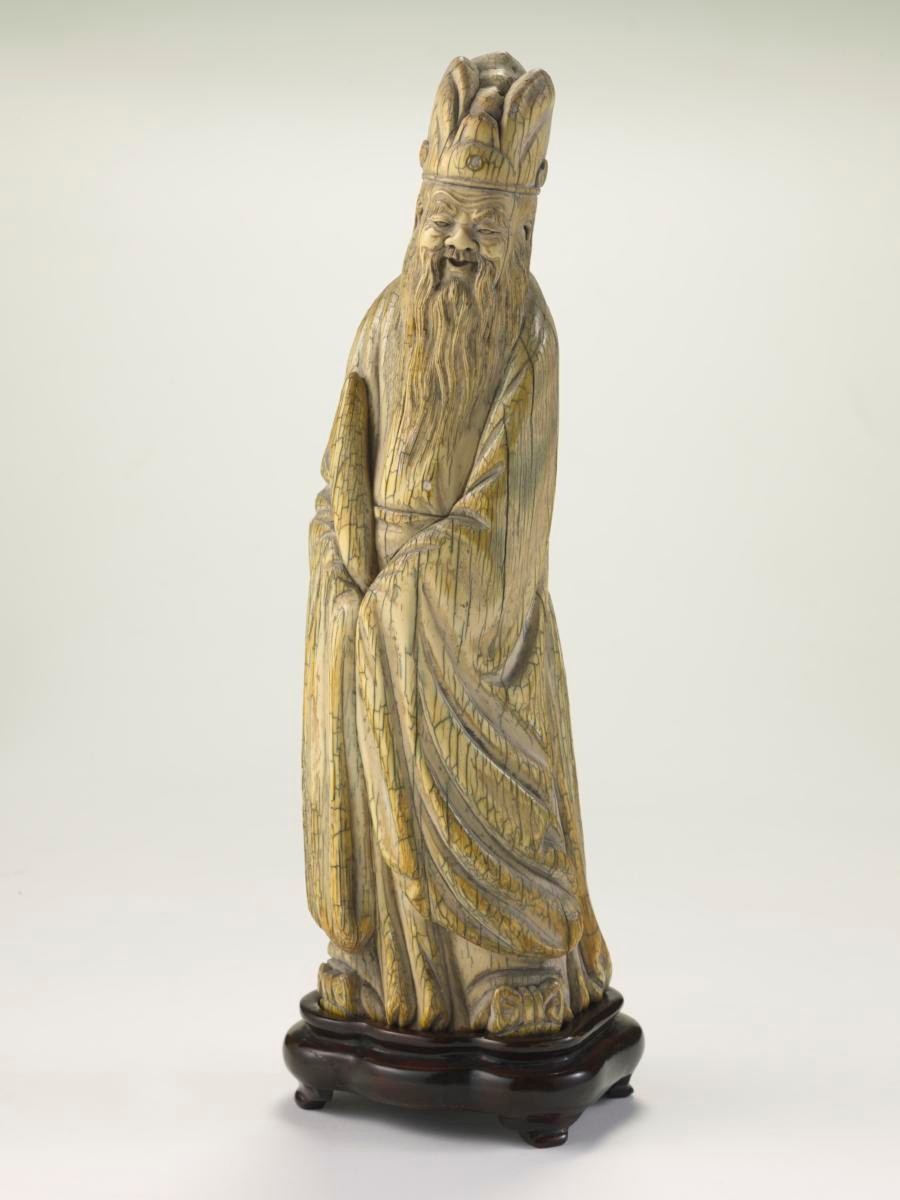
This figure is likely Shoulao, the god of longevity, based on his tall forehead, long beard, and attire. The elongated form and slight sway of the body follow the natural curve of the elephant tusk. Ivory entered China through the Silk Road, as well as from Thailand, Vietnam, and other parts of Southeast Asia. It was prized as a luxury commodity because it was durable and well-suited to making fine, complex carvings. The art of ivory carving reached new heights during the Ming (1368–1644) and Qing (1644–1911) dynasties, alongside the increased availability of ivory in China. Ivory carvings of deities, mythical figures, or legendary characters like this were largely decorative and were not used for religious observances. By the late 19th and early 20th centuries, many Chinese ivory carvers also made figures for export and as souvenirs.