

Image size: 165.0 x 120.5 cm
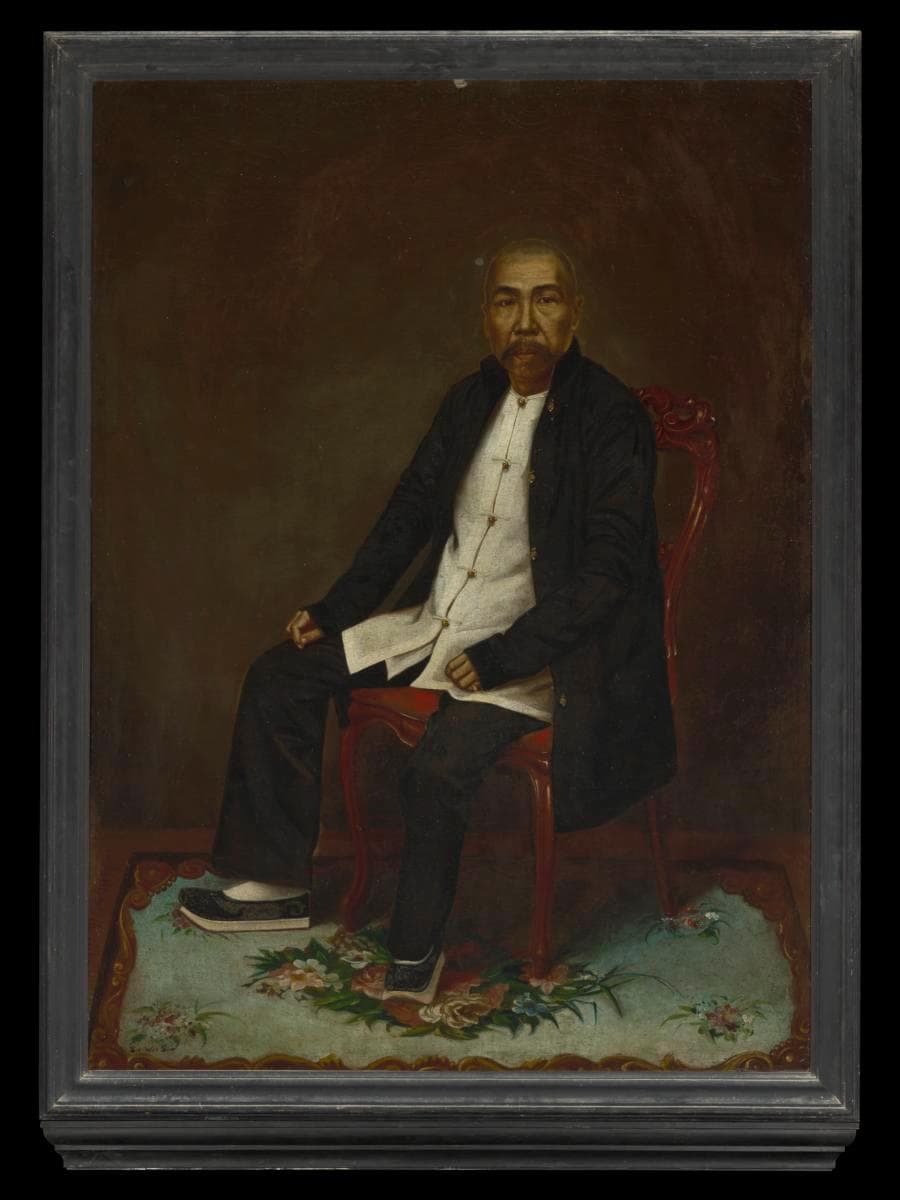
This portrait depicts Sie Wee Swie, a tobacco merchant from Kediri, East Java. The painting is signed on the lower left-hand corner, with the sitter's name “Sie Wee Swie”. It is uncommon for such paintings to be signed. The sitter wears a hybrid Chinese jacket with western tailoring over a Chinese shirt with knot and loop buttons. On both articles of clothing, gold buttons are attached. Loose trousers and a pair of Chinese fabric-covered shoes with white soles complete his outfit. Seated on a European style chair, an imported carpet from Europe is placed under his feet. The mixing and matching of Chinese and Western clothing and furnishing reflect not only the affluence and cosmopolitan status of the sitter but demonstrates changing social conventions and experimentations in sartorial taste. Typically depicted in painted ancestral portraits, the seated subject is presented in a full-length view against a plain, dark background. Although seated at an angle, the subject is depicted with a full face and boldly holds the viewer’s gaze. This pictorial convention is closely followed in the representation of the deceased. The artist who executed this work was likely part of a wave of itinerant Chinese painters in Southeast Asia who catered to the demand of wealthy Chinese and Peranakan patrons who required painted ancestral portraits to be placed at ancestor altars in households, temples and clan halls. For the Chinese, ancestral portraits were used to facilitate ancestor veneration rituals. This practice was continued by Chinese immigrants in Southeast Asia, including Peranakans thereby sustaining the demand for oil paintings even as photography introduced a more affordable and accessible means of making ancestral images in the Dutch East Indies and the Straits Settlements by the mid-1850s. This painting is related to two others which reportedly depict the sitter's son and daughter-in-law.