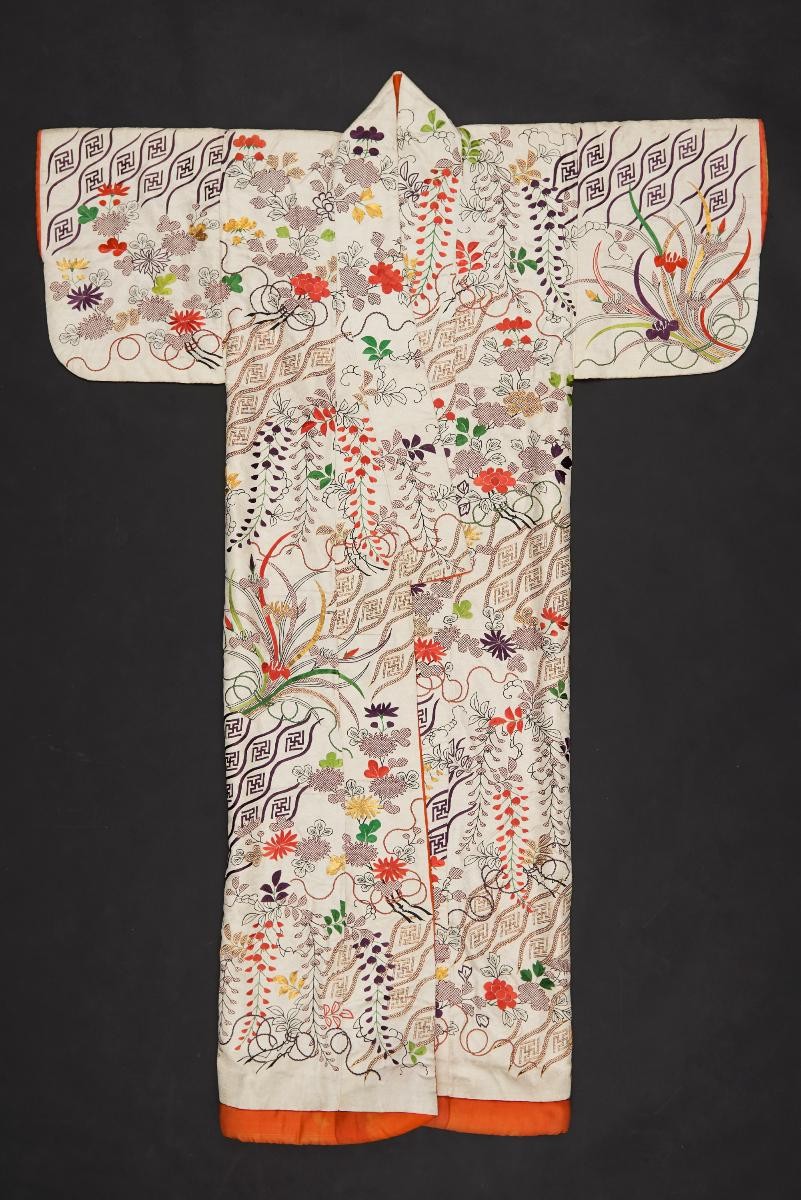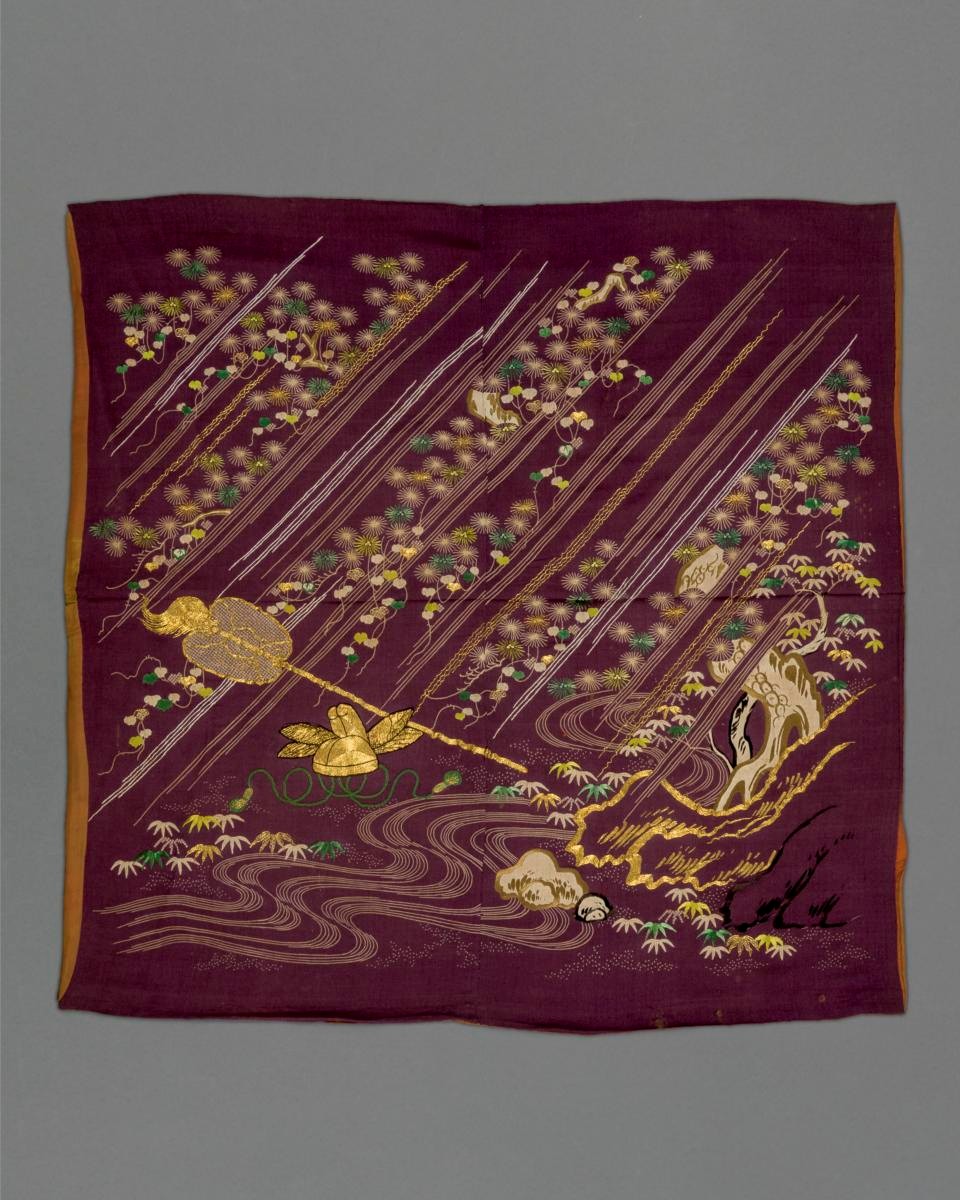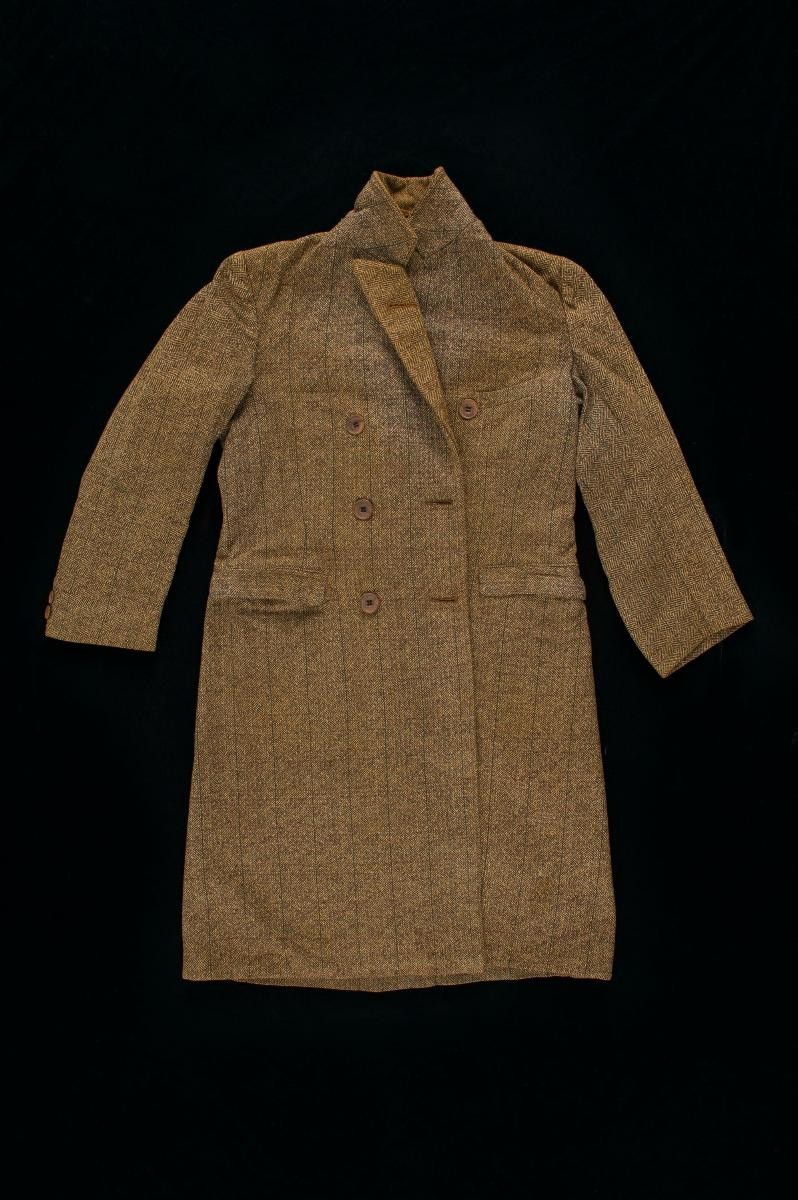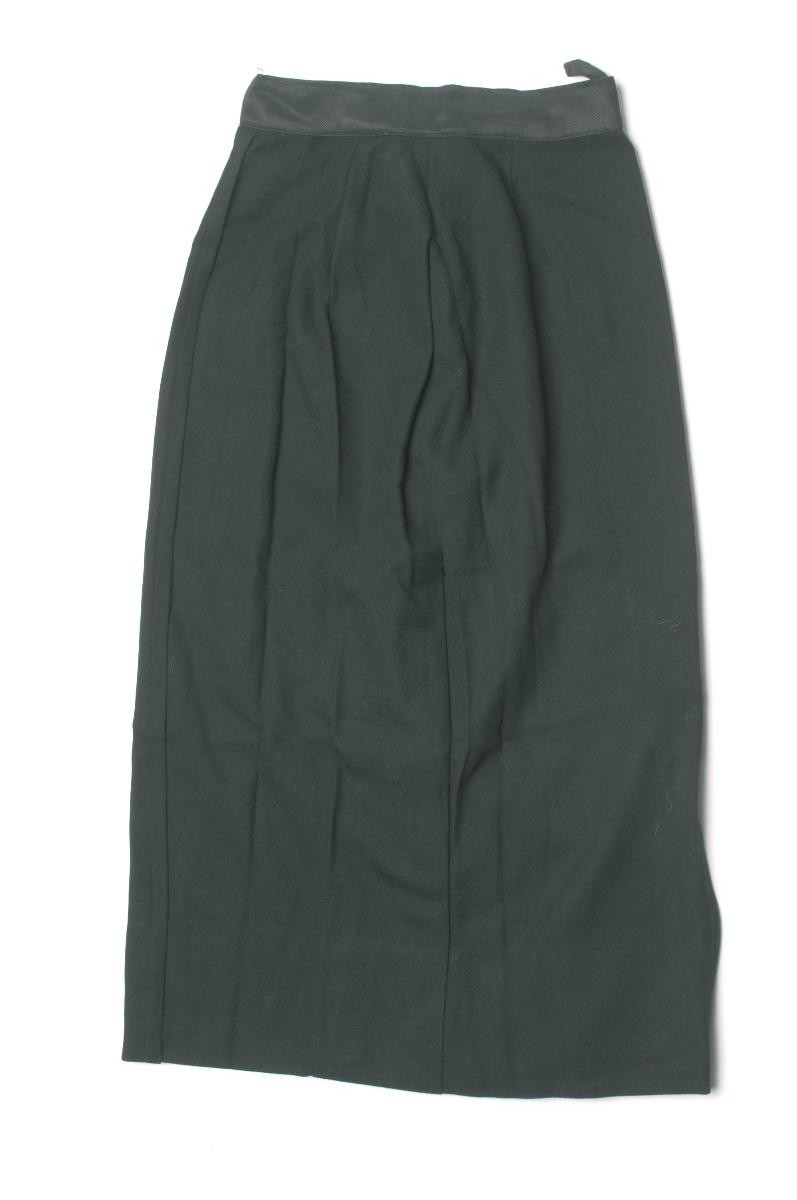

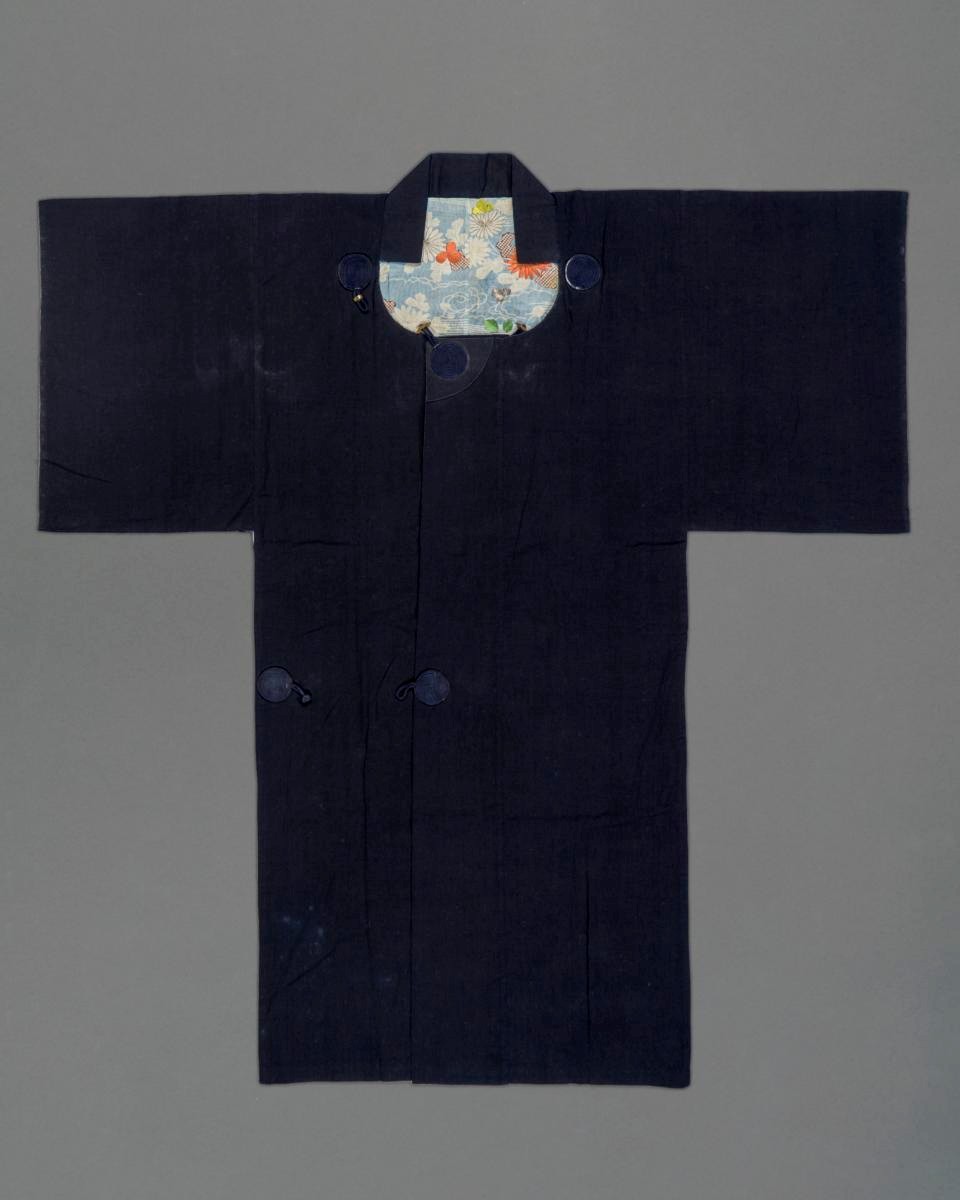
This coat is lined with a goshodoki kosode that belonged to a woman. Goshodoki (“palace landscape”) is a Meiji-period term that describes a style of kosode – the precursor to the modern kimono – worn exclusively by the Edo warrior elite. The robes are characterised by stylised landscapes of trees, rippling water, and flowers, scattered with motifs that allude to classical literature and Noh plays. Women of the educated warrior class showcased their high status and erudition by wearing robes with literary motifs, and by recognising the scholarly allusions on their peers’ clothing. Here, the drums embroidered against a background of waves may be a reference to the Noh play Tsutsumi no taki (The Waterfall of Drums).The repurposing may have been sentimental, economical, or perhaps a response to sumptuary laws issued to curtail inappropriate displays of wealth and status. Luxurious undergarments and linings circumvented such restrictions.