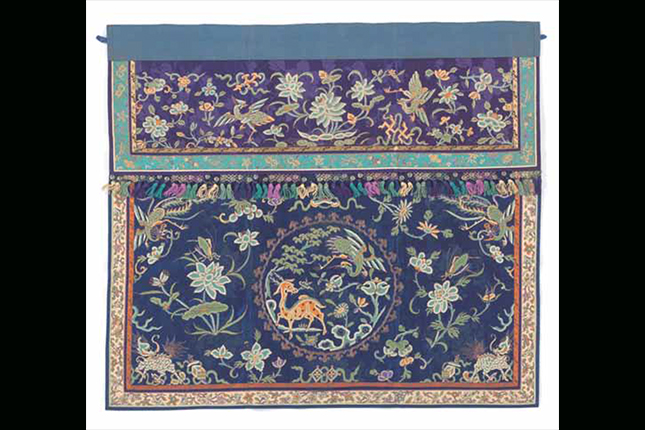

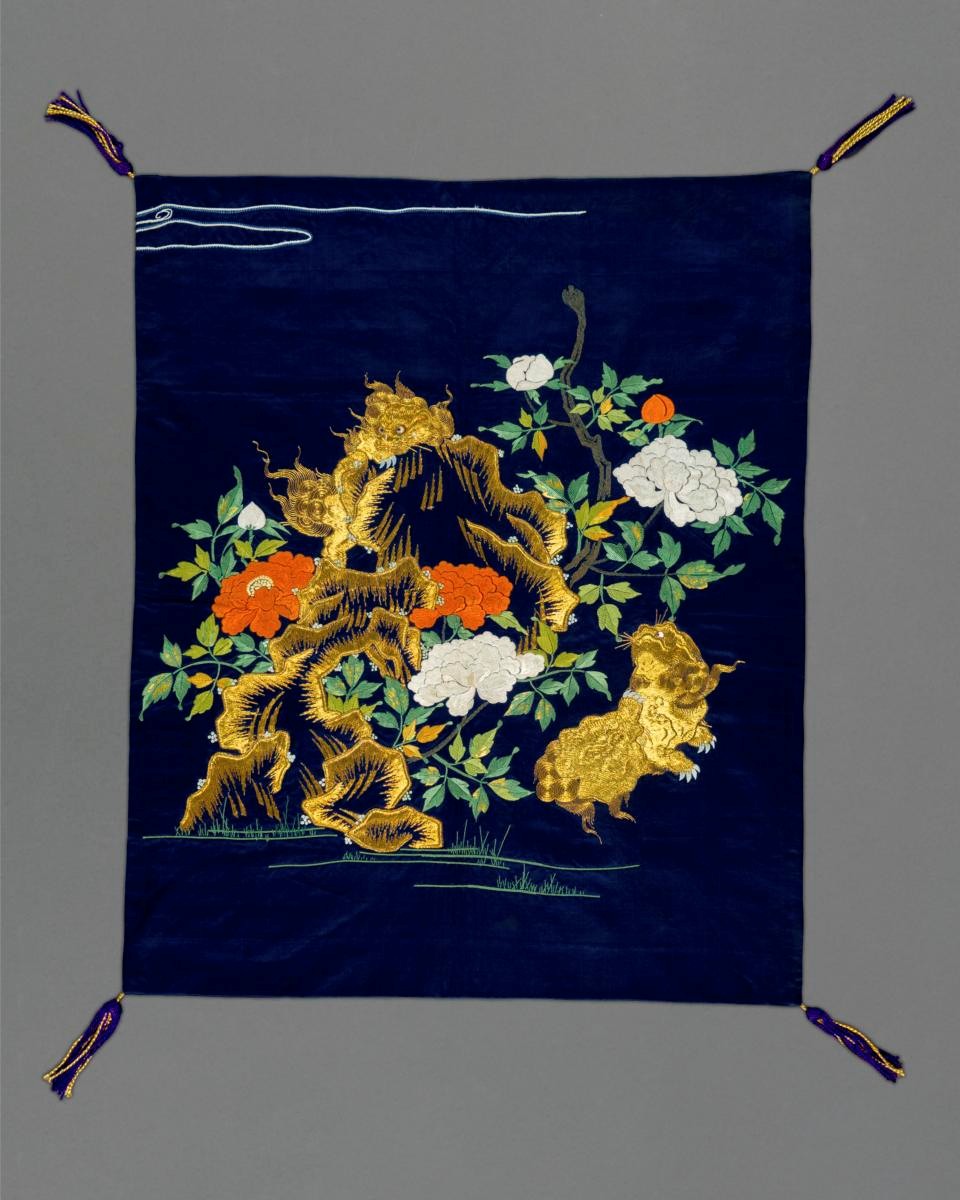
Object size: 96.0 x 84.0 cm (with tassels)
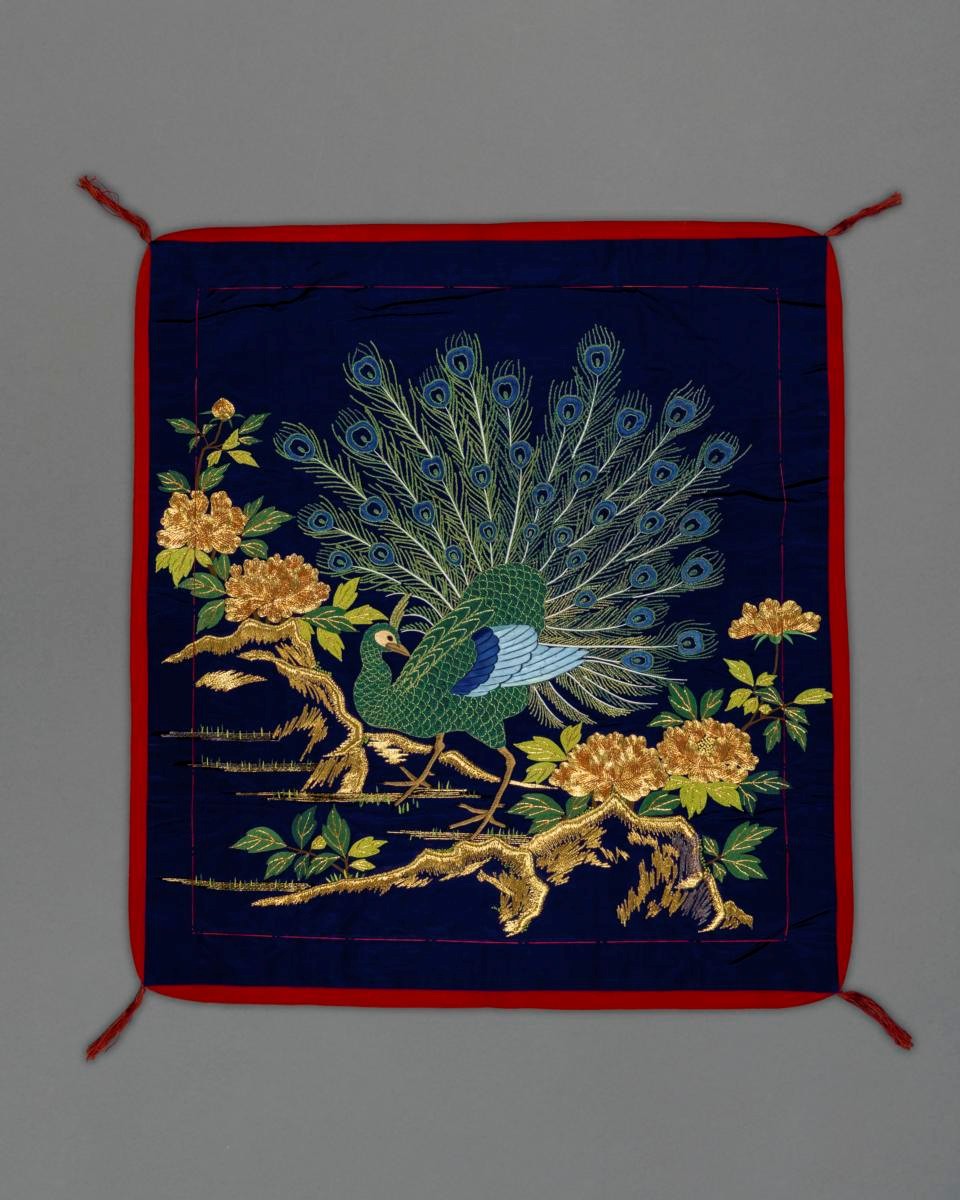
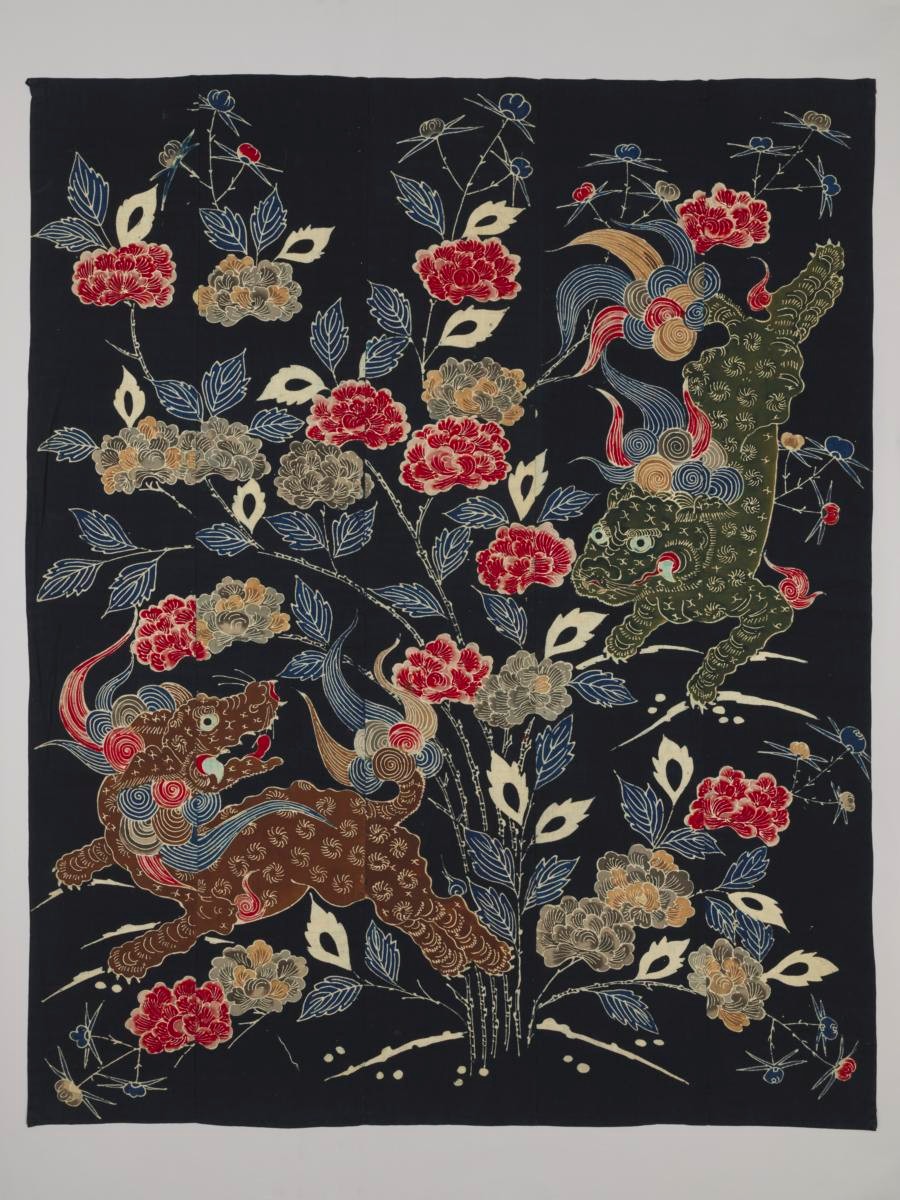
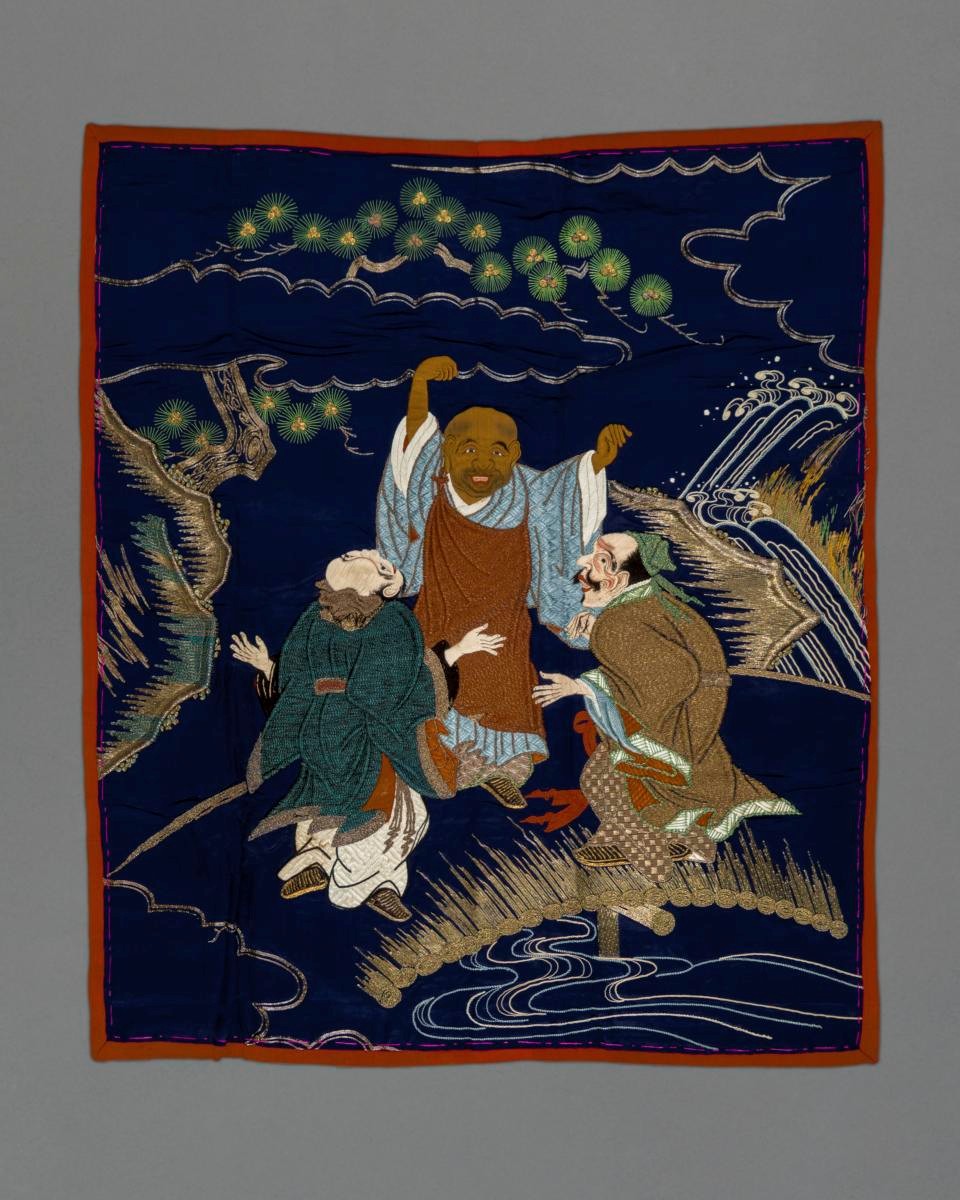
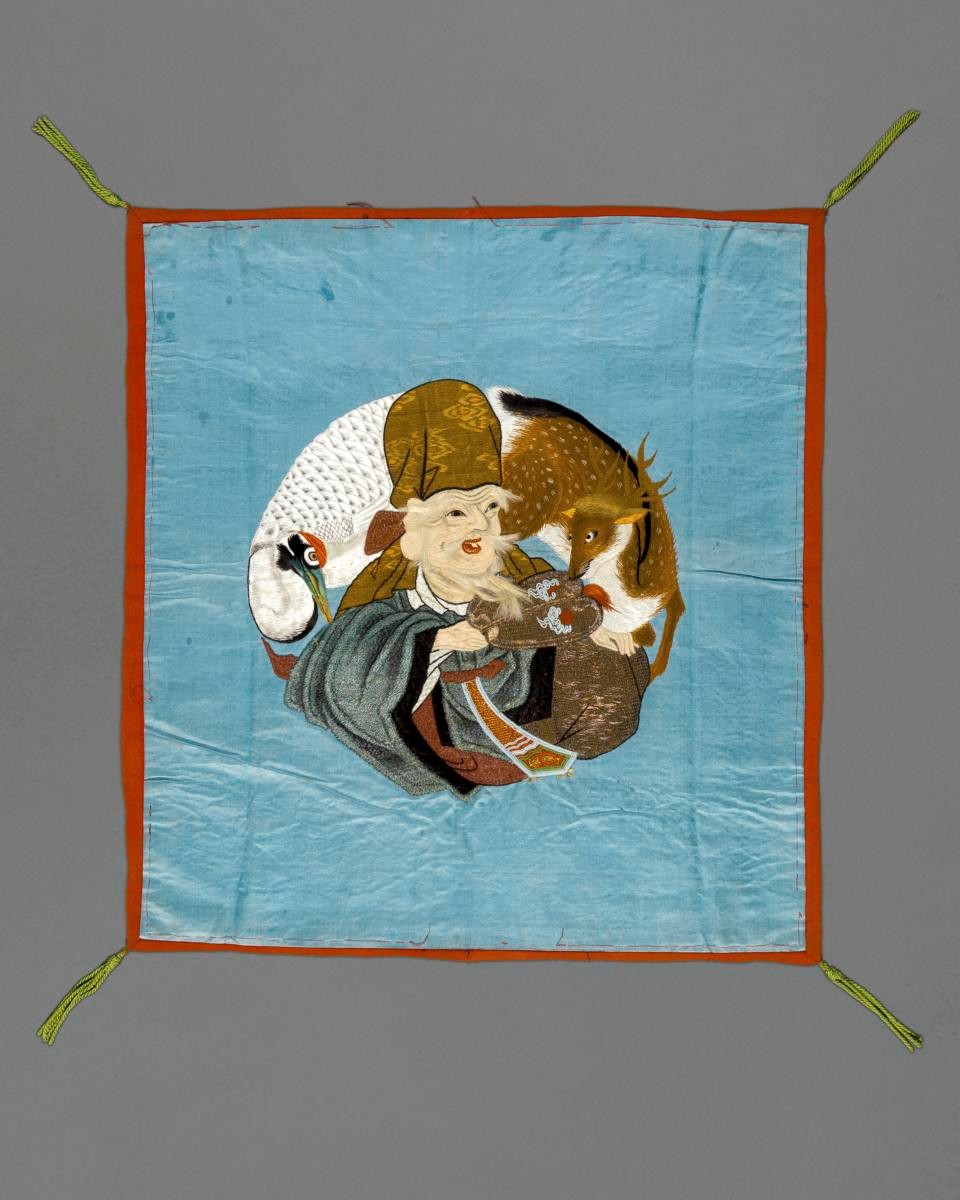
In Japan, the practice of formally presenting gifts with silk covers called fukusa began in the Edo period (1603–1868), around the late 17th or early 18th century. These covers were draped or folded over gifts for a variety of occasions, from seasonal festivities to important personal events. Each fukusa was carefully chosen to evoke the circumstance of the gift and to convey a message to the recipient through its design. Fukusa designs often feature symbolic objects or allusions to Japanese and Chinese stories. The choice of fukusa also reflected the giver’s wealth, taste, erudition, and cultural sensitivity. The use of fukusa continued into the early 20th century. Today, they are used in parts of Japan for weddings and corporate events. This fukusa recalls a legend in which only the strongest lion cubs that fall into a peony bush can climb out and survive. The theme of strength and reaching maturity was especially fitting for occasions celebrating children. The lion was the king of beasts, the peony the queen of flowers. They often appear together in Japanese art to connote wealth, good fortune, bravery, and the balance between power and delicate beauty. As seen here, small pieces of glass were sometimes placed over an animal’s eyes to give the creature a more lifelike appearance.