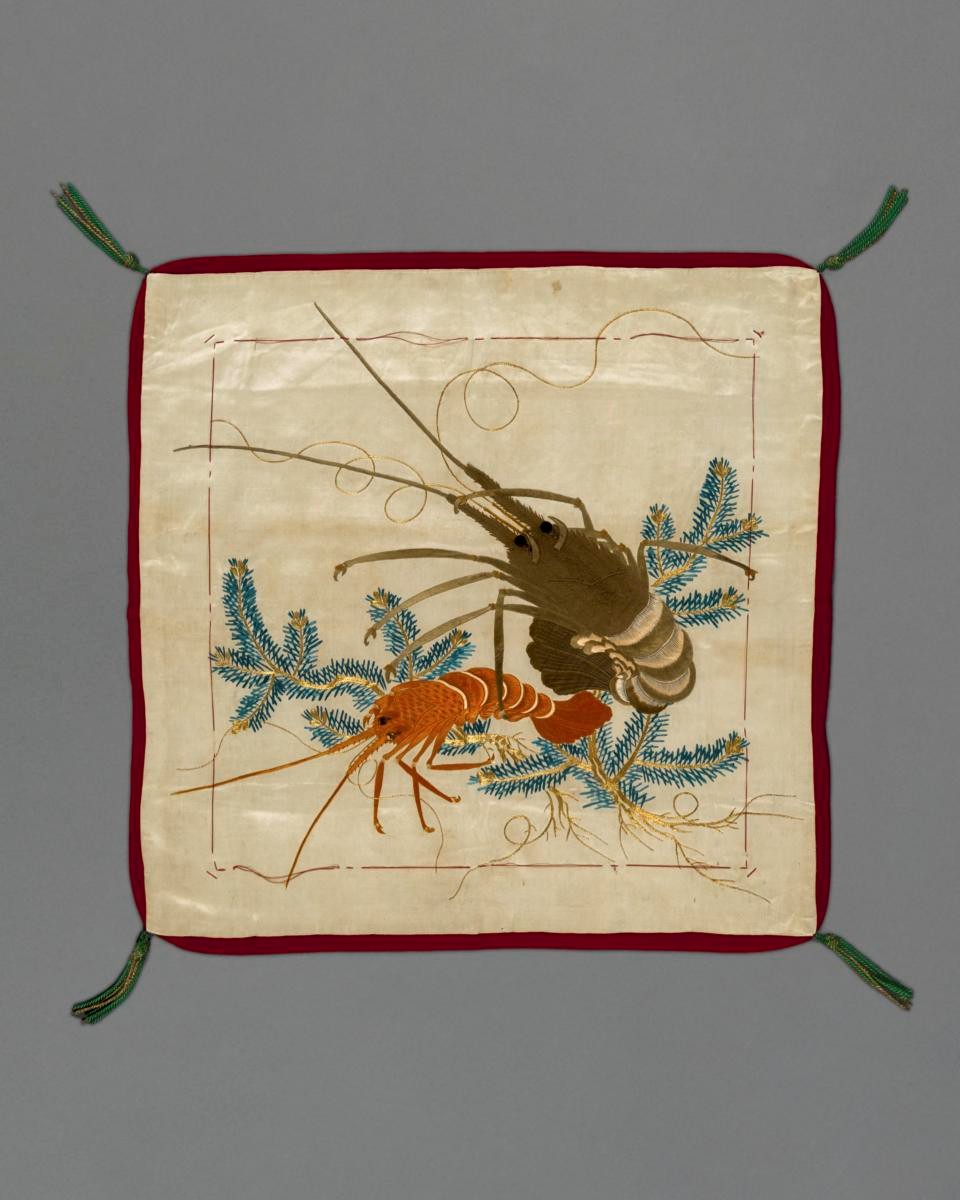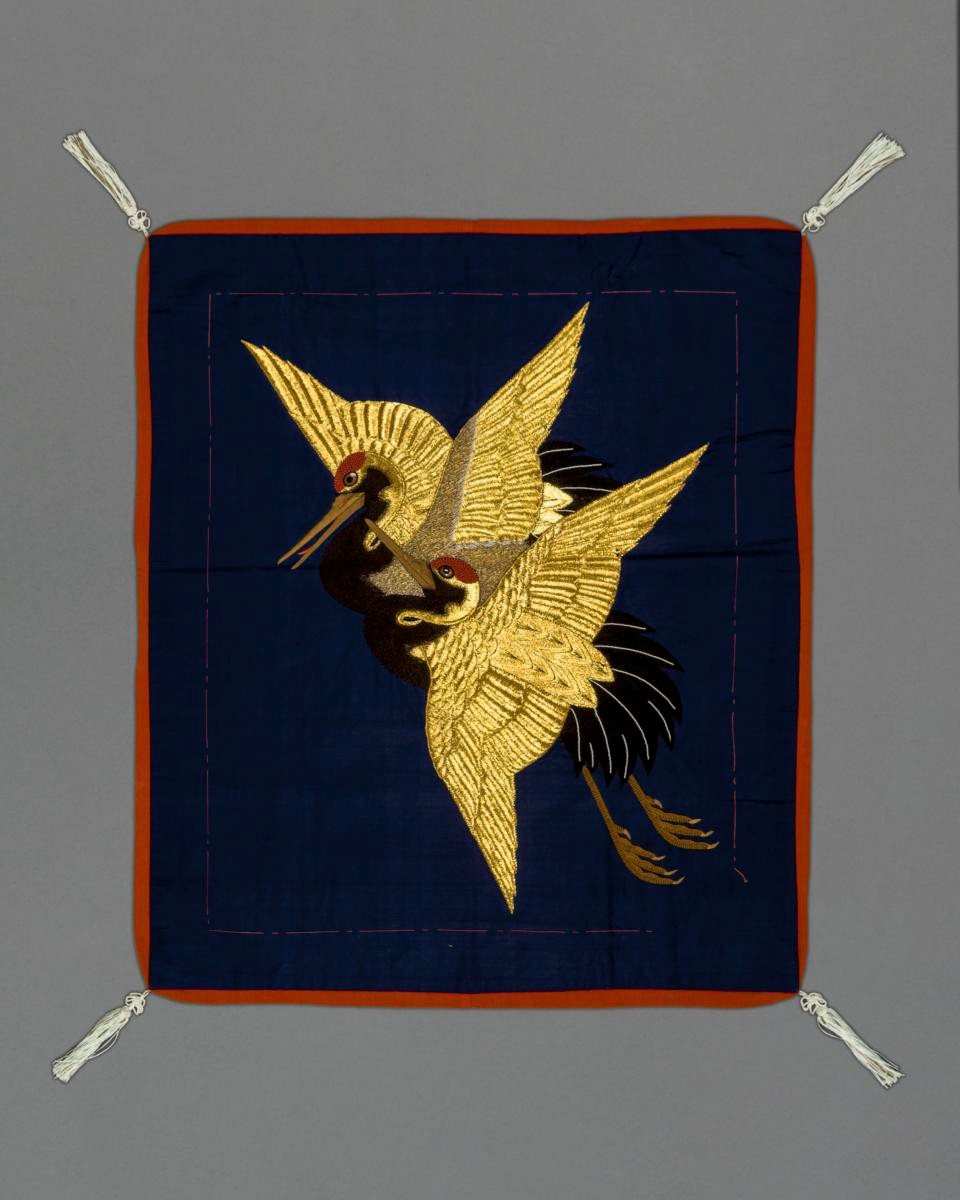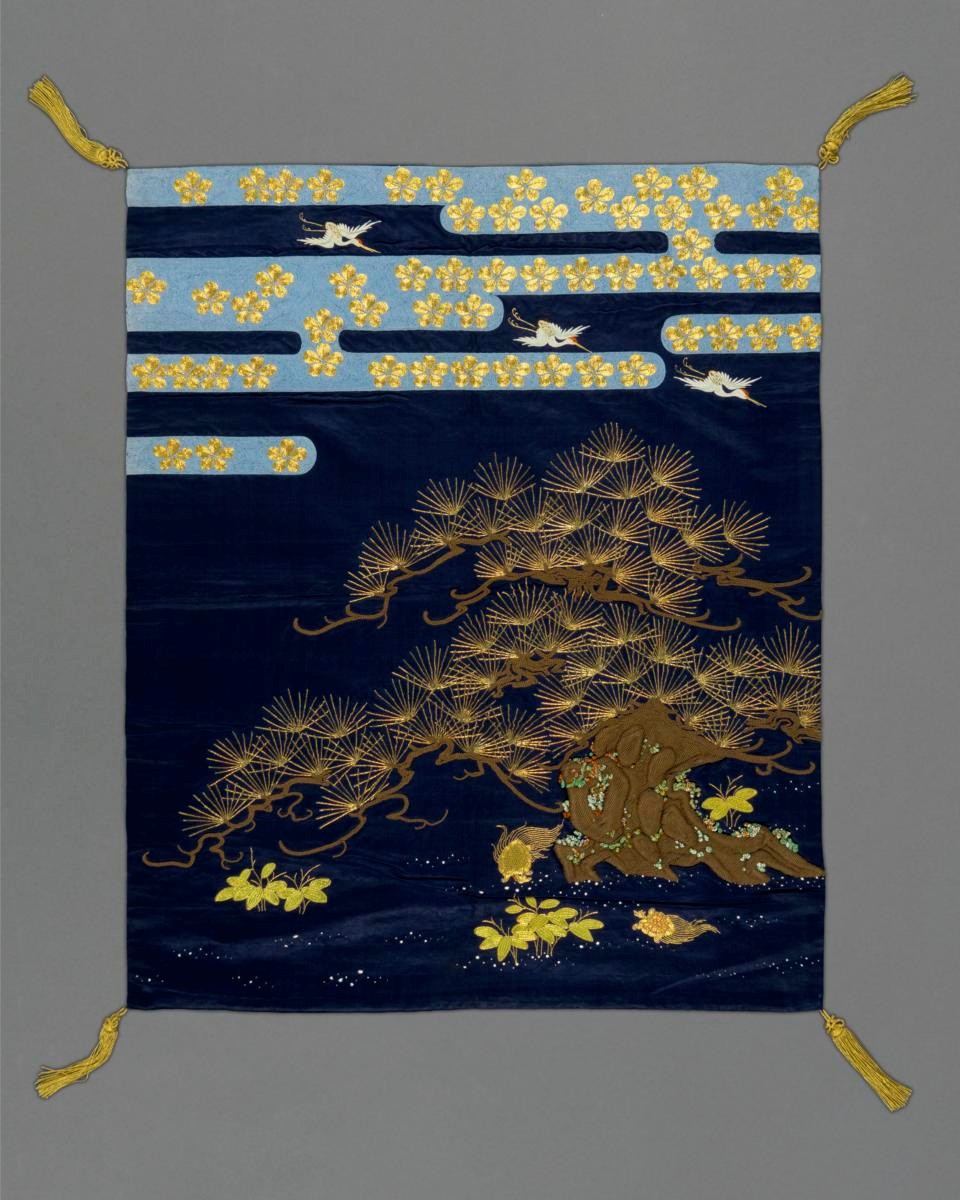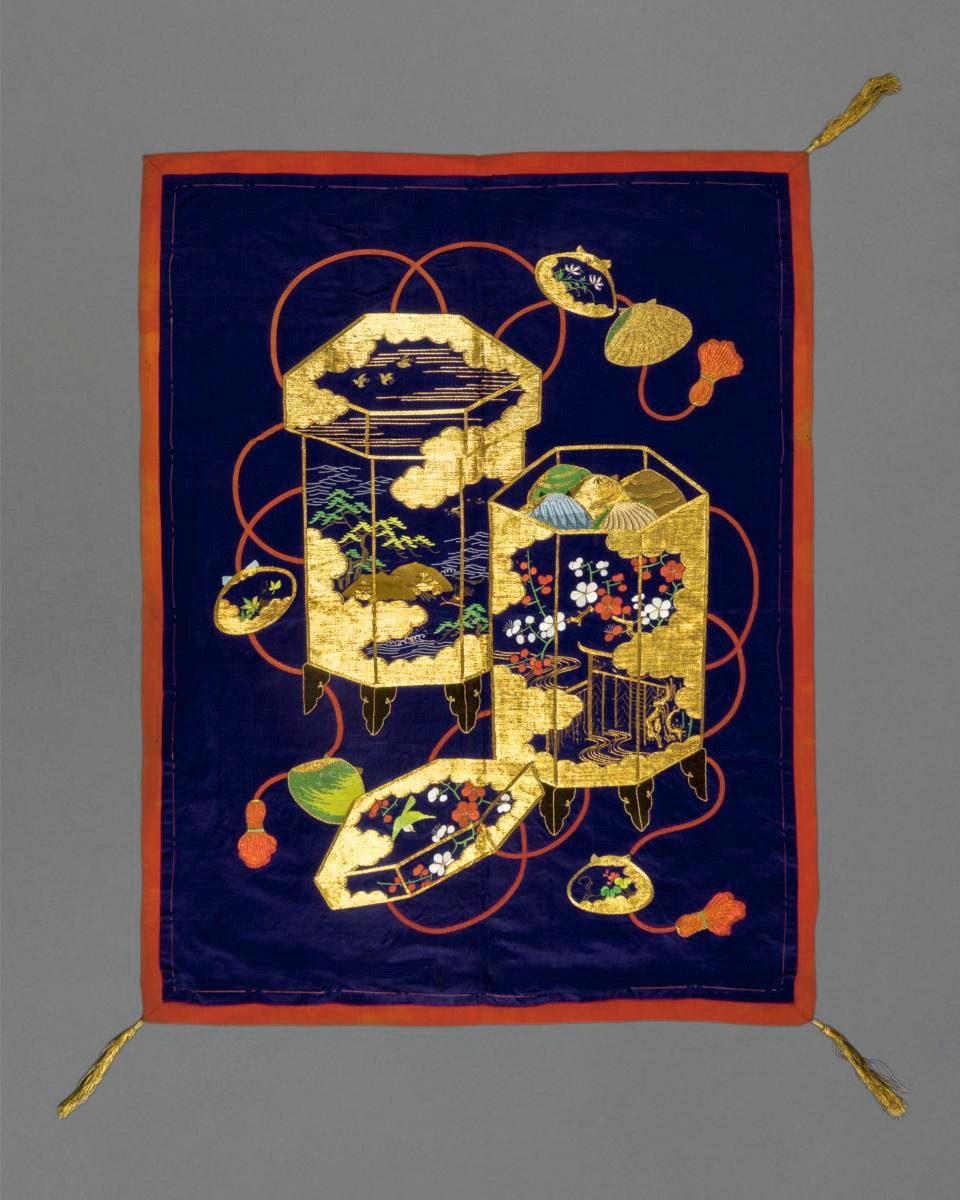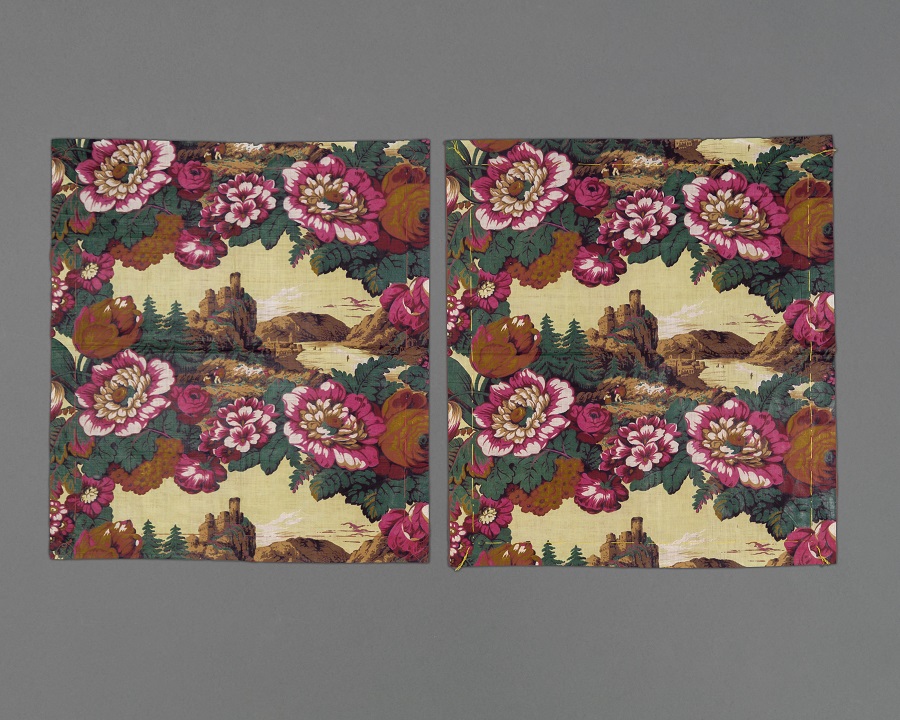

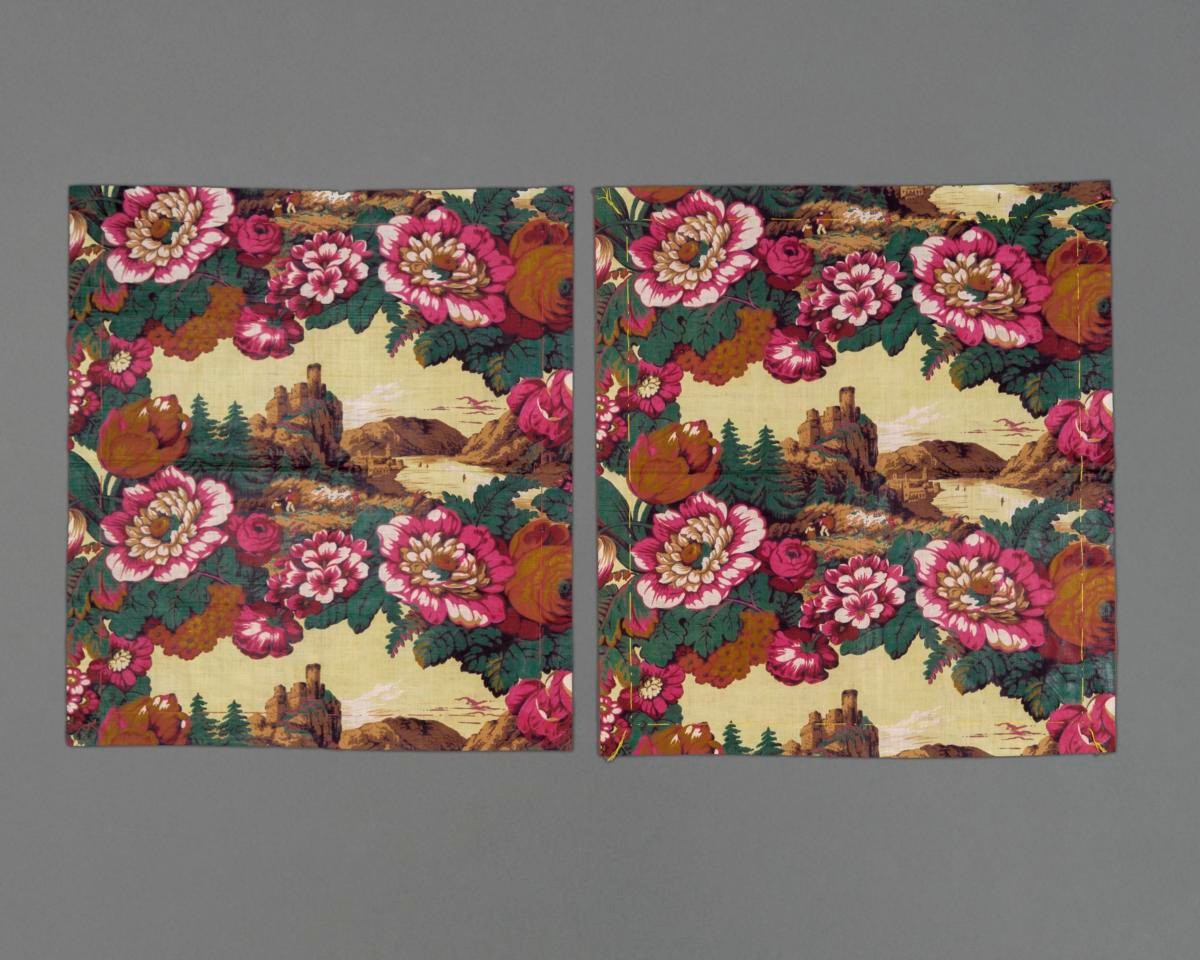
In Japan, the practice of formally presenting gifts with silk covers called fukusa began in the Edo period (1603–1868), around the late 17th or early 18th century. These covers were draped or folded over gifts for a variety of occasions, from seasonal festivities to important personal events. Each fukusa was carefully chosen to evoke the circumstance of the gift and to convey a message to the recipient through its design. Fukusa designs often feature symbolic objects or allusions to Japanese and Chinese stories. The choice of fukusa also reflected the giver’s wealth, taste, erudition, and cultural sensitivity. The use of fukusa continued into the early 20th century. Today, they are used in parts of Japan for weddings and corporate events.Made of imported European roller-printed cotton, these two fukusa are identical except for the colour of the threads that hold the lining in place. The use of imported and mass-produced textiles as seen here suggests that early 20th-century fukusa could be purchased from stores instead of commissioned. Printed cotton fukusa were faster and cheaper to make, and contrast sharply with the types of handmade silk covers collected in the West. It is unclear on what occasions cotton fukusa may have been used. The Japanese interest in foreign printed cotton can be traced to the early Edo period, when Dutch traders brought hand-painted and block-printed Indian cottons to Japan. Known as chintz, or sarasa in Japanese, these precious and exotic fabrics were used sparingly for small accessories like tobacco pouches and tea ceremony cloths. More rarely, they were incorporated into clothing and fukusa. By the late eighteenth century European roller-printed cotton cloth was exported around the world. The patterns on these fabrics were originally based on Indian chintz, but soon developed in new directions to cater to various markets. By the late nineteenth century, European roller prints were made into fukusa in Japan. These fabrics were more affordable and accessible than both block-printed chintz and hand-embroidered silk. Their adoption may reflect changing tastes in fukusa styles, or the increasing accessibility of ready-made fukusa. In this period, customers could visit Western-style department stores like Takashimaya to purchase European products. Some examples feature wool linings, a material that was relatively rare before the Meiji period. The subsequent introduction of Western fashions and increased import of wool led to the increased adoption of woollen clothing and accessories.