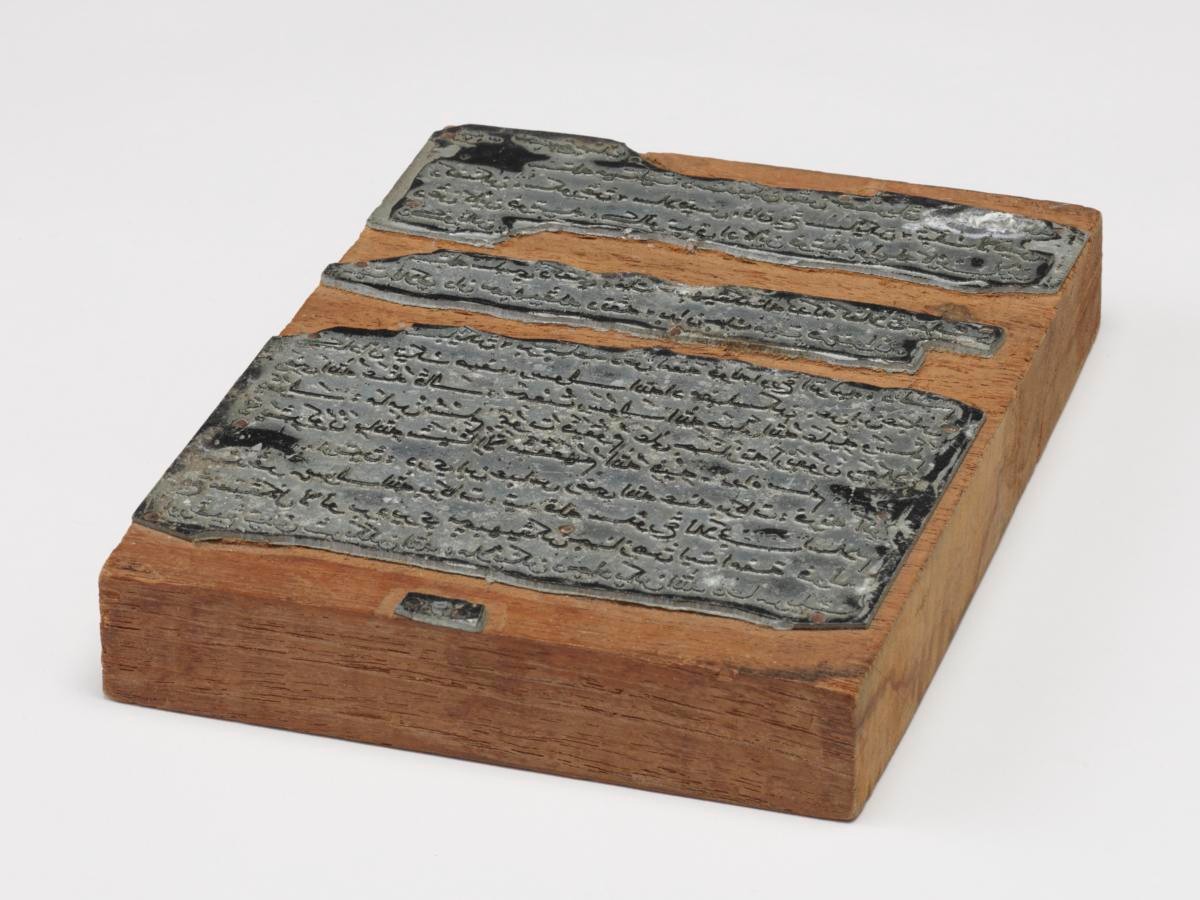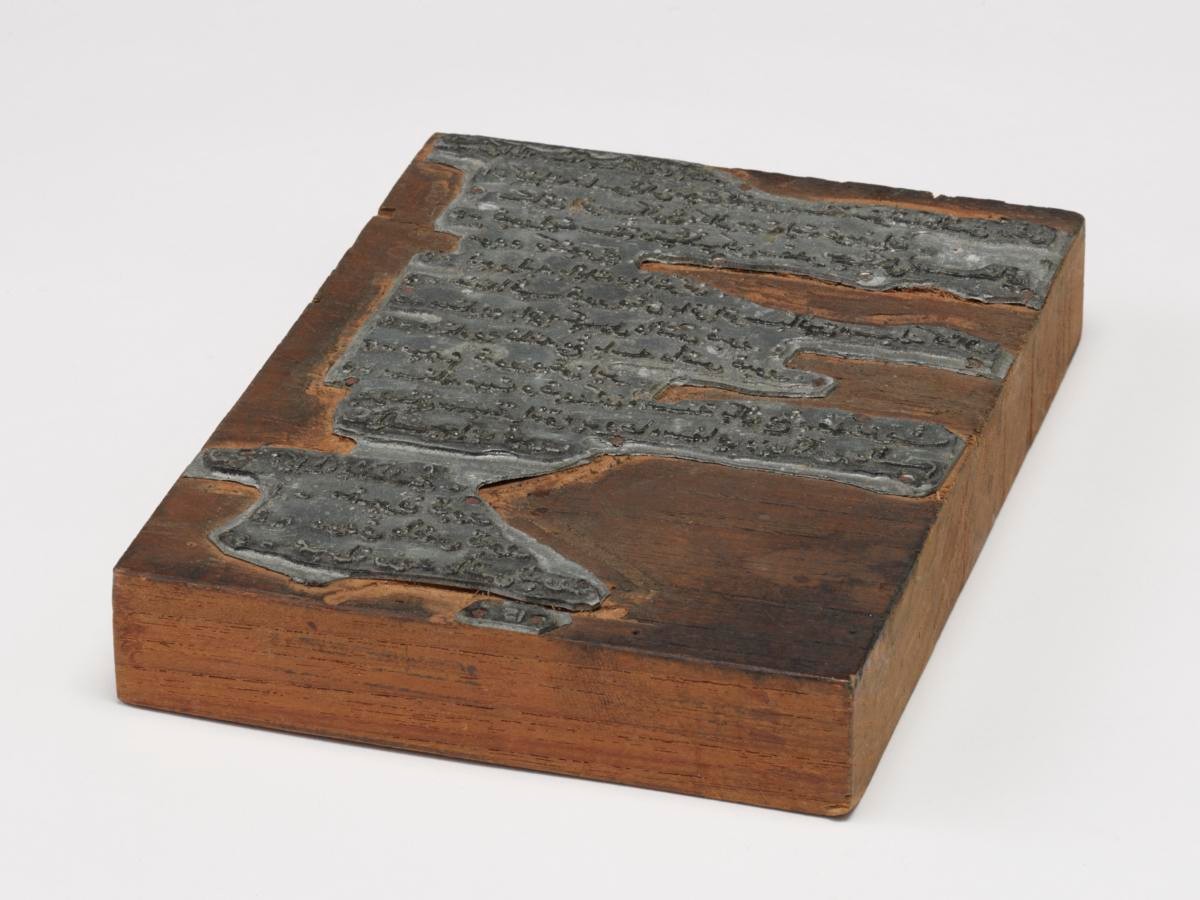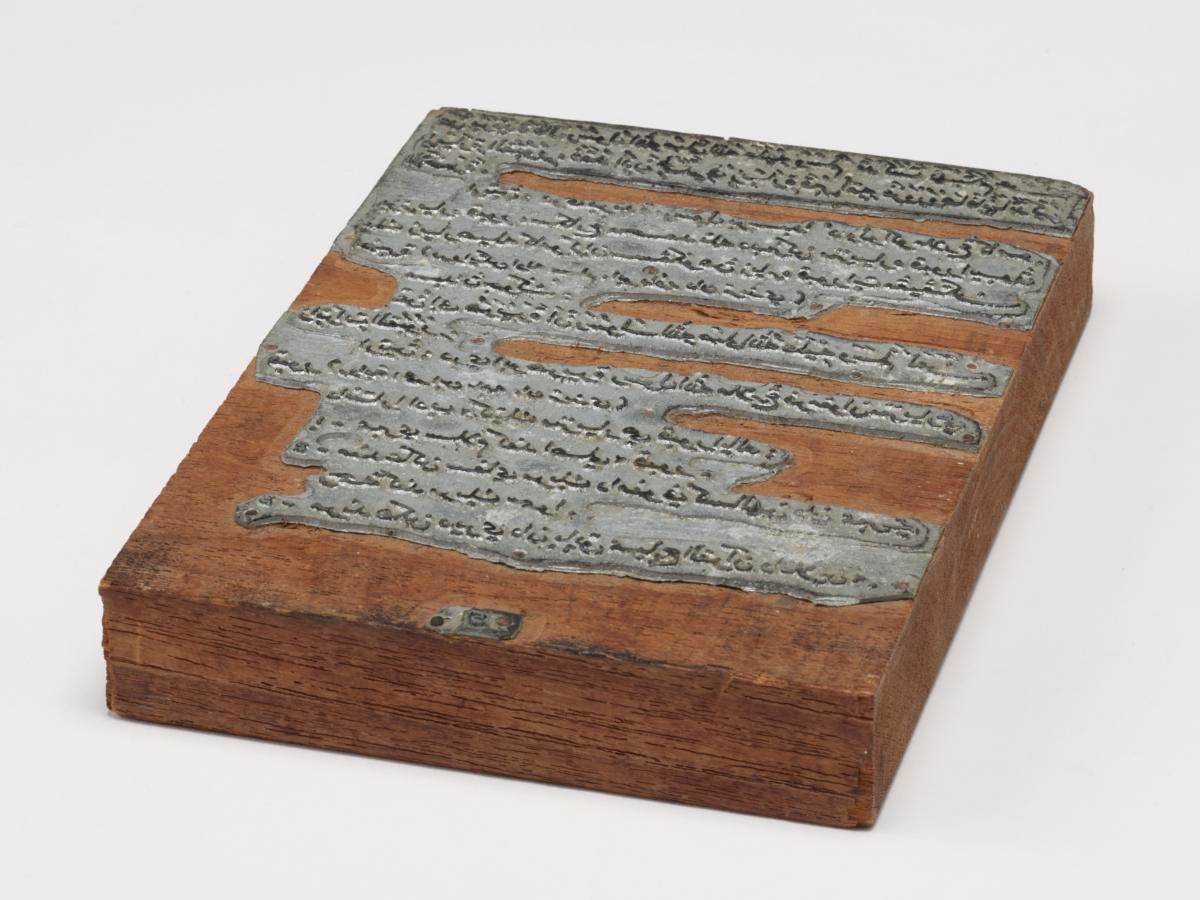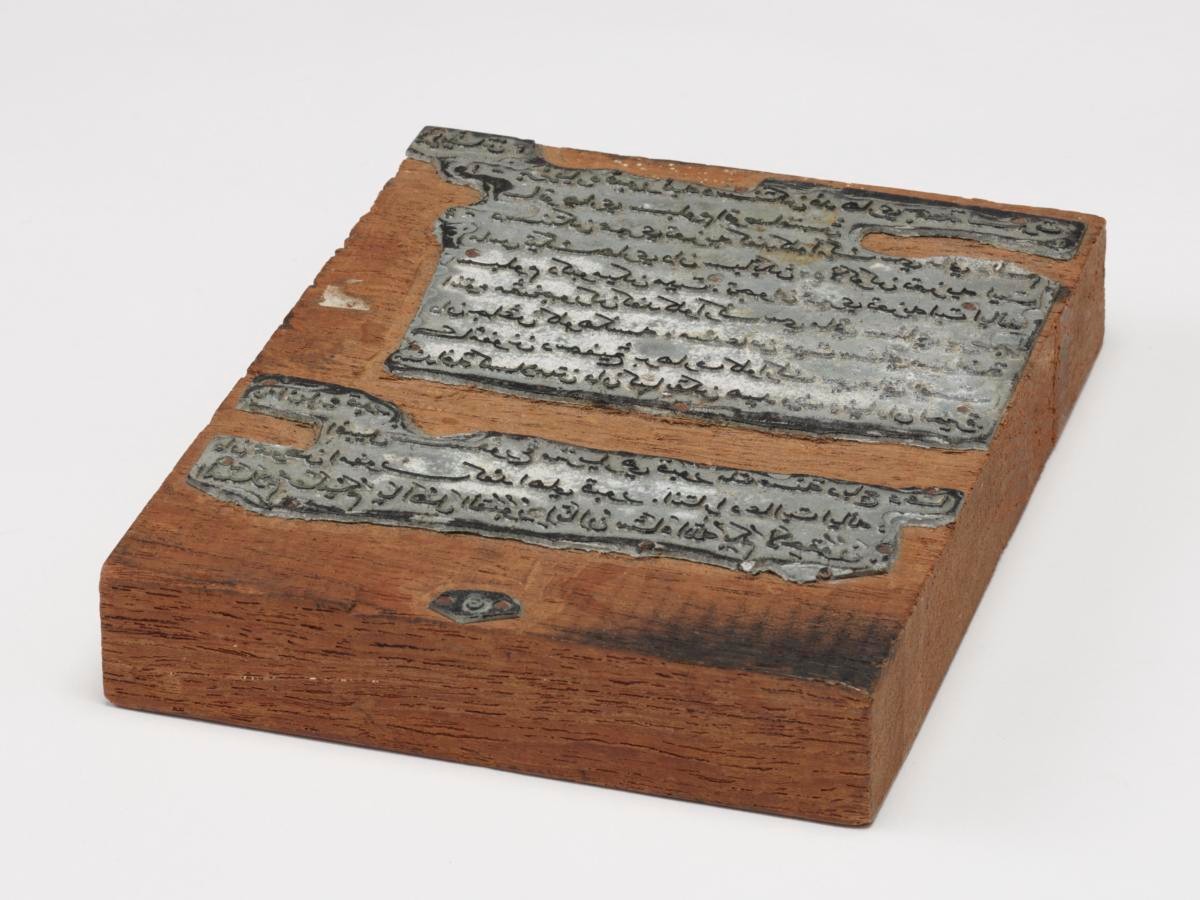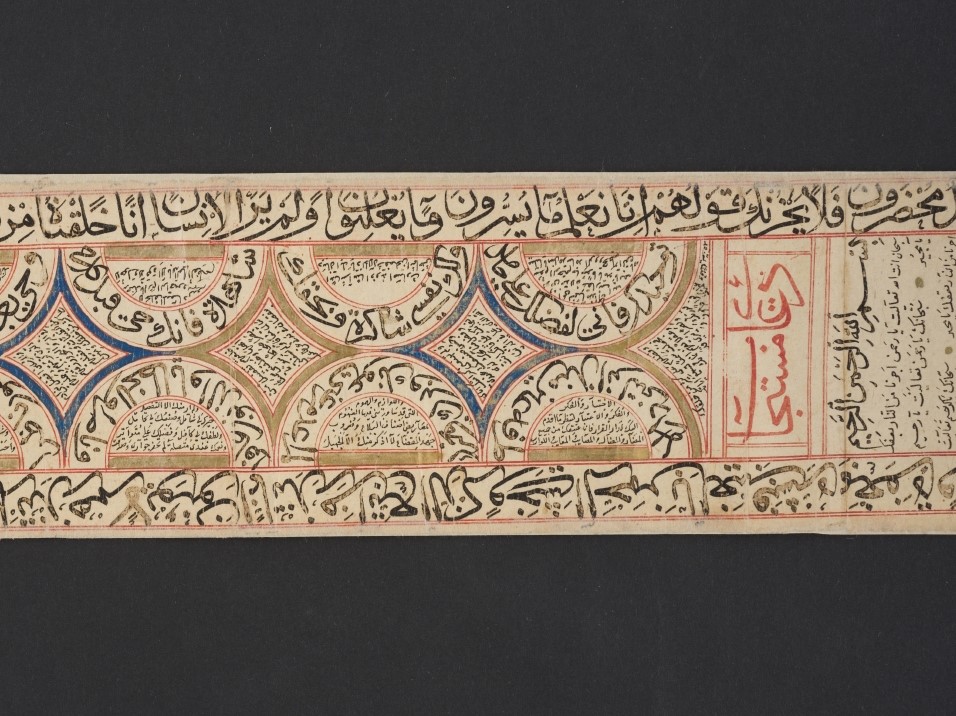

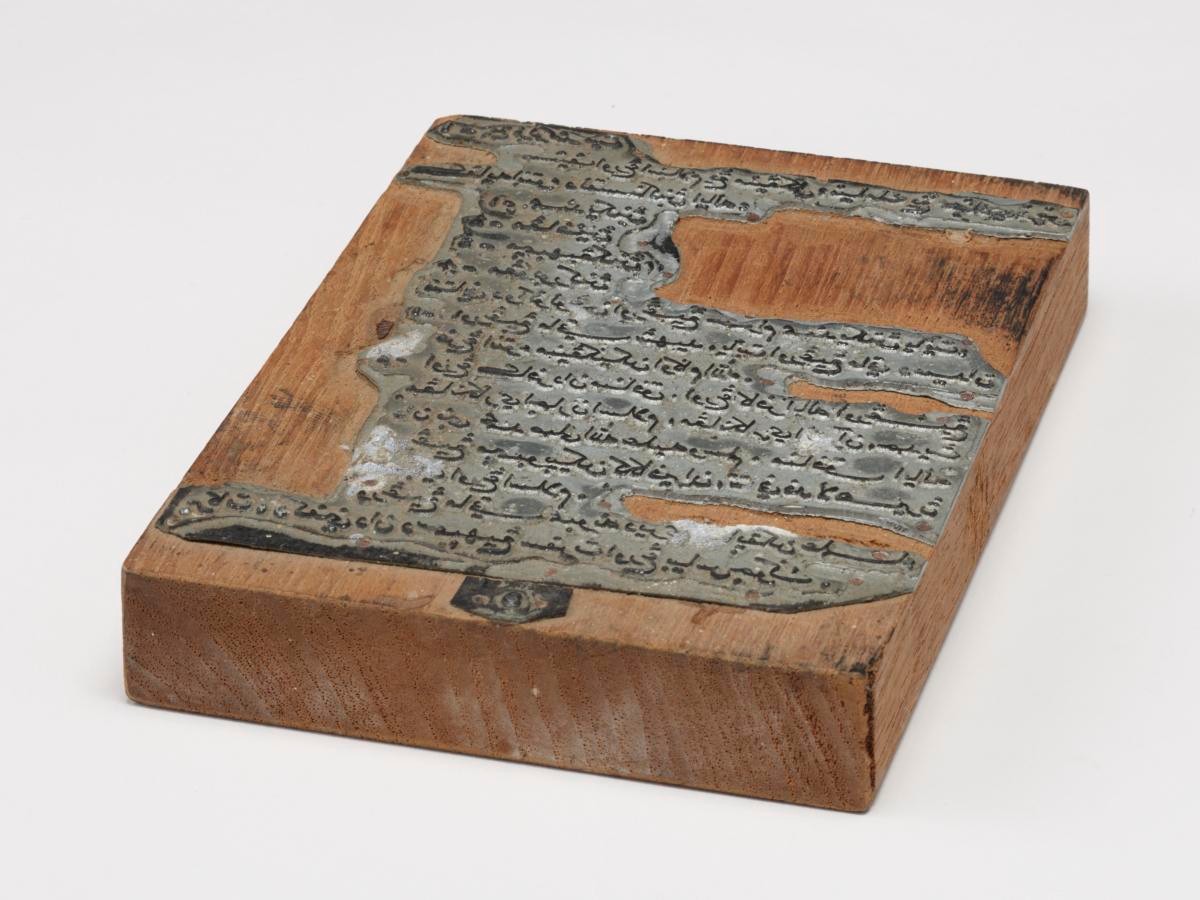
Printing blocks such as these, with raised engraved tin plates (cetakan, the Malay term for print blocks) affixed to a wooden backing, were used in the early to mid-20th century to print Kitab Kelantan, a guidebook on Islamic rituals and other fiqh (Islamic rulings and practices) -related matters such as managing the deceased and funerary arrangements. Printed books in the Malay language began to gain popularity by the end of the 19th century, and flourished by the start of the 20th century amidst increased literacy and access to reading materials following expansion of schools and towns across Singapore, Malaya and Indonesia. Moreover, the improved transportation networks between Southeast Asia and the Middle East by the early 20th century also saw to greater transmission and translation of publications from Mecca and Egypt to the larger Malay world, with a popular genre being that of fiqh-related books.