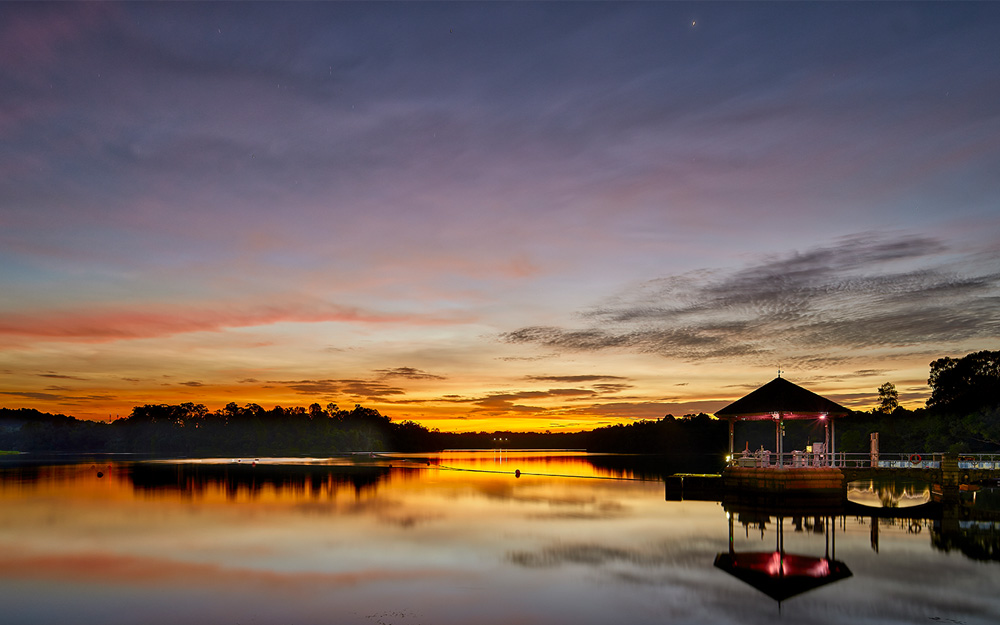

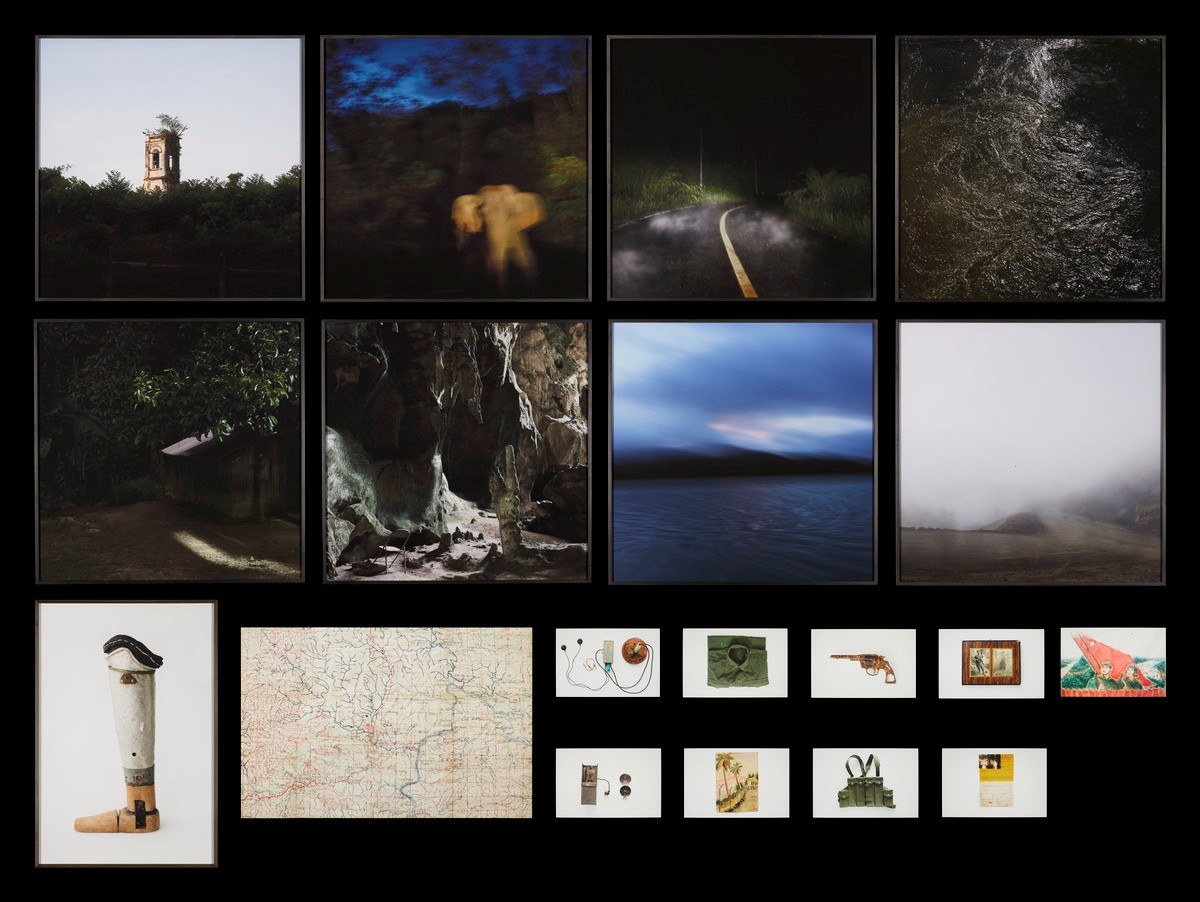
Remnants take us on a cinematic journey through traces of hidden histories. The ethereal landscapes are an unspoken archive of an undeclared war. These sites of memory hold fragments of the conflict between the British colonial government and the resistance led by the Malayan leftists. This was the longest conflict Britain fought post-World War Two, but officially it was called an “emergency.” As the Cold War took hold globally, what most Malayan leftists saw primarily as an anti-colonial fight was cast as a Communist insurgency. Tens of thousands were labelled “bandits” and “Communist terrorists” by the state. Along with sympathisers, they were detained without trial, jailed or deported.The artist’s paternal grandfather Shen Huansheng was among the deported. He was later executed by the Nationalist Kuomintang army and left in a mass grave in southern China. His mother, wife and five children left behind in Malaya did not hear about his death for another two years. For the next 60 years, he was never again spoken of in the family. Just as this trauma has sat quietly within the artist’s family, it is also deeply embodied in society, along with many other ghosts from this war. These are the starting points in the artist’s on-going, years-long research and artistic project “One Day We’ll Understand” which takes its title from an inscription on a grave of a British planter killed by the Communist guerrillas during the war. Less certain than that affirmative line, Sim asks through her work if we will, in our politically polarised times, after all, one day be able to understand. More broadly, she questions ifthe consequences and legacies of colonialism have been reckoned with and reflected upon, and if global politics today is still (mis)informed by unfinished, unexamined dreams of empire.Sim has sought out some of the unrecorded stories, songs, memories, artefacts and documents of the leftist foot soldiers, creating an assemblage that is an unofficial, alternate archive of that war. In Remnants, she shows unembellished photographs of the objects she has made still-life studies of from her visits with the old left across southern China, Hong Kong, Malaysia, Singapore and southern Thailand. These are juxtaposed with the intentionally aestheticised landscape photographs she made around sites where this war played out, where battles or ambushes took place, the jungles where the guerrillas had their bases, limestone caves where they hid, rivers “awash” with civilians killed by the Communists, a village where British troops killed 24 unarmed civilians in December 1948, a giant man-made lake created by a dam to flood the Communists out of the rainforest, and “New Villages” — barb-wired camps where the British authorities resettled more than half a million squatters to cut the supply of men, arms, food and medicines to the Communists. While grounded inhistorical and archival research, Sim’s aesthetic approach in making this landscape work evokes a sense of spatial haunting and the absent presences in sites of memories known and unknown. It is as if she projects onto the jungle, rubber trees, tin mines, limestone caves which were recurring motifs in the war, conjuring traces of the time. Her aesthetic choices here echo her work on nuclear landscapes in the 2017 Nobel Peace Prize commission, Most People Were Silent, slipping from the documentary into a different sort of imaginary, transcending thequotidian to prompt us to suspend our sense of place, reality, time, belief and, perhaps, moral judgment.