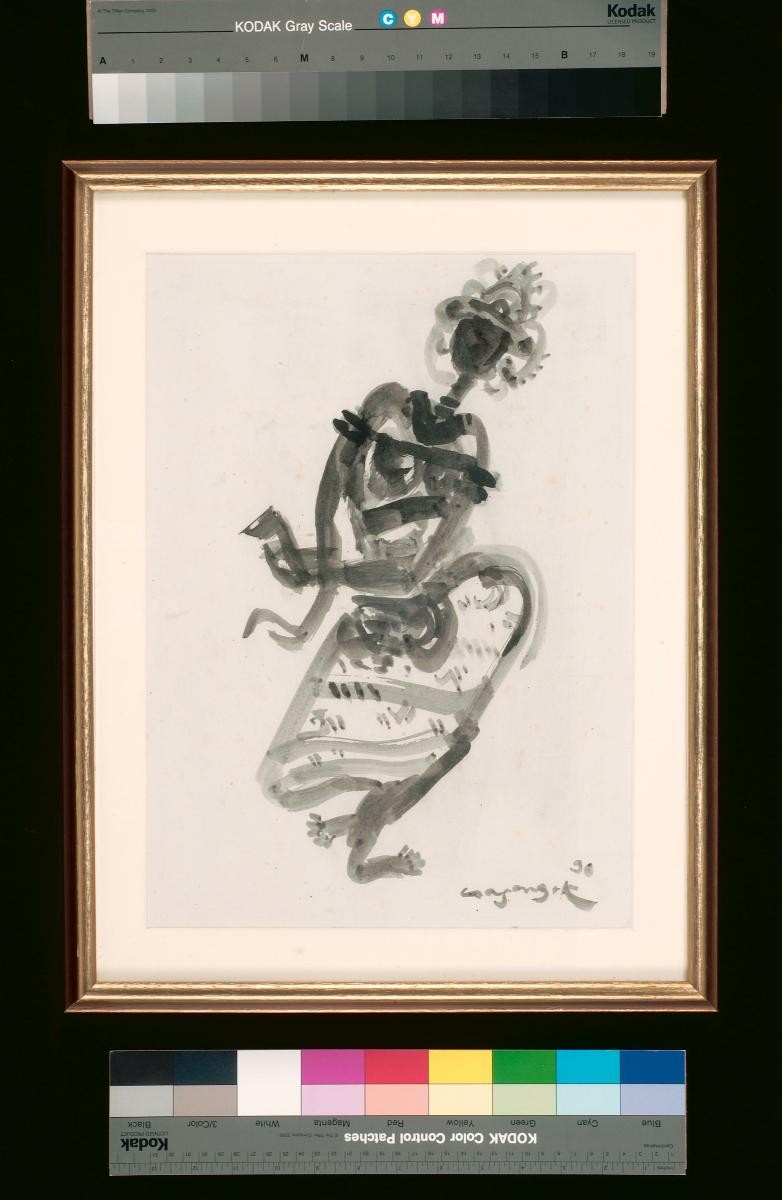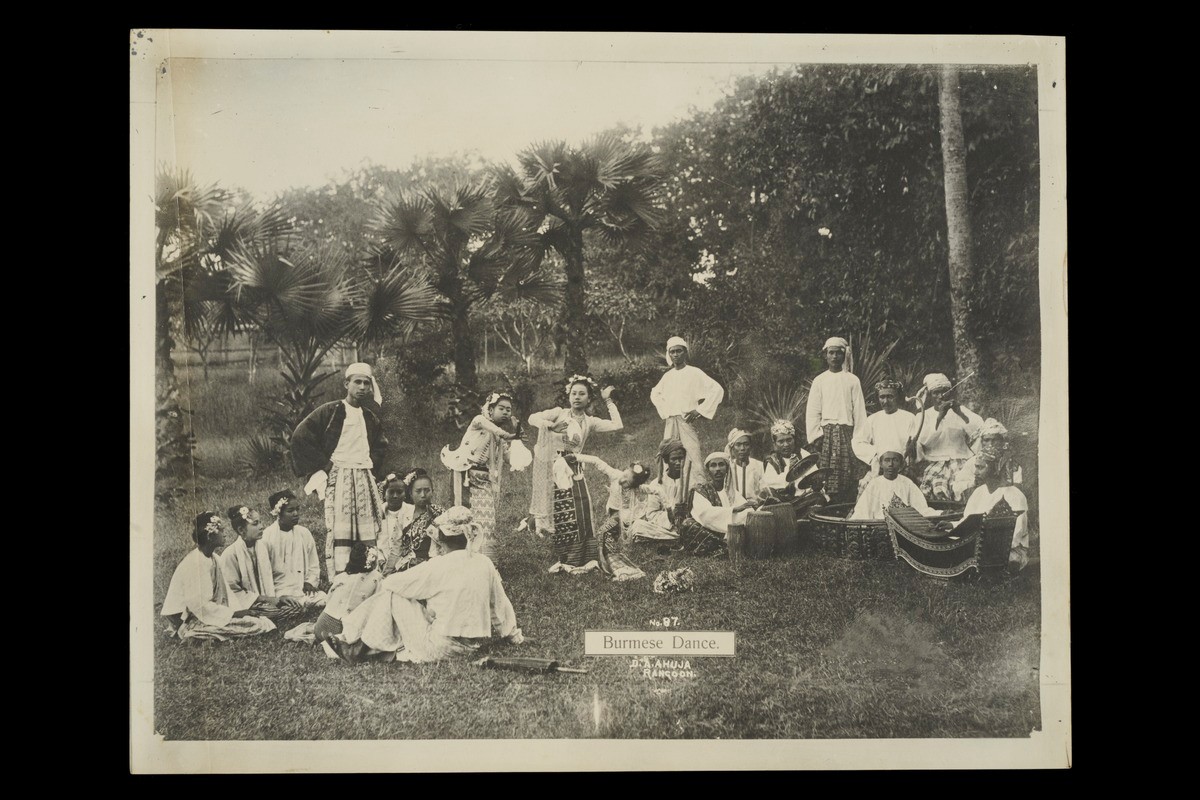

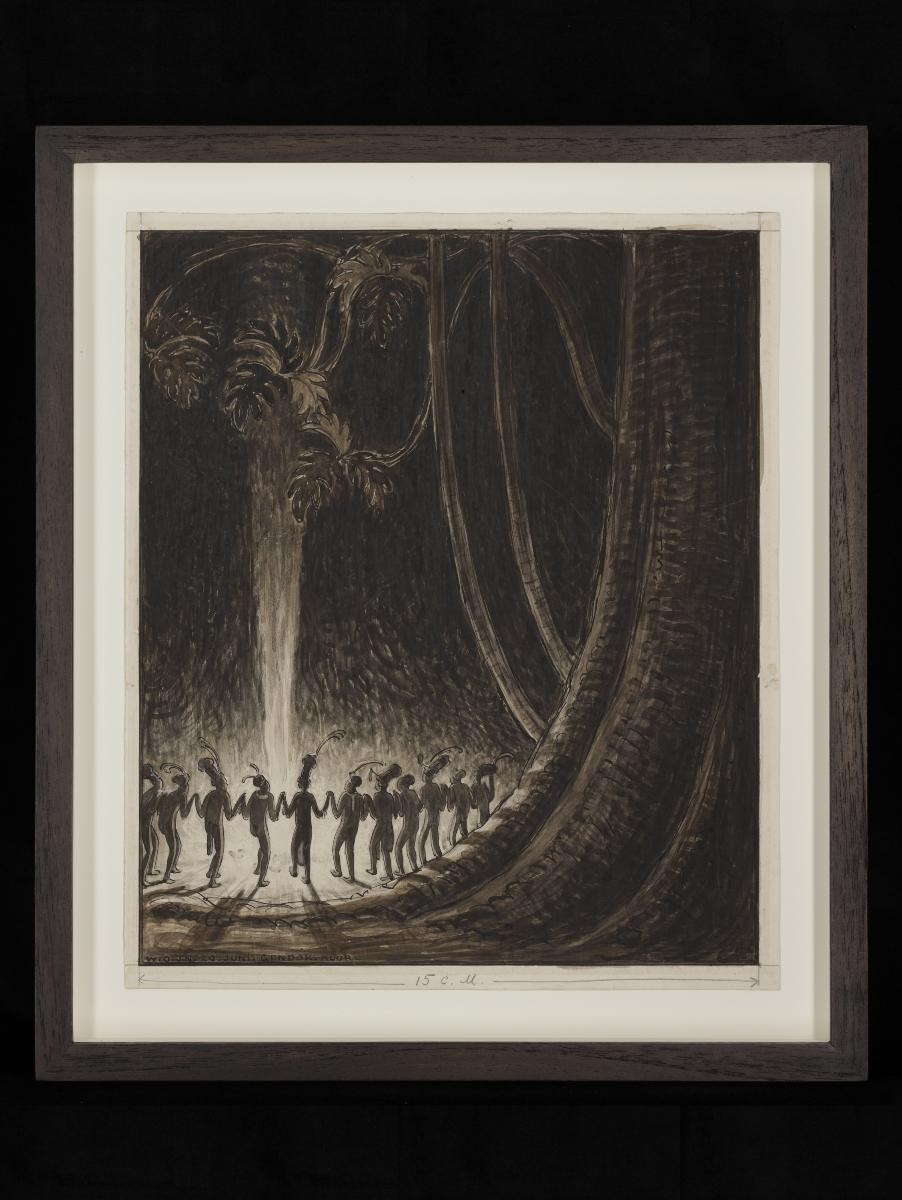
Object size: 32.4 x 27.3 cm
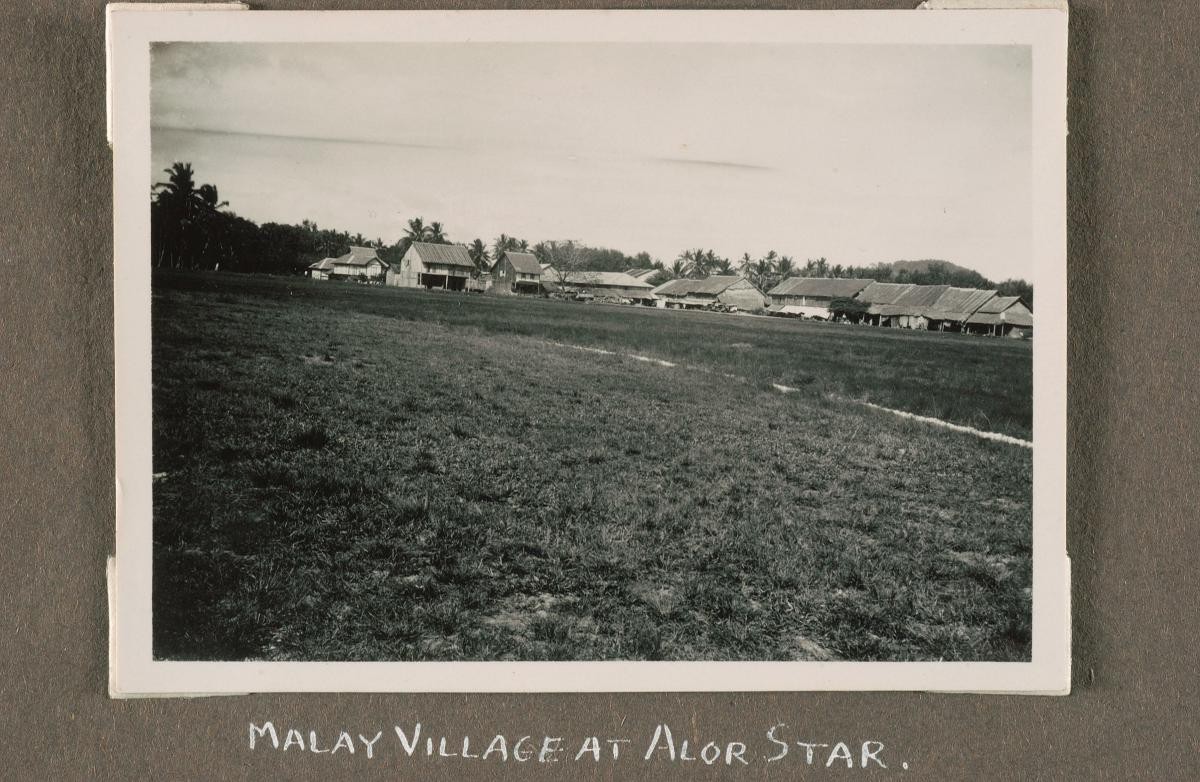
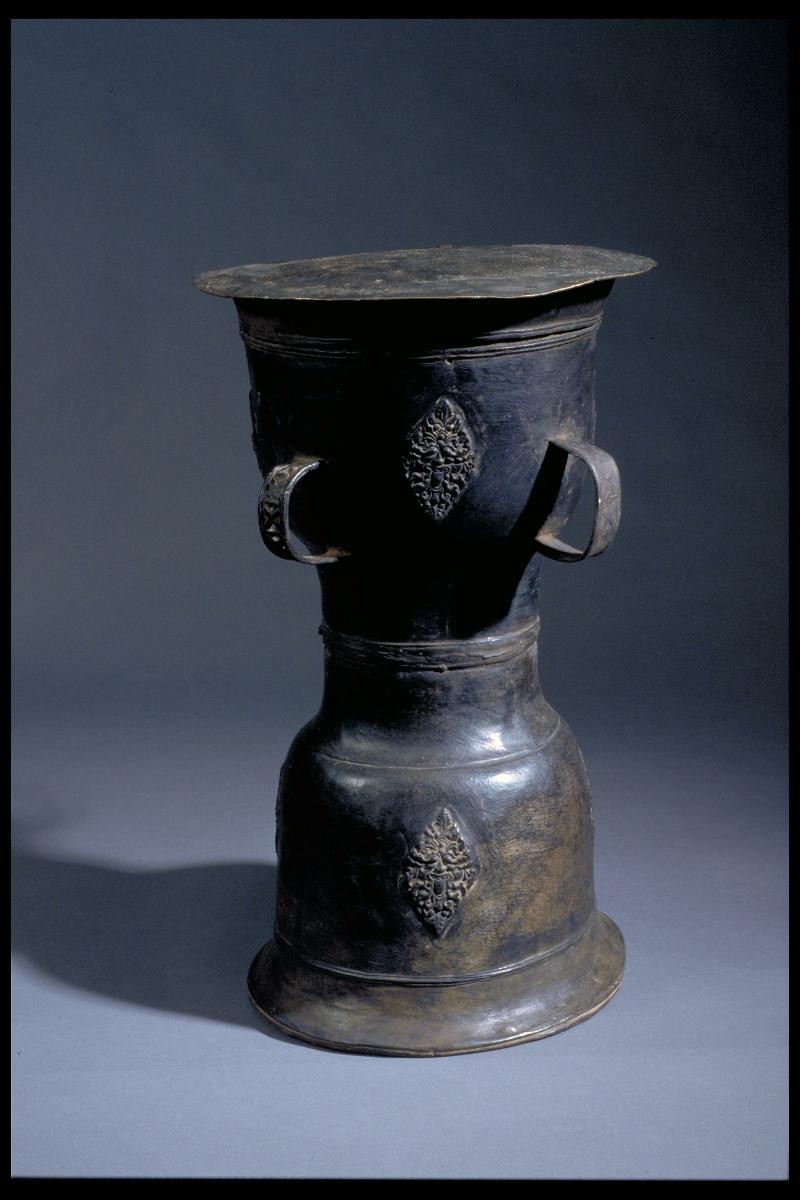
WOJ Nieuwenkamp (1874-1950) is known as the first European artist to arrive in Bali in 1904. The story of modern art in Bali is often written from the point of European artists arriving upon Bali. In Nieuwenkamp’ s case, Bali is brought home with him to Europe. His publication, Bali en Lombok (1906-1910) played a key role in inscribing Bali in the European imagination. In its introduction, he also called out to artists to visit the then-Dutch East Indies (present-day Indonesia). Numerous artists from Europe heeded this call. During his lifetime, Nieuwenkamp’ s role as a Balinese expert was well-known. He made meticulous, and annotated studies of material culture, landscape and environment in Bali, and elsewhere in the Dutch East Indies (today, Indonesia). Painted during Nieuwenkamp’ s fourth trip to the Dutch Indies in 1917-1918, he visited the island of Alor to study the evolution of the moko drum. His journals indicate that he fell asleep numerous times only to be woken up by the intense drumming and chants. Such studies were subsequently used to illustrate his prolific output of articles and books that explored how certain craft and performance traditions took shape and spread across the archipelago. Furthermore, Nieuwenkamp had accumulated a significant collection of artefacts from the East Indies. These materials would contribute to several significant exhibitions in Europe, including: the first exhibition of Old Javanese and Contemporary Balinese Hinduism exhibition organised by the Colonial Institute at the Stedelijk Museum in 1915. By the 1920s, WOJN had become the de-facto authority on all matters Balinese having written and exhibited widely on the topic. In 1924, he was honoured with a 7-room retrospective at the Kleyklamp Gallery in the Hague.