
TL;DR
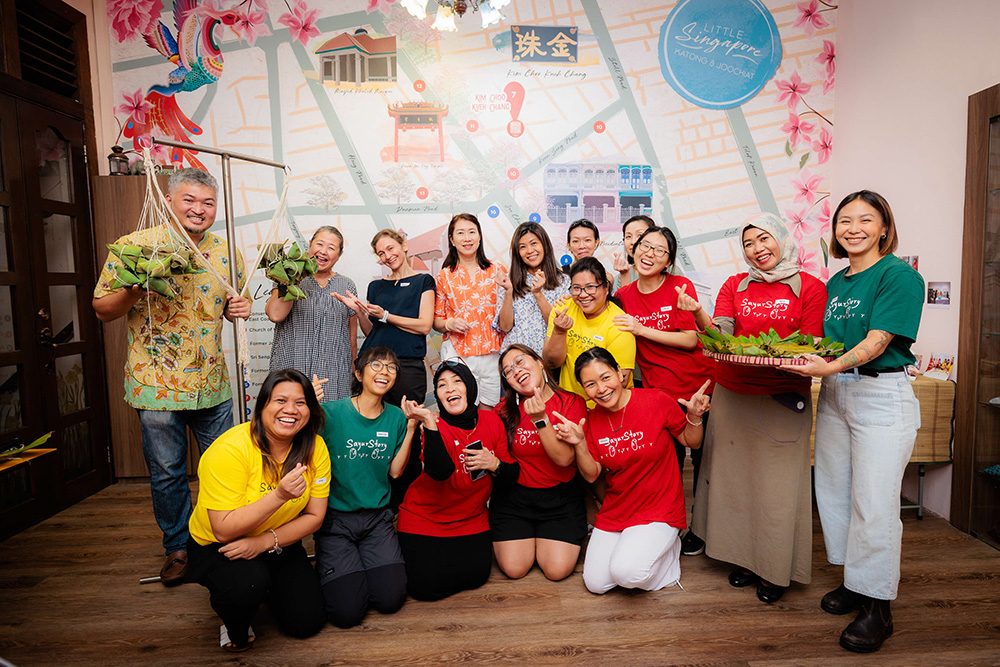
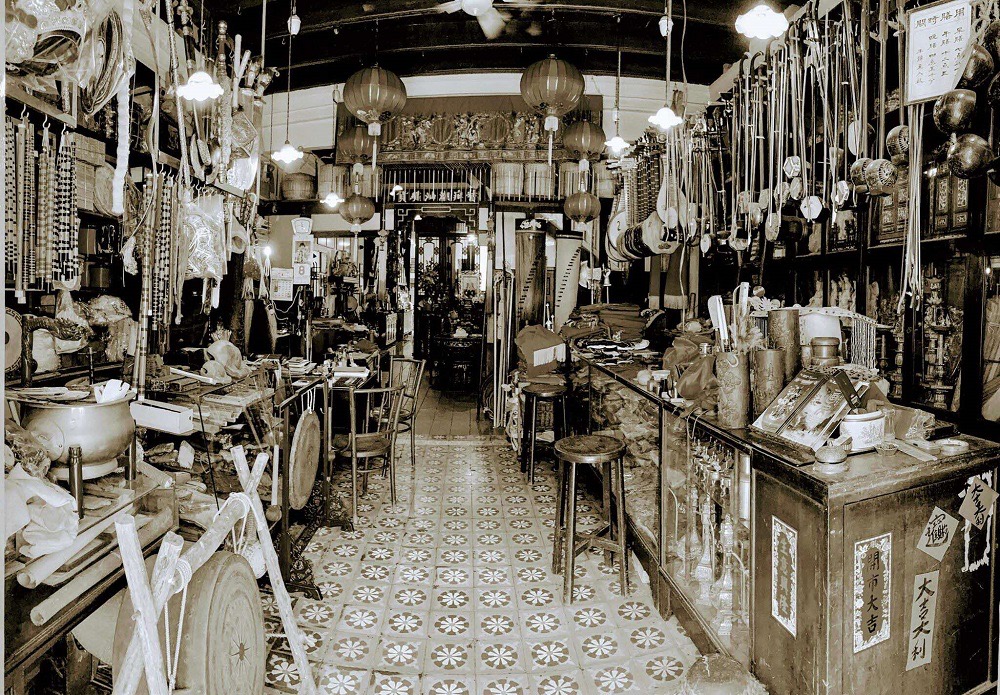
Eng Tiang Huat, a traditional Chinese cultural goods shop established in 1938, evolved from a thriving Chinatown business importing musical instruments and opera costumes to a heritage enterprise preserving Chinese craftsmanship, surviving urban renewal and economic changes through three generations.The Chinese cultural goods at the present premises in Geylang Lorong 24A. Photograph courtesy of Jeffrey Eng.
Shops play a key role in the economic and socio-cultural life of a community that is often neglected. Many Singaporeans grew up with vivid memories of the shops in their childhood and neighbourhood. These humble businesses had history and personality—perhaps it was the character of the shopkeeper or the things they sold. We look at one such shop with both features in an old Teochew part of Chinatown—Eng Tiang Huat.
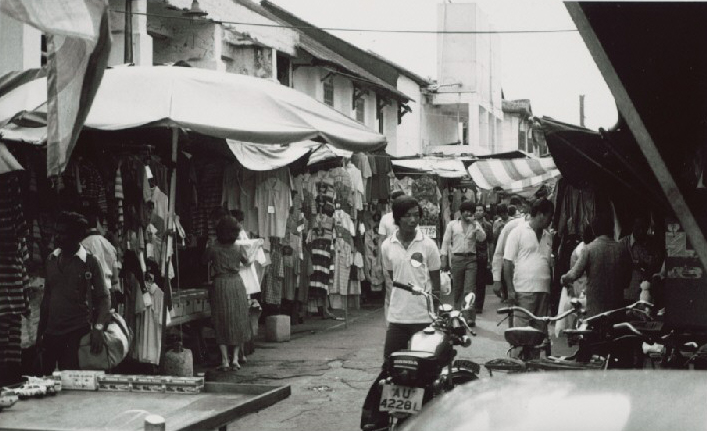
The streets of Chinatown before urban renewal in the 1960s were lined with many memorable shops. Si Jing wrote of her mother searching through the various clog shops for a particularly skilled clog maker, a sifu (“master”), as he could have been poached by another shopkeeper.[1] Geraldene Lowe-Ismail was amused by the awkward English on some of the shops’ signboards, like “Shorty Dies Clothes” (Shorty was the name of a man who dyed clothes at Sago Street), and “Chinese Wine Treaders Shop” (instead of Traders).[2]
Migrant Origins
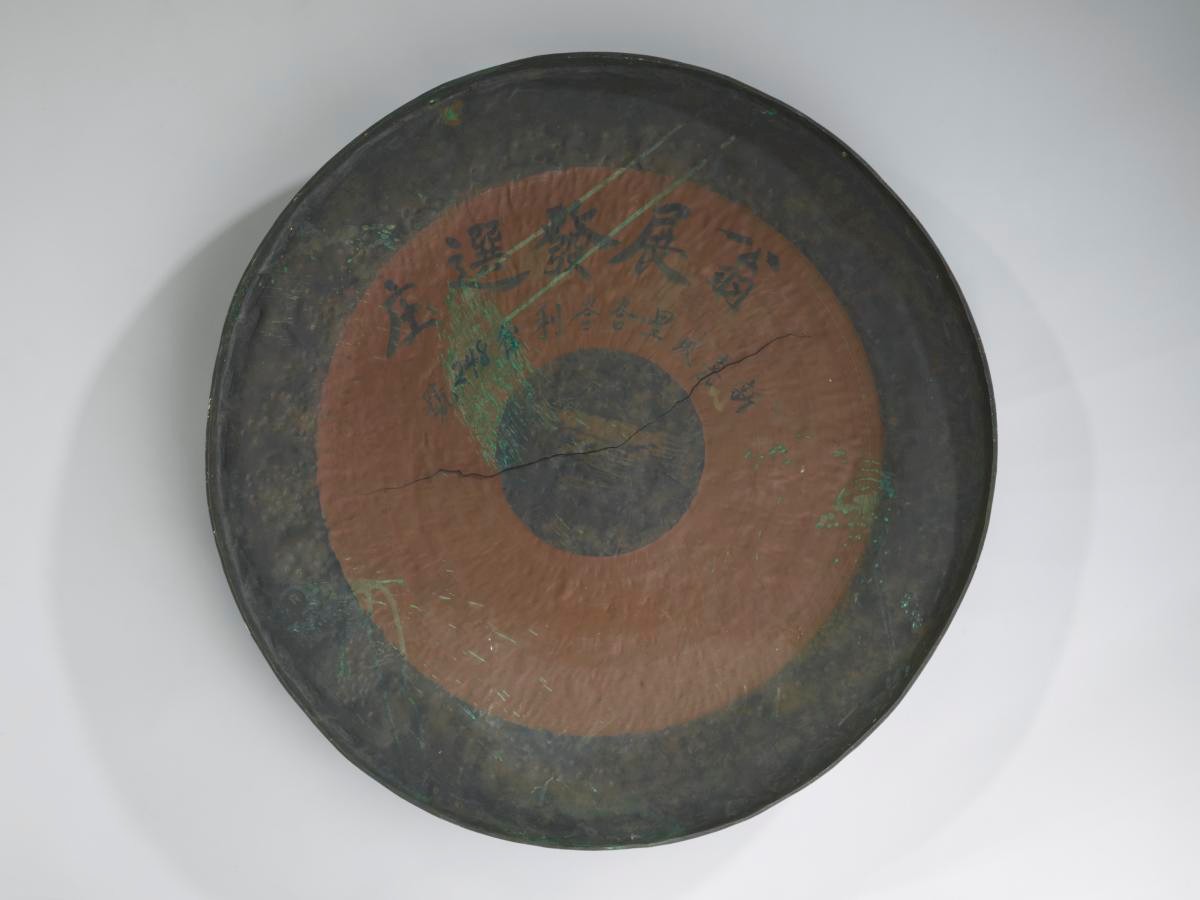
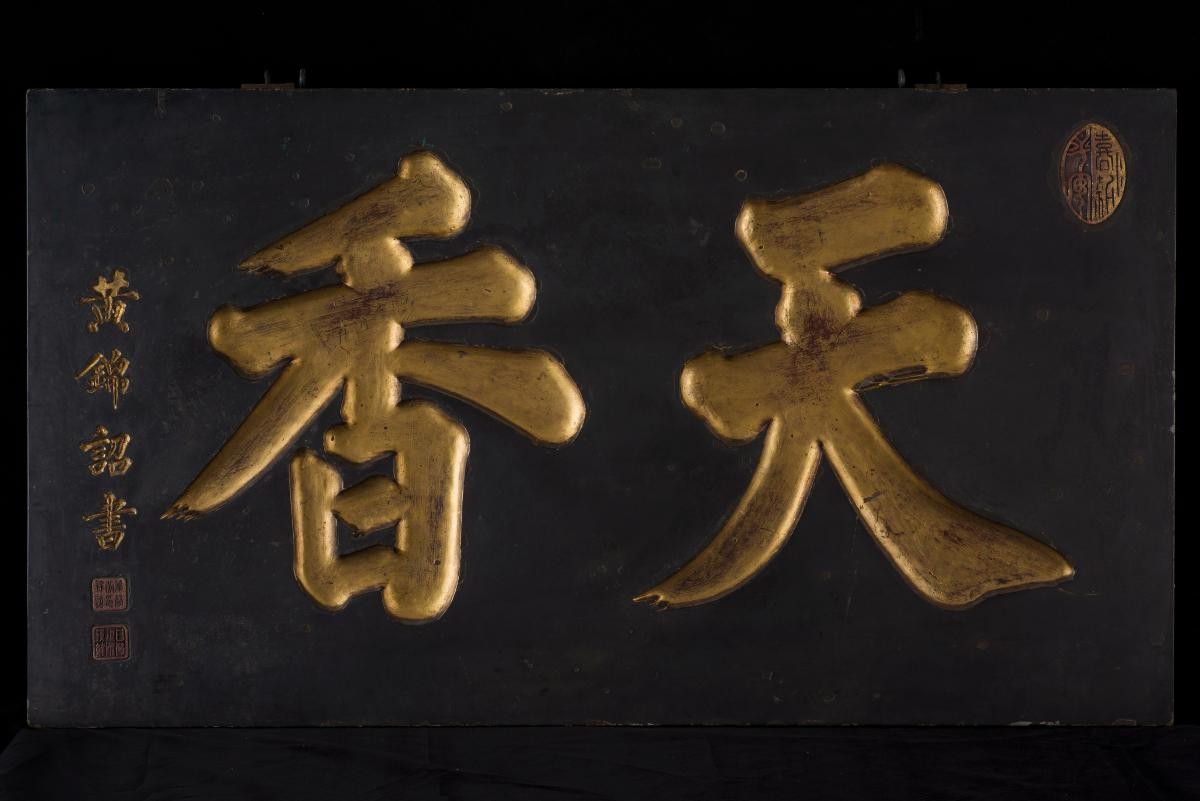
Eng Tiang Huat was a small family business at 15 Merchant Road. This was a Teochew-speaking area along the Clarke Quay stretch of the Singapore River. The landmark here was the famous Ellenborough Market built in 1845, which burned down in a fire in 1968. Many of the Teochews were small traders, dealing in foodstuffs, marine produce, and provisions from the region. Eng Tiang Huat was one of them, but its imports were quite different. These were traditional Chinese items ranging from musical instruments like the pipa and erhu to opera costumes, furniture, religious embroidery, and weaponry of the sort used in the Hong Kong martial arts films. Jeffrey Eng, the present proprietor from the third generation, calls these Chinese cultural goods.
Another photo of the shop with Eng Song Leng inside (in white shorts), late 1970s. Photograph courtesy of Jeffrey Eng.
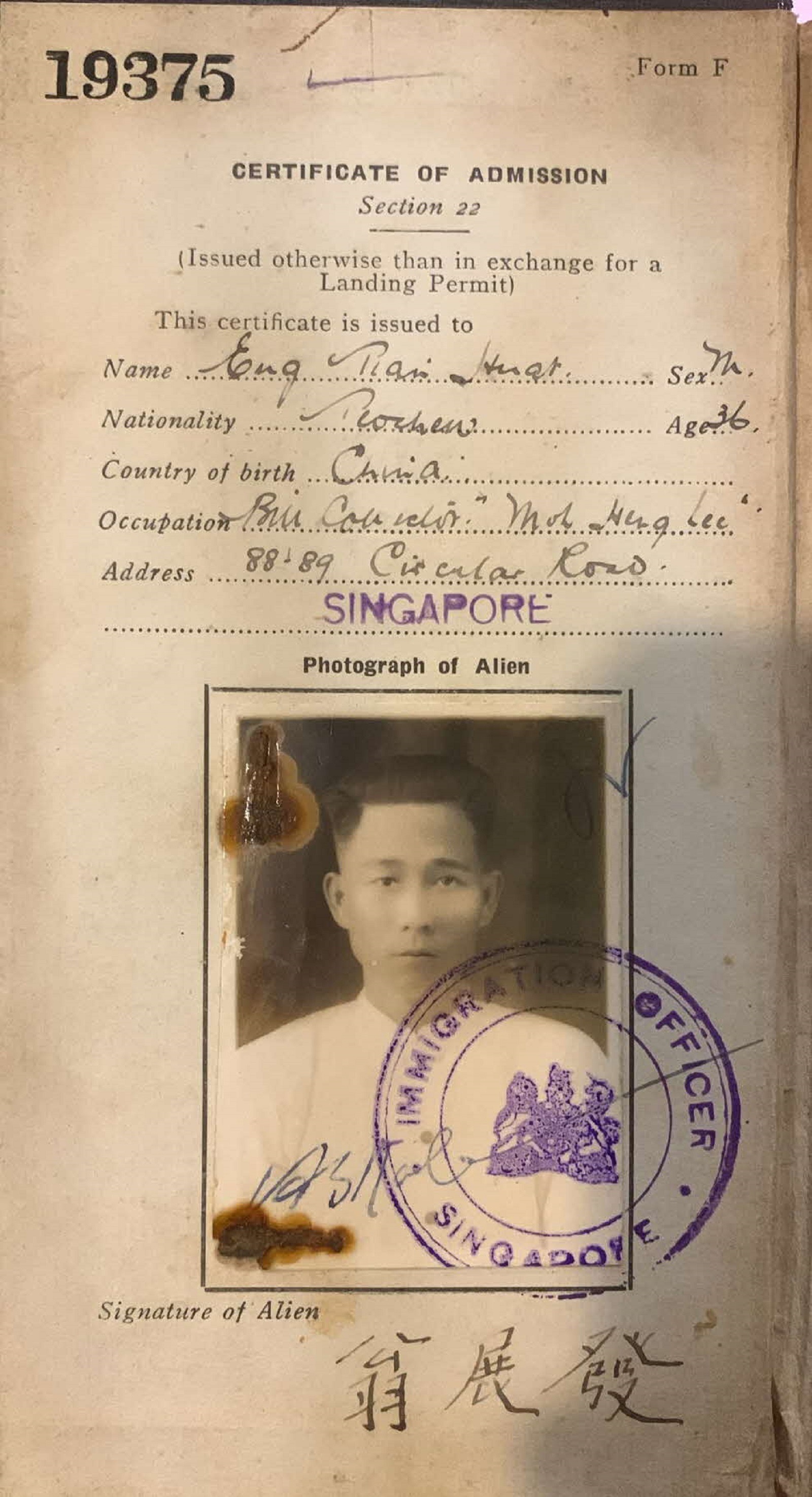 Eng Tiang Huat’s immigration papers, c.1941. Photograph courtesy of Jeffrey Eng.
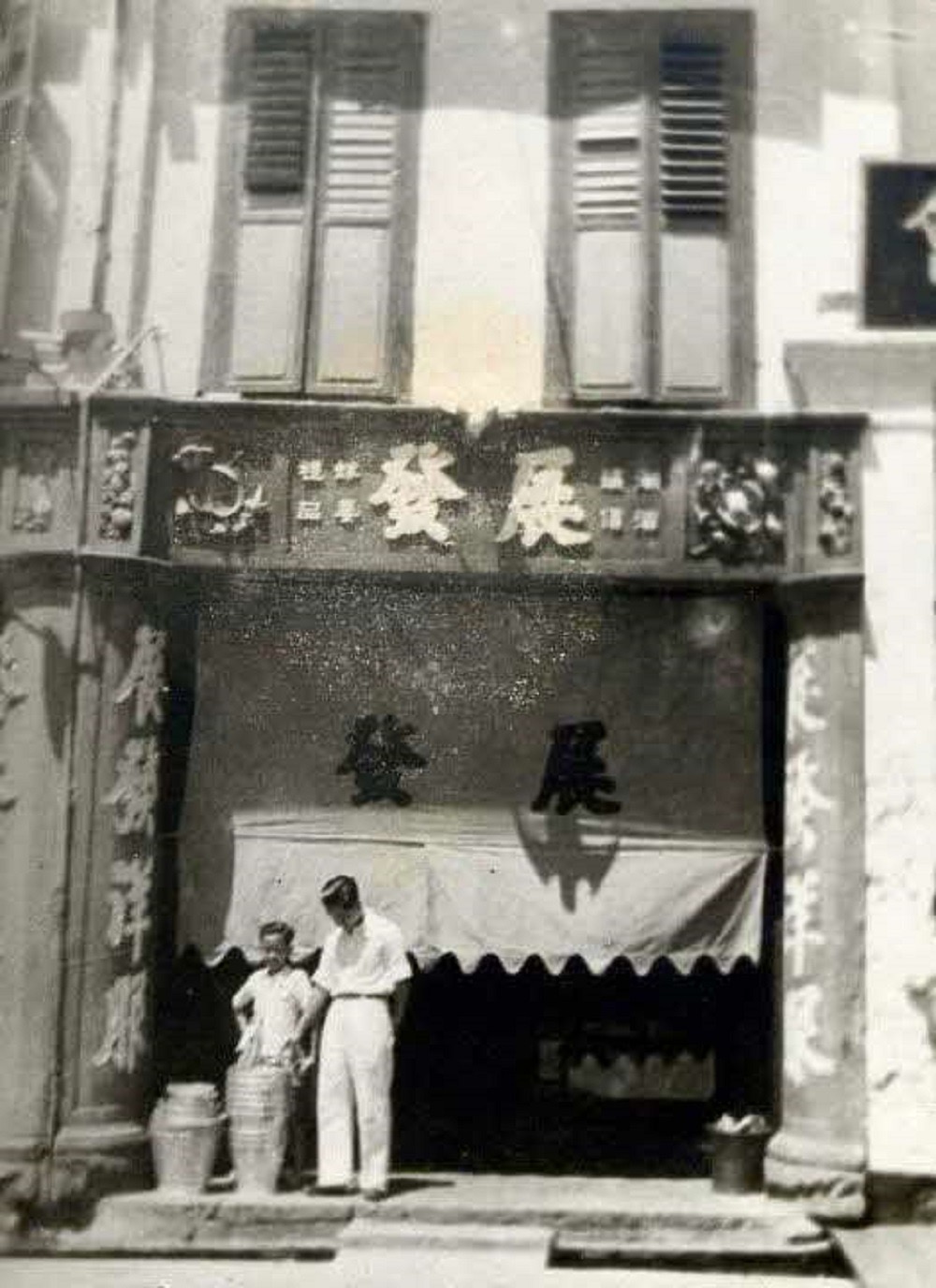 Eng Tiang Huat at Merchant Road with young Eng Song Leng and an unknown adult, late 1940s. Photograph courtesy of Jeffrey Eng.
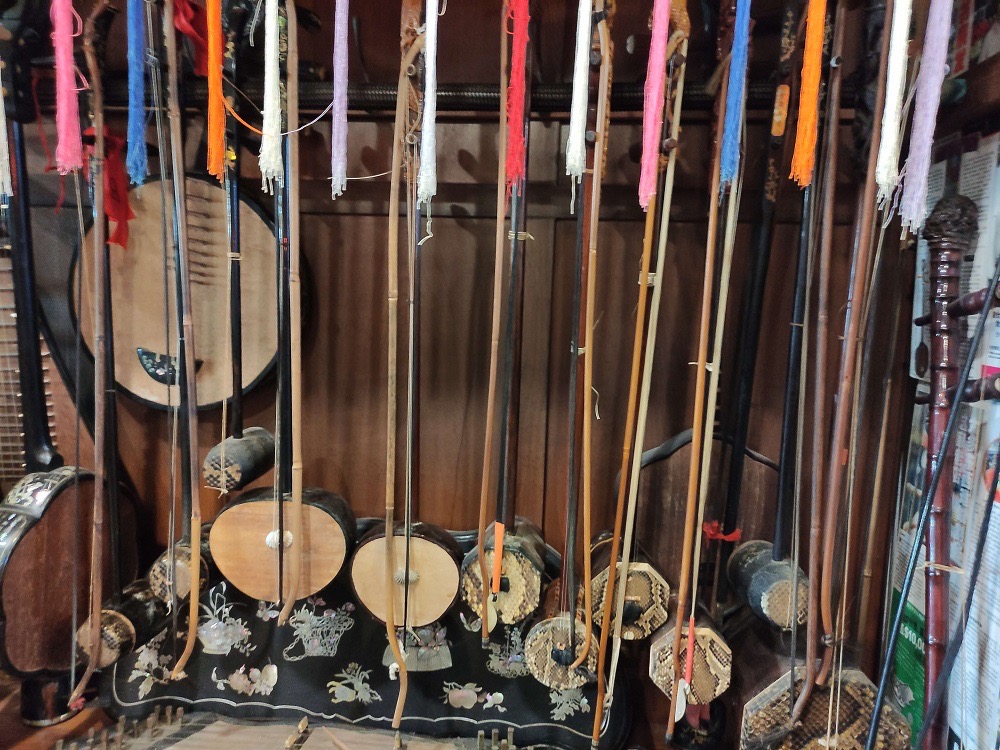 Pipa at Eng Tiang Huat. Photograph by Loh Kah Seng.
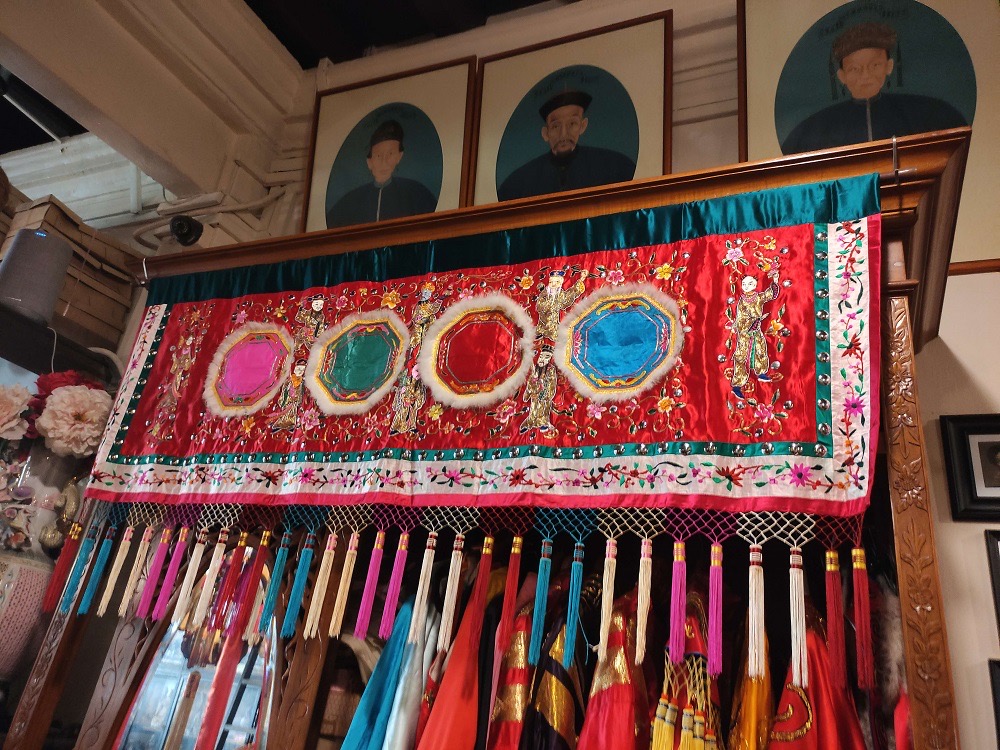 Traditional embroidery. Photograph by Loh Kah Seng.
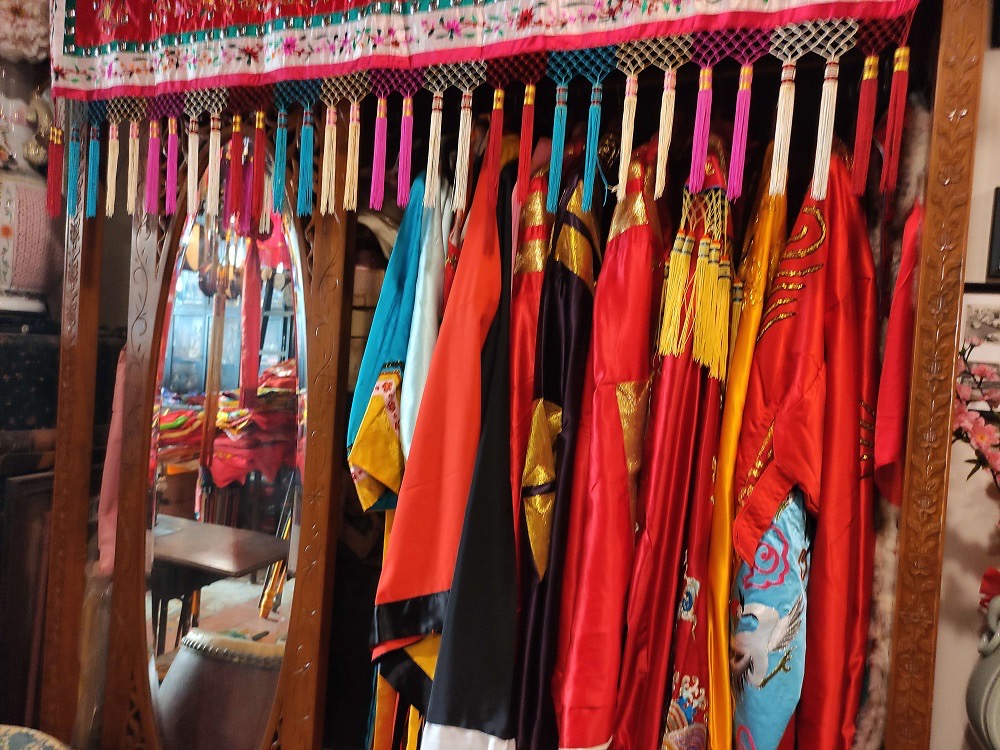 Opera costumes. Photograph by Loh Kah Seng.
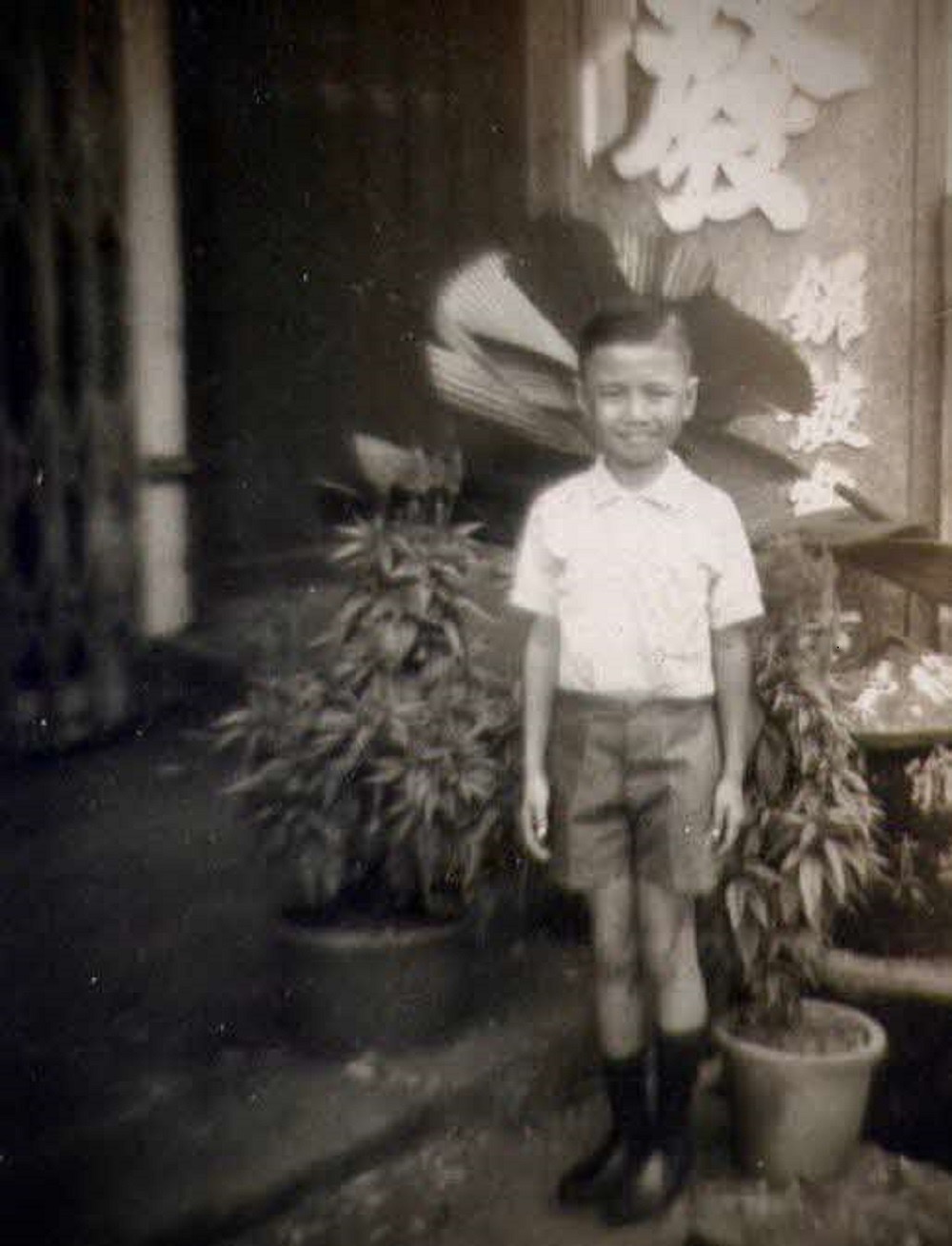 Eight-year-old Jeffrey Eng outside the shop during the Chinese New Year. Photograph courtesy of Jeffrey Eng.
Established in 1938, Eng Tiang Huat took its name from its founder, a Teochew from Chenghai, Chaozhou, who came to Singapore three years earlier. Like most Chinese immigrants, Tiang Huat initially worked for someone else—as a bill collector for a hardware business at Circular Road called Moh Heng Lee. But he soon went into business, opening a tailor shop making mandarin shirts before pivoting to Chinese cultural goods. It was a common experience for his generation of Chinese shopkeepers who were immigrants. They ventured into business for various reasons—they were unable to find a job, wages were too low, or their health was unsuitable for physical work.[3] But there was also a basic wish to set up a business and become their own boss. This desire for autonomy separated the shopkeeper from the average migrant who remained an employee. This was similar to shopkeepers in the West, who were reputed for their individualism and independence.[4]
Like most shops in Chinatown, Eng Tiang Huat was based in a shophouse. As its name suggests, the shophouse was an excellent arrangement for small-scale business. This was conducted on the ground floor while the family lived upstairs. Because Tiang Huat had an extended household living together, the immediate family dwelt on the ground floor in the area behind the shopfront while the relatives lived upstairs. There was still space on this floor for storing inventory (between the shopfront and sleeping area). When an aunt and her family moved out, their space, as well as the attic, was used for storage too. The use of space by a shophouse business was flexible and pragmatic.
Business & Trade
Although modest in size, Eng Tiang Huat was not an insular shop confined to the local economy. Its business included dealings with Chinese suppliers and buyers in China, Hong Kong, Japan, Southeast Asia, and Australia. This regional trade utilised ethnic and kinship networks, as most Chinese businesses did during the colonial era. But doing business in China before the mainland opened up also required other networks. The trade was not direct, for foreign businesses had to go through a state agent to obtain their goods from Chinese firms, which were state-owned. As an intermediary, the agent provided a degree of security for the Chinese government, but it also meant sometimes mistakes were made and Eng Tiang Huat received the wrong shipment.
Doing business in the mainland was not as open as it is now. It was facilitated by the Singapore Chinese Chamber of Commerce, which regularly organised trade missions to China for firms that wanted to do business there. For cultural goods, this was even less straightforward, as they were not listed in the Chamber’s business catalogues, which were mainly for food and machinery. To find the suppliers of cultural goods, Eng Tiang Huat sent a relative to attend business expositions in China, which were by invitation only. They found out that cultural products were listed under light industry! Despite the hurdles, the family was able to buy in bulk from suppliers in various cities and areas like Shanghai, Beijing, Suzhou, and native Chaozhou. They realised Wuhan in particular was a good source of Chinese percussion instruments. The 1950s to early 1980s were a boom period for the business.
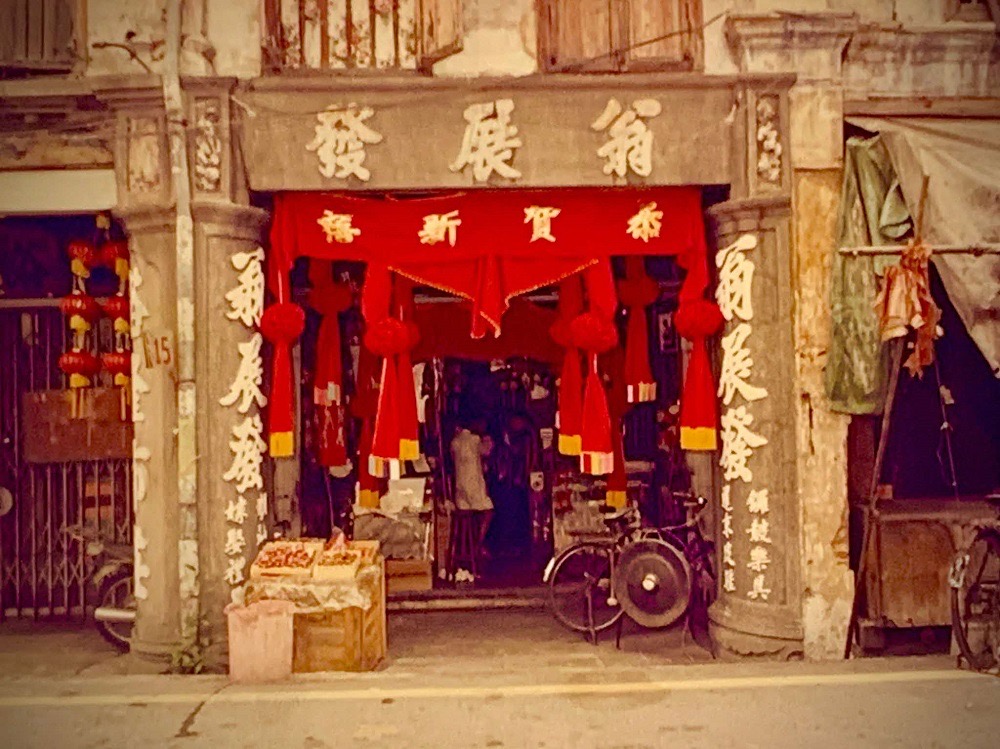 Another photo of the shop with Eng Song Leng inside (in white shorts), late 1970s. Photograph courtesy of Jeffrey Eng.
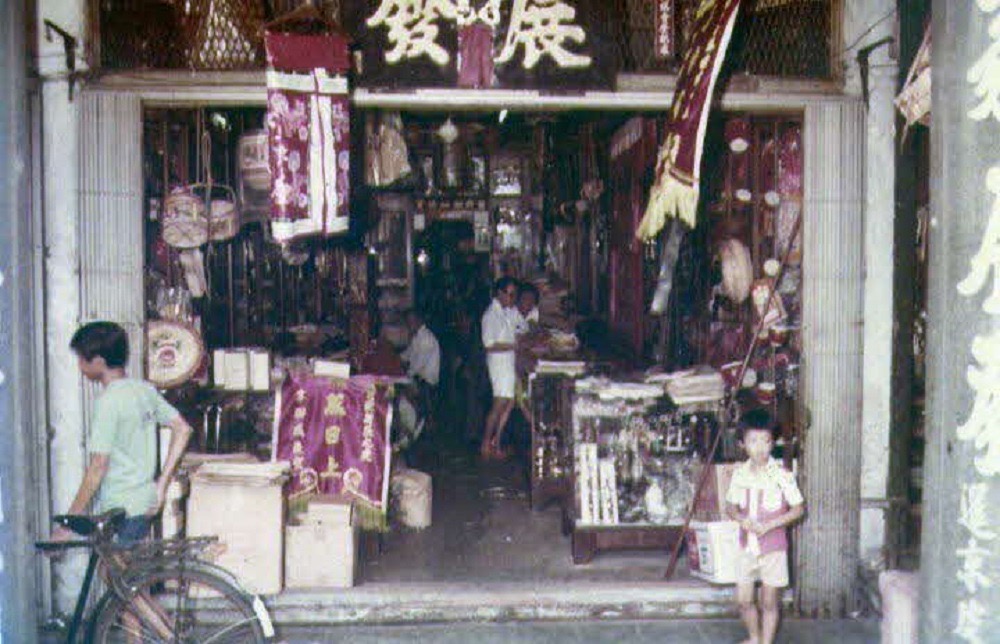 Eng Tiang Huat, c.1980s. The red cloth decoration made the shop stand out. Photograph courtesy of Jeffrey Eng.
However, the opening up of China in the 1980s had the opposite effect. Eng Tiang Huat could now do business directly, as the enterprises there had been privatised. They were able to contact fellow Teochew suppliers of tapestry and embroidery in Chaozhou. Guanxi (relations between business partners) was instrumental in this, as it traditionally had been. But this guanxi was different from the previous ties based on kinship. Tiang Huat’s son, Eng Song Leng (Jeffrey’s father), had taken over the business in the 1960s. He told business researchers Thomas Menkhoff and Chalmers Labig in the 1990s that from his experience, “guanxi was based on material interests rather than any ganqing (affection) considerations based on primordial blood links”.[5] Change was afoot for traders that did business in China.
The opening of China’s economy had a net adverse effect on Eng Tiang Huat’s business. Its middleman role shrank as both local and regional buyers were able to obtain the cultural goods directly from the mainland. Lifestyle changes in Singapore also played a role, as Western-made furniture became more popular than traditional Chinese-style chairs and tables. Families were discarding their old furniture for new ones when they moved out of shophouses and kampongs to Housing and Development Board flats. The underlying factor was Singapore’s rapid economic development. As people attained a middle-class standard of living, they embraced a modern consumer culture that leaned towards Western products.
Travails of Relocation
Along with changes in the business came a shift in its location. In the 1980s, the ageing Merchant Road shophouses were acquired by the government and demolished as part of the construction of the Central Expressway. Song Leng did not want to leave, and his family was in fact the last one on the street to move out. He had to relocate his family home and business elsewhere. He was fortunate in this sense. He had previously bought a shophouse at 284 River Valley Road and another at 10 Geylang Lorong 24A, which was used for storing the musical instruments. He viewed these investments as branches of Eng Tiang Huat for his children to run.
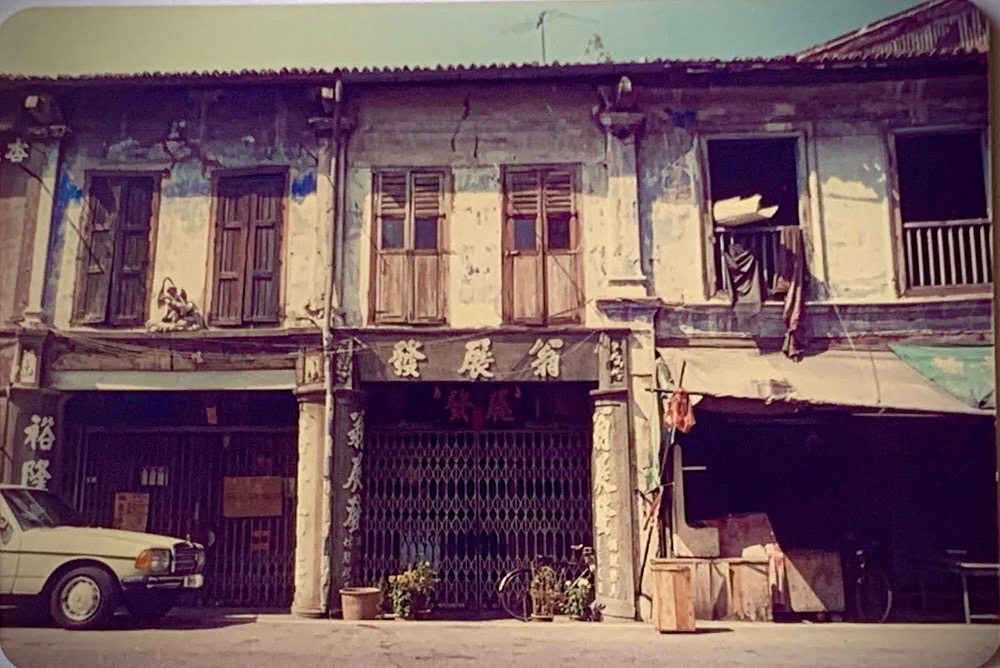 Eng Tiang Huat just before relocation in the 1980s. The shophouses are more rundown, showing a lack of maintenance. Photograph courtesy of Jeffrey Eng.
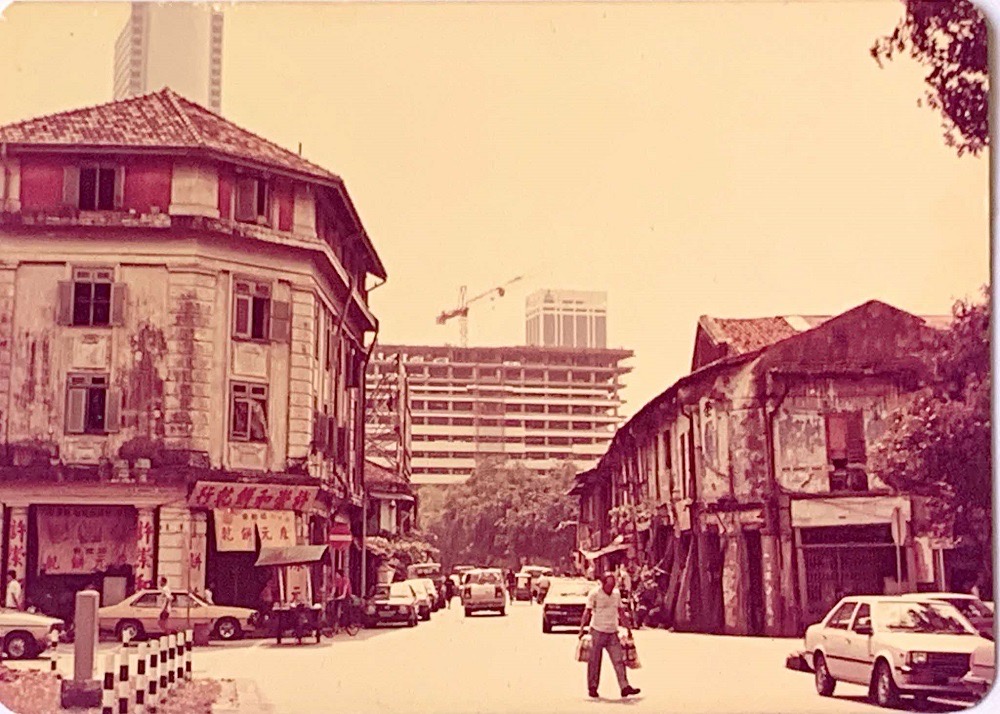 Merchant Road showing its age, c.1980s. Photograph courtesy of Jeffrey Eng.
Song Leng decided to purchase a third shophouse for the business at Neil Road, part of the Tanjong Pagar conservation area. He submitted a lower bid than his competitors, but to his surprise, he was successful. This was likely because Eng Tiang Huat was a heritage business and suitable for a conservation area. Buying shophouses was quite unusual at the time. They had been perceived as outdated, with a long history of filth and harbouring diseases like tuberculosis. Most businessmen then would purchase a landed property or some other private housing, but Song Leng wanted a property that could serve both housing and business purposes. This proved to be far-sighted as shophouse rents surged after rent control was lifted in the late 1980s.
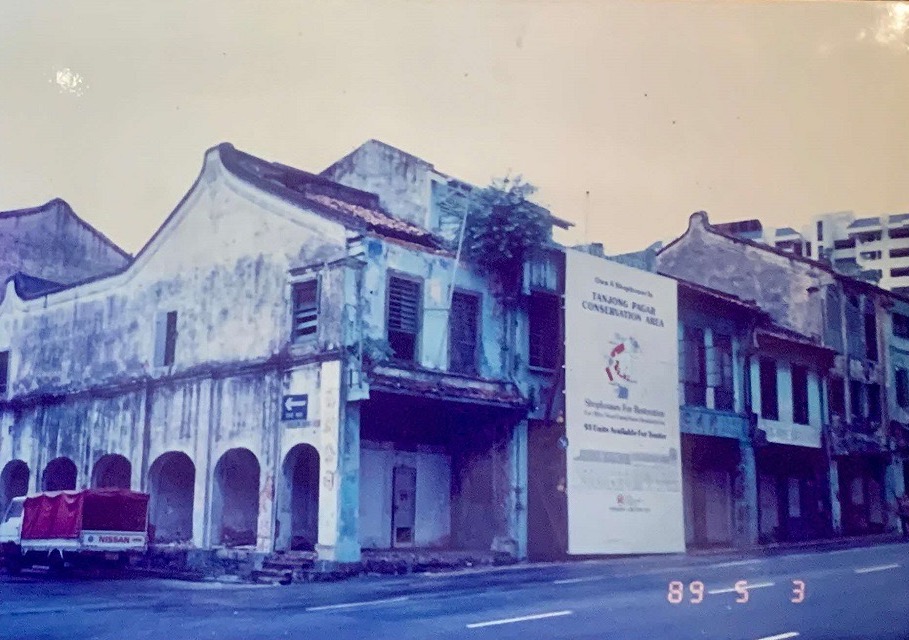
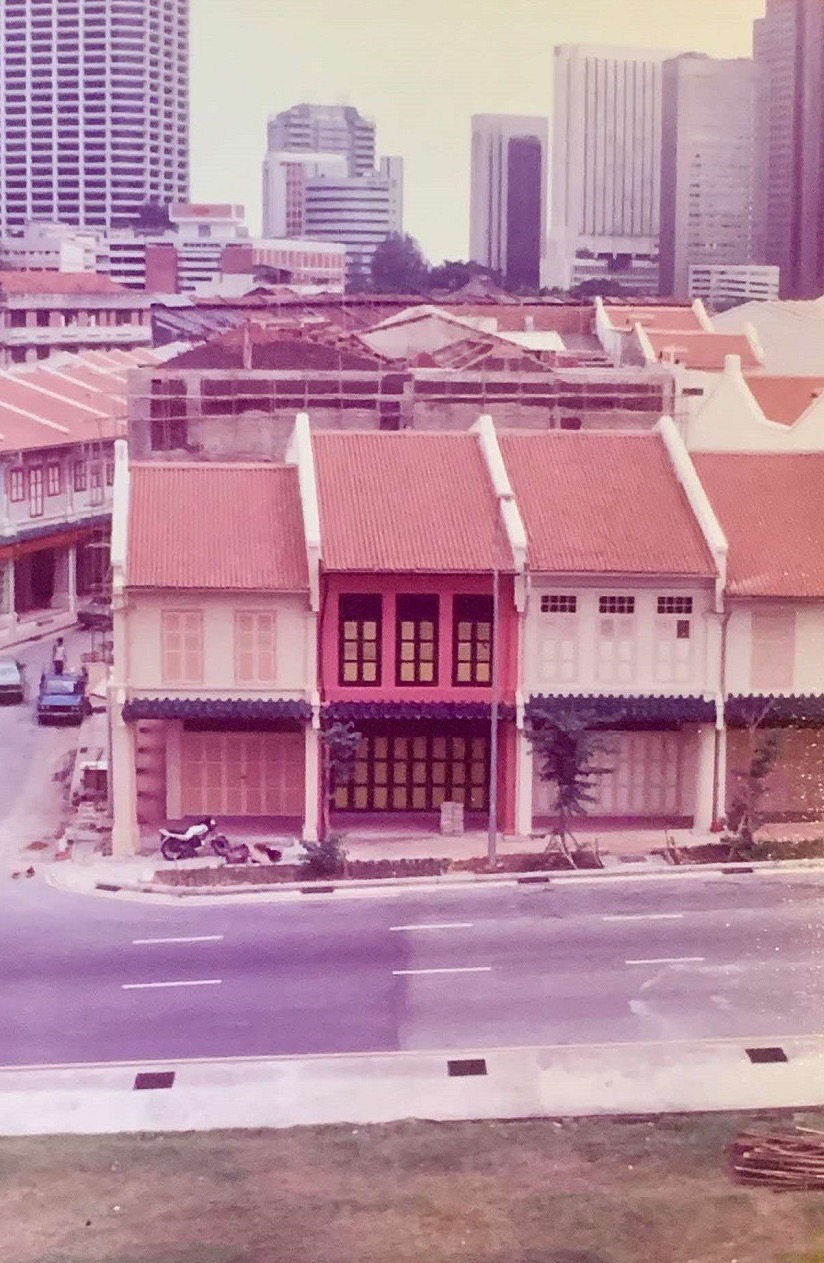 Eng Tiang Huat’s conserved shophouse at Neil Road. Photographs courtesy of Jeffrey Eng.
Renovating the Neil Road shophouse was a learning experience. This was no ordinary shophouse but one governed by the Urban Redevelopment Authority (URA)’s conservation guidelines. The Engs found the actual size of the premises to be smaller than they thought, with only two windows and a low roofline permitted. Upon appeal, this was increased to three windows and a higher roofline. Furthermore, in line with conservation guidelines, they had believed traditional timber flooring would be used, but this was rejected by the Fire Safety Bureau for being unsafe. The URA had to concede, so the family erected a fire wall in the shophouse while building a concrete floor with wood underneath it.
For all the renovation struggles, the Neil Road shophouse was not a commercial success. Chinese cultural goods were a sunset industry. The family tried its best to adapt, selling or renting their inventory to local emporia, departmental stores, schools, and museums, and for Lunar New Year celebrations. But these were against the grain of the trade. Another difficulty was complying with government regulations. Eng Tiang Huat had to obtain licences for the weapons, which were classified as arms. Such compliance entailed expenses and overheads which hurt small businesses. As Jeffrey pointed out, because cultural goods were not necessities, his business was the first to be hit in bad times and the last to recover.
Culture & the Community
Despite declining business, Eng Tiang Huat was entering a new chapter in its history. It was not an independent shop that existed only to make money. Like shopkeepers in other countries, it developed ties with the neighbourhood, both in the past and present.[6] Old Merchant Road was a place where, as Jeffrey recalled, everybody knew everybody else. The local residents were curious about this interesting business on the street. They gathered at the shophouse when the latest shipment of cultural goods arrived, interested in its contents. A temple on the road purchased their musical instruments. When the shop closed in the evening, a host of people in the neighbourhood—buskers, lawyers, tourists—descended upon the shop to play the instruments. The street, Jeffrey observed, had a soul then. The neighbourhood was a living community and the shop was a big part of it. Contrary to their reputation, shopkeepers were not fiercely independent.
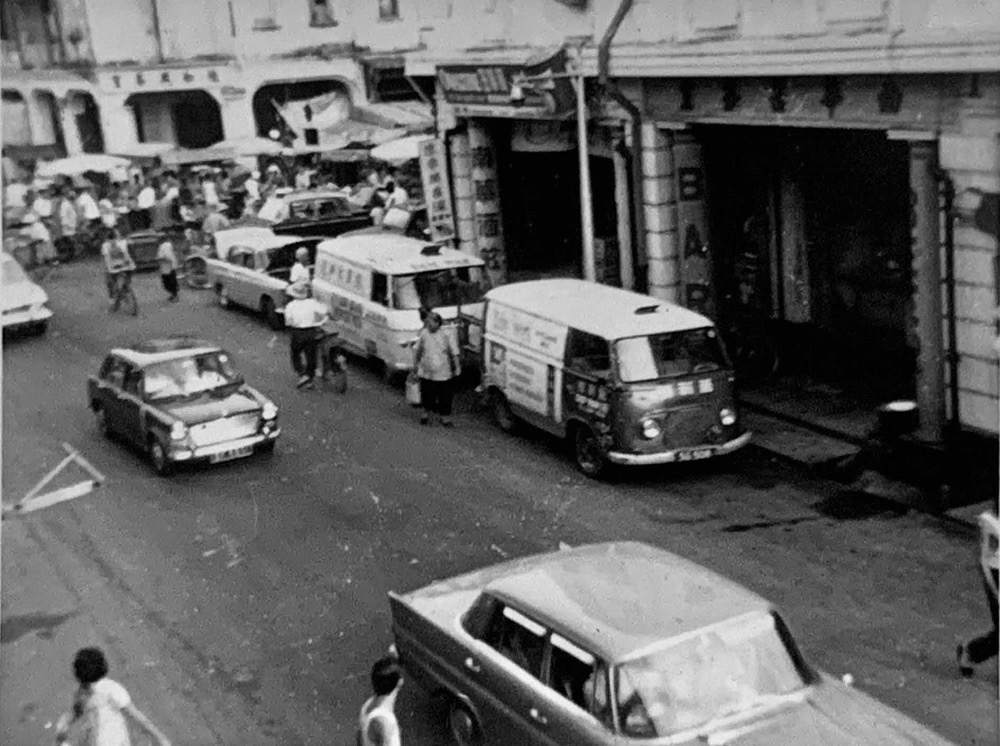 The Merchant Road neighbourhood, c.1967. The old Ellenborough Market, which burned down in 1968, is in the background, filled with makeshift stalls. Along the road are Nam Hua, a shop selling liquor and cigarettes, and the Nam Hua Chiang coffee shop. Photograph courtesy of Jeffrey Eng.
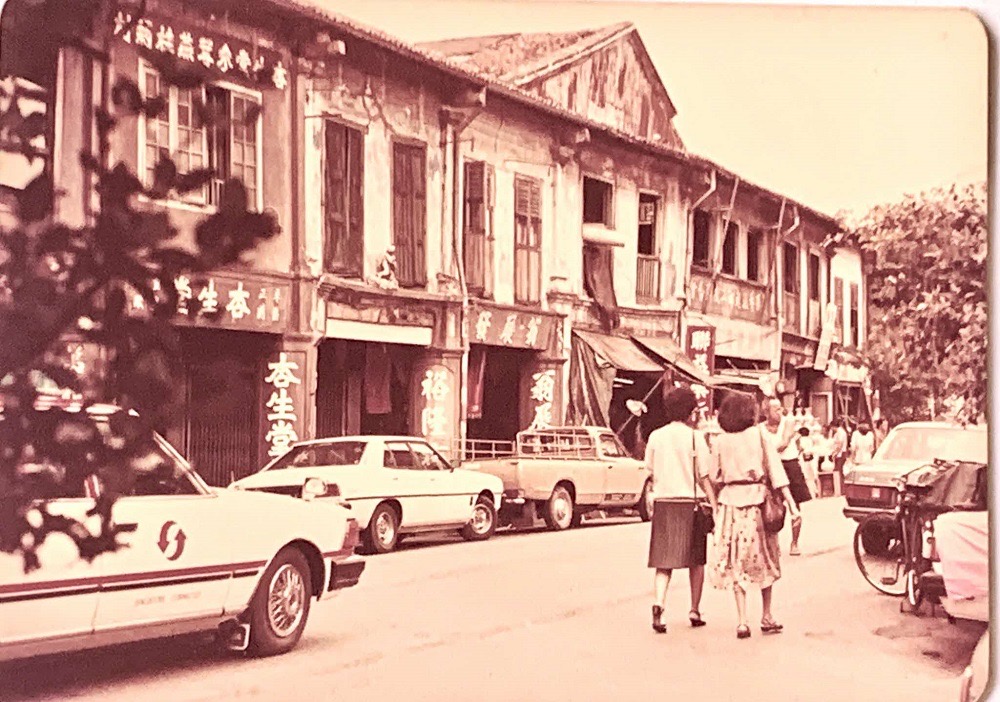 Merchant Road in the 1980s. Photograph courtesy of Jeffrey Eng.
Today, Eng Tiang Huat operates out of the shophouse at Geylang Lorong 24A. It is less of a business than a cultural enterprise, even though its old collections are highly priced. Jeffrey remains passionate about the shop’s cultural heritage, willing to speak to anyone who would listen. Students, visitors, researchers, and heritage buffs have spent countless hours on the premises. He has acquired some skill in repairing the old items his customers brought to the shop. He has become something of a sifu, a master artisan, even though he did not make the items.
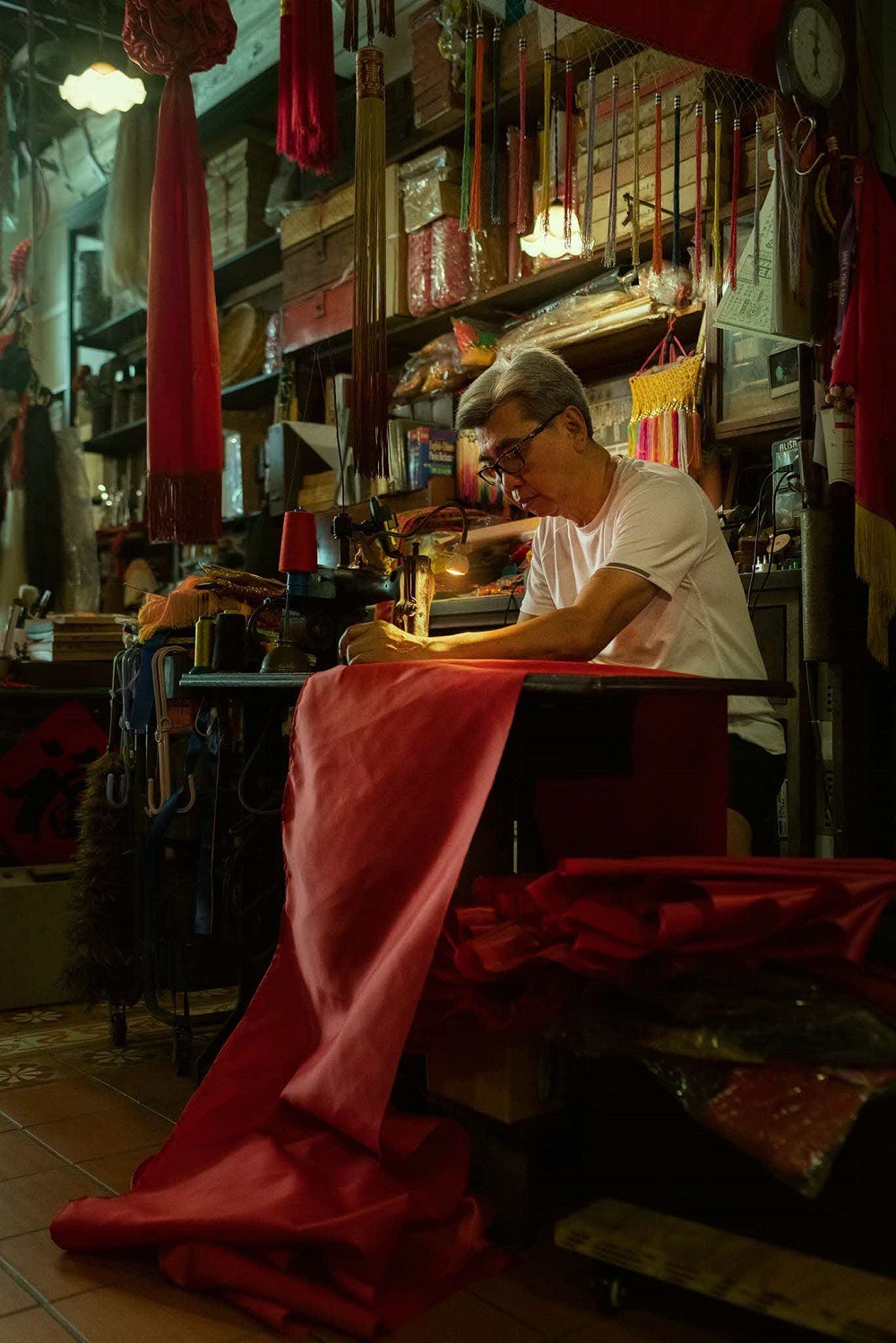 Jeffrey working on embroidery at Geylang Lorong 24A. Photograph courtesy of Jeffrey Eng.
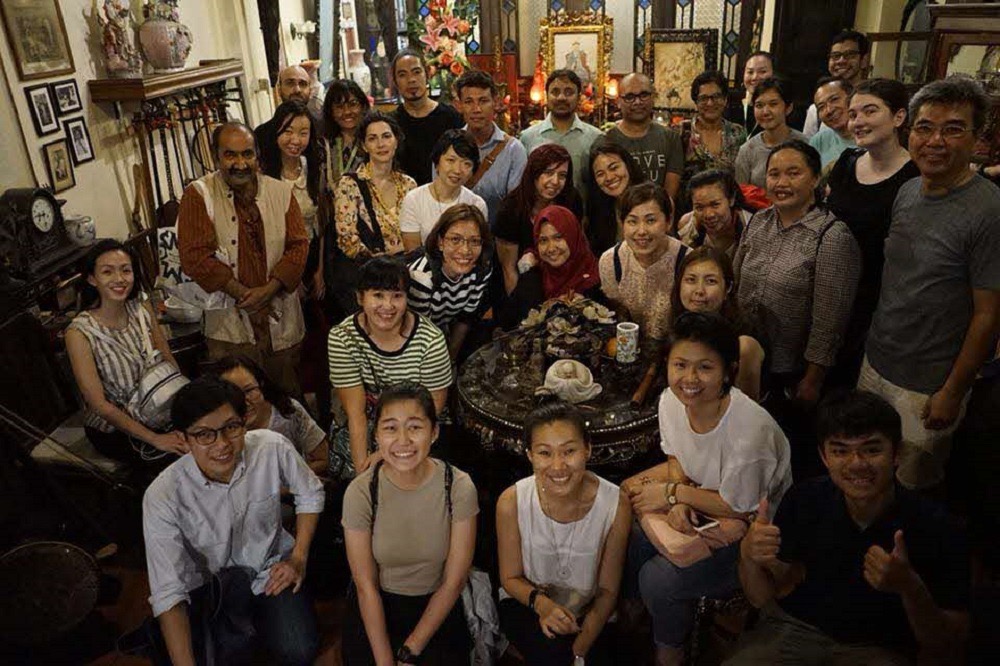 Overseas visitors hear about Eng Tiang Huat’s cultural goods and heritage. Photograph courtesy of Jeffrey Eng.
Historically, both in Singapore and the West, many of the most skilled and reputable shopkeepers have been artisans and craftsmen. They were known for the quality of their wares and services. These shopkeepers were unique because they were both employers and employees. Like employees but unlike most shopkeepers, they used their own labour to make things. But like most shopkeepers, they also hired a few staff—usually their family members or kinsmen—and invested a sum of money in their business.[7]
In colonial Singapore, some of these artisans and craftsmen became shopkeepers to sell the things they made. We asked Jeffrey if he would go in the opposite direction to showcase the craftsmanship and heritage of Chinese cultural goods. In 2024, the Chinatown Business Association looked to revitalise Smith Street as a place of commerce and culture. We wondered if Jeffrey would bring his cultural goods to a shophouse there to share about their rich history. He said, maybe, but only if those who came are genuinely interested. He was not interested in casual tourists looking to snap photographs or post a video on Tik Tok. Eng Tiang Huat was not a curiosity in a line of tourist attractions in Chinatown, but a heritage business with an interesting story to tell.
This research was supported by the National Heritage Board’s Heritage Research Grant.
Loh Kah Seng is a social historian and director of Chronicles Research & Education, a heritage consultancy. Stephen Dobbs, also a social historian, teaches at the University of Western Australia. Jeffrey Eng is the third-generation proprietor of Eng Tiang Huat.
Notes
[1] Si Jing, Down Memory Lane in Clogs (Singapore: Asiapac Books, 2002).
[2] Geraldene Lowe-Ismail, Chinatown Memories (Singapore: Talisman Publishing, 1998).
[3] Phua Sok Huay, ‘Vanishing Trades’ in Singapore, unpublished academic exercise, Department of Sociology, National University of Singapore, 1981.
[4] Geoffrey Crossick & Heinz-Gerhard Haupt, The Petite Bourgeoisie in Europe 1870-1914: Enterprise, Family and Independence (London: Routledge, 2016).
[5] Thomas Menkhoff & Chalmers Labig, ‘Towards an Understanding of Chinese Business Networks in Asia-Pacific: The Singapore Case’, Internationales Asienforum. 26, (3-4) 1995, p. 359.
[6] Christopher C. Hosgood, ‘The “Pigmies of Commerce” and the Working-Class Community: Small Shopkeepers in England, 1870-1914’, Journal of Social History, Vol. 22, No. 3 (Spring, 1989), pp. 439-460.
[7] Crossick & Haupt, The Petite Bourgeoisie in Europe.