
Image size: 11.3 x 9.5 cm
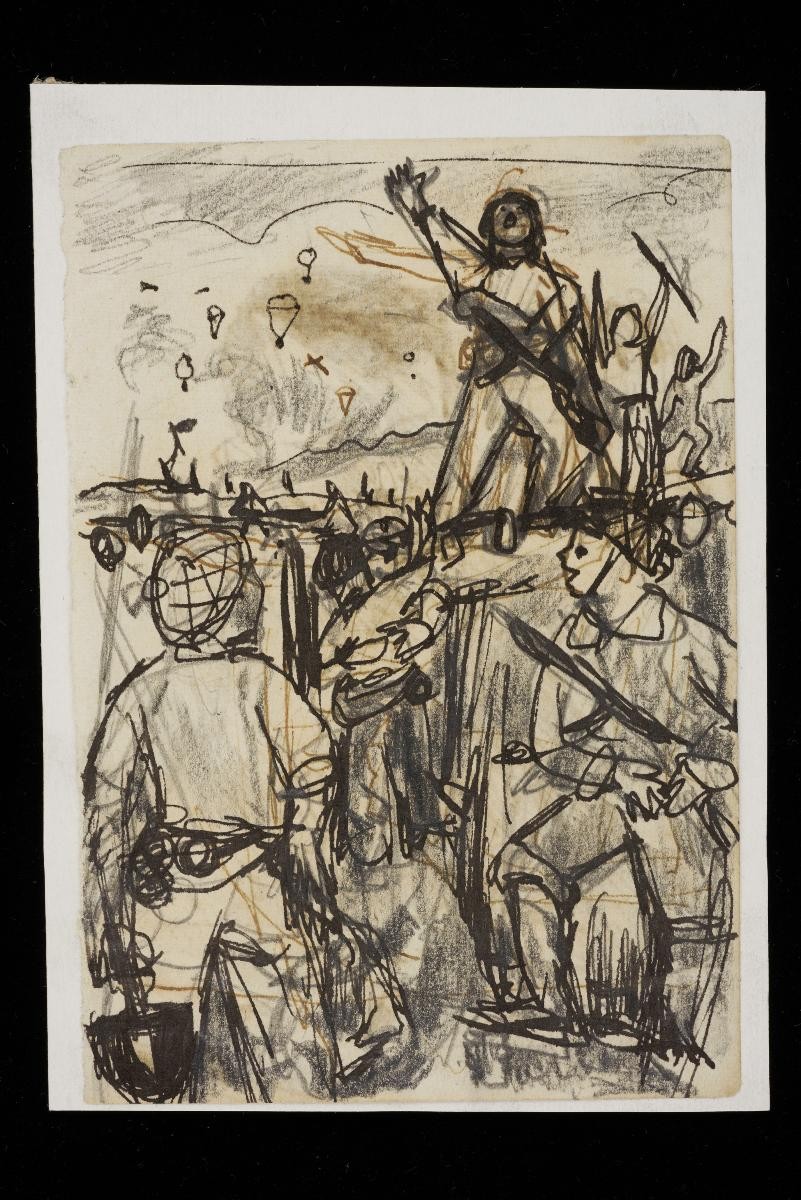
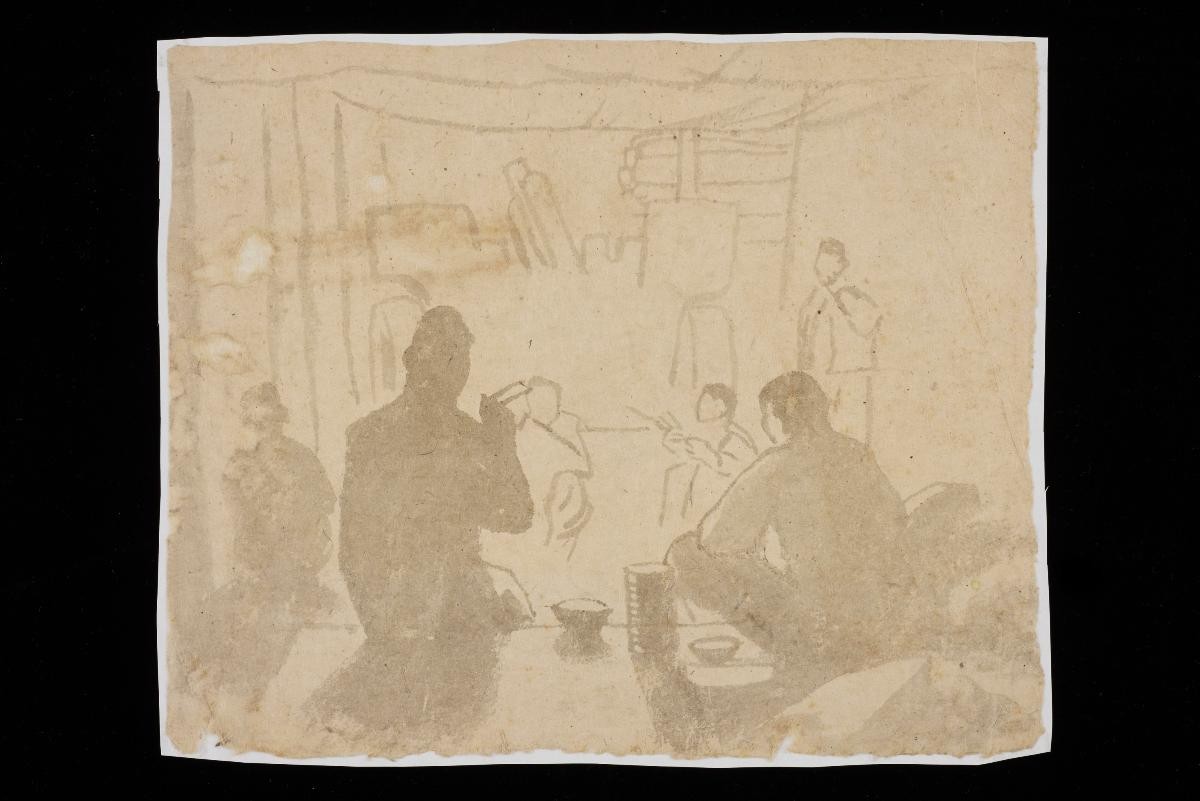
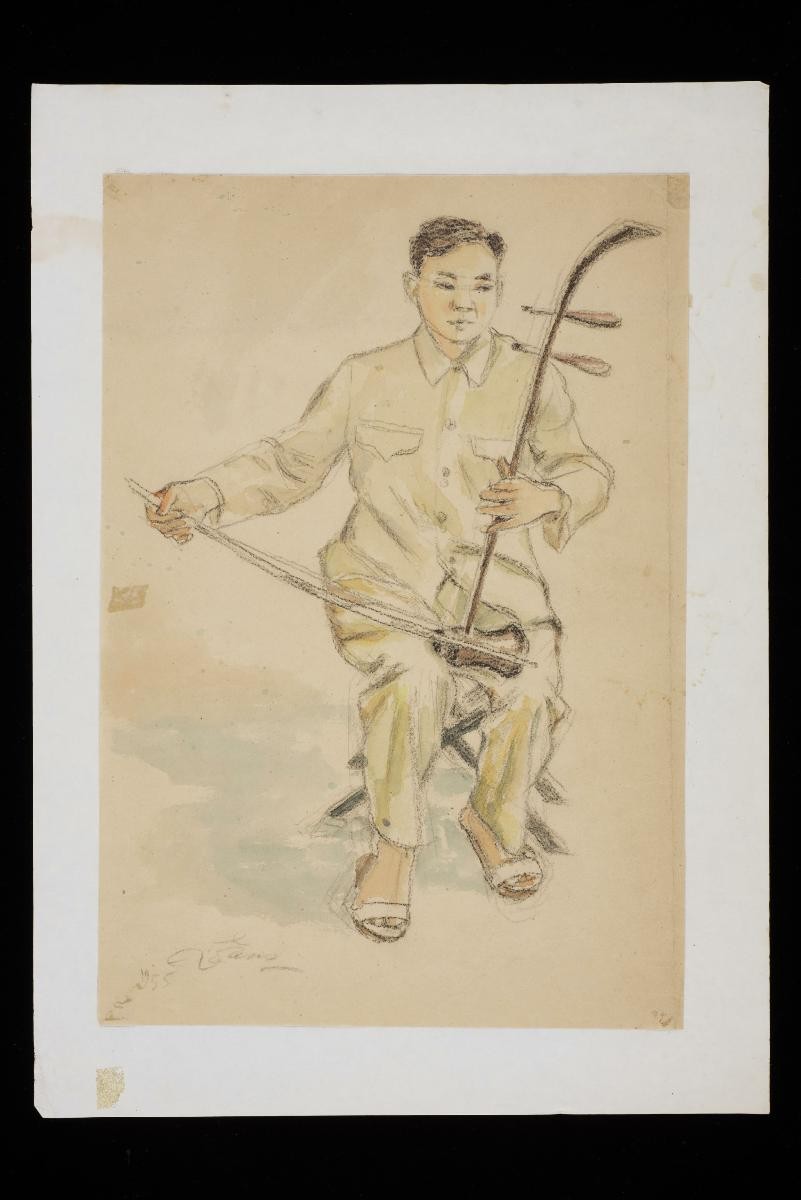
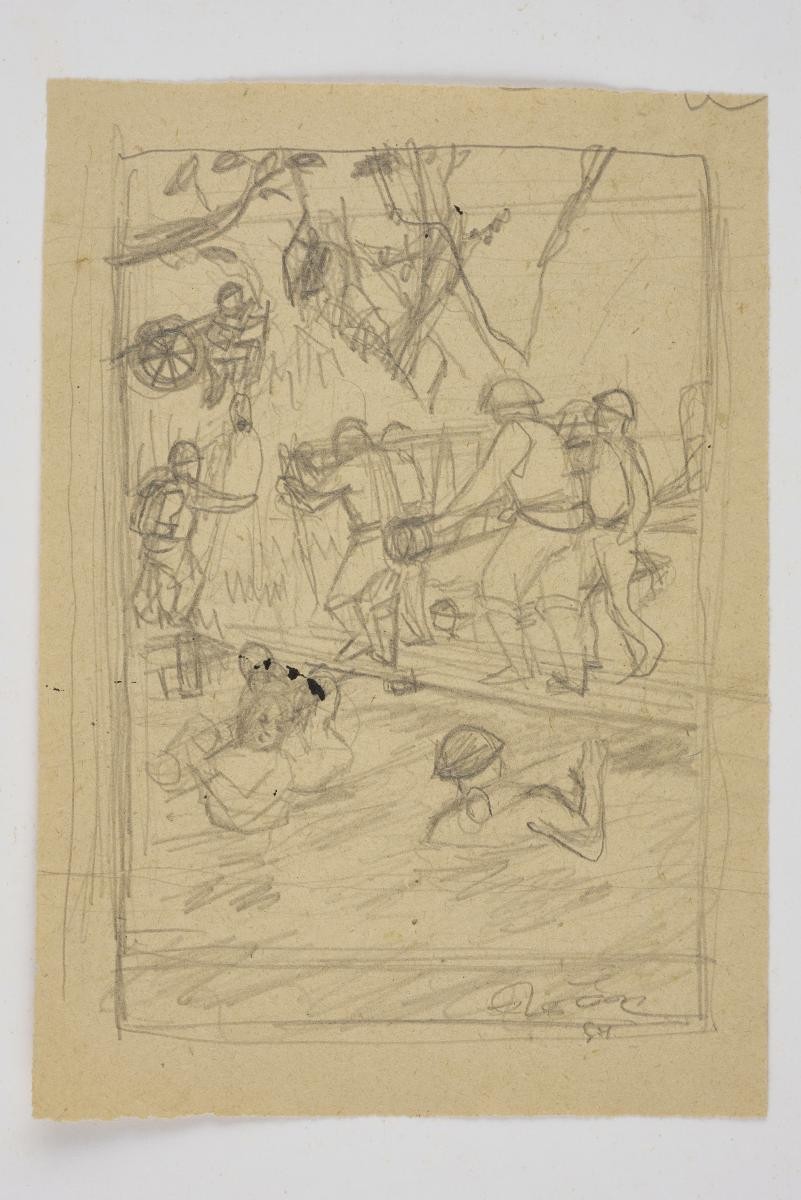
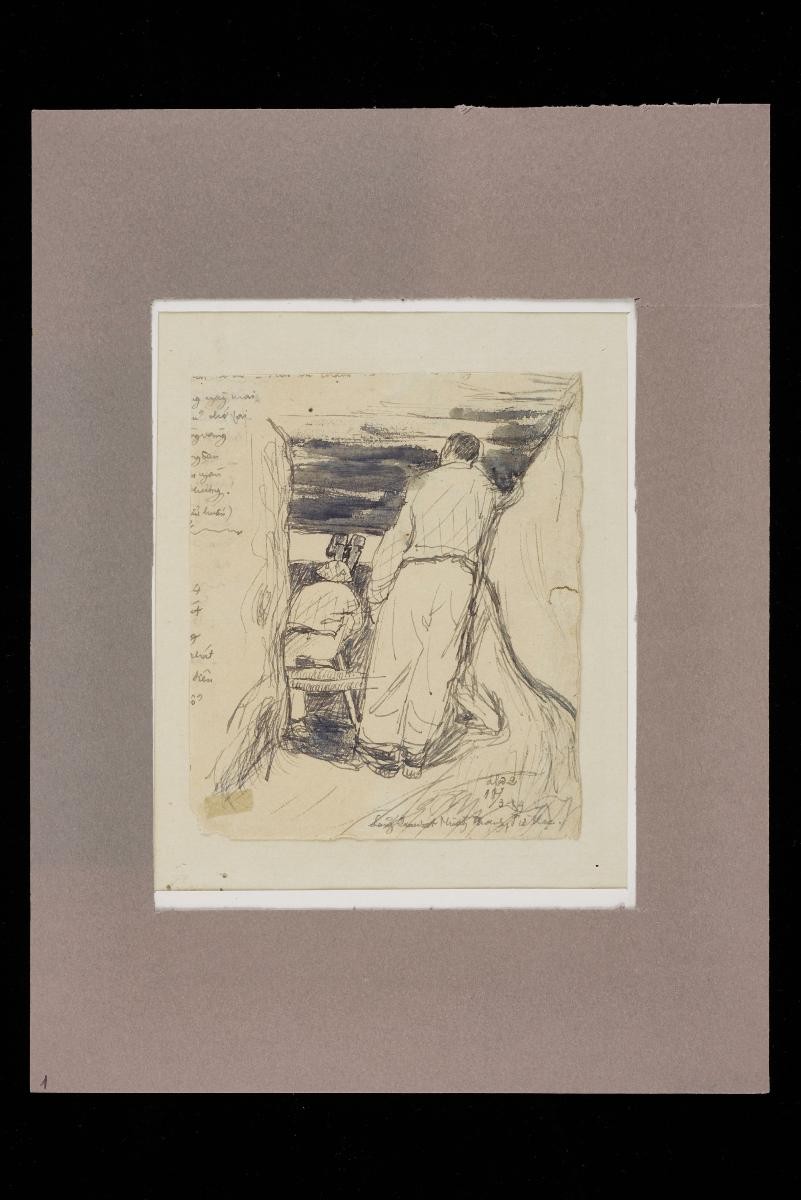
Artists from Vietnam played an integral role in both the First Indochina War (1946-1954), where they fought for independence from French colonial rule, and the Second Indochina War (commonly known as the Vietnam War or the American War), which continued until 1975. Artists documented conditions for soldiers in the battlefields, as well as for civilians in the cities and the countryside. They also created propagandistic and sometimes romantic images to articulate and advocate ideological positions. In the Democratic Republic of Vietnam (DRV or North Vietnam), artists were employed by the military or the state; sometimes their works were created as personal mementoes, and sometimes they were exhibited or published during the wartime. Phạm Thanh Tâm is remarkable for having participated as a soldier-artist in both the First and Second Indochina Wars, creating a large volume of work recording his experiences. His extensive wartime diaries have also been translated and published. He joined the Viet Minh at a young age, becoming part of a propaganda painting division, where he studied sketching and painted revolutionary murals, posters, and banners. In 1963, Tâm commenced formal studies at the Vietnam Fine Art College, graduating with a specialisation in oil painting. One of the historic moments at which this artist was present was the critical battle of Điện Biên Phủ in 1954, which in effect ended the First Indochina War. This battle was a crushing defeat for French forces, which found themselves surrounded by the Viet Minh. In this sketch, drawn briefly in-situ, Viet Minh soldiers are using an optical observation device to locate the position of opposing forces.This artwork is part of a significant collection of drawings, sketches, paintings, posters and photographs in Singapore’s National Collection. These works reflect the diversity of artistic production during the First and Second Indochina Wars among artists affiliated with the communist side of the conflict. Many key figures active as war artists during this period have also had a lasting impact on the development of modern art in Vietnam and beyond.