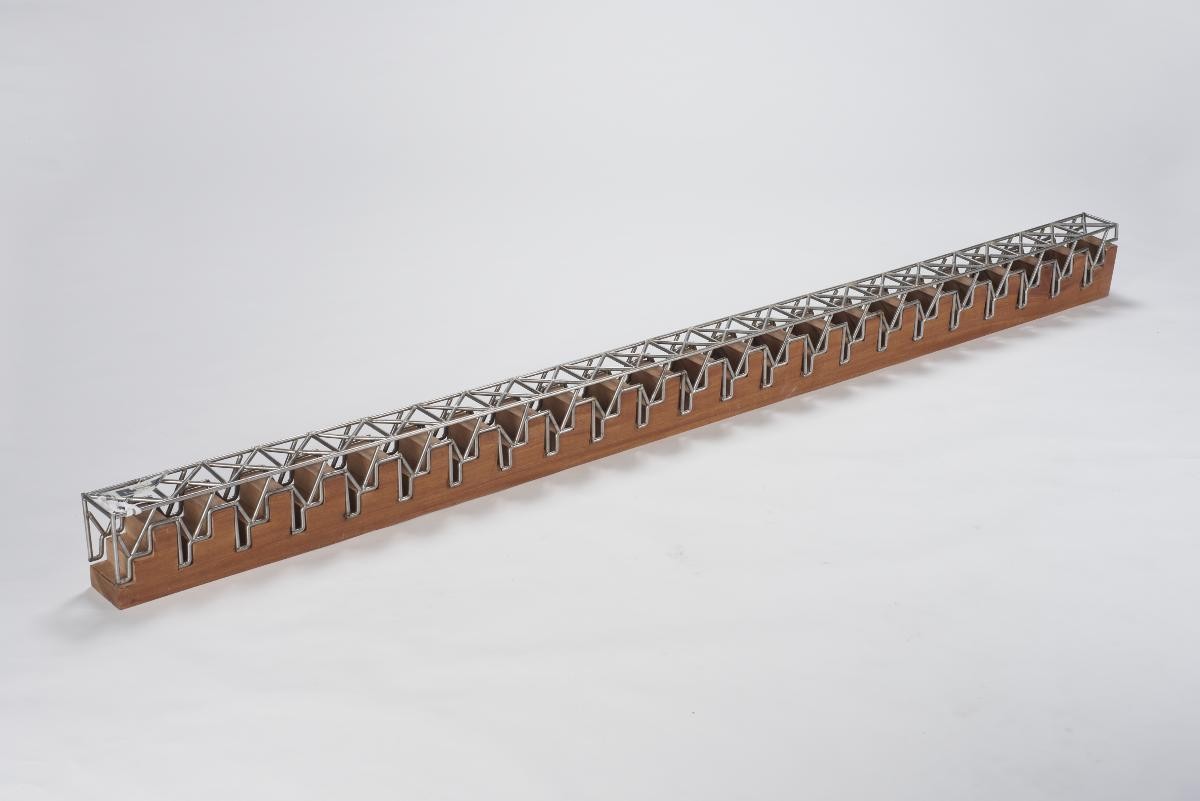

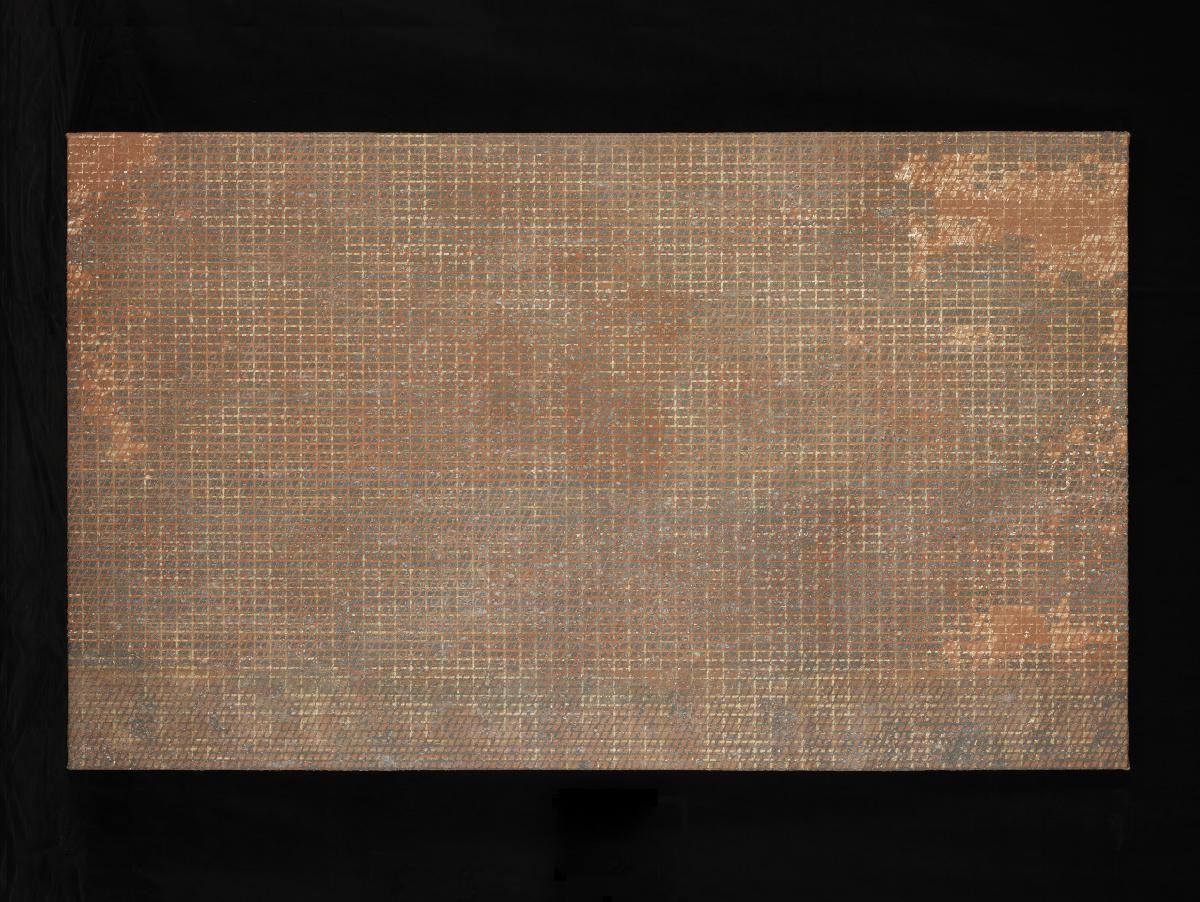
Malaysian artist Zulkifli Lee’s aesthetic influences include the foremost examplars of abstraction and conceptualism in the twentieth century: Minimalism, the Gutai group, Dansaekhwa, Mono-Ha, as well as the work of Malaysian abstractionist Ramlan Abdullah. He is also inspired by Islamic philosophy and aesthetics, as evidenced by Berganding and Padan. Both works are derived from humble, natural materials, jettisoning representationality, and stylized depictions of the real world. Berganding is a two-dimensional piece that consists of a mixture of soil and limestone, applied on a canvas of jute. Like the Japanese techniques of nihongo painting, only mineral pigments were involved here: both soil and limestone used were selected on the basis of their colour. Padan is comprised of a wooden base and a steel superstructure, fitted together without nails or adhesive. The base was carved from a single piece of wood, and the steel rods of the superstructure were cut to measure according to the wooden base, and then welded together in place. Both works are conceptually premised on the philosophy of Nazzariyah. The second of the four categories of Nazzariyah is “Riyaziyyah”, which is the beauty of geometric forms and numbers – hence the primary visual language of the works, their modularity, repetition, seriality, and abstraction. They also foreground the dichotomy, or tension between the personalized and impersonal, and also the harmony between two polarities, or two opposites. As the artist observes, Western art history is driven by individualism, and by the cult of genius, but Lee’s practice about culture, Islam and God, rather than the expression of individuality.