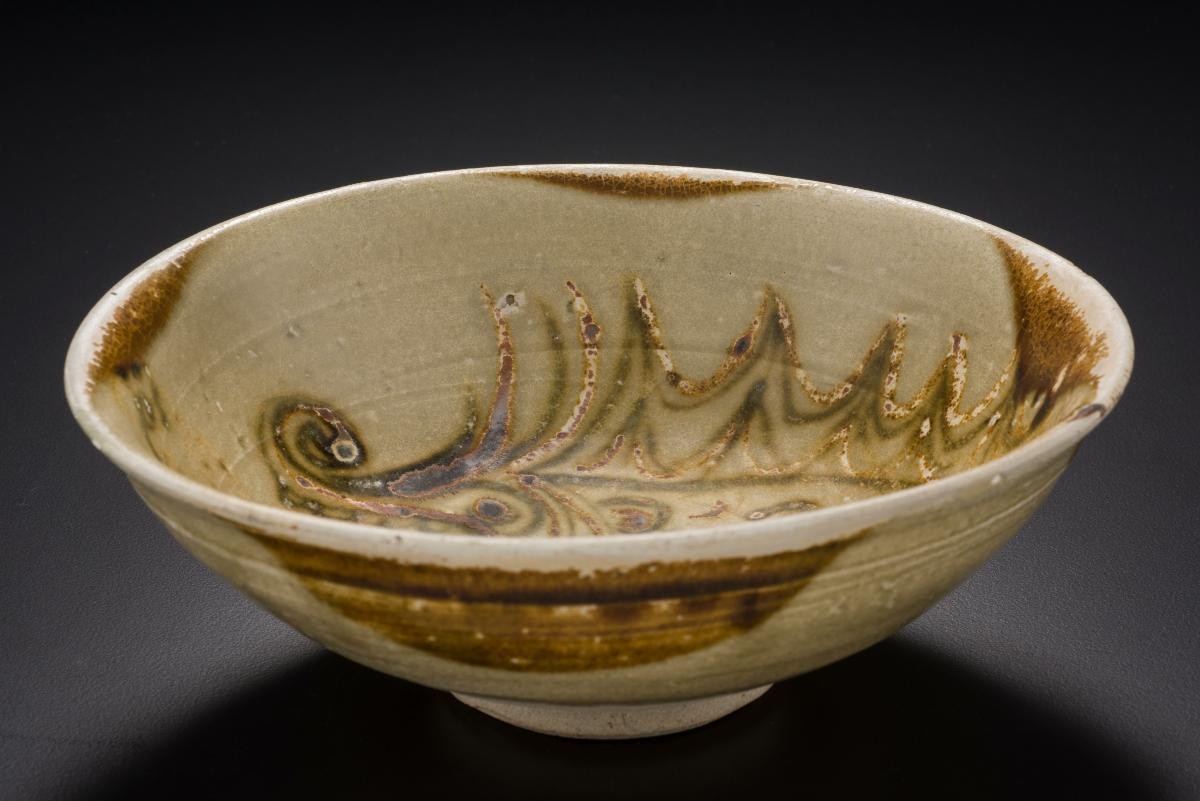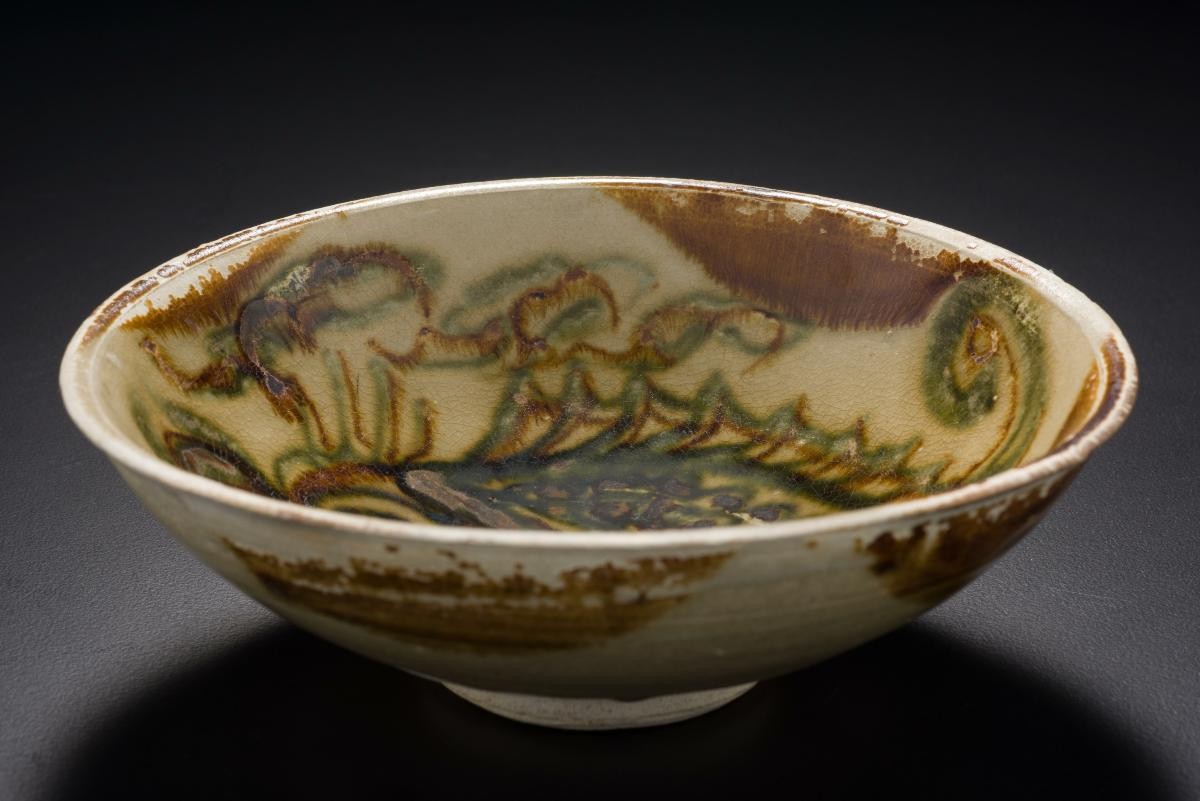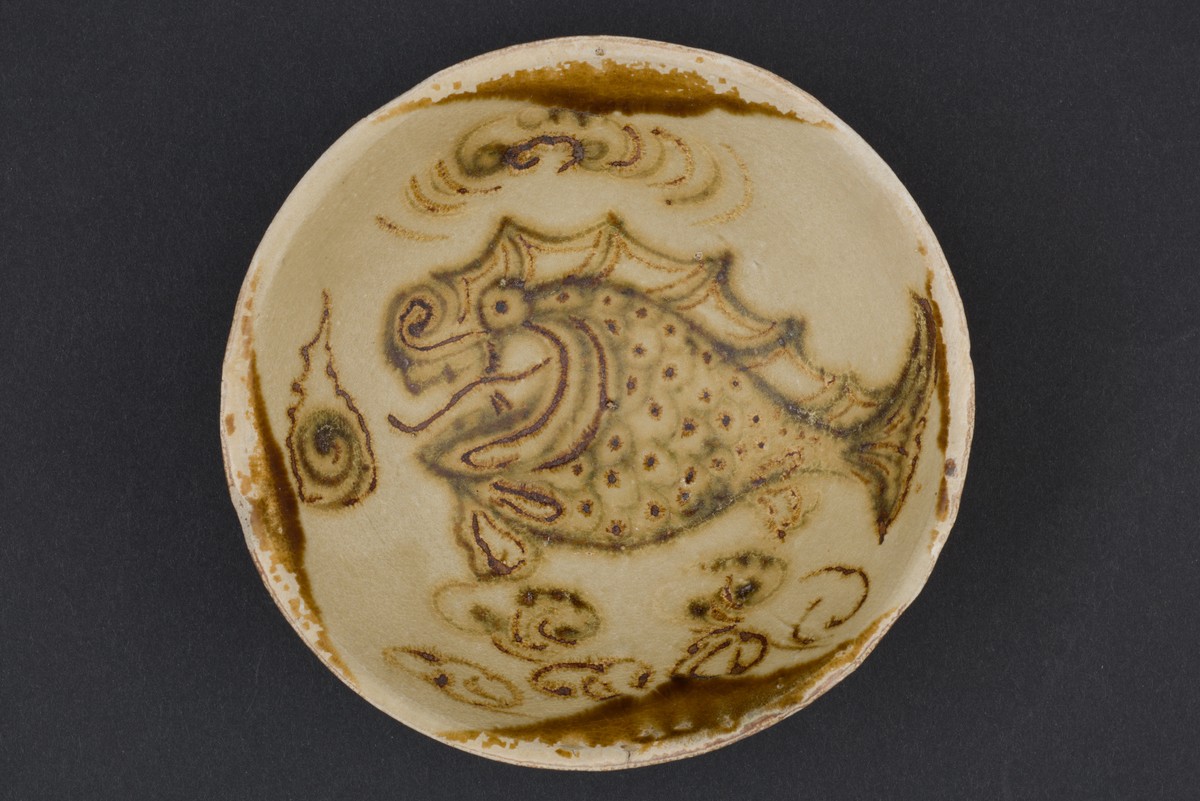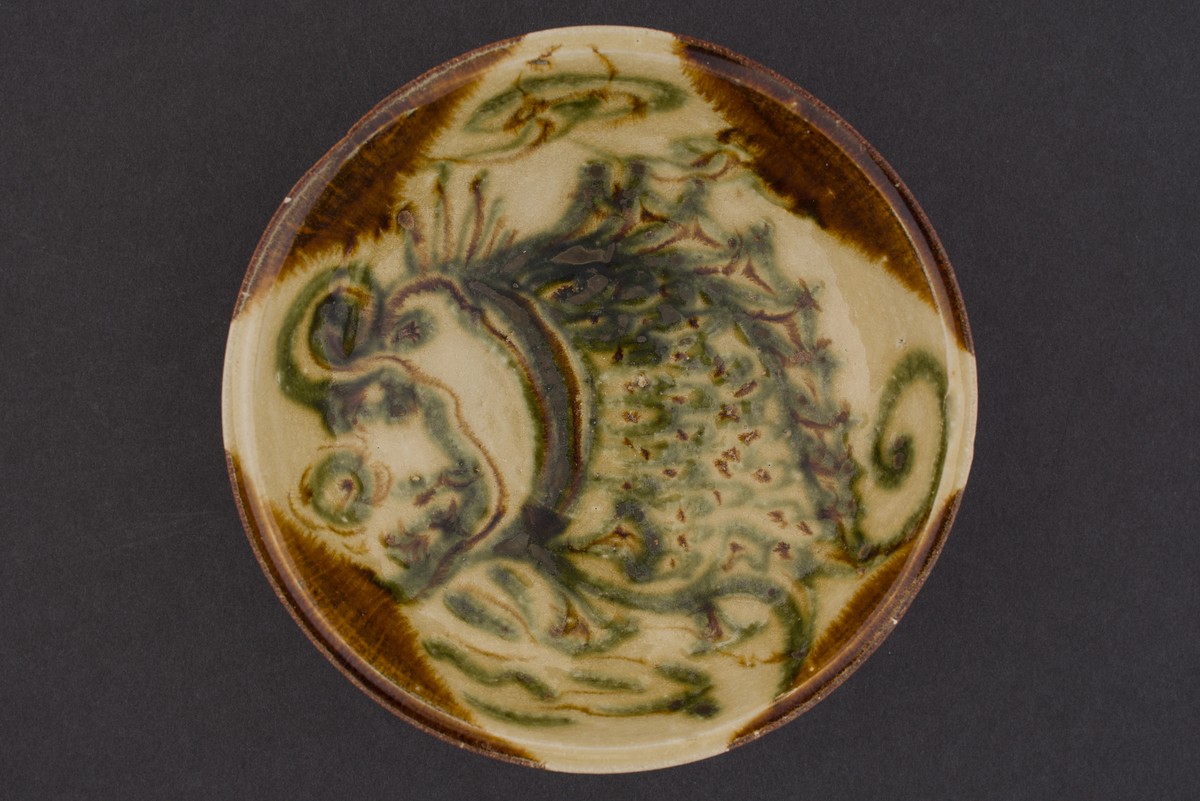

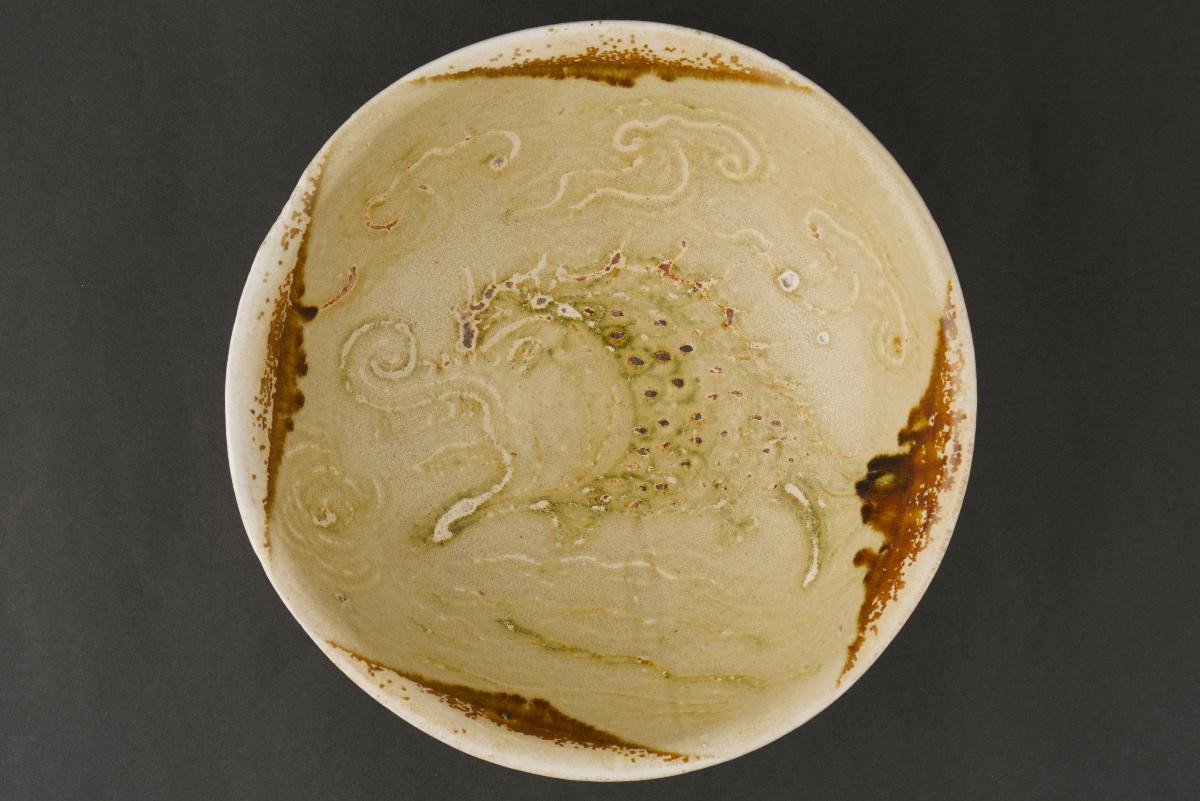
This stoneware bowl was made in the 830s in the kilns around Changsha, in southern China. Common designs include birds, clouds, flowers, foliage, landscapes, and spiral patterns. These designs are usually framed by brown patches that were applied by dipping the rims of the bowls into glaze. The relative distance away from the Tang-dynasty capital of Chang’an (modern day Xi’an), allowed for creativity; the Changsha potters could explore and develop their own distinctive style of decoration.Over 54,000 bowls like this were recovered from the Tang shipwreck, a 9th- century vessel en route from China to Middle East when it sank off the coast of Belitung Island in the Java Sea. Many different artisans were involved in crafting and painting the wares, which led to varied expressions of each design. Mass-production of these bowls for shipment overseas was accomplished by coordination of many family workshops that produced the bowls, and numerous large kilns used for firing them. The large glaring eyes, gaping mouth, and sharp teeth all point to the possibility that the creature illustrated on this bowl is a makara. Makaras have roots in Hindu and Buddhist mythology and are often depicted chasing the cintamani, a flaming jewel symbolic of the teachings and virtues of the Buddha. This hybrid sea creature was introduced to Tang culture from India with the spread of Buddhism.