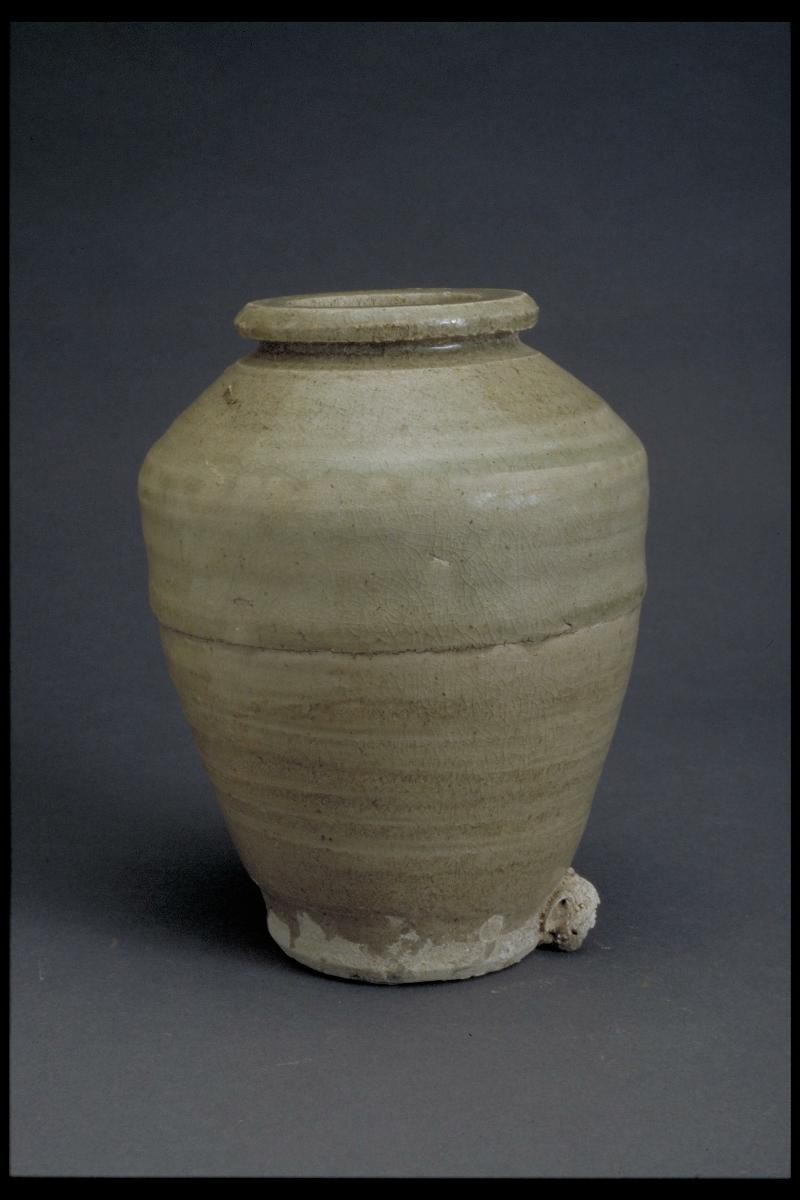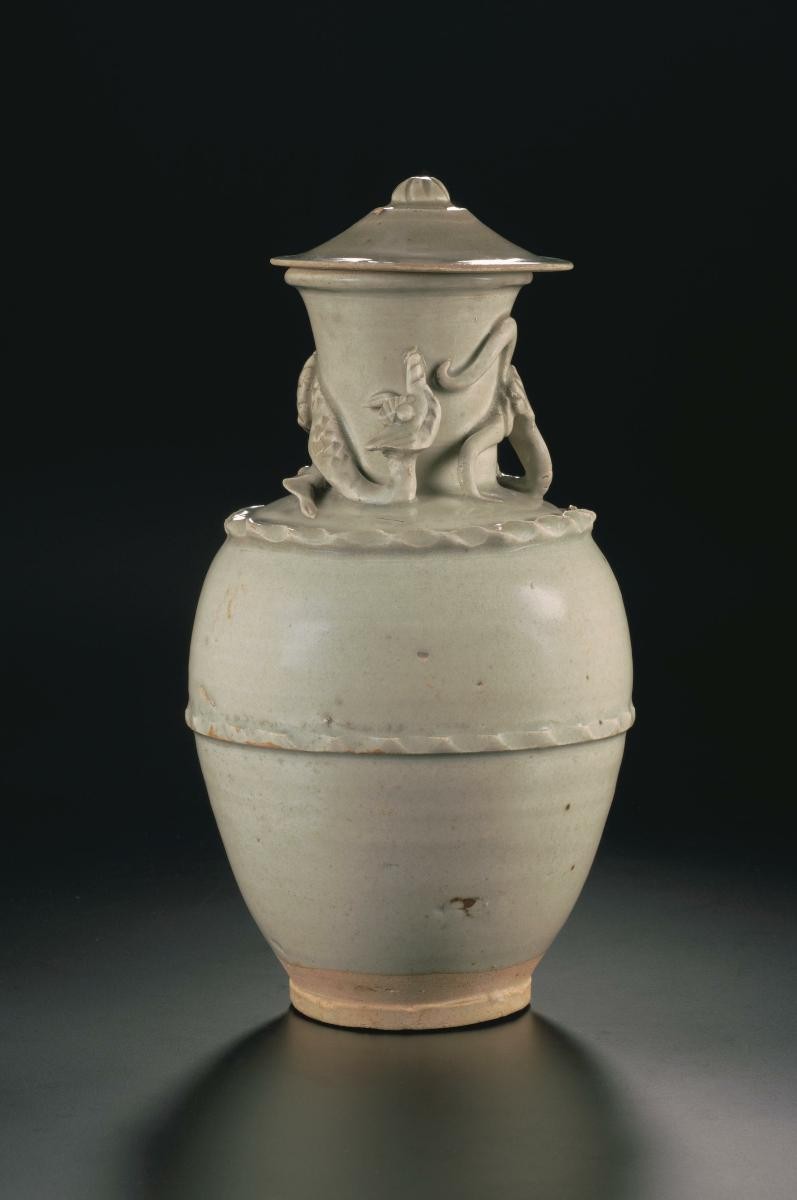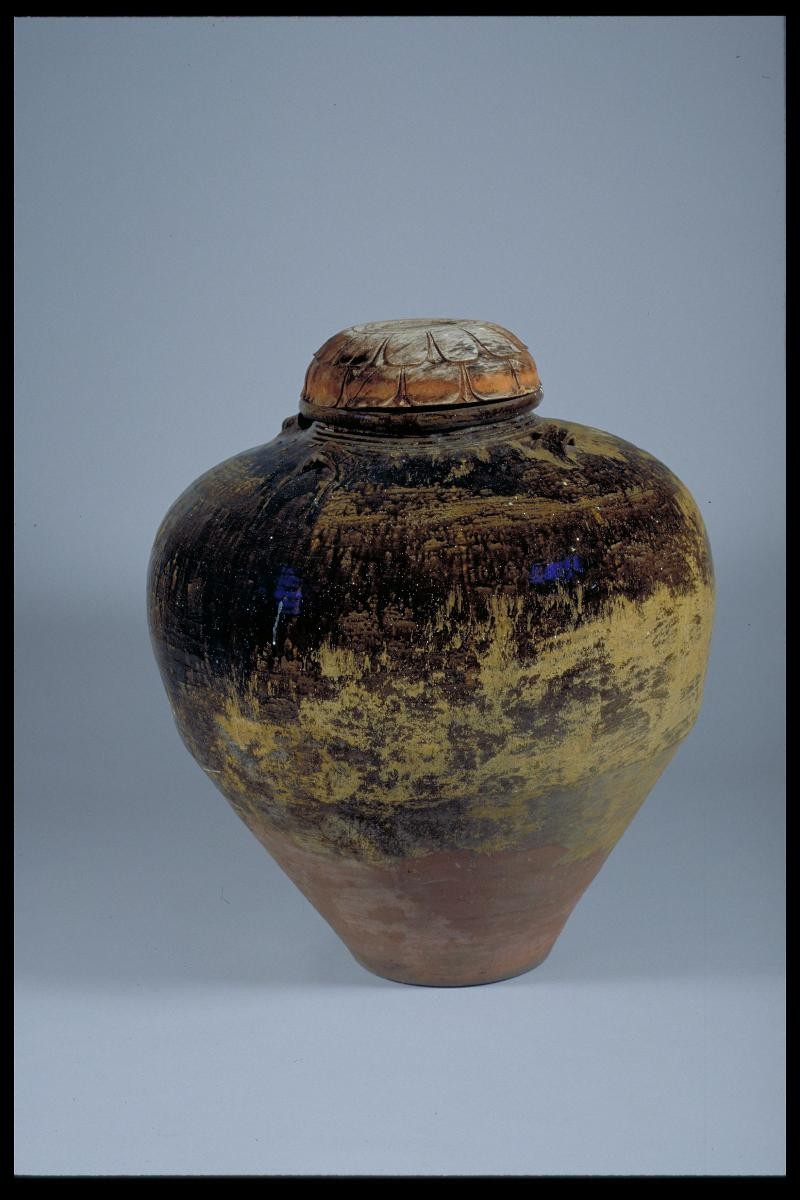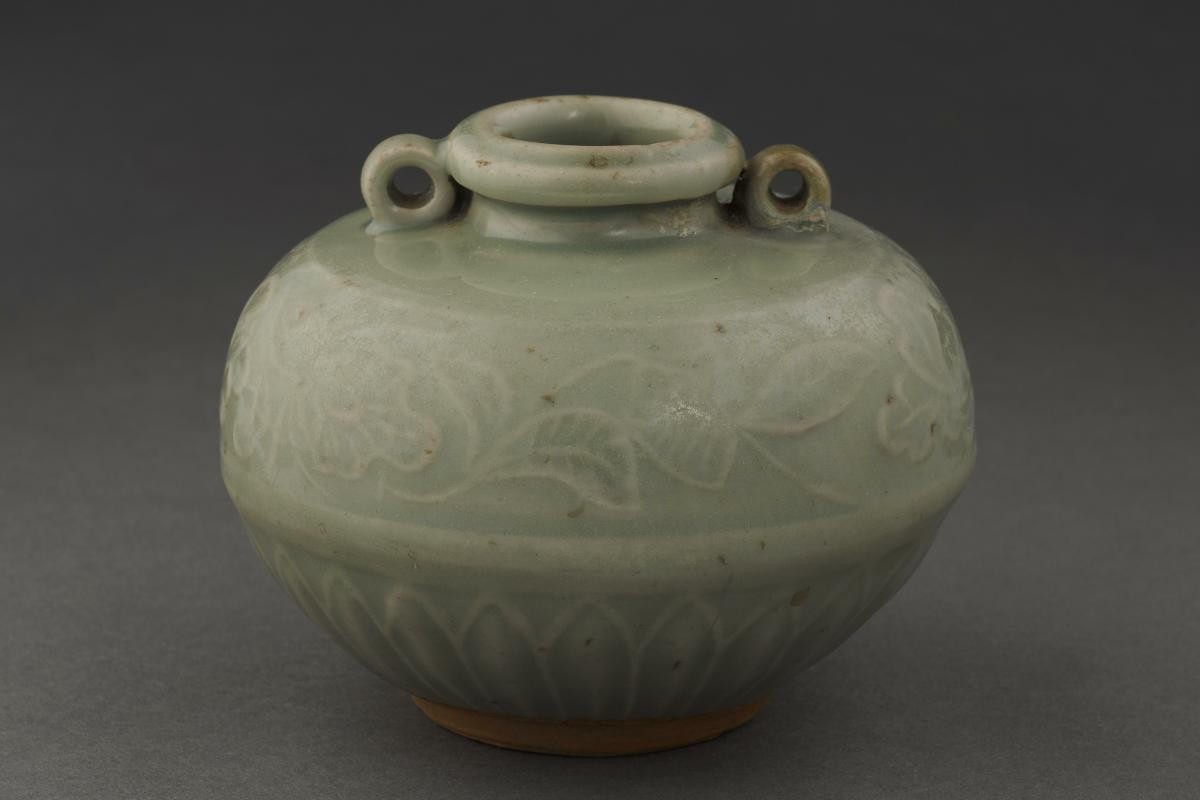

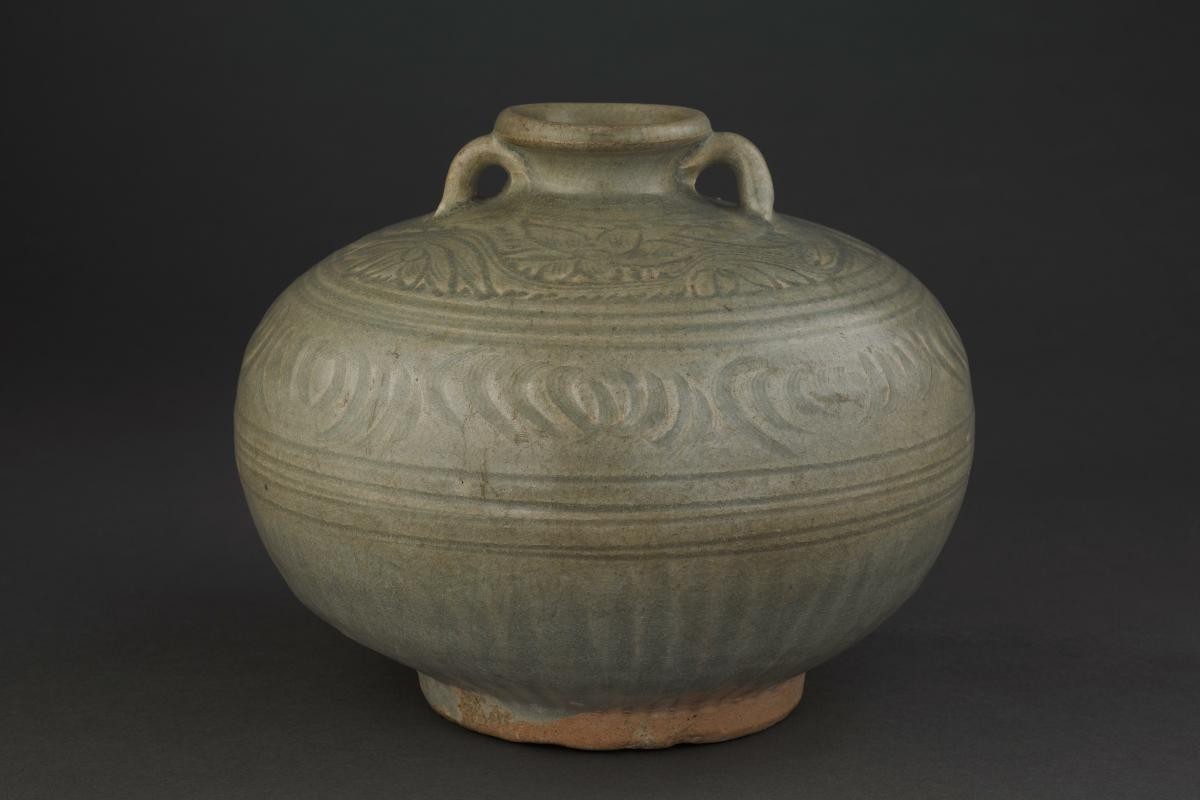
This globular jar has a pale green and lightly crackled glaze that covers the entire vessel, except for the foot. It is a popular form that was produced at the Sawankhalok kilns and brown-glazed versions are also known. Such jars were probably used to contain fish brine, medicine or cosmetics. The small mouths of the vessels prevented any wastage or leakage of its contents.Sawankhalok wares comprise the largest group of ceramics produced in north-central Thailand. The Sawankhalok kilns produced mostly green-glazed ware, which clearly take Chinese Longquan celadons as a model. These green-glazed wares formed the bulk of Thai ceramic exports in the fifteenth century, and have been found all over maritime Southeast Asia, in Japan, and even in Egypt.