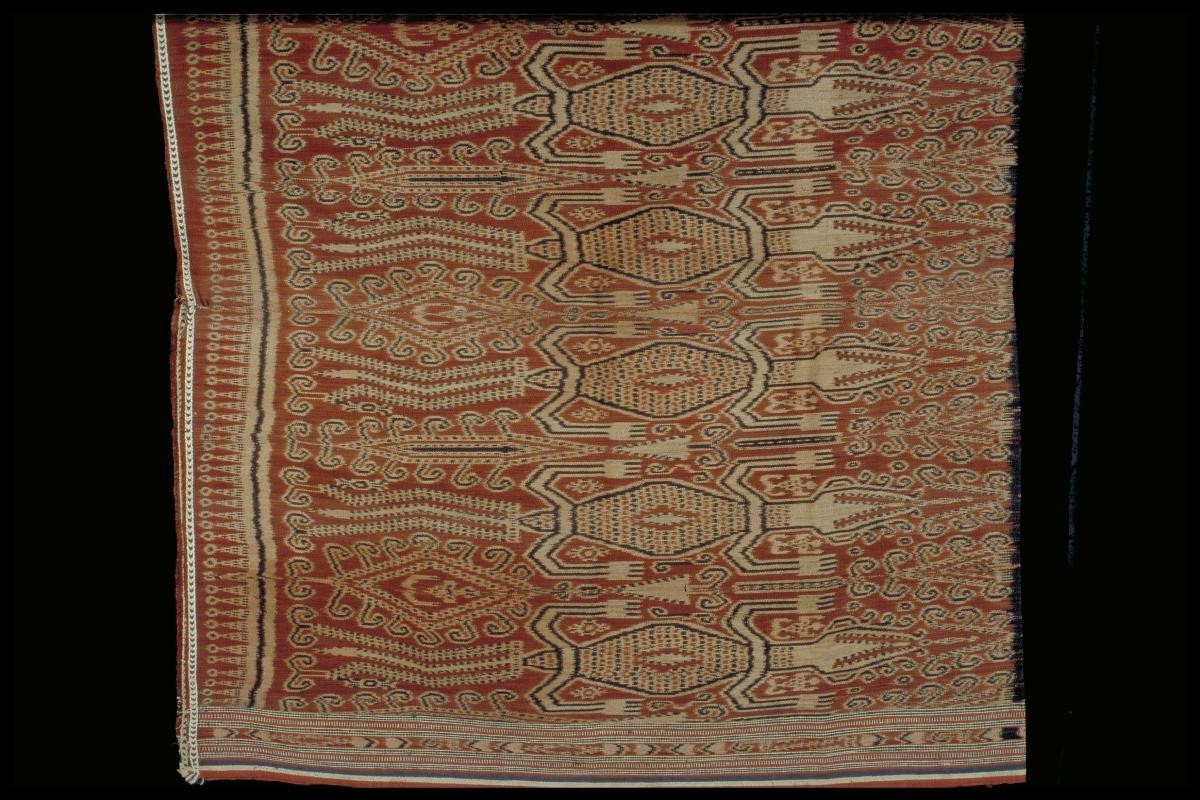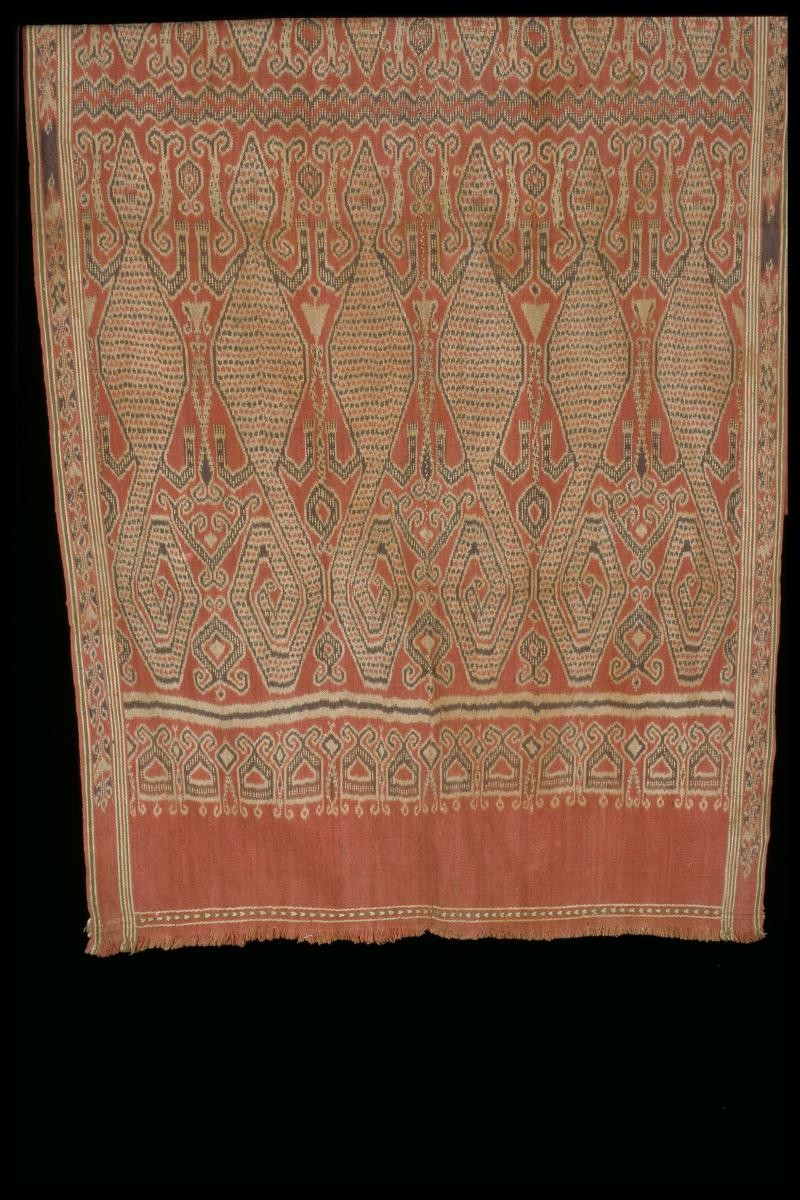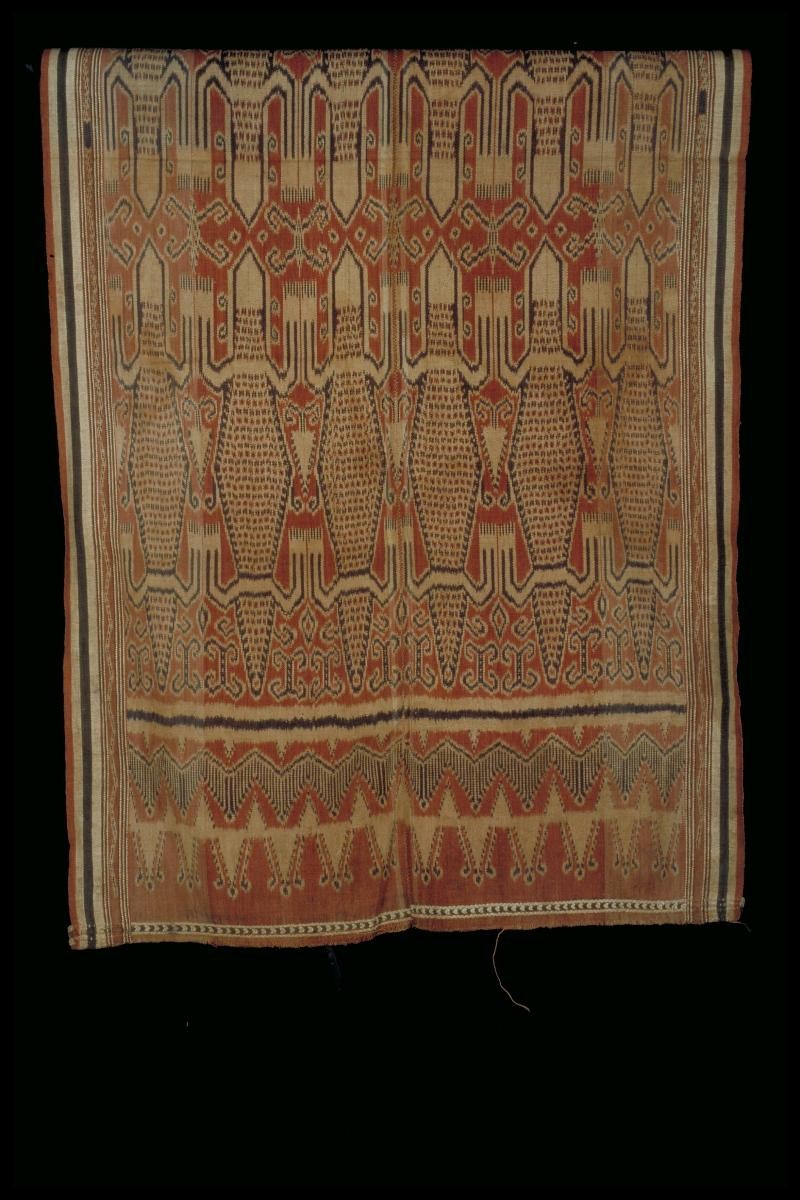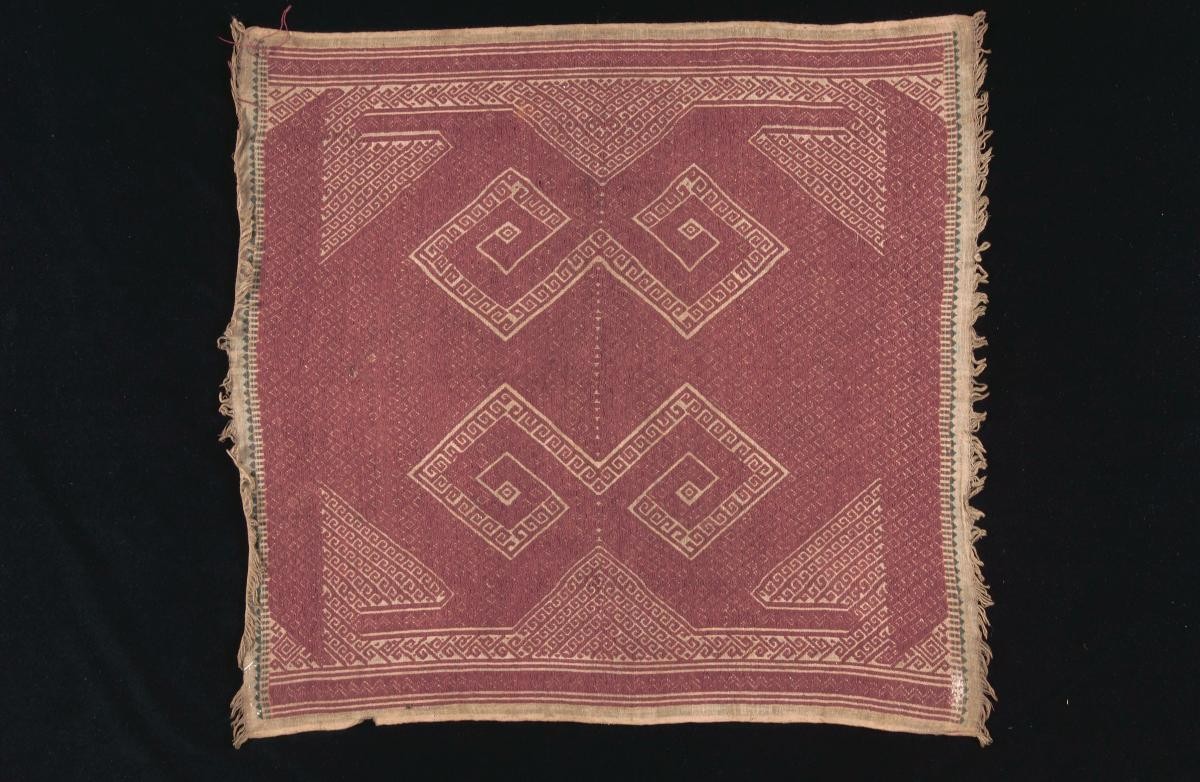

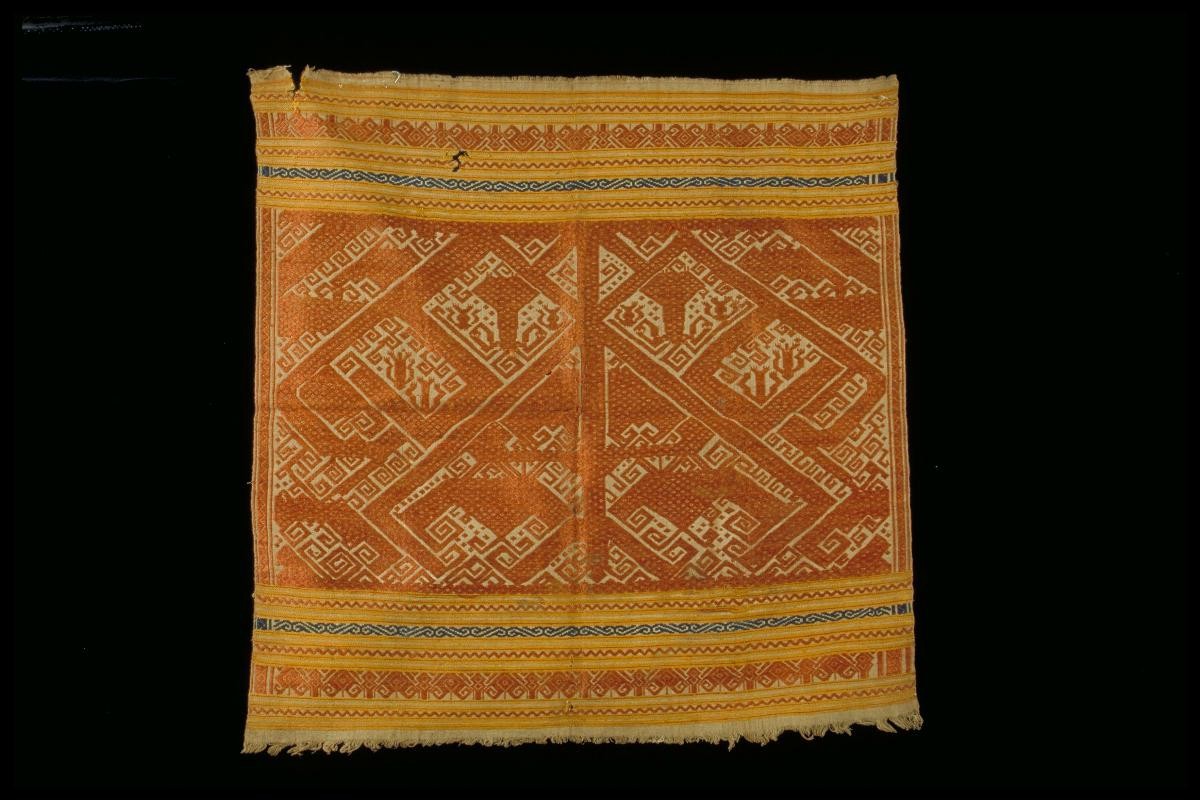
This ceremonial cloth or ‘tampan’ depicts a highly stylised tree of life motif used widely in Southeast Asia. Branches extend from the central trunk in hook motifs, with ancestor or deity figures and unidentified creatures locked in the tree structure. All ceremonies included tampan, either as decorations or to wrap gifts and ceremonial food. Tampans are also used during the presentation of a newborn child, circumcision rituals and funerals. Tampans were especially important during wedding rituals that were carried out between two family clans, as the social status of the families dictated the number of tampan presented to the bride-givers. The bride will also return to her home three to seven days after the marriage and receive tampan from her relatives to confirm the tie between the two families. It is normally woven using the supplementary weft technique, where additional horizontal threads create patterns over the top of the ground weave.