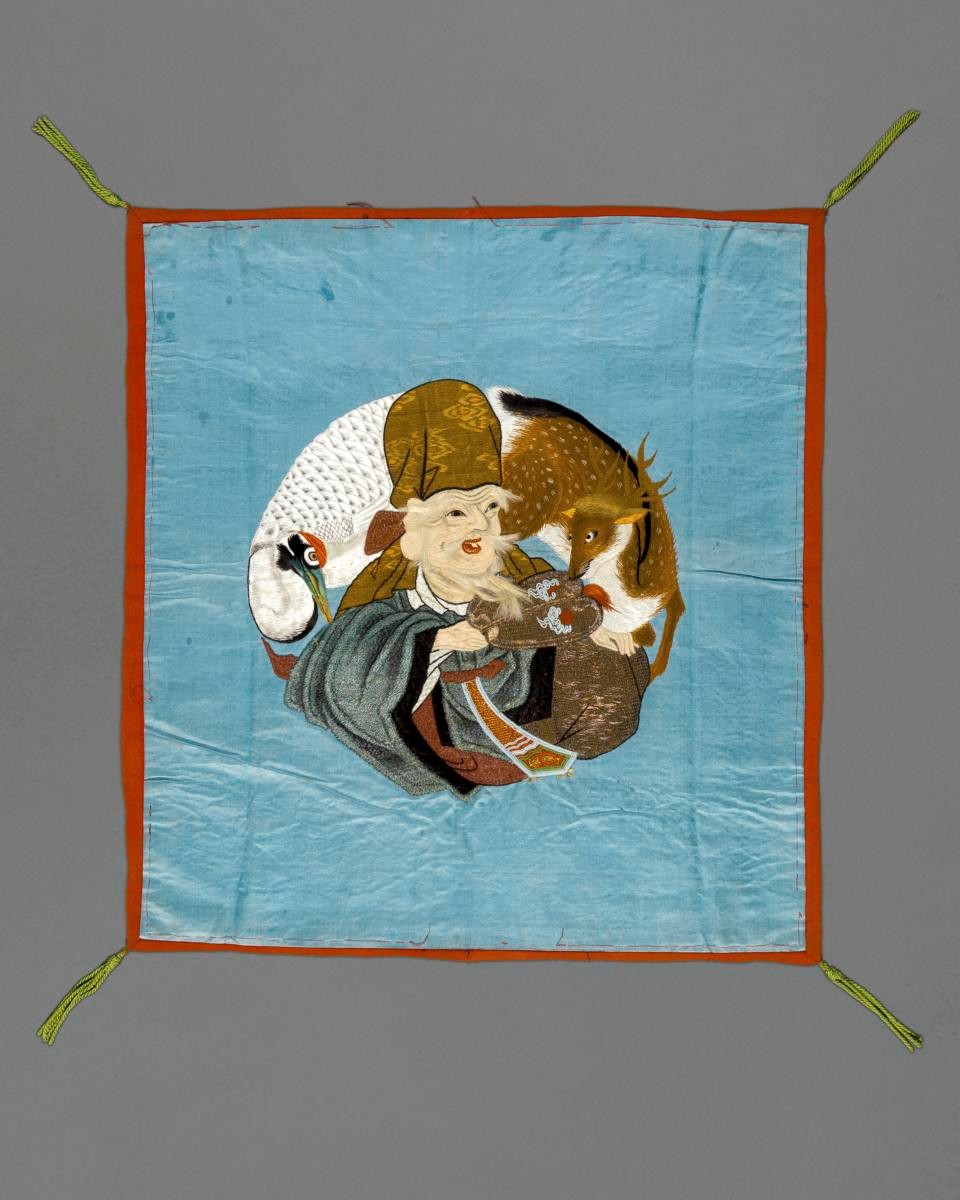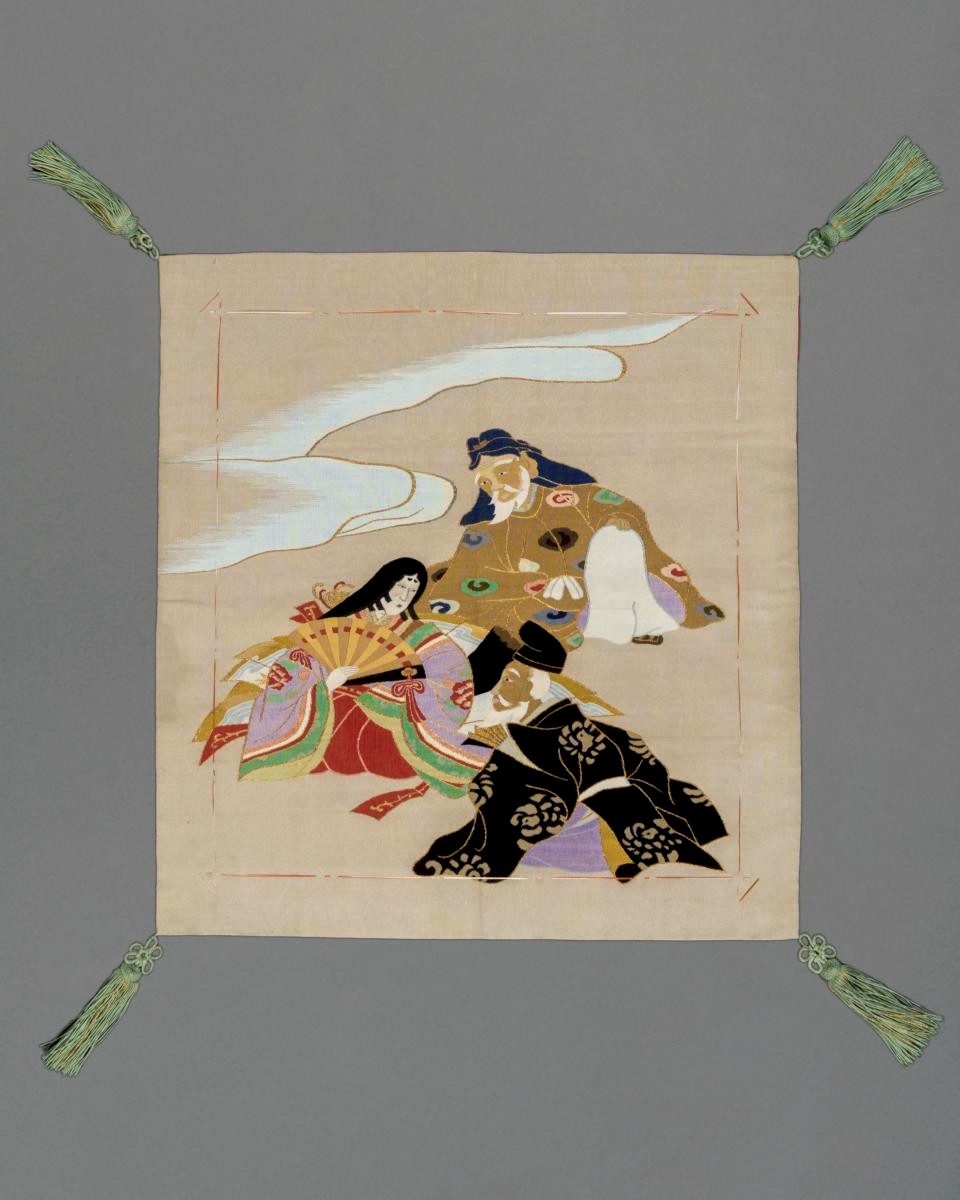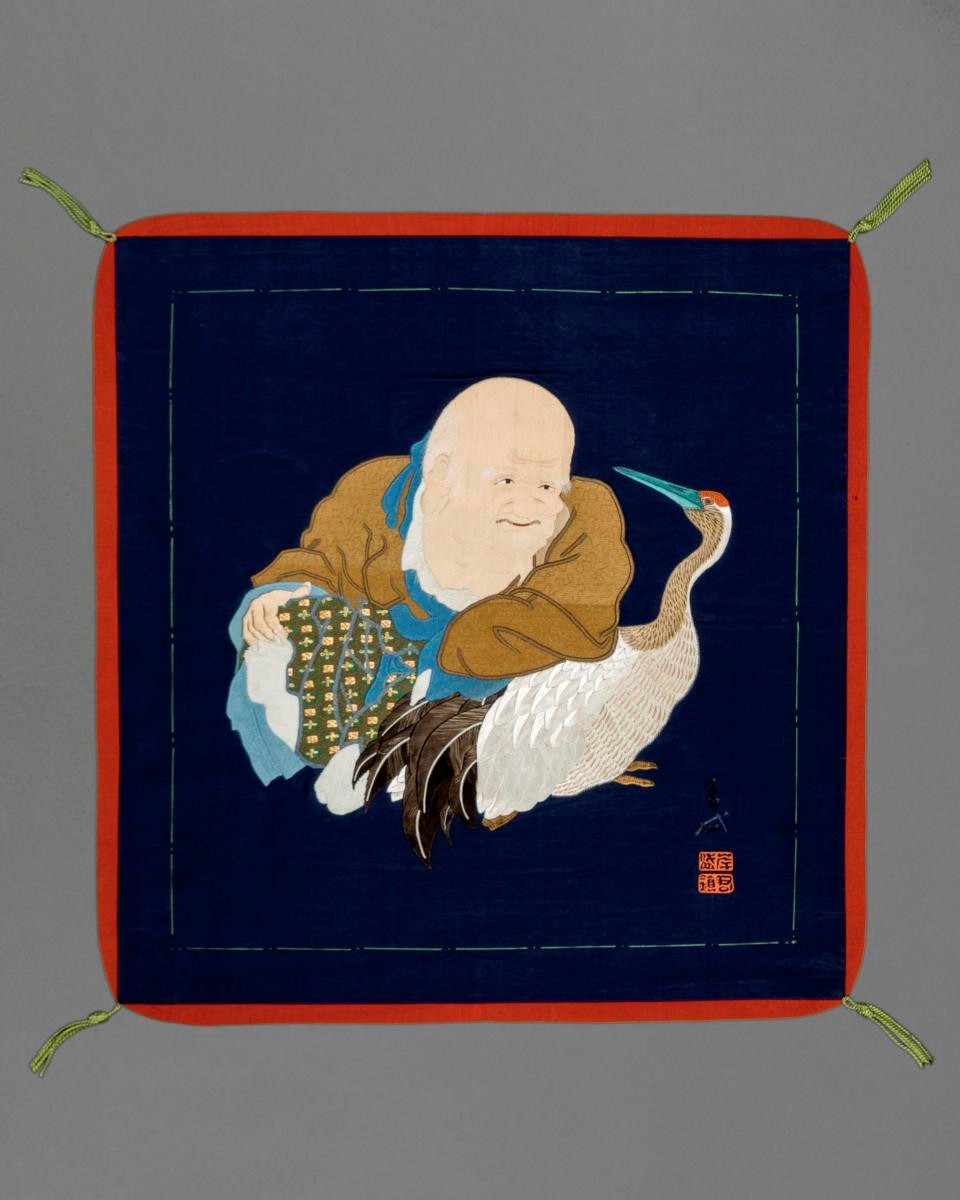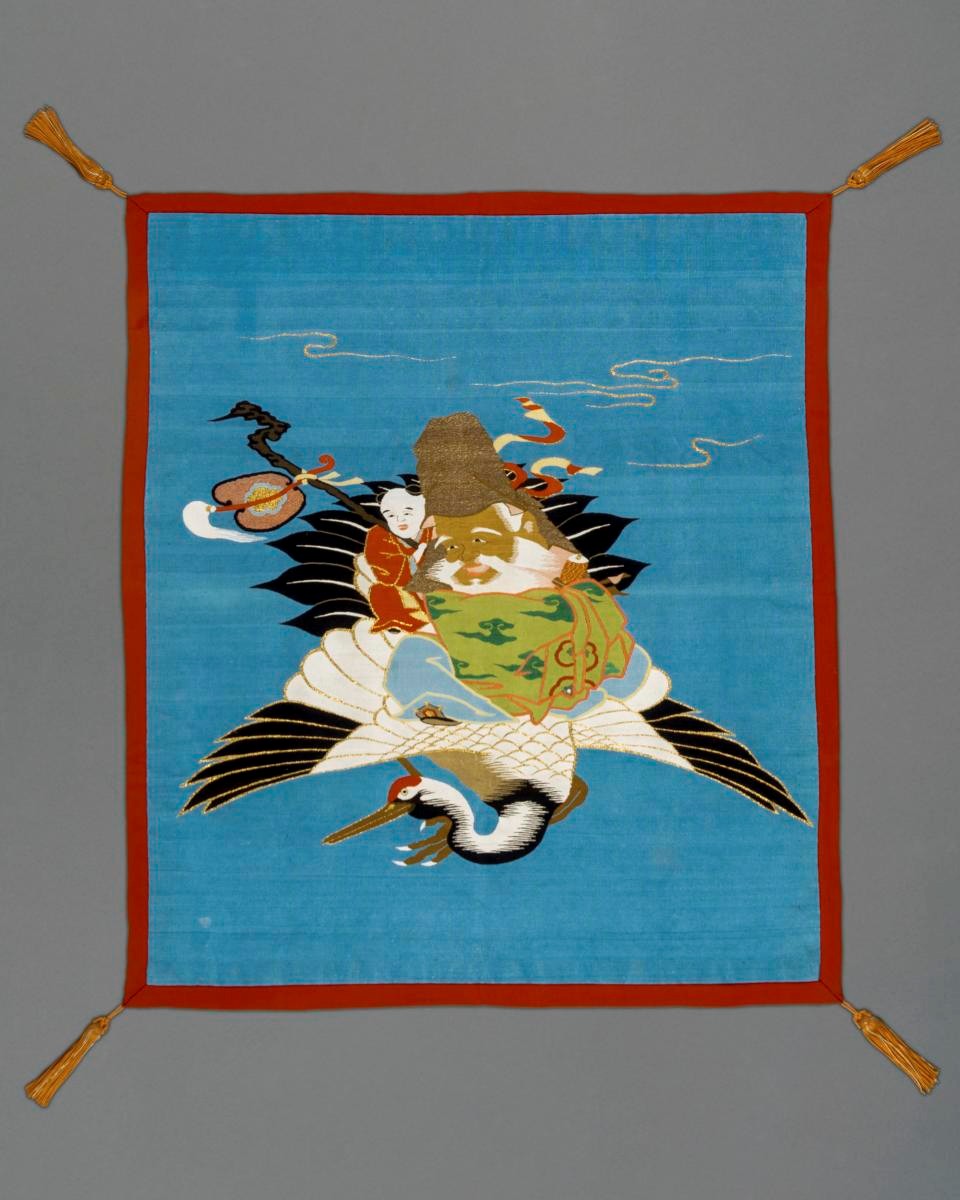

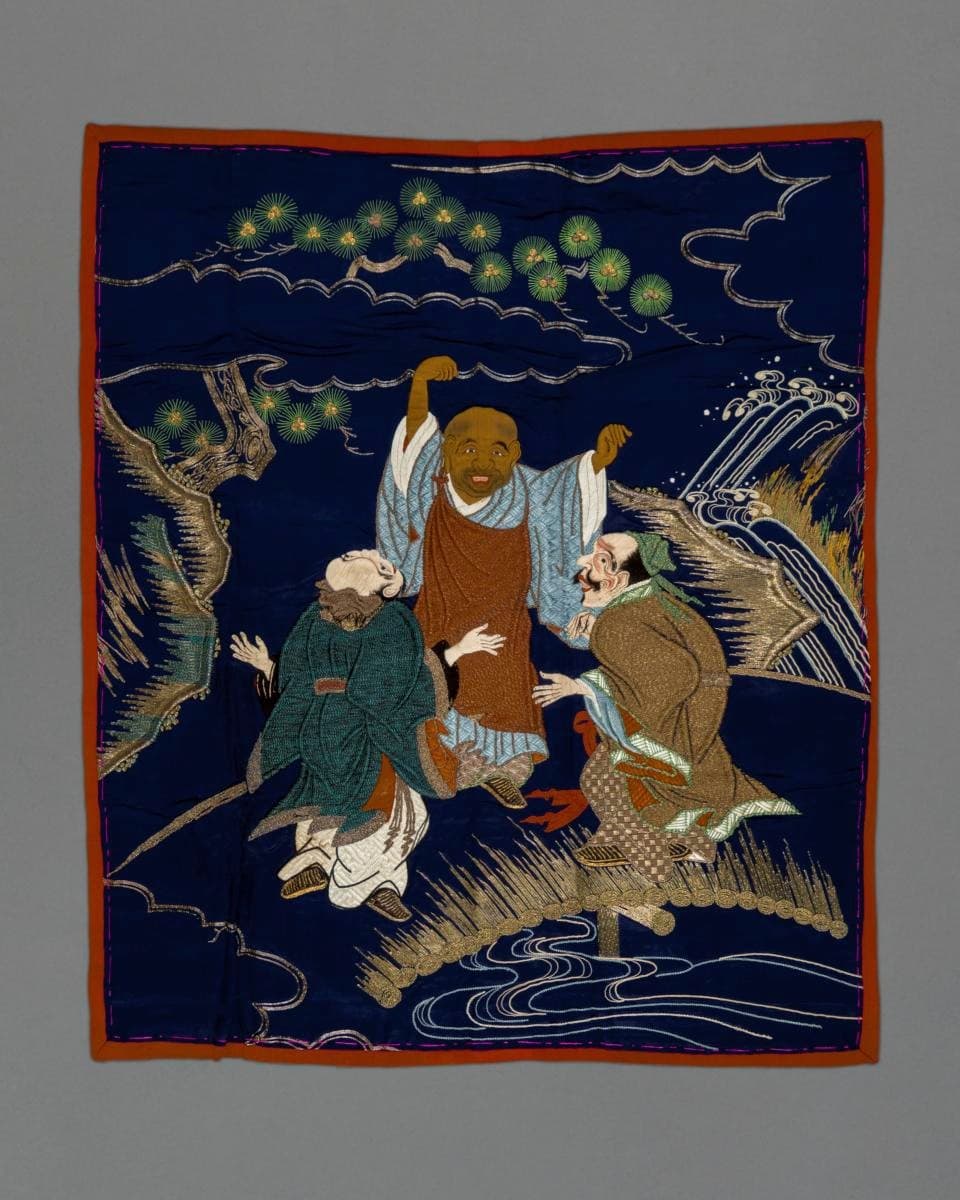
In Japan, the practice of formally presenting gifts with silk covers called fukusa began in the Edo period (1603–1868), around the late 17th or early 18th century. These covers were draped or folded over gifts for a variety of occasions, from seasonal festivities to important personal events. Each fukusa was carefully chosen to evoke the circumstance of the gift and to convey a message to the recipient through its design. Fukusa designs often feature symbolic objects or allusions to Japanese and Chinese stories. The choice of fukusa also reflected the giver’s wealth, taste, erudition, and cultural sensitivity. The use of fukusa continued into the early 20th century. Today, they are used in parts of Japan for weddings and corporate events.This fukusa illustrates Kokei sanshō, a legendary episode in ancient China involving the Daoist master Riku Shūsei (Lu Xiujing, 406–477), Buddhist monk E On (Huiyuan, 334–416), and poet Tou Enmei (Tao Yuanming, 365–427). Riku and Tou frequently visited E On, who maintained a vow to never cross the bridge at Tiger Ravine that marked the precincts of his mountainous temple abode. In one version of the story, the three inadvertently crossed the bridge while engaged in deep conversation. Upon recognising this, they broke out in laughter. In another version, Riku Shūsei and Tou Enmei play a joke on E On, distracting him with conversation to lead him across the ravine. The episode represents the folly of adhering narrowly to one philosophy in the pursuit of wisdom. The subject was introduced to Japan in the early Muromachi period (1392–1573) and became closely associated with Zen Buddhism. It advocates a syncretic view of Confucianism, Buddhism, and Daoism, and would have resonated with Neo-Confucianists who borrowed from Daoist and Buddhist concepts.