
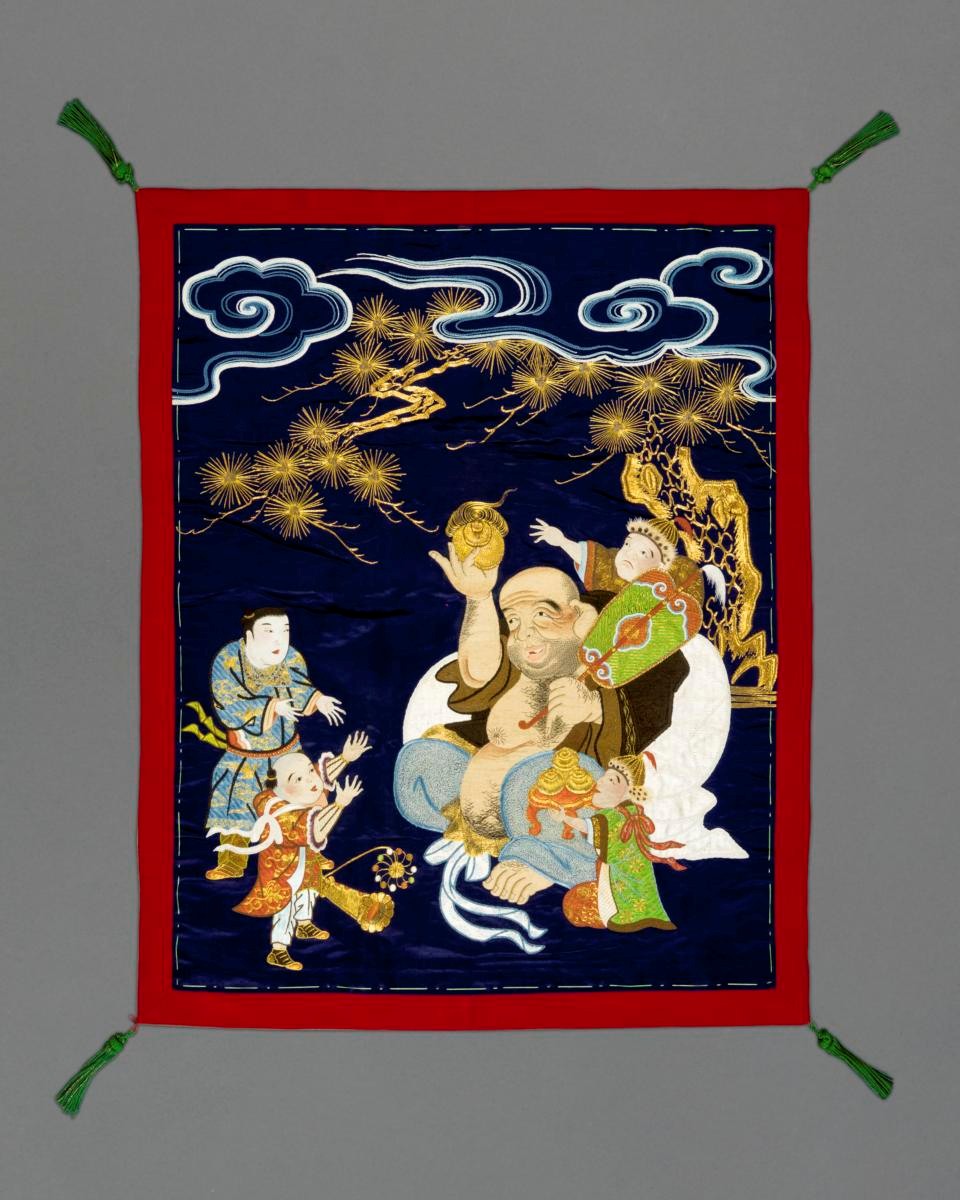
Object size: 110.0 x 86.0 cm (with tassels)
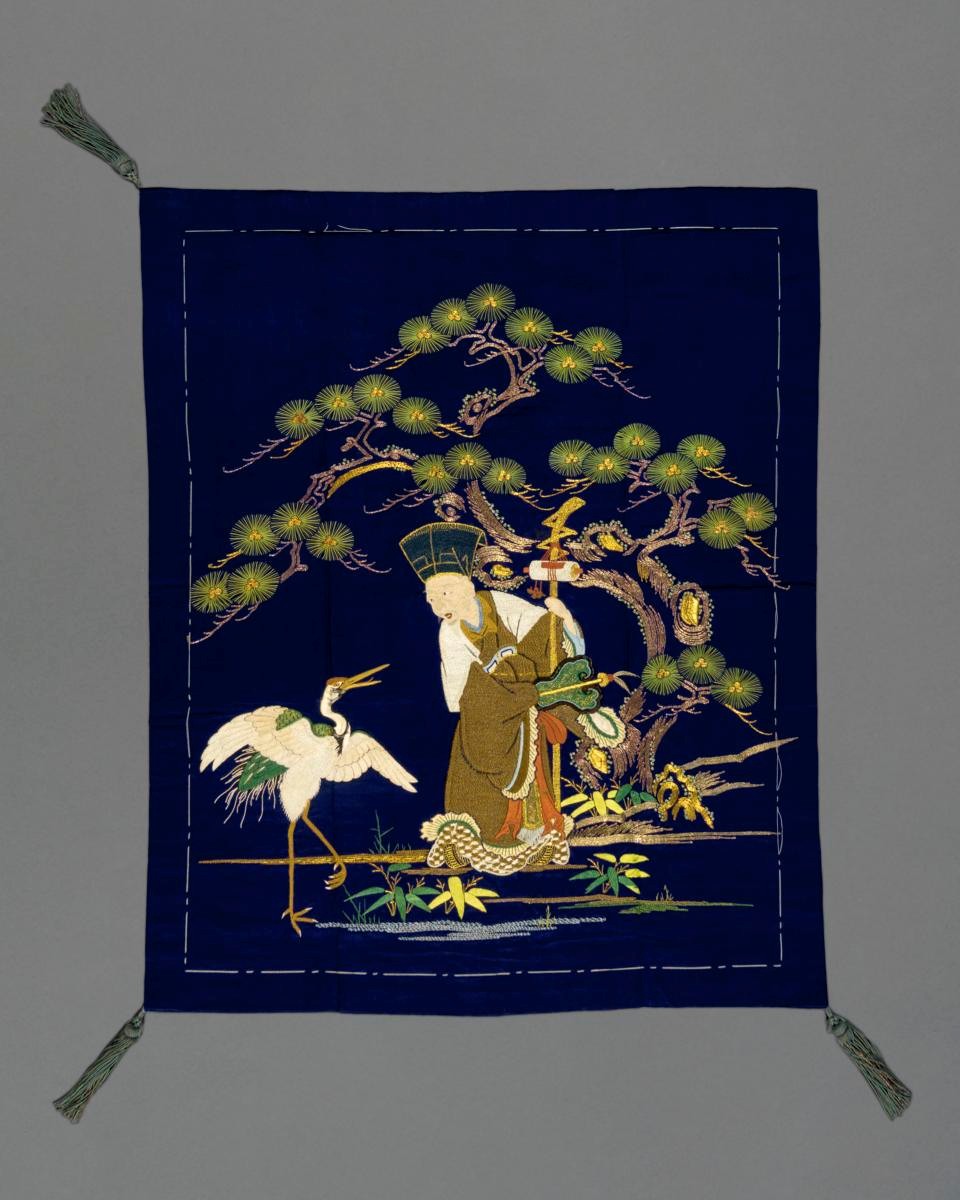
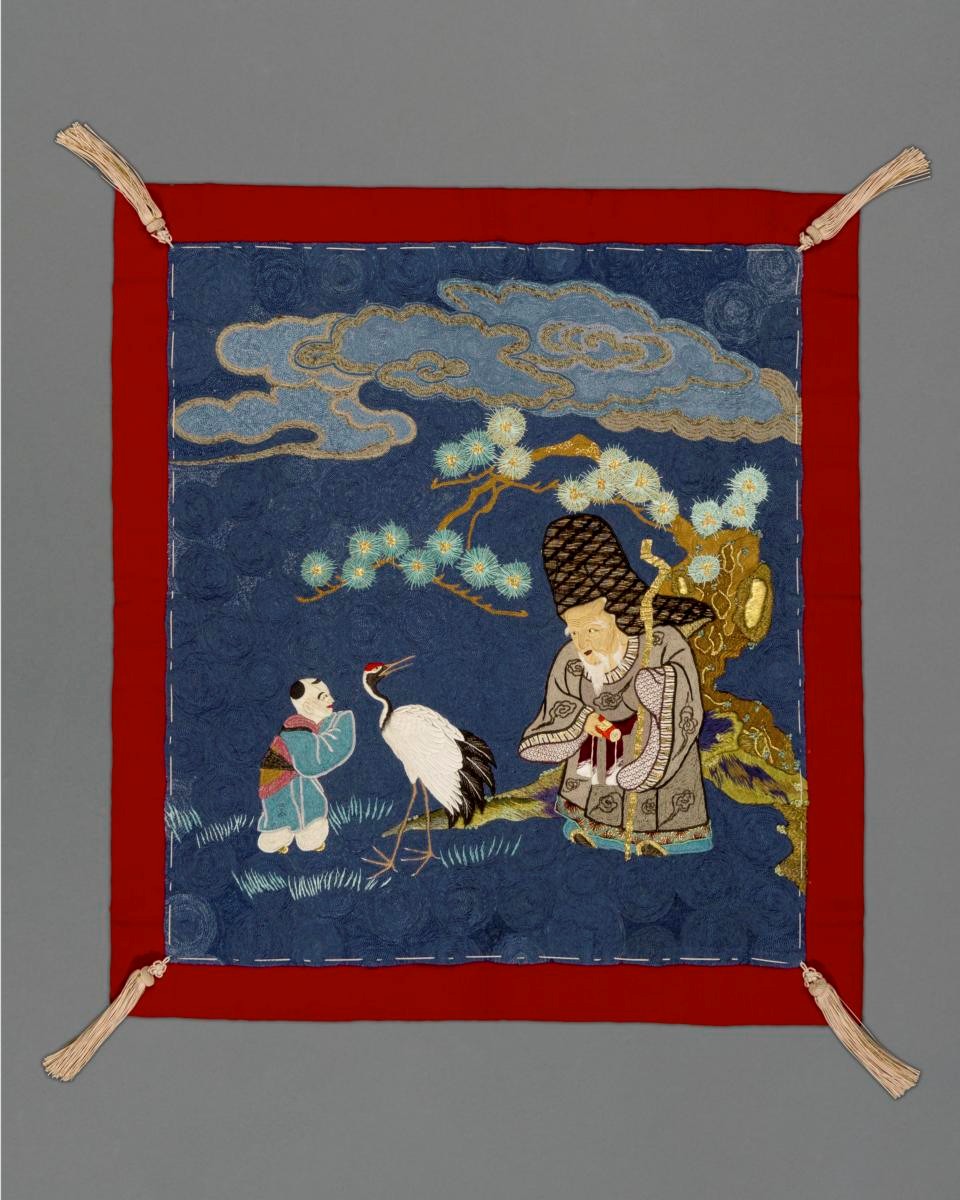
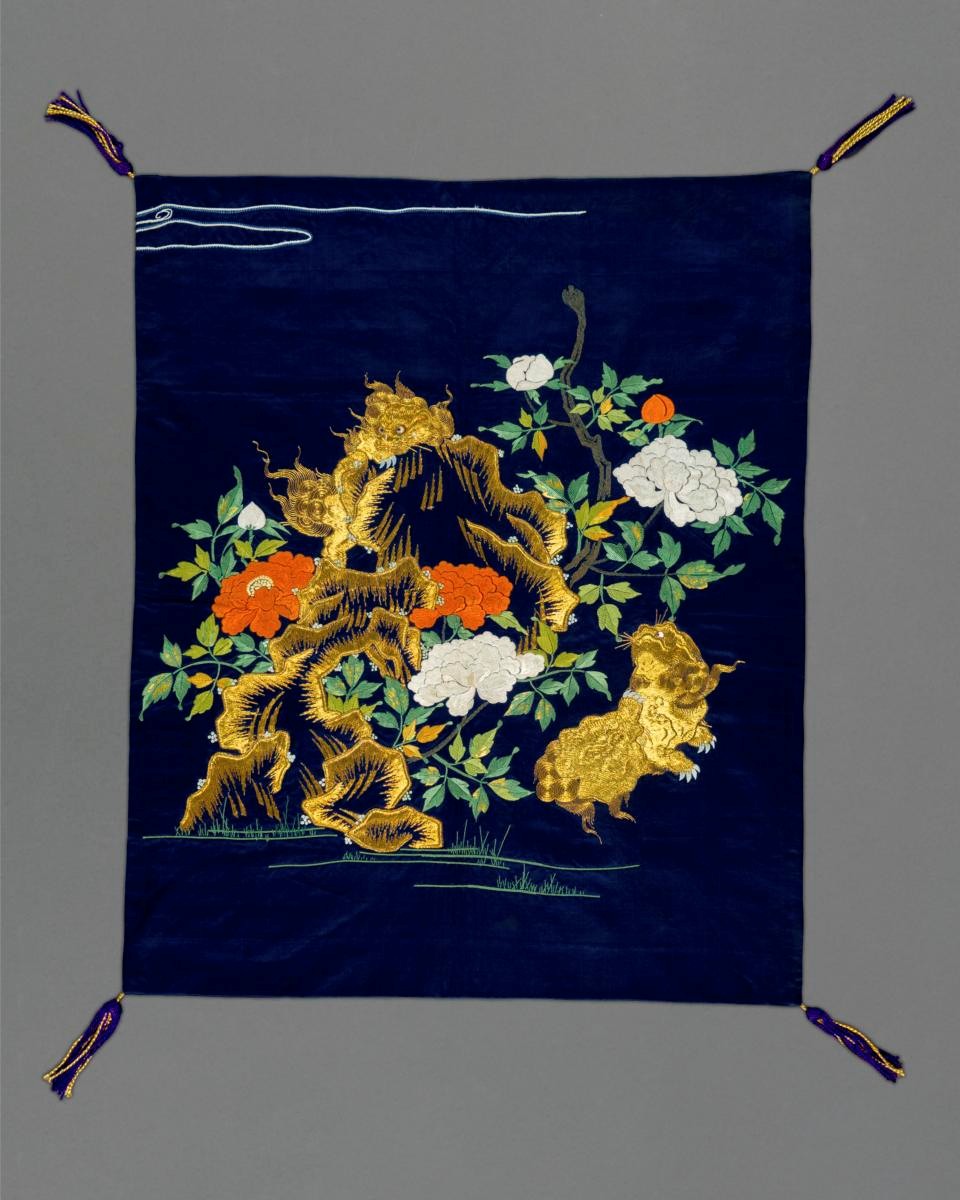
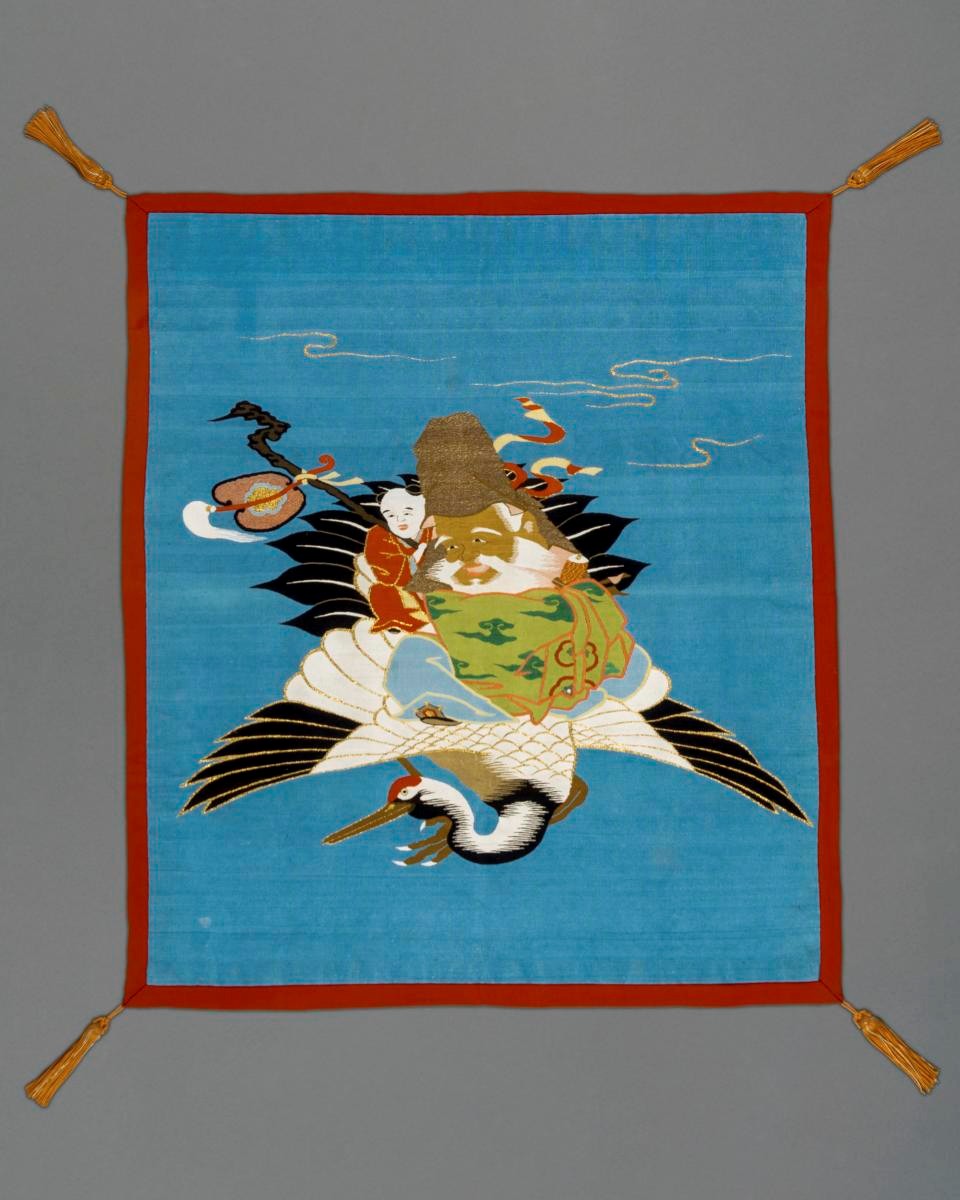
In Japan, the practice of formally presenting gifts with silk covers called fukusa began in the Edo period (1603–1868), around the late 17th or early 18th century. These covers were draped or folded over gifts for a variety of occasions, from seasonal festivities to important personal events. Each fukusa was carefully chosen to evoke the circumstance of the gift and to convey a message to the recipient through its design. Fukusa designs often feature symbolic objects or allusions to Japanese and Chinese stories. The choice of fukusa also reflected the giver’s wealth, taste, erudition, and cultural sensitivity. The use of fukusa continued into the early 20th century. Today, they are used in parts of Japan for weddings and corporate events. Hotei (Budai) is a legendary monk. He is especially venerated in popular Buddhism as an incarnation of Maitreya, the Buddha of the Future. He is known for his rotund belly and eccentric, cheerful personality. In Japan, Hotei is also the god of fortune, guardian of children, and one of the Seven Gods of Luck. The deity holds a wish-granting jewel and leans against his iconic cloth sack, representing abundance. Fukusa with this design were appropriate for celebrating a new house or business venture. Fleshy folds and drapery are enhanced by raised embroidery, while subtle washes of colour on the silk threads create tonalities in the skin and hair.