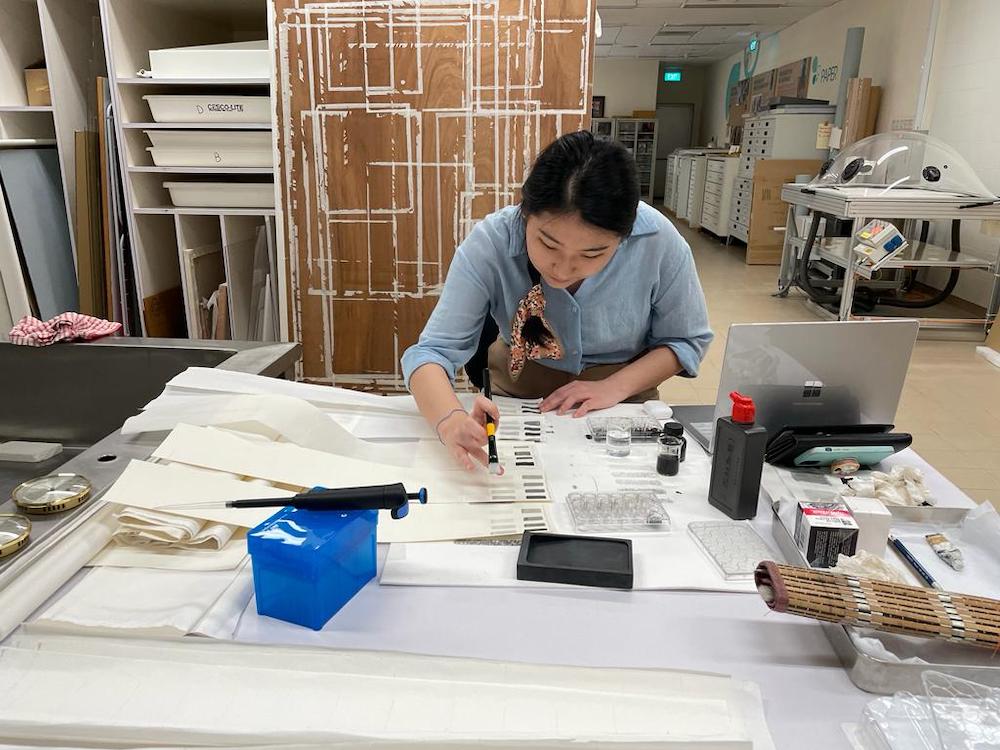

.JPG)
TL;DR
Over 10 tonnes of artefacts were excavated in Singapore waters. A multidisciplinary team of archaeologists, conservators, and collection managers now undertakes meticulous work to clean, conserve, analyse, and store these finds, revealing insights into past maritime trade and daily life whilst developing Singapore's archaeological capabilities.A diver uncovering artefacts from a historic shipwreck site in Singapore.
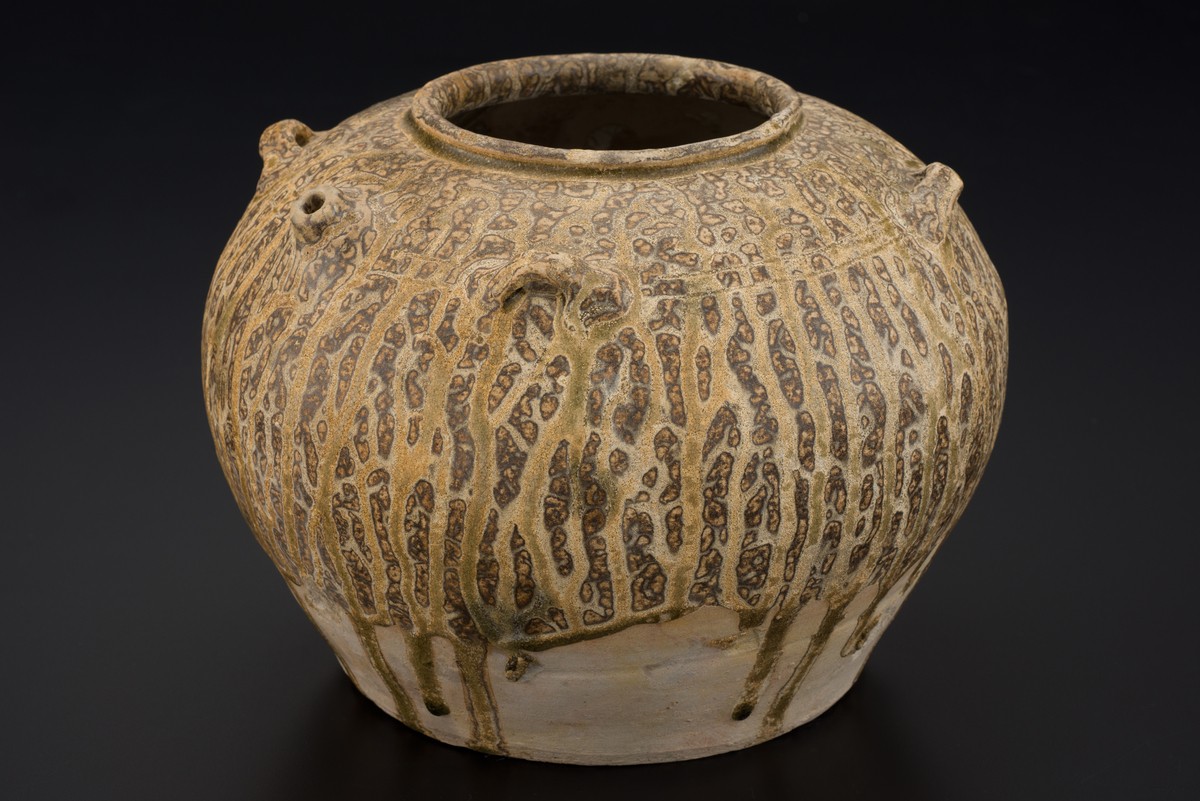
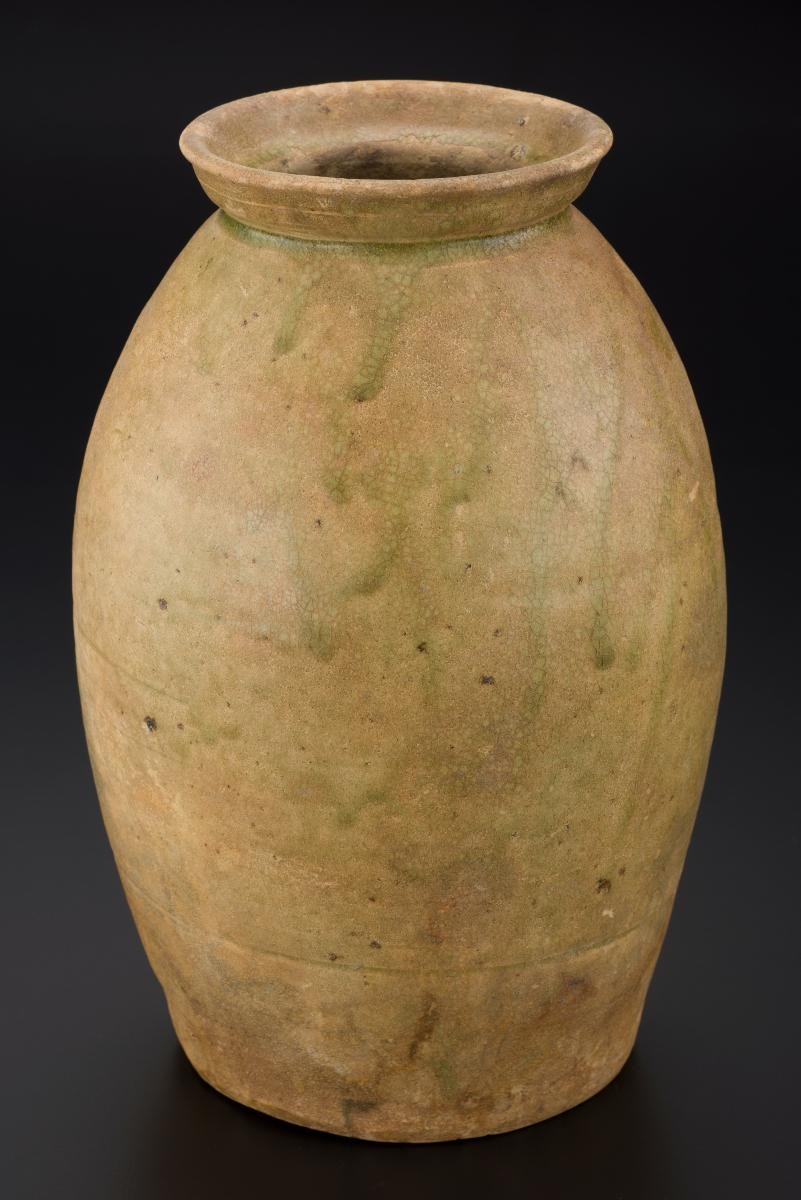
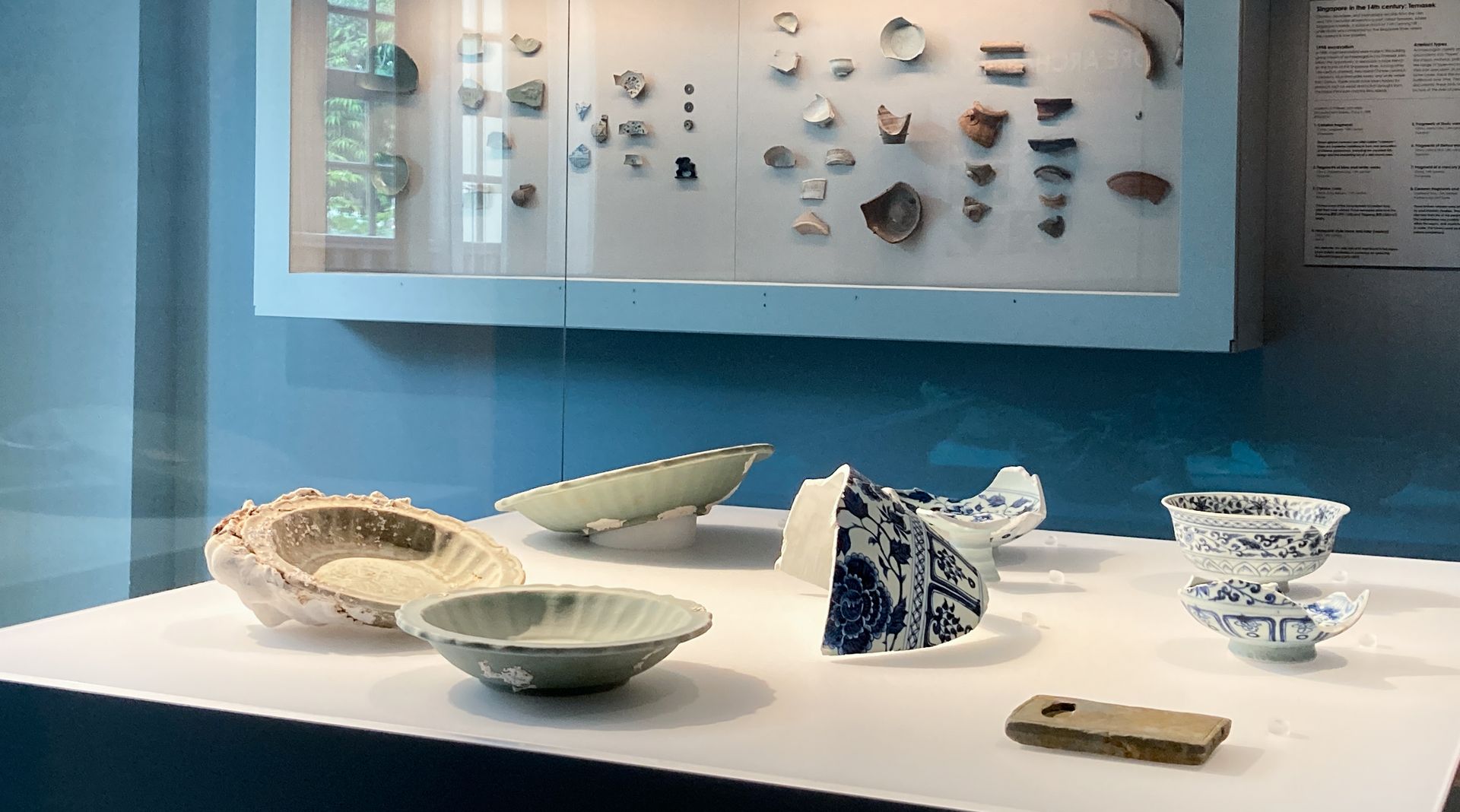
In 2021, the excavation of two historical shipwrecks in Singapore waters was announced by the National Heritage Board (NHB): the mid-14th century Temasek shipwreck and late-18th century Shah Muncher shipwreck. From these two wrecks, a dizzying 10 tonnes of varied materials were recovered. From metal betel cutters to charming porcelain makaras, these finds reveal intimate details about the way people in the past lived and the vast movement of goods across oceans and continents.
Today, the work done to record, analyse, store, care for, and interpret these objects is shared by a community of archaeologists, conservators, collection managers, volunteers, researchers, and policymakers. Each object has been on a journey multiple times: from the moment they were lifted from sea to land, through being counted, transported, analysed, and conserved, to their eventual storage or display. This article aims to capture the meticulous but unseen work done beyond the excavation—the “long-tail” of archaeology—and the professionals who do this work.
What Happens during an Underwater Excavation?
Divers usually conduct an underwater survey of the seabed to assess the full extent of the site. The site is then divided into grids and systematically excavated. This is to retain context, which is of paramount importance in archaeology—understanding the location of an object within the site is essential to understanding how the ship was wrecked or how the object was once used. This is very difficult in Singapore’s active waters, where the unpredictable currents result in a dynamic and constantly shifting seabed. Coupled with low visibility, such maritime sites require a skilled diver with a trained eye.
On dry land, archaeologists and volunteers clean, sort, and assign a Unique Identification Number (UIN) to each object, which enables it to be traced back to where it was found on the site. They are then transported to a storage facility where each object is photographed and registered to a database.
As the seabed has preserved the objects for hundreds of years, removal from the underwater environment can cause rapid changes to them. The conservation process is critical to preserving valuable information held by the objects. Appropriate conservation first-aid measures are employed immediately after excavation to slow down deterioration. Later, more extensive conservation treatments are carried out, some of which may take years to complete. This is necessary to enable their long-term storage and use, such as for display, education, and research.
Research conducted on the objects helps to piece together a clearer picture of the wreck and its cargo. For example, glass finds are particularly illuminating; using non-invasive methods such as X-ray fluorescence (XRF), a chemical profile of the glass object can be developed by using X-rays to identify the elements present in the glass. As different regions used various types and compositions of raw materials and had their own glassmaking traditions, this data could be matched with other glass objects found in various regions to establish where and when they may have been manufactured.
Treatment Spotlight: Glass Bottles
Among the Shah Muncher finds were several glass bottles and shards. Likely cognac and beer bottles consumed by the crew, these items were not part of the cargo. While such mundane objects are often overlooked for their prettier cousins—such as the Temasek shipwreck's glass beads and bangles—these items offer a wonderful insight into the crew of the 1794 ship.
Often appearing in deceptively good condition when on the seabed, conservators can only tell how deteriorated the glass is once they are dried out, when layers start separating and detaching. After nearly 230 years underwater, the glass from the Shah Muncher had been leached of stabilising minerals and was in a heavily eroded state. After desalination (the process of removing potentially damaging salts), a combination of consolidation methods was used to reduce further loss of glass.
The wet glass was first placed in a water-based emulsion bath so that the consolidant (a thin adhesive) could be drawn into the gaps between the fragile layers and provide support during the air-drying process. Once dry, a different acrylic-based consolidant was used to aid in localised treatment of layers that required further support.
The final stage—and arguably the most fun—was piecing the shattered bottles back together. Because of the highly eroded nature of many of the glass pieces, determining how shards fit back together was difficult, time consuming, but very satisfying.
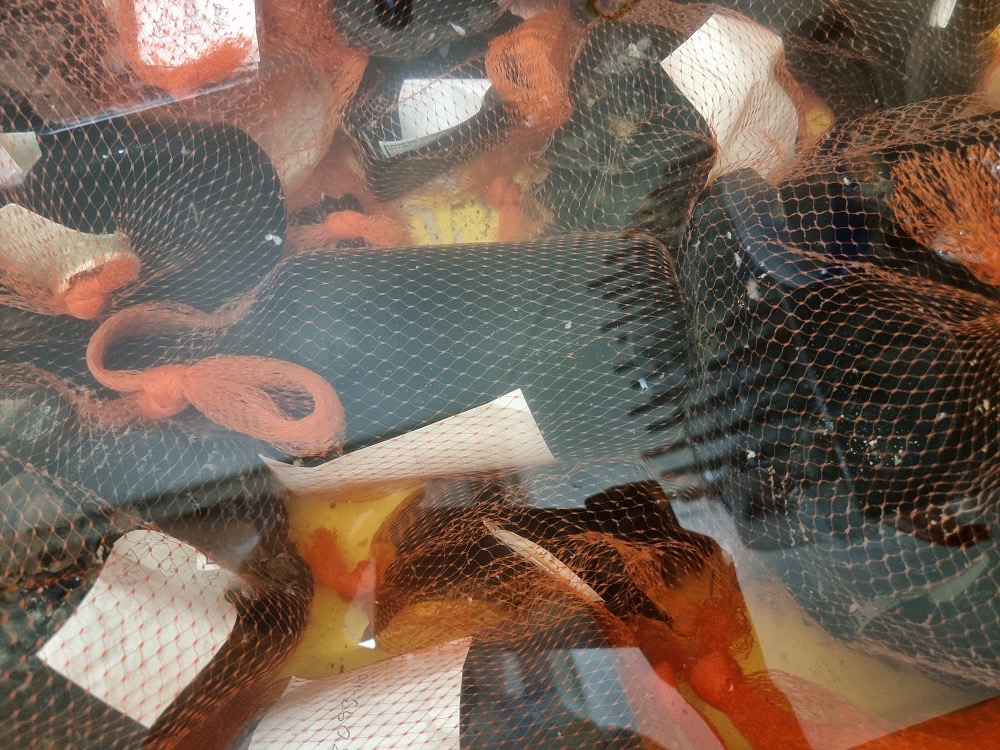
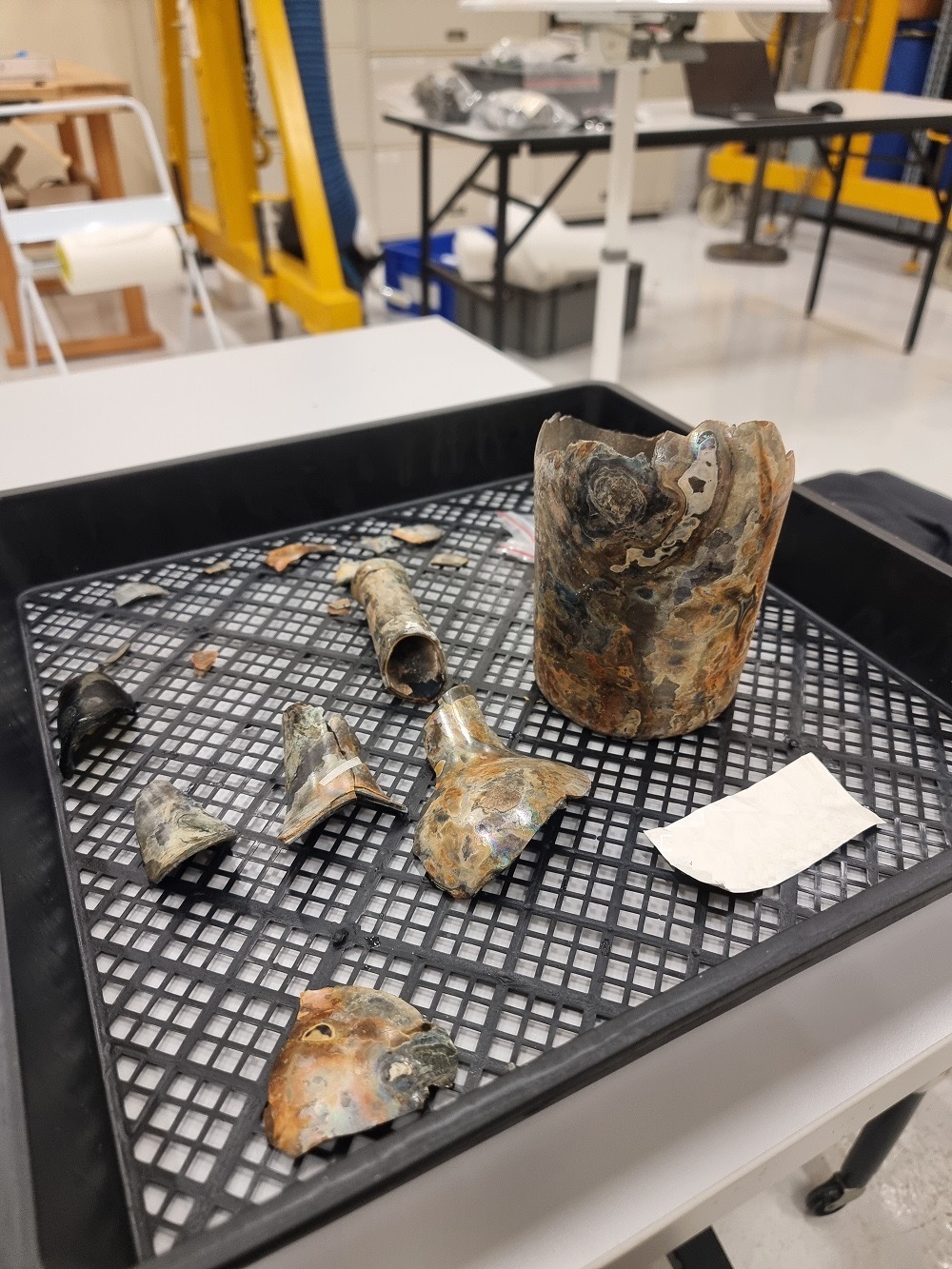
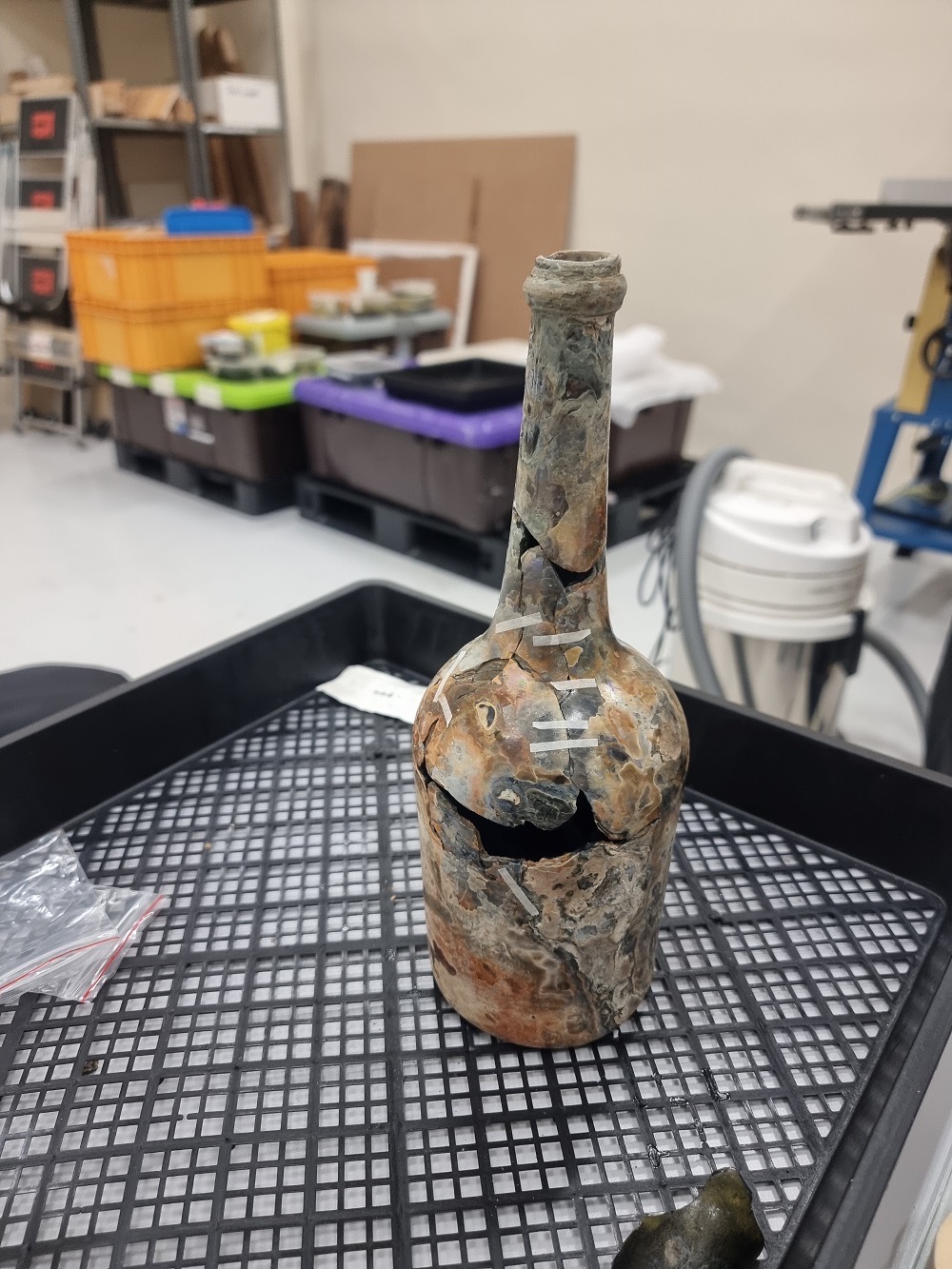 Batches of wet glass in a water solution (left), pieces of glass drying after consolidation (middle), and an example of a treated glass bottle after reconstruction (right). Images courtesy of the authors, 2024.
Many of the finds and their contexts contain a wealth of valuable information for researchers, students, and scholars, who continue to deepen our understanding of our past through their studies. Enabling access to Singapore’s archaeological objects is therefore a vital thrust of NHB’s approach in managing Singapore’s archaeological patrimony. To facilitate this, NHB is developing a management framework to guide usage of Singapore’s archaeological objects and archives in a manner that is aligned with their archaeological value, enabling Singaporeans to enjoy and appreciate the country’s deep history through everyday encounters with archaeology.
The Big Move
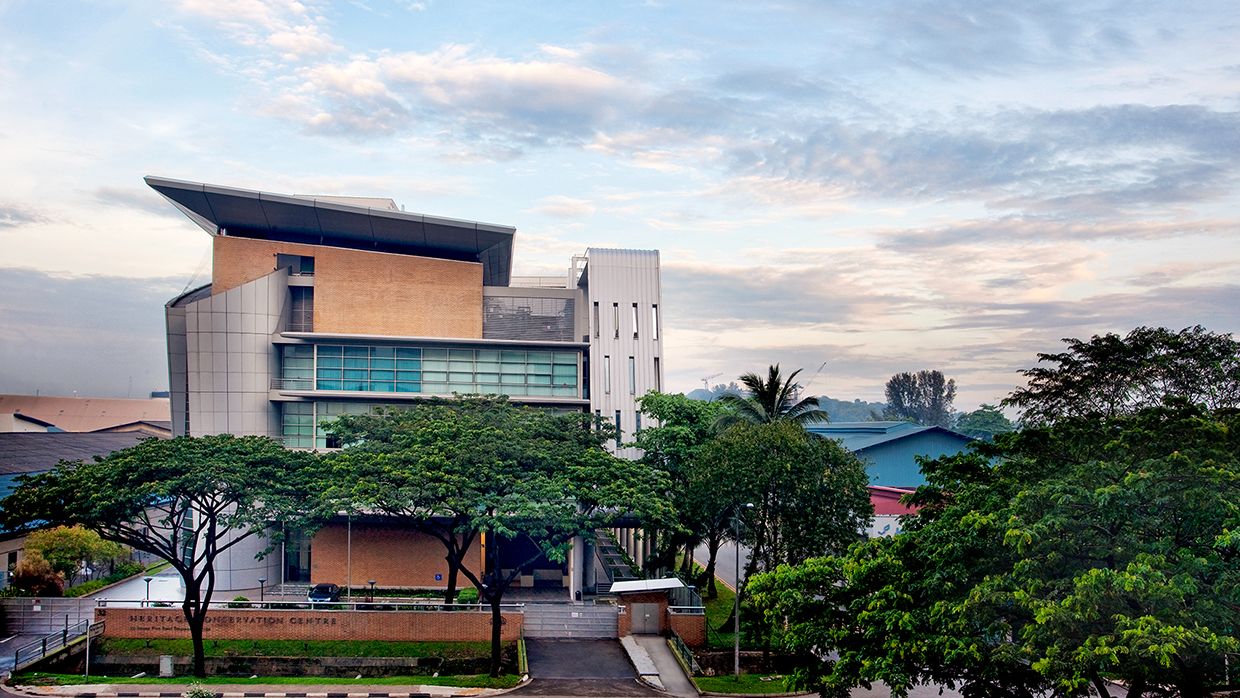
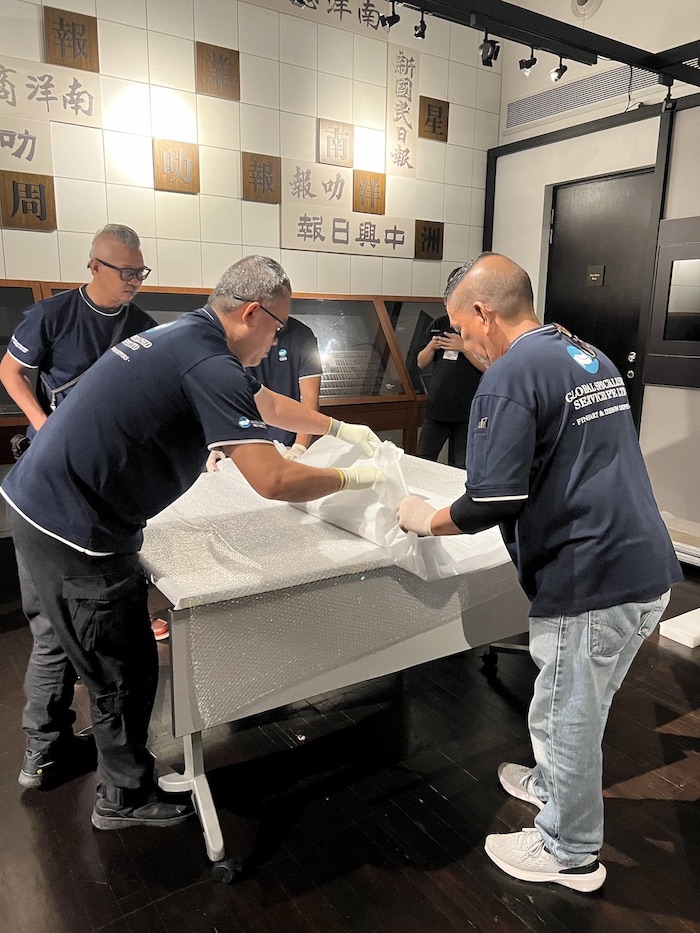
The massive scale of archaeological finds, and the messy and dirty work needed to process them, differentiates them from collections that are usually acquired more selectively. Hence, following the excavation and interim conservation treatments to stabilise the finds, collection managers and conservators from the Heritage Conservation Centre (HCC) worked closely with maritime archaeologists to move a massive 10 tonnes of materials from an interim facility to a location more suited for storage and processing. As the scale and complexity required many hands, the team was joined by eight professional art handlers, who provided the strength and vigour required to complete such a feat in a short amount of time.
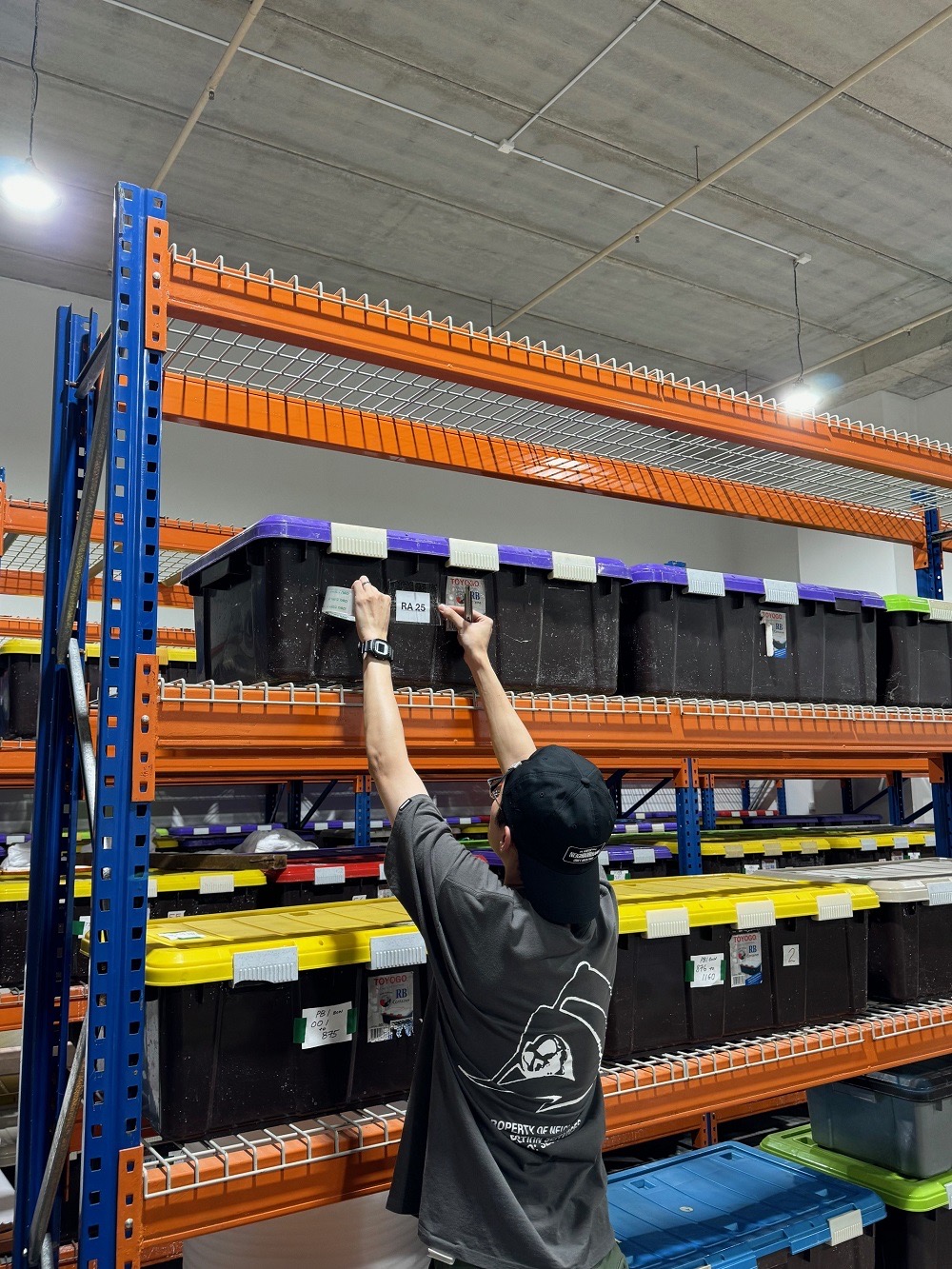 A collection manager ensures all boxes are labelled appropriately prior to transport. Image courtesy of the authors, 2024.
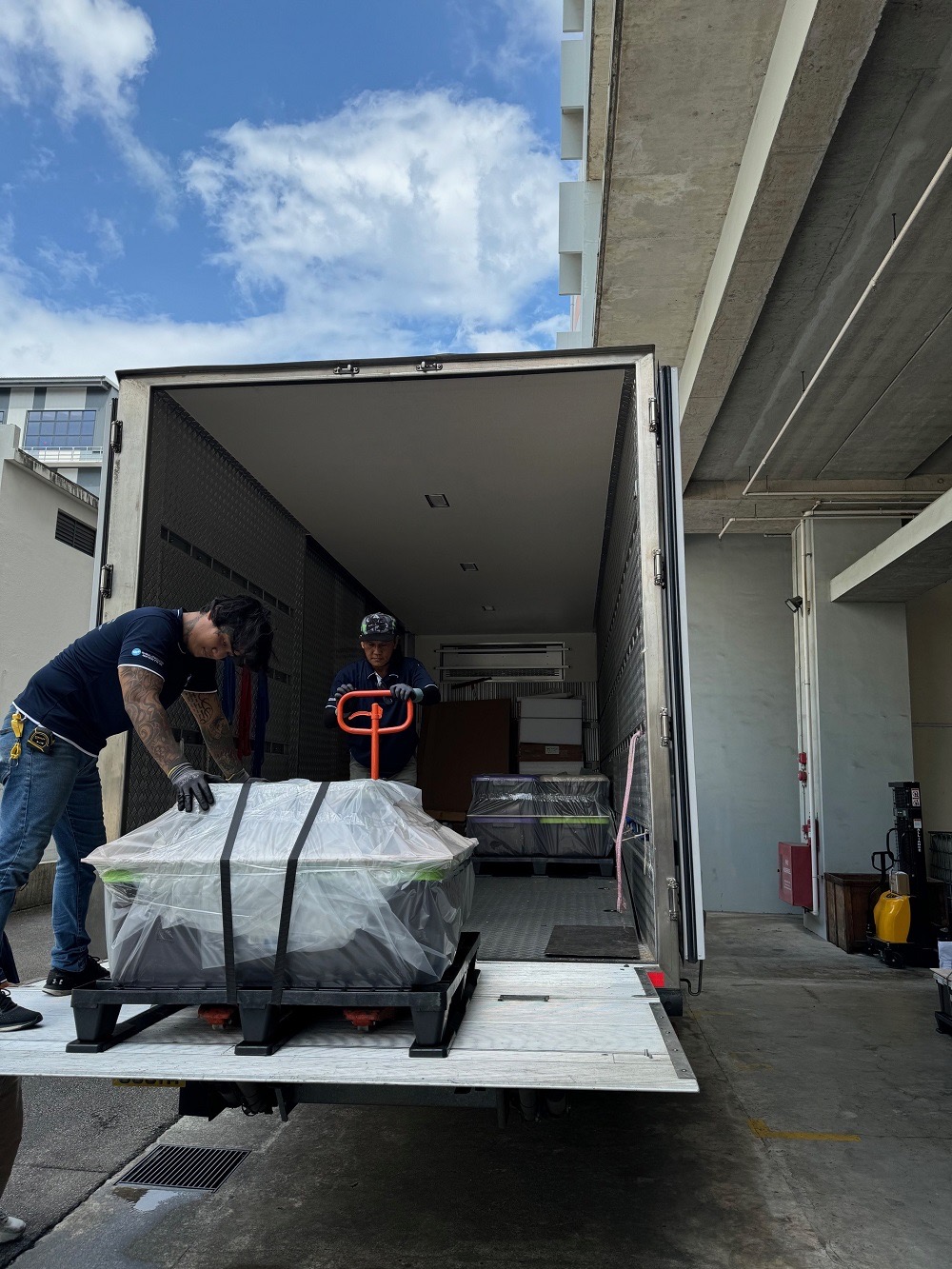 Art handlers safely loading the objects into the truck for transport. Image courtesy of the authors, 2024.
“Do not separate”—archaeological materials in transit
Safety—of both the objects and their human handlers—and accountability were two key aspects of the move. Unlike non-archaeological artefacts that are usually labelled and packed individually, the archaeological finds, consisting of whole objects and large bunches of broken sherds, were grouped in plastic nets. As retention of site information is crucial to archaeological materials, the team kept the objects in their plastic nets during packing to reduce the risk of dissociation of integral site information. The bagged ceramic sherds and other dried, stable objects were then wrapped in layers of acid-free paper and bubble wrap to ensure their safety while in transit.
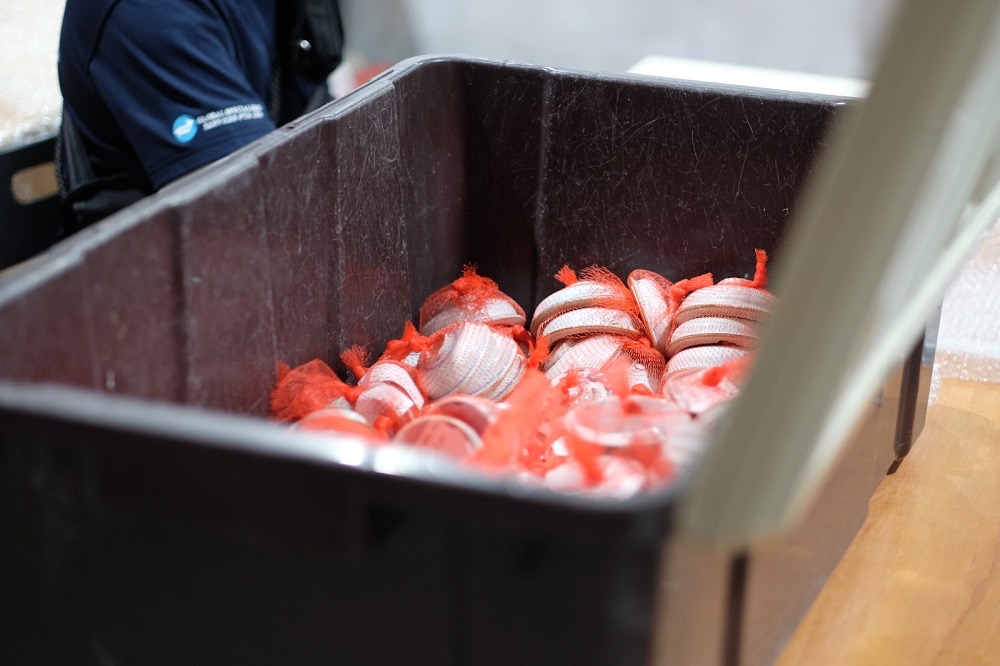 Finds grouped in plastic nets. Image courtesy of the authors, 2024.
The woes of waterlogged finds
Waterlogged maritime archaeological objects added a layer of complexity to transport considerations, as moisture needed to be retained even in transit. While much of the collection had been dried and treated, some waterlogged materials remained in boxes filled with solutions such as polyethylene glycol (PEG) and sodium carbonate. The objects submerged in these solutions, such as wood and glass, are often sensitive to extreme changes in environment. These solutions ensured that the objects did not dry out prematurely, which would have caused great damage.
Retaining all the solutions in the boxes would have made them too heavy and risked spillage. Most of the solutions were therefore removed to move the boxes safely. To maintain moisture and keep the objects from drying out whilst in transport, they were wrapped in solution-soaked geotextile, an absorbent material that retains liquid, and bubble wrap. The solutions were then replenished upon arrival at the next facility.
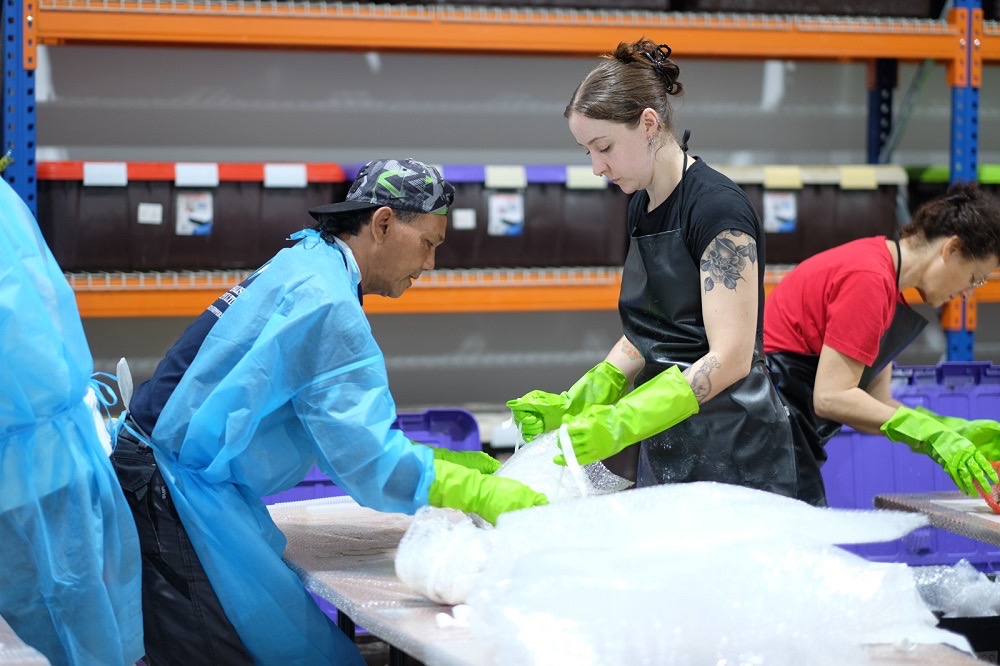 Personal protective equipment (PPE) is essential when handling waterlogged materials during the packing process. Image courtesy of the authors, 2024.
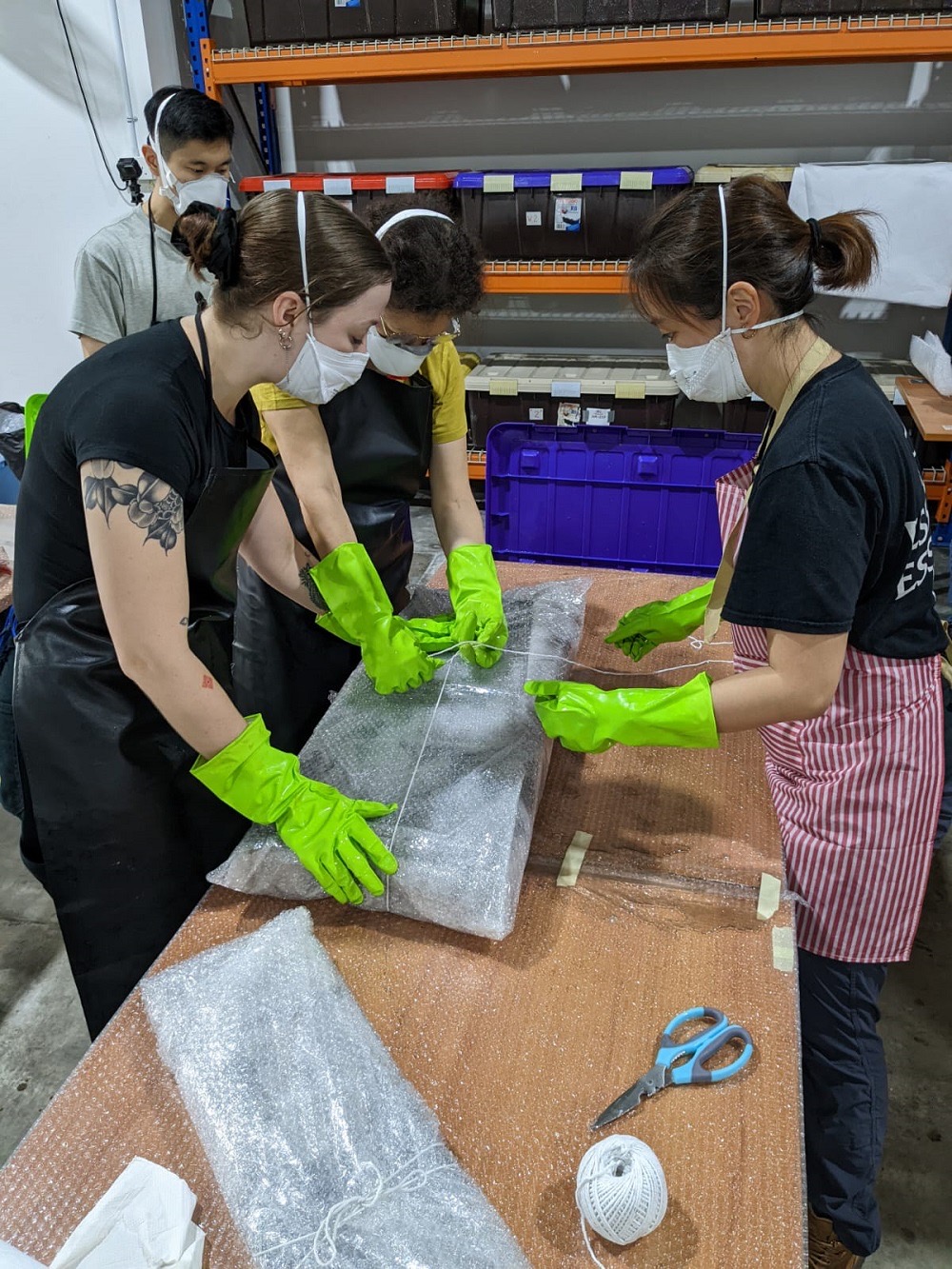 Wrapping waterlogged materials with geotextile and bubble wrap to maintain a wet environment for transportation. Images courtesy of the authors, 2024.
Developing Capabilities in Archaeological Collections Care
As Singapore’s involvement in maritime archaeology develops, there is a need to build local capabilities in archaeological collections care and conservation among all parties, across a range of disciplines, who work closely together in excavating, managing, conserving, and using archaeological collections.
To support this, HCC organised a six-day workshop led by Dr Franca Cole, an archaeological conservator with over 25 years of experience and who, at the time, was consulting on Conservation, Archaeology and Collections at the Sarawak Museum Department, Malaysia. Dr Cole is currently a Research Fellow at Nanyang Technological University. Opened in person and online to professionals and students within the conservation and archaeological fields, the workshop focused on a holistic, sustainable approach to archaeological collections care: from inception of project to long-term storage.
Comprising theoretical lessons and hands-on sessions using actual archaeological materials, participants learned about archaeological practices, conservation processes, and even handled excavated finds that had not yet undergone complete conservation treatment. This prompted participants to think about conservation approaches for different types of materials, and their impact on research and display.
The workshop culminated with a public talk by the late Professor John Miksic, Dr Goh Geok Yian, and Dr Michael Flecker, along with Dr Franca Cole on Singapore’s archaeological history and advocated for appropriate, coordinated care for archaeological heritage amid the rapid pace of urban re-development in Singapore.
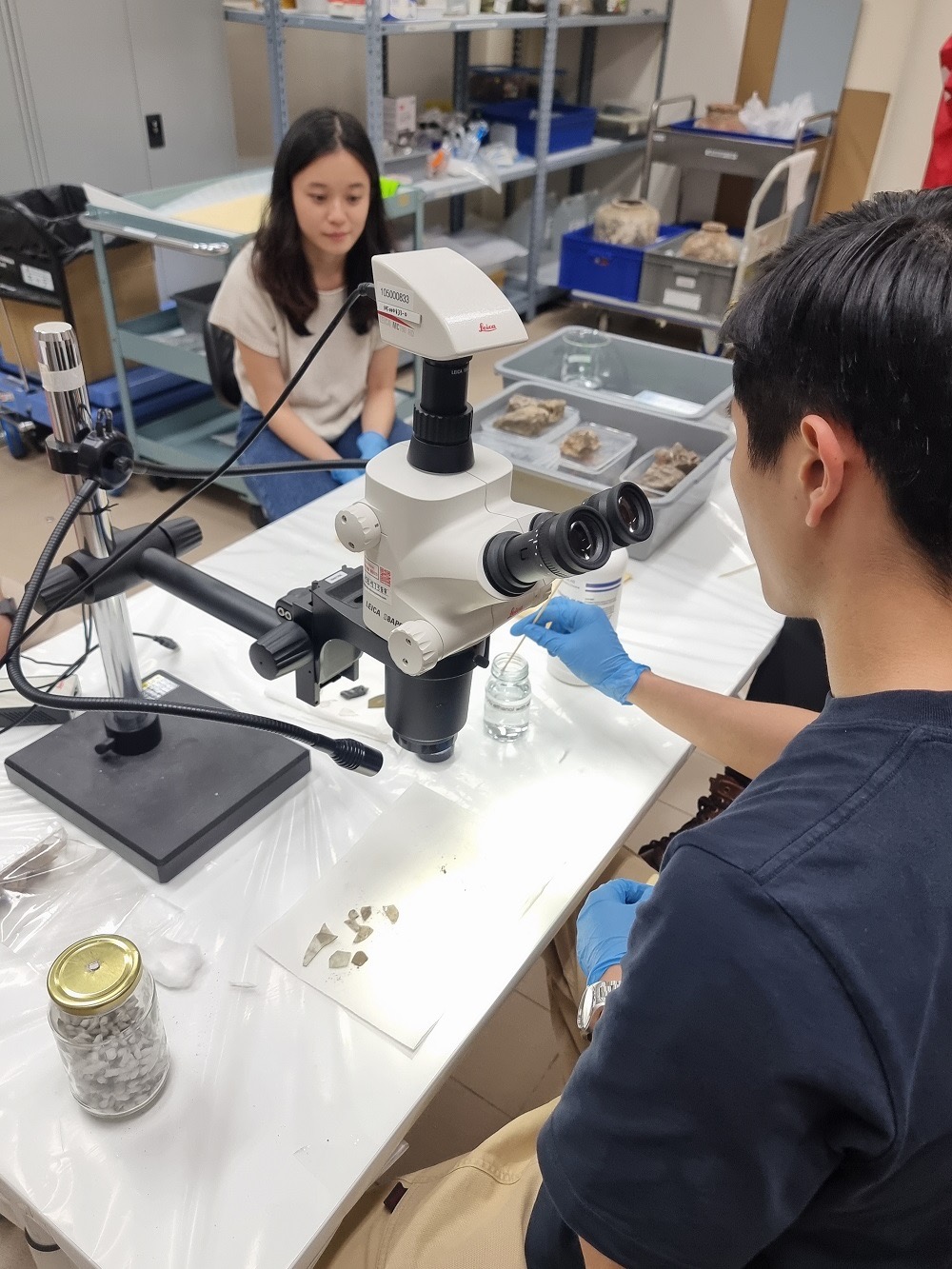
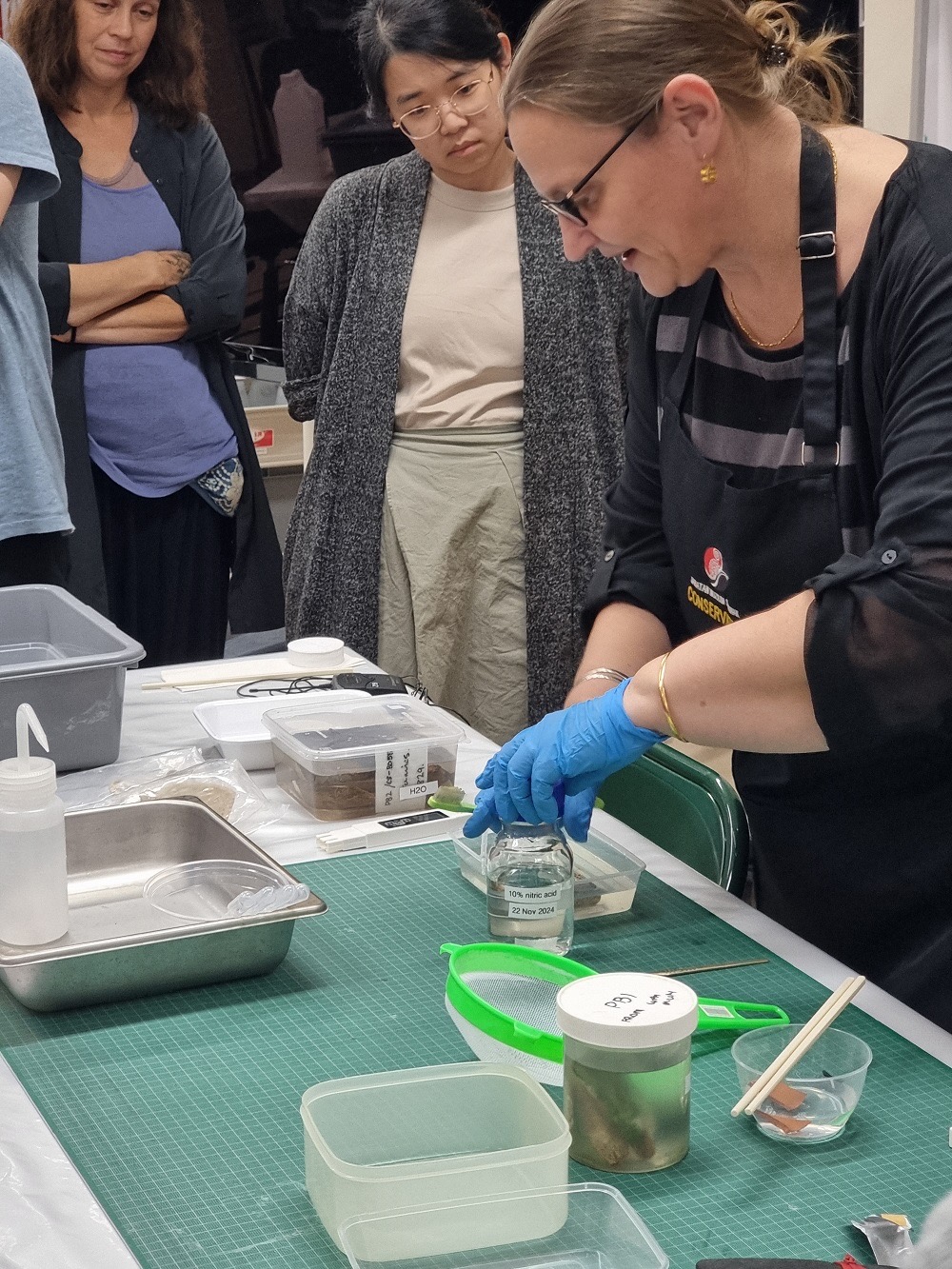
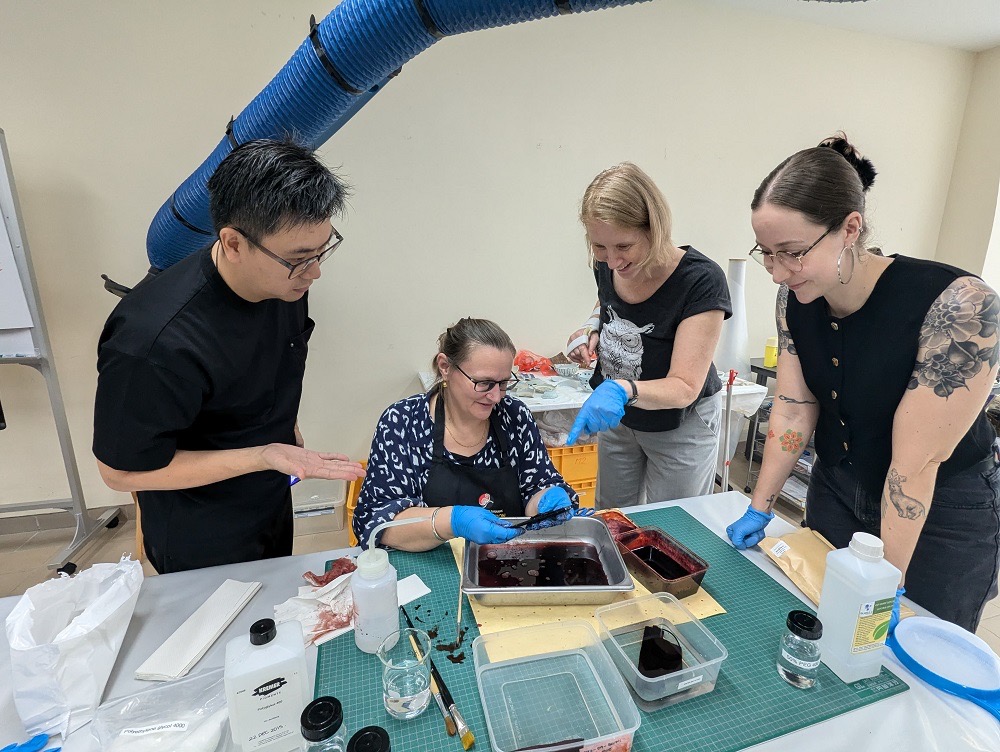 Hands-on sessions on archaeological conservation at the HCC laboratory. Images courtesy of the authors, 2024.
Treatment Spotlight: 2D X-Radiography
Among the many considerations in archaeological conservation are the decisions on conservation treatments.
Iron alloy concretions (often iron objects obscured by multiple layers of corrosion products) usually have fragments of ceramics, glass beads, agate crystals and even coral embedded in the corrosion layers. They tell an interesting story of how disordered the underwater environment can be, giving insight into the destructive environment of shipwrecks and the chaos that maritime archaeologists usually encounter on an excavation. These make them wonderful storytelling pieces.
For this reason, it is always vital to determine if such pieces should be treated to unearth the underlying objects.
As the conservation process focused on revealing the final non-ceramic objects, a major step in conservation treatment has been the 2D X-radiography of iron alloy concretions. Determining object shape and remains of base metal are two major aims when choosing to X-ray finds. In this case, it has given conservators a chance to see whether treatment—that is, reduction of concretions and removal of the outer corrosion shell—should be undertaken.
For the Temasek and Shah Muncher objects, 2D X-radiography has allowed the conservators and archaeologists to see rivet points, joints and whole artefacts, giving further insight into the ships and their cargoes, without needing to remove the concretions. In this way, 2D X-radiography allows the conservator to have the proverbial cake and eat it too.
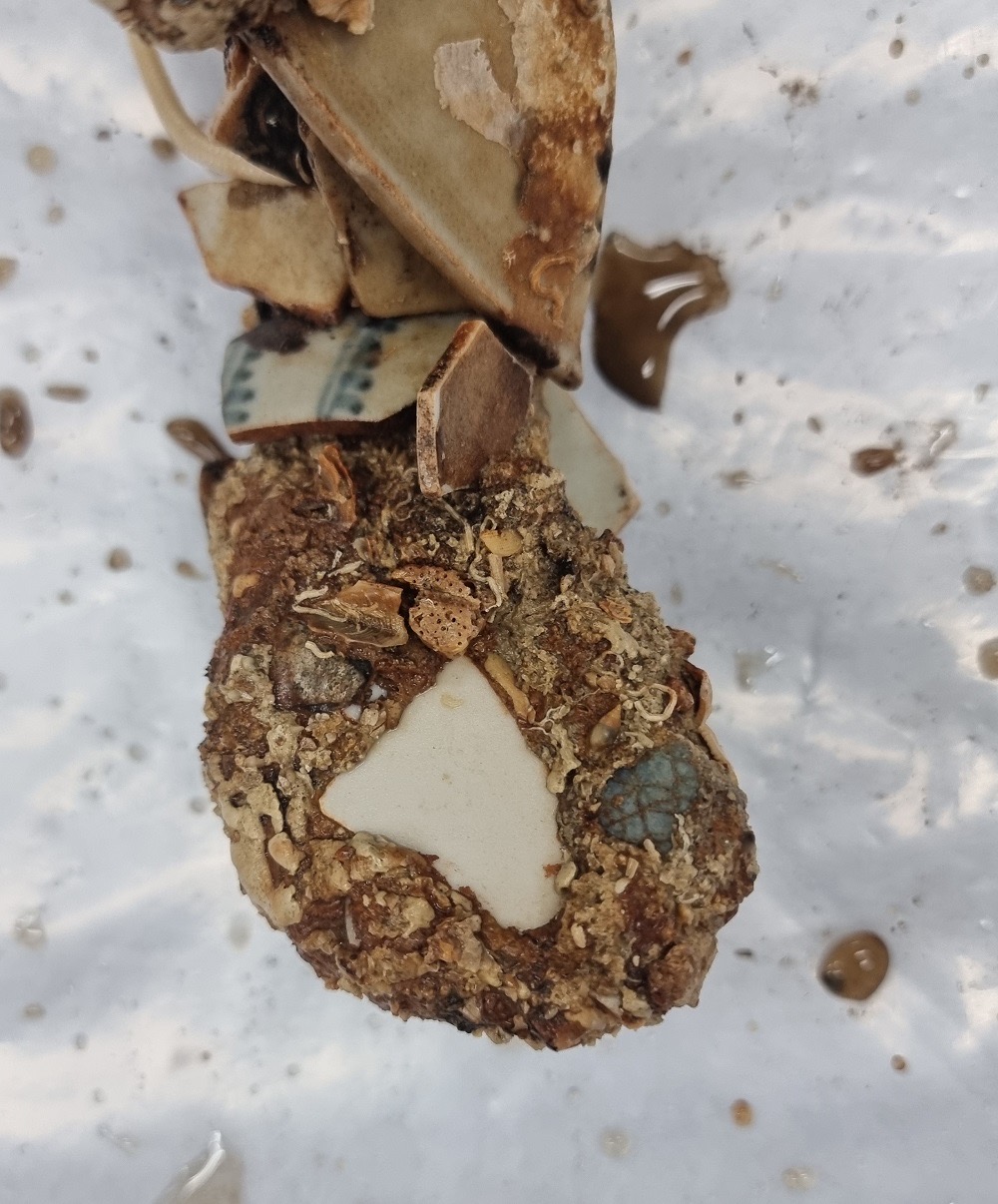
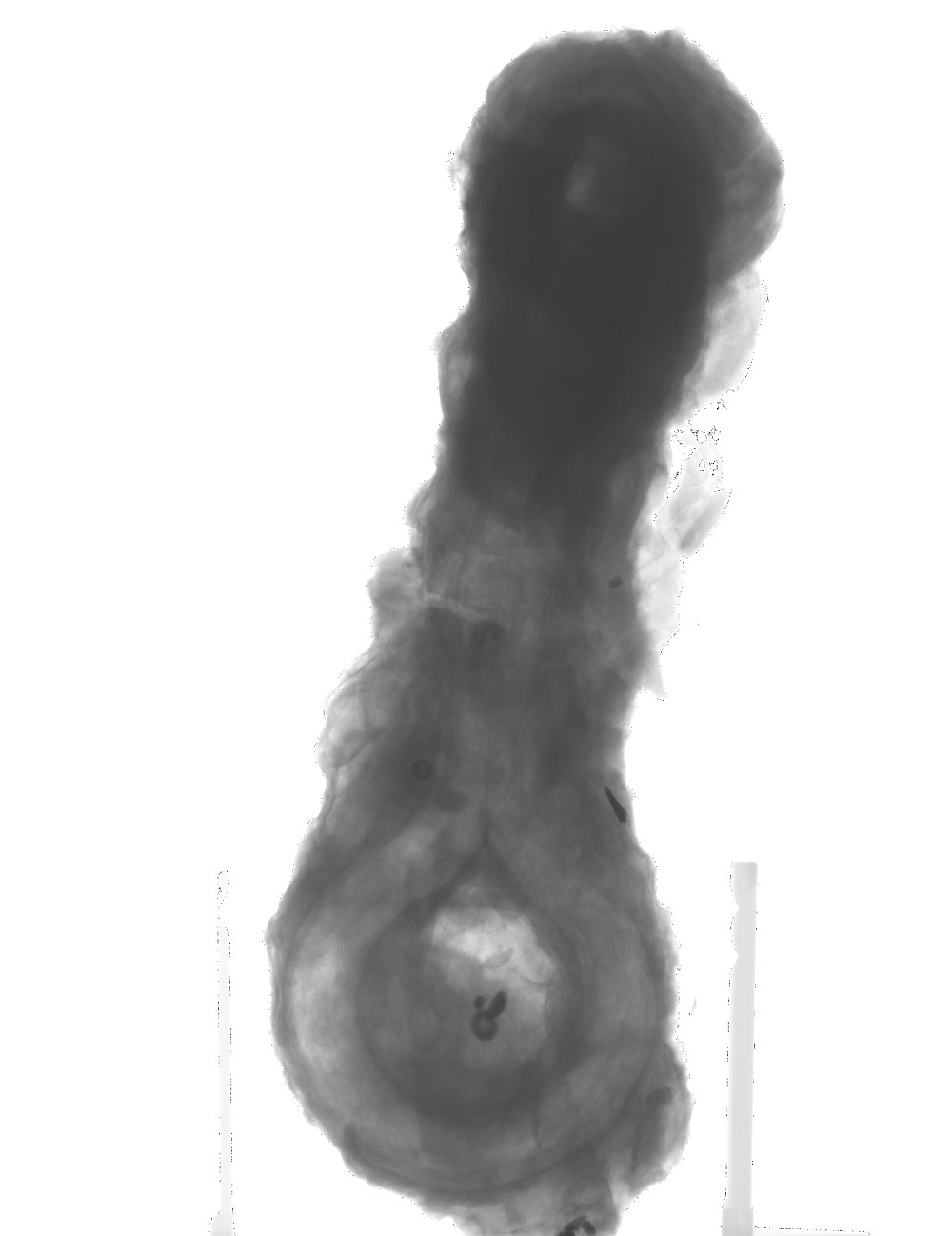 Side by side images of an iron alloy concretion and image produced by 2-D X-radiography, clearly showing an eyelet and remains of base metal. This enabled the concretion to be identified as a hook and eye, which was likely used to fasten rigging. Images courtesy of the authors, 2024.
Conclusion
The discovery of the Temasek and Shah Muncher shipwrecks was only the beginning of a long journey, undertaken by a community of people across multiple disciplines, towards an archaeological collection suitable for research, display, and long-term storage. Years later, the finds are still being processed, recorded, and treated. Efforts are also being made to develop other essential facets of archaeological collections care in Singapore, such as collections management, conservation, and capability development. This benefits not only the current archaeological collection, but also any future finds as Singapore’s archaeological scene continues to develop. This will ensure that the objects’ afterlives continue long after the last of these have been lifted out of the sea, for generations to come.
The authors would like to thank Dr Michael Flecker, Cindy Lau, Wei Ping Young, and Sufiyan Hanafi for their contributions to the article. The authors would also like to thank Dr Flecker’s volunteers for their long-term efforts in processing the shipwreck artefacts.