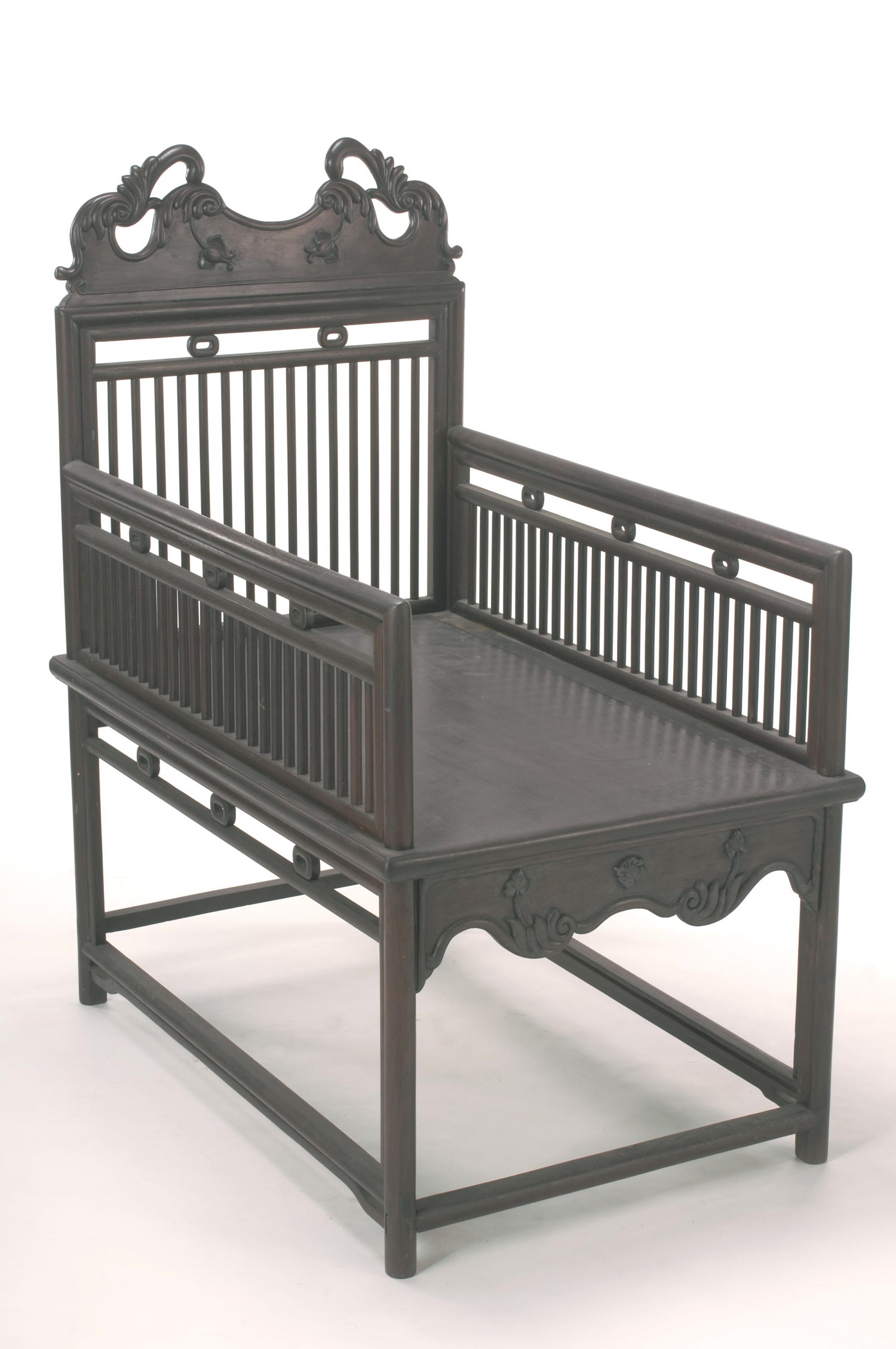

Objects made from organic materials such as paper, textiles or wood are particularly vulnerable. When these organic materials are exposed to air, they can break down chemically, releasing harmful substances known as museum corrosives, including acetic acid, formic acid, and formaldehyde. These gases are called Volatile Organic Compounds, or VOCs. The main way to protect Singapore’s national collection is to detect these VOCs early, which requires precise scientific methods.
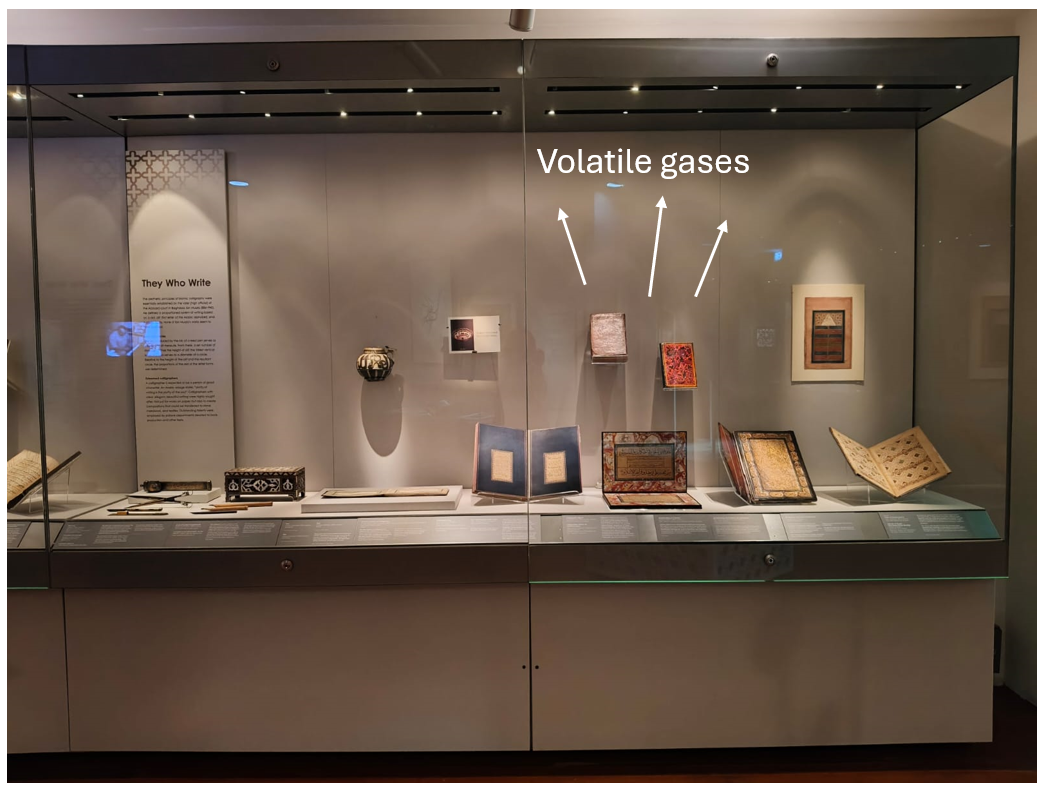 Artefacts and museum materials can potentially off-gas gaseous emissions. Volatile gases are concentrated in an enclosed environment such as a showcase. Courtesy of HCC.
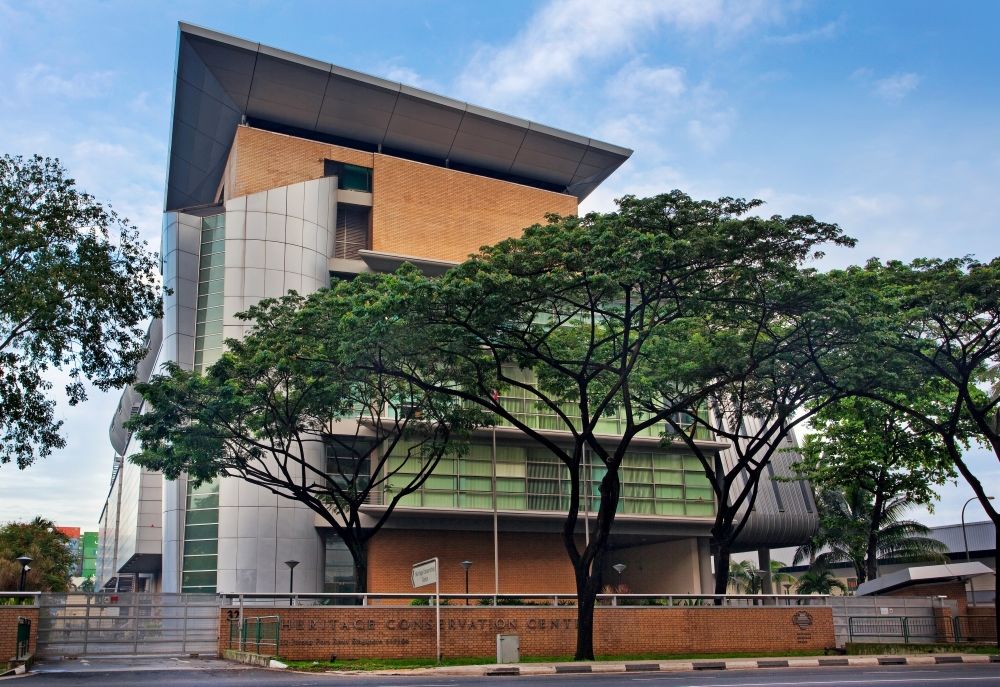
The most sensitive technique for identifying VOCs is Gas Chromatography (GC), which is available at the Heritage Conservation Centre (HCC) within the Conservation Science laboratory. Although GC is an extremely sensitive technique that can detect even tiny amounts of harmful VOCs, analysing gases released from artefacts presents challenges for conservation scientists. GC is a destructive method that requires cutting samples into small pieces and exposing them to high temperatures to release the VOCs. This is not always possible because heritage artefacts may be too delicate and valuable to damage.
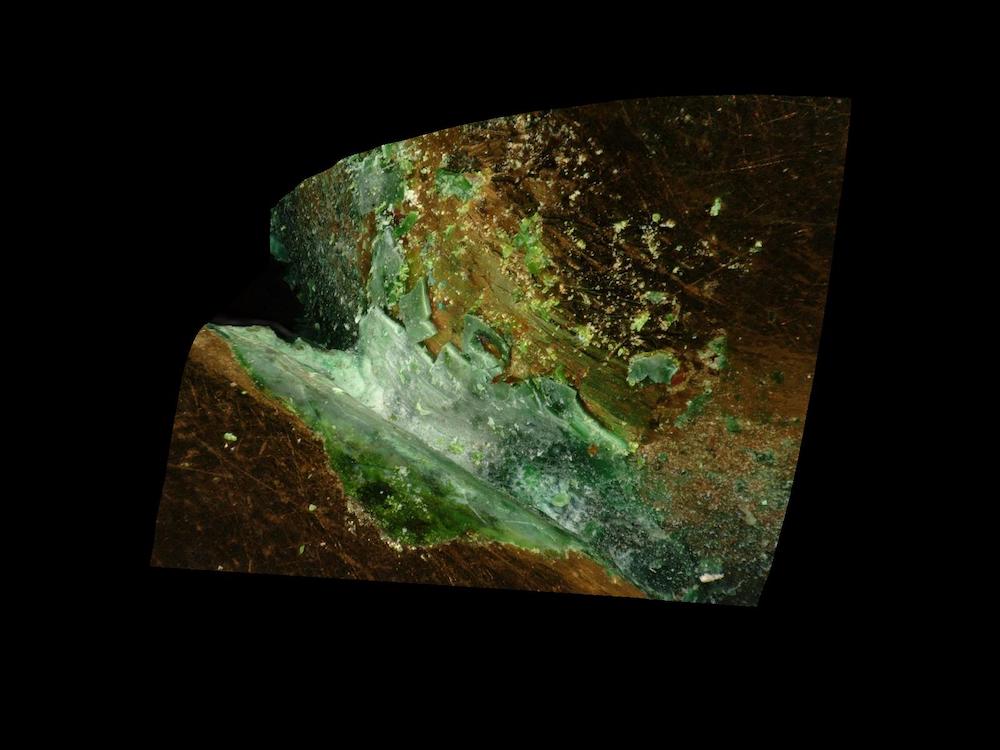
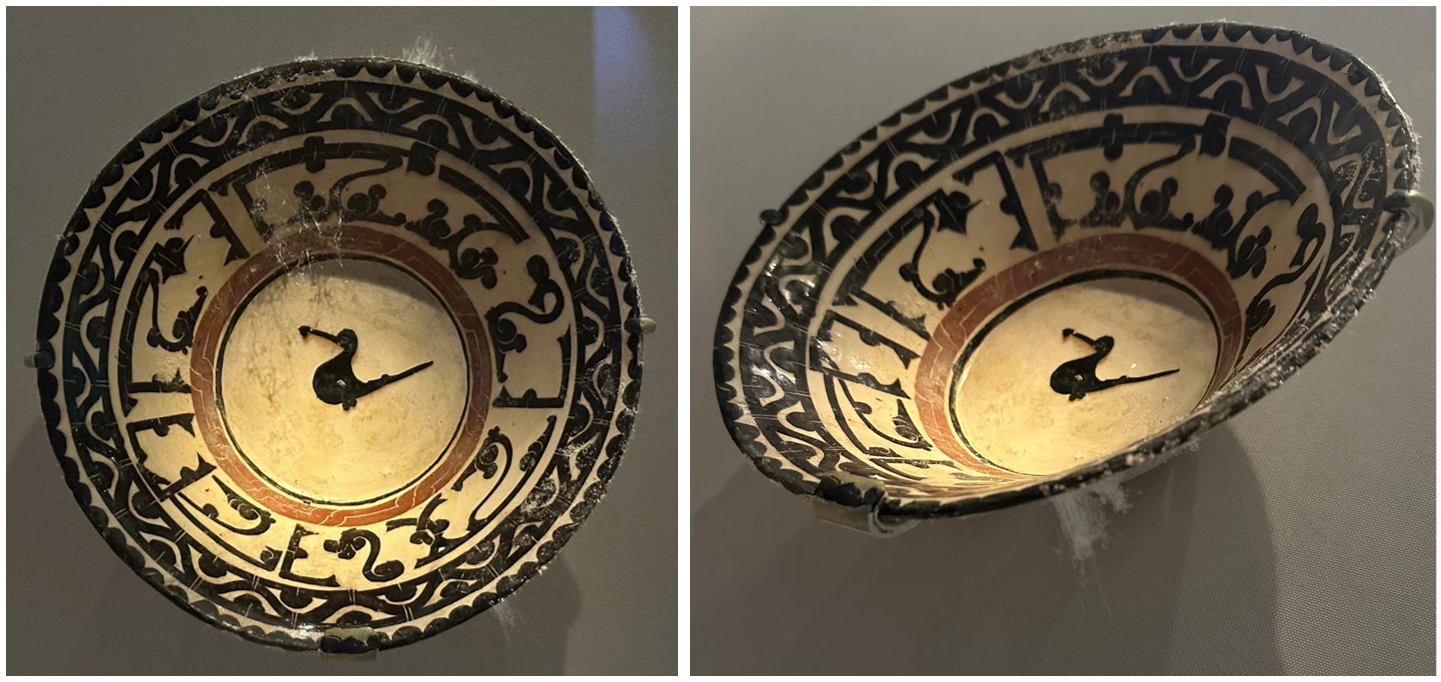
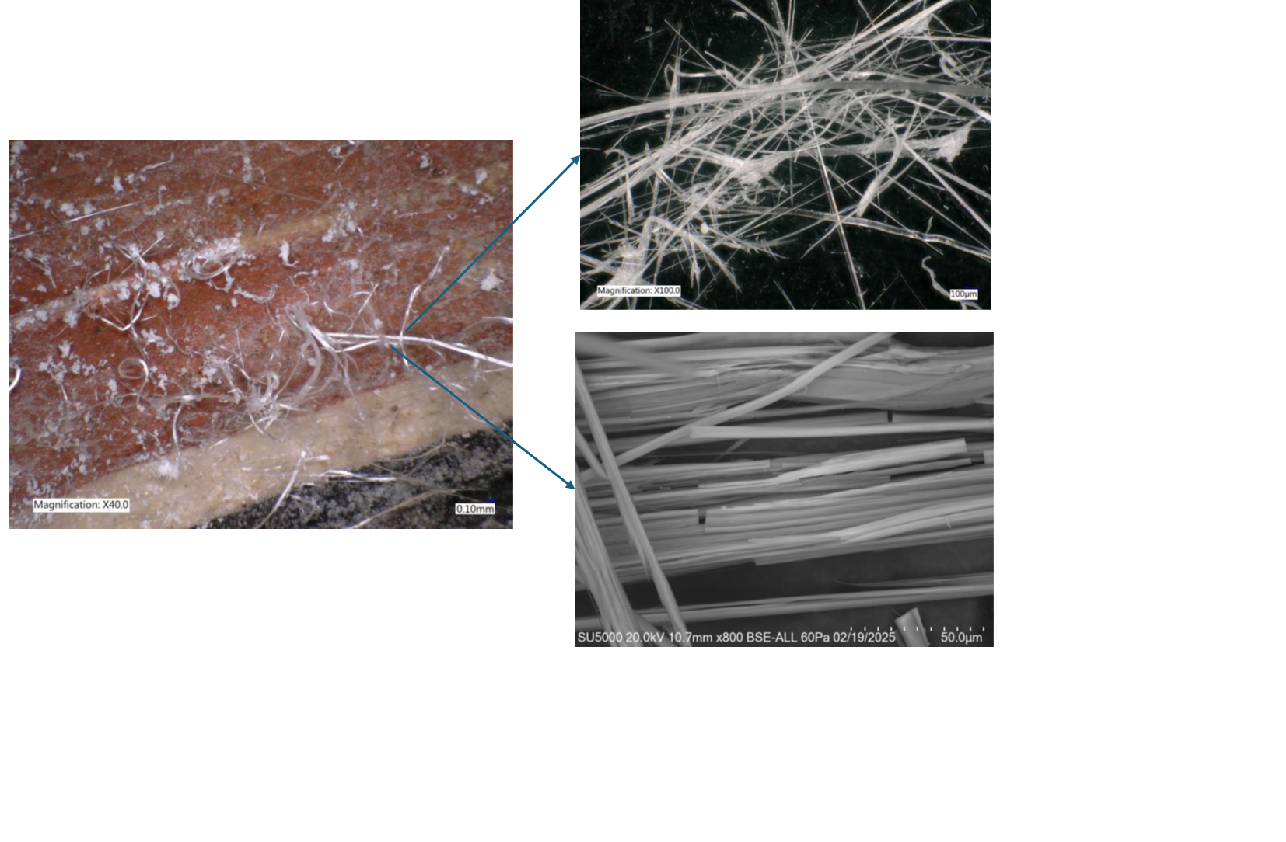 Crystalline deposits on the ceramic bowl, 2007-56610 are removed for chemical analysis. The crystals are identified as a hydrated calcium salt composed of both acetate, formate and nitrate: Ca2(CH3COO)(HCOO)(NO3) 2·4H2O. Courtesy of HCC.
Scientists at HCC have developed a non-destructive method for analysing VOCs that might be present inside museum showcases. This method uses a small metal tube coated with a special polymer. The coating is incredibly thin—only about 10 micrometers thick, thinner than human hair. The tube is carefully placed inside the showcase where suspected VOCs stick to the absorbent coating surface. The tubes, with trapped VOCs on their surface, are taken to HCC’s Conservation Science laboratory for further analysis using GC. This technique is normally used only to detect whether VOCs are present. However, HCC scientists have developed a method that can measure exactly how much of each VOC is present, providing valuable information for their work.
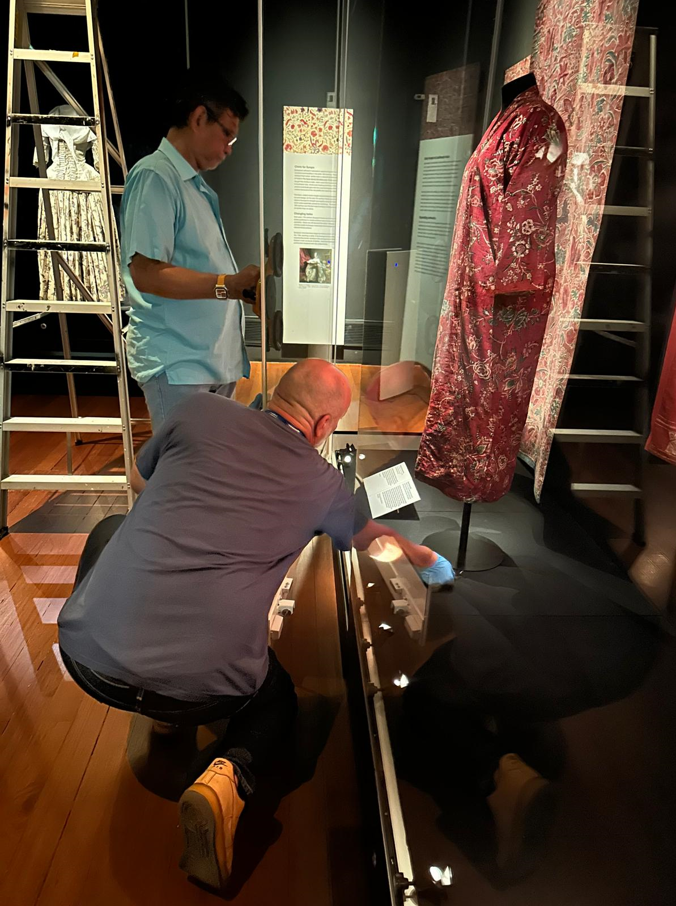 An HCC conservation scientist places the polymer-coated tube inside the showcase for 24 hours, to investigate the possible presence of corrosive VOCs. Courtesy of HCC.
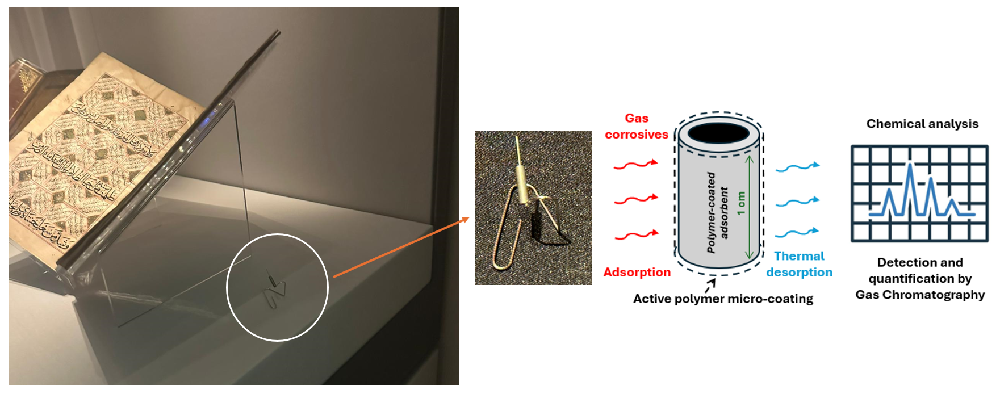 A small metal tube is coated with a micro-layer of polymer designed to absorb the most common museum corrosives: acetic acid, formic acid, and formaldehyde. Courtesy of HCC.
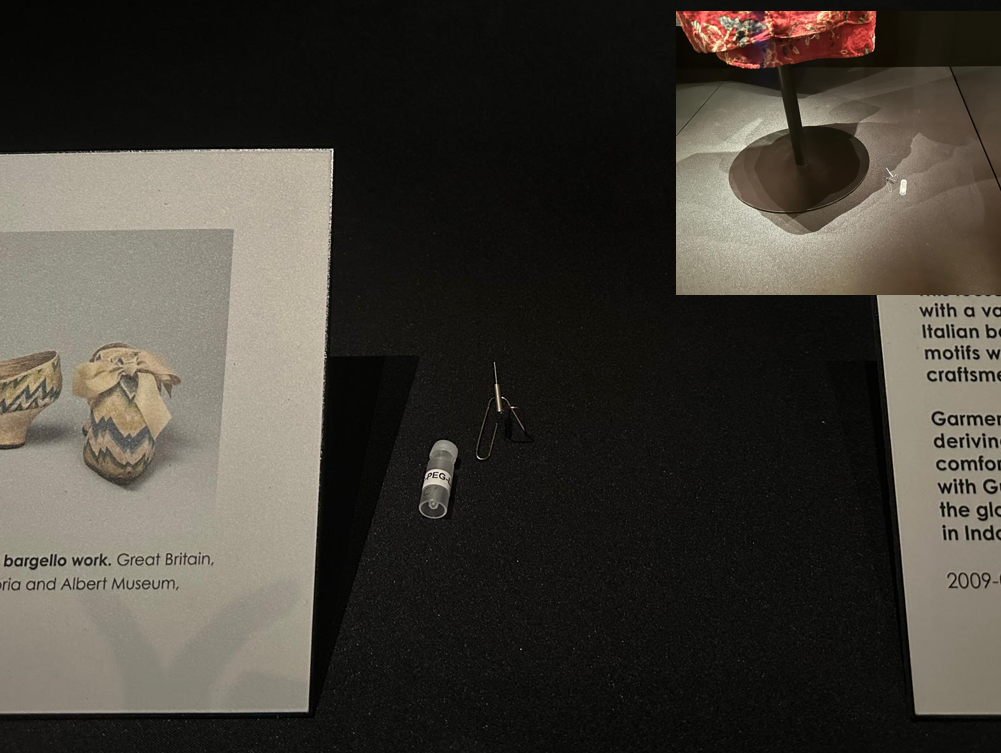 After 24 hours, the tube is removed from the showcase and analysed at HCC’s Conservation Science laboratory. Courtesy of HCC.