
TL;DR
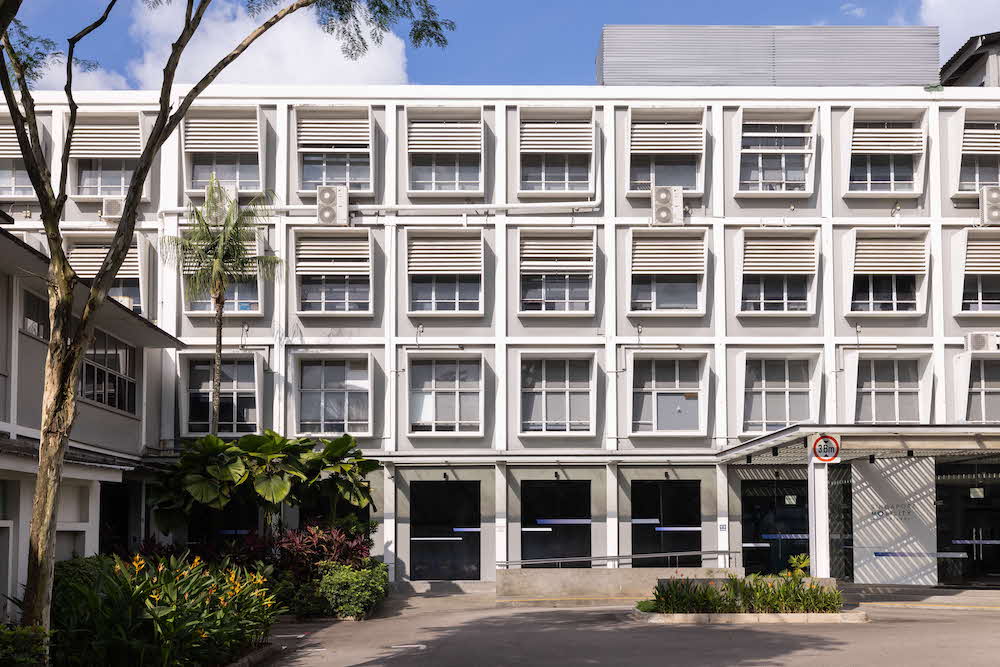
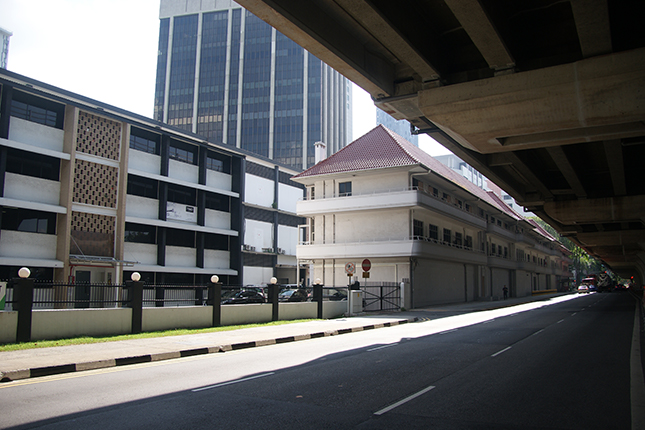
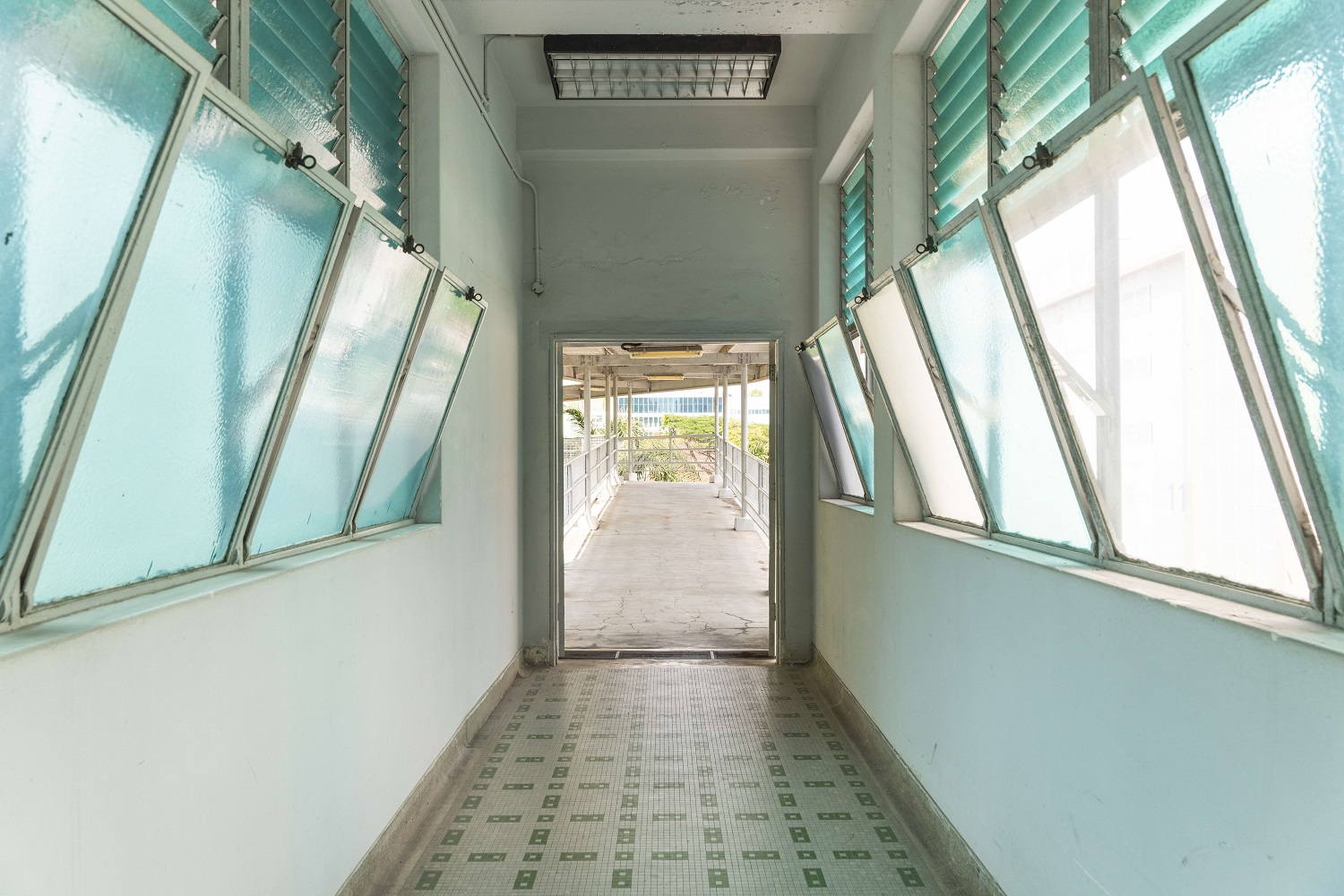
1 Hampshire Road, now the headquarters of the Land Transport Authority—where planners work to ease congestion and keep the city moving—is no stranger to bottlenecks. Decades before, it served as the nation’s busiest maternity hospital, where staff laboured in crowded, makeshift wards, delivering babies back‑to‑back for 20 years. The post-war generation of midwives and medical staff, led by Dr Benjamin Sheares, worked tirelessly through the chaos, helping to support one of the city’s greatest natural population surges.A corridor at Block 1 of the Former KKH with original tiles and windows that played host to generations of expectant mothers. 2025, image courtesy of Finbarr Fallon.
As the birthplace of generations of Singaporeans and of modern obstetrics in the country, the National Heritage Board (NHB) designated Blocks 1, 2, and 3 as the country’s 76th national monument in October 2025. Join us as we unbundle its past with three Singaporeans: Dr Joseph Sheares, who grew up on its grounds; long-serving KKH midwife Ms Too Ah Kim; and heritage blogger Jerome Lim who recently conducted tours of the site.
Home at the Hospital
As cries of newborns pierced the delivery suites of Kandang Kerbau Hospital (KKH), a different pulse of life—one of warm family dinners, easy banter, and the occasional get-together, unfolded above.
Dr Joseph Sheares, 81, one of a small group of residents who lived there, recalled his family’s Christmas festivities most fondly. Hospital chefs would send up mouthwatering dishes like spicy devil’s curry, rich meatloaves, and flavourful nasi biryani for the annual affair.
“It certainly didn’t taste like hospital food,” laughed Joseph, the son of Dr Benjamin Sheares, Singapore’s second president and the hospital’s leading obstetrician and gynaecologist (O&G).
It was his mother, Yeo Seh Geok, who orchestrated the year-end parties at their third-floor residence in what is now Block 3. “She was the Mistress of Ceremonies. She organised the games and drew up the guest list,” said Joseph, offering a glimpse into a lesser-known facet of the famous hospital.
“At 10pm, everyone would stop eating to play card games like gin rummy. My father, like on most evenings, would have already retired to bed after reading a medical journal and a copy of Time magazine.”
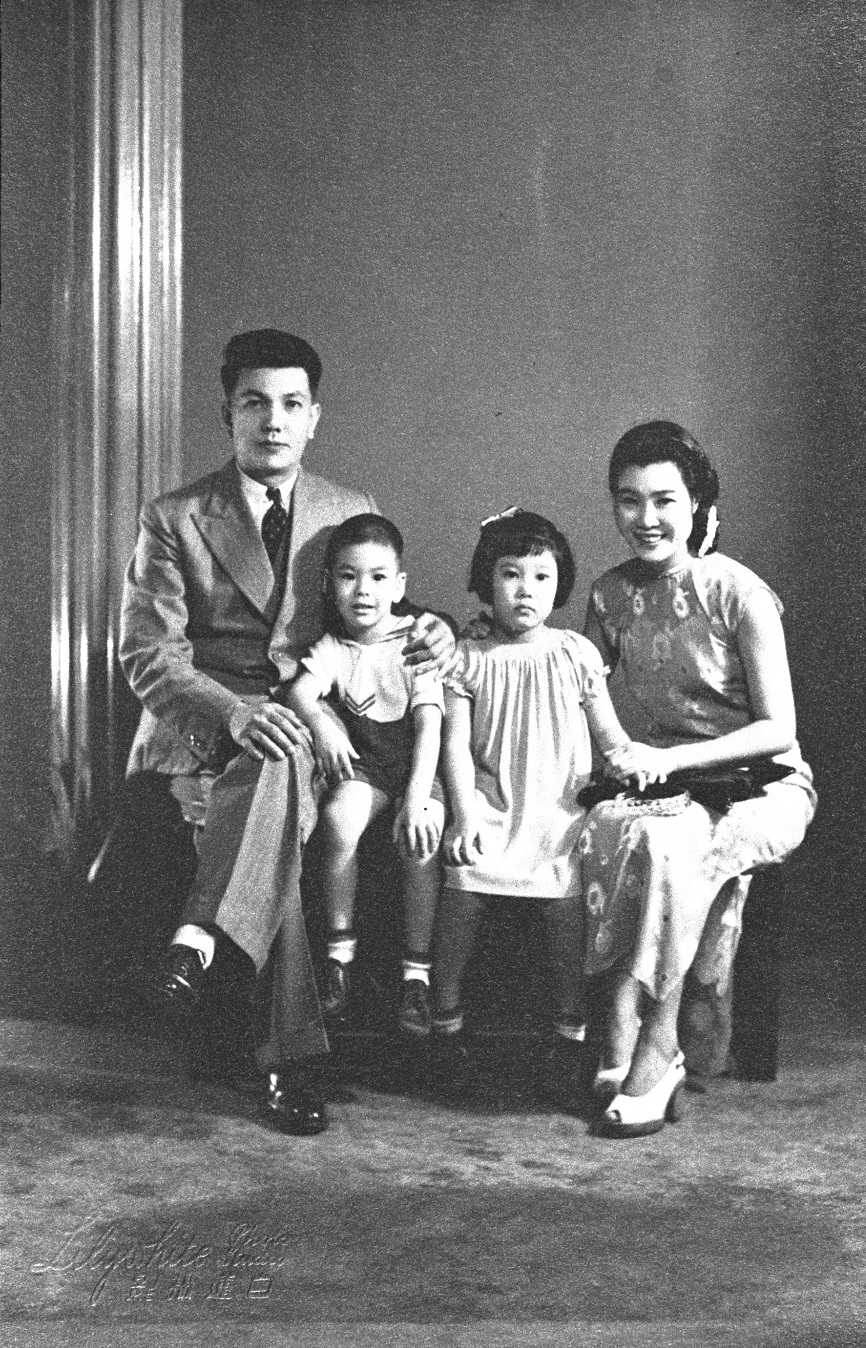 A family portrait of the Sheares and their two children Joseph and Constance, 1946. Image courtesy of the Sheares Family.
The couple and their three children—Joseph, Constance and Edwin—lived in the hospital block from 1945 to 1951. Joseph said the arrangement made sense for his family since his father was always on duty. He cited his father’s own writings:
“… in my time there was only one unit, and I was the only specialist with one assistant. Till I was appointed professor in 1951, I used to live at the top floor of the hospital as I could not afford to be away at all. I was on call 24 hours a day.”
As the sole O&G specialist, it also made sense that his office was located right by the grand stairway of the block and flanked by treatment and examination rooms, said Joseph.
“My sister and I would always peek to check if his office door was open, and we’d wave if we saw him inside. Then, we’d race up to the third floor where we lived,” he shared.
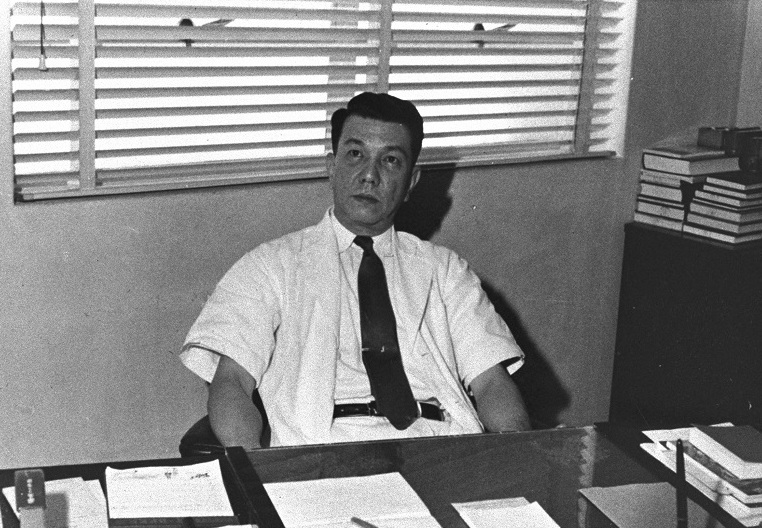 Singapore’s father of O&G Dr Benjamin Sheares in his Block 3 KKH office. His son, Dr Joseph Sheares, recalled that his father always wore a coat although it was not required. His ties were invariably red and sometimes striped or dotted. “I used to think he had a million of them,” he said. “He was fastidious in manner, speech, and dress.”. 1950s. Benjamin Henry Sheares Collection, courtesy of National Archives of Singapore.
Driven by his ambition to “heal people”, Dr Sheares supported himself through medical school with scholarships, entering the King Edward VII College of Medicine at the age of 16 and later distinguishing himself in O&G. In 1937, he joined KKH as its first local obstetrician, working under British director Dr Joseph Sandys English.
This experience crystallised his love for the specialty, said Joseph. Just three months after receiving his Member of the Royal College of Obstetricians and Gynaecologists diploma in May 1948, he declared that he would give Singapore an O&G service rivalling England’s and reduce the high maternal and neonatal mortality rates.
“It must have sounded like a rash boast from a young person. He had very few staff and no facilities in 1948. But this was his vision, you see. And like the late Mr Lee Kuan Yew and the pioneers of his time, he never wavered. This is the heart of the KKH story,” said Joseph.
Tea Monkeys and a Car Crash
Busy as he was, Dr Sheares was popular among his peers, and it was common for colleagues and friends to stop by the family’s residence for tea and dinner.
Joseph recalled visitors like the very friendly physician Dr Lee Siew Choh, and pathologist Dr T. Balasingham, “who was always full of jokes and really good with us children”.
Living next door was the hospital’s other O&G specialist, Dr A.C. Sinha, and his family.
Together, the two families made up the block’s only residents. Notably, the block, completed in 1940, was constructed with a flat roof which allowed for upwards extensions. This was unique for its time.
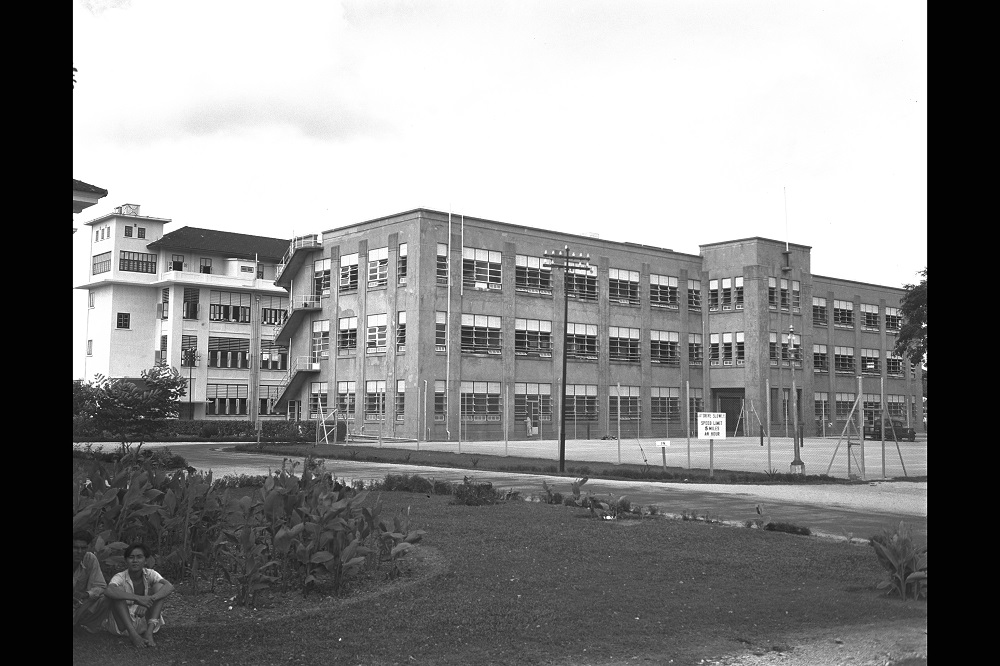 Block 3 of the former hospital with its signature large windows and tennis court facility. The Sheares family lived in a unit on the top floor. 1950. Ministry of Information and the Arts Collection, courtesy of National Archives of Singapore.
The wards were large, and patients occupied two neat rows of beds. High ceilings and large windows provided much-needed ventilation.
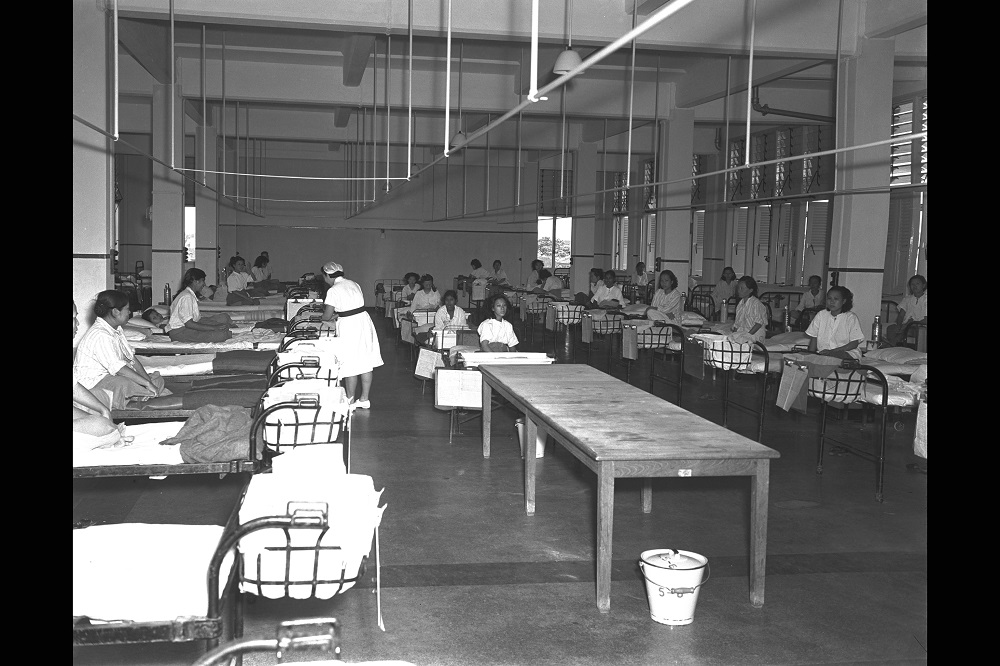 A ward in either present-day Block 2 or 3, photographed in 1950. Joseph said that his third-floor residence afforded a view of these “very long, expansive wards” characteristic of the Nightingale design conceived by the founder of modern nursing, Florence Nightingale, to promote ventilation and recovery. 1950. Ministry of Information and the Arts Collection, courtesy of National Archives of Singapore.
Within the compound was a small kampung comprising a row of single-storey houses for ambulance drivers, doctors’ personal chauffeurs, and their families.
Nearby, lines of freshly laundered white hospital linen would stir in the breeze.
Joseph said: “My playmates were the children from this kampung. They were my buddies, and we played ball together. My sister Constance remembers one of them owning a huge pet monkey which hung out in the coconut trees.
“Save for the wards and nurses, we never felt like we were living in a hospital. It simply felt like home.”
They were so at home with the place that his mother even tried learning to drive within the hospital compound. Unfortunately, she crashed into a tennis court fence near Block 3 and damaged the hospital’s prized court. The matron was furious, and she never drove again.
In 1951, Dr Sheares was the first Singaporean to be appointed to a professorial chair in O&G at the University of Malaya by a board of British specialists. The following year, the family moved to Eng Neo Avenue in Bukit Timah to live in university housing for professors and department heads.
Heritage blogger Jerome Lim, who led NHB tours of the former KKH in the lead‑up to its gazetting, said doctors like Dr Sheares excelled with limited resources.
He described Dr Sheares’ contributions as highly significant to KKH’s history as well as the larger arc of Singapore's medical story.
“Colonial prejudice meant there was a glass ceiling for local medical professionals,” he said. “Dr Sheares was among the first pioneers to shatter that ceiling, proving his mettle through sheer determination, hard work, and deep commitment to the population.”
Midwives delivering sterling service
Troubled by the high number of maternal and neonatal deaths amid a shortage of doctors, Dr Sheares overhauled maternity care.
He kicked this off during the war by introducing the life-saving lower segment caesarean delivery technique in Singapore—deployed in one in three births today.
As chairman of the Central Midwives Board, he raised midwifery standards by modernising training and requiring trainees to have at least a Primary English education and two years of hospital training.
Then, in 1955, KKH launched the Domiciliary Delivery Service, sending midwives to deliver babies at home.
These various changes helped slash the maternal mortality rate from as many as 80 deaths per 10,000 deliveries in the 1930s to fewer than 10 by 1955.
KKH midwife Too Ah Kim, 82, was among those who benefited from Dr Sheares’ reforms. Strict training and tough fieldwork in less-than-ideal conditions during her attachment with the Maternal and Child Health Clinic in the community honed her delivery skills and earned patients’ deep gratitude.
Ms Too recounted one particularly dramatic night when a patient’s husband raced her through dark, bumpy dirt roads in his pick-up truck, desperate to reach his kampung in Mandai. There, under the weak glow of kerosene lamps and candlelight, the 23-year-old midwifery student calmly delivered the couple’s baby.
“There was usually no electricity, and painkillers were not allowed,” she said. “Yet the women were brave. Few screamed. Perhaps they felt comfortable in their own homes.”
Grateful families often repaid her with rambutans and durians from their plantations. The tokens of thanks even included livestock.
Once, a young man walked up to the clinic holding live chickens by their legs, one in each hand. Sent by the family of a patient she had been attending to, he wordlessly passed the squawking fowl to her colleagues.
“The ah ma in charge of the kitchen and the other staff was always surprised by how grateful these patients and their families were to me,” said Ms Too.
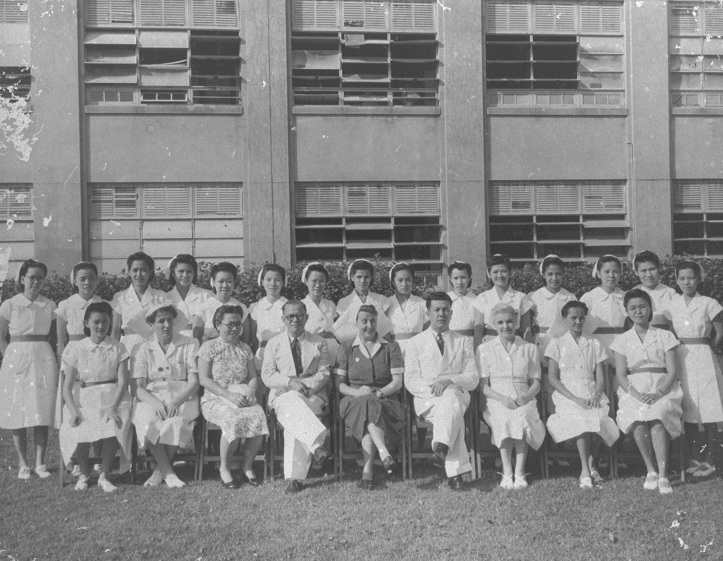 Dr Sheares, seated fourth from right, with a group of nurses outside KKH at 1 Hampshire Road. 1960. David Ng Collection, courtesy of National Archives of Singapore.
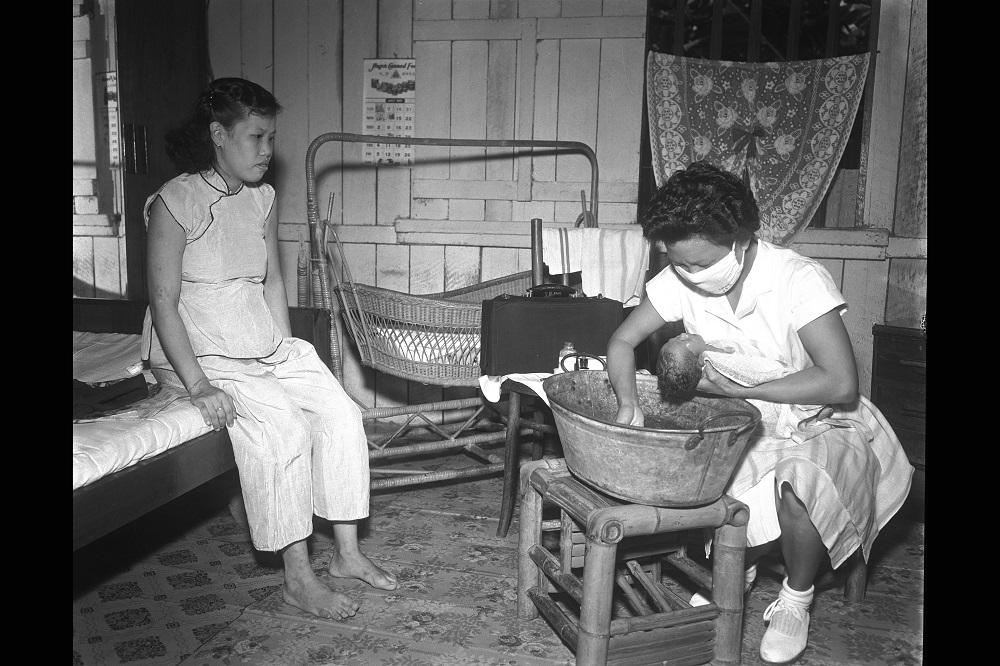 A midwife conducting a home visit. 1957. Ministry of Information and the Arts Collection, courtesy of National Archives of Singapore.
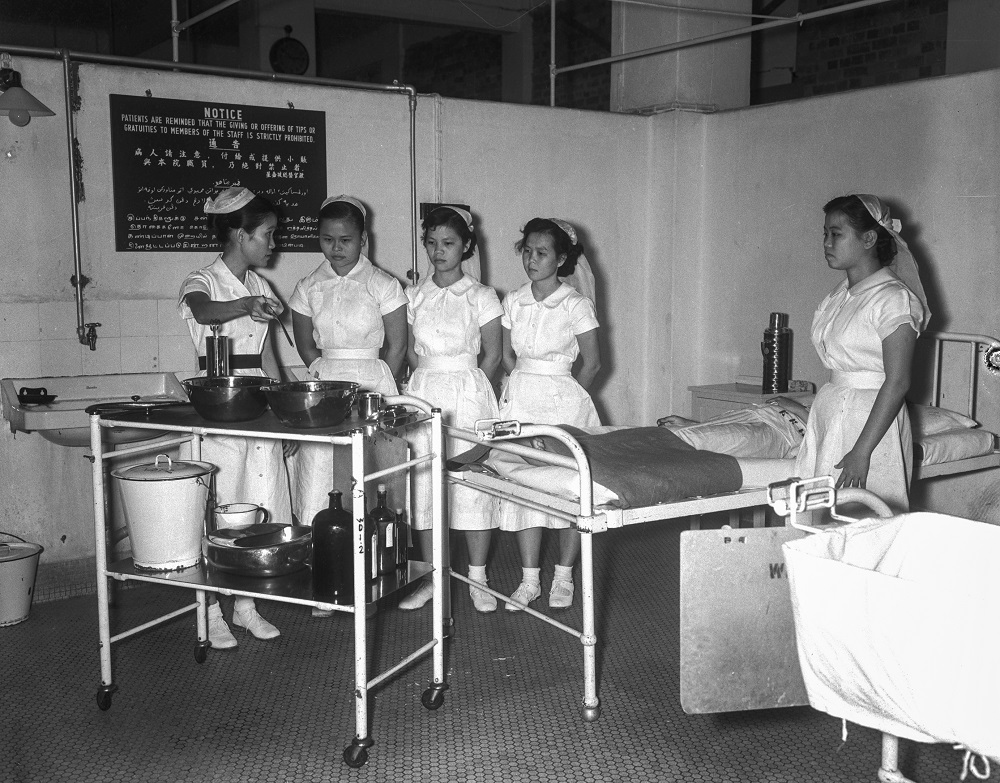 Staff undergoing training at KKH. 1958. Ministry of Information and the Arts Collection, courtesy of National Archives of Singapore.
After three years of training, Ms Too qualified as a midwife in 1966, the very year KKH set a world record with 39,835 births.
She said she delivered as many as 13 babies in a single 10‑hour shift during the height of Singapore’s baby boom.
“The situation was so intense that it was pretty common to have a mother and daughter delivering their babies at the same time, and in some cases, right next to each other,” said Ms Too.
“Sometimes there was no time to push patients to the delivery wards. We would roll out a green Macintosh sheet, add a bedsheet, pull up a screen, and squat down to help them deliver.“
 Ms Too Ah Kim, the first from the right. 1983. Image courtesy of KK Women’s and Children’s Hospital.
When the hospital moved to its present-day site, Ms Too was responsible for delivering its first baby—a boy named Eugene—on the opening day, on March 8, 1997.
She also developed a knack for delivering breech cases where babies are positioned buttocks or feet first instead of head first.
Ms Too still works at KKH and is the oldest midwife on its roster. She now helps with the pre-assessment checks during antenatal visits for pregnant mothers.
 Ms Too (seated) with a fellow KKH midwife in the Women's Specialist Outpatient Clinics at the present-day KKH. Image courtesy of KK Women’s and Children’s Hospital.
Reflecting on how the former KKH connects generations of Singaporeans from all walks of life, heritage blogger Jerome said he was among many who celebrated its designation as a National Monument.
Jerome has multiple ties to the old hospital. He was born there in 1964, as was his first child in 1997. Members of his paternal family, including his grandmother, also lived on the premises in the 1940s, in staff housing for the hospital’s outpatient dispensary.
“The former KKH holds a place in many of our hearts,” said Jerome. “I’m heartened that a place tied to the story of everyday Singaporeans has been protected. By preserving places like this, we keep alive reminders of who we are beyond the pages of our history books.”
KKH’s Timeline
Did you know KKH did not begin life as a hospital for women and children? Here’s a quick rundown of its history.
1858: The institution starts operating as one of five general hospitals in Singapore, serving Europeans and locals separately.
1865: The General Hospital begins treating women for gynaecological conditions and childbirth.
1905: It is restructured as the Pauper Hospital for Women and Children and takes in female pauper patients from Tan Tock Seng Hospital.
1924: The Pauper's Hospital is converted into a free maternity hospital to ease the strain at the Free Maternity Hospital at Victoria Street and the General Hospital at Outram Road. It re-opens as the Kandang Kerbau Hospital (KKH) with more than 30 beds and 12 cots for babies.
1933: Block 2 opens. It boasts tropical climate-sensitive modernist architecture which informs and shapes the look of subsequent buildings in the compound.
1940: Block 3, the site of the Sheares’ former residence, wards, delivery suites, and midwifery classes, is completed.
1941-1945: The institution serves as an emergency general hospital during the Japanese Occupation.
1946: KKH absorbs all O&G patients from the General Hospital in Outram. It is the only O&G hospital in Singapore at the time.
1950s: The hospital becomes the nation’s key maternity and midwifery training institution. It also now houses Singapore’s first birth control clinic.
1955: Block 1, designed by then head of O&G Professor Benjamin Sheares and chief government architect K.A. Brundle, opens with air-conditioned wards and more than 300 beds.
1997: KKH relocates to its present-day site at 100 Bukit Timah Road, which was built at a cost of $$393 million.
2003: 1 Hampshire Road is designated a historic site.
2004: The Land Transport Authority moves into the hospital’s former Hampshire Road grounds.
2025: Blocks 1, 2, and 3 of the Former KKH are gazetted as a National Monument.
This story is brought to you by the Built Heritage team, Heritage Policy & Research Division, NHB. The team conducts important research and documentation work on lesser-known buildings and sites. The goal is to tangibly reflect all facets of the Singapore story.