
TL;DR
Time-based media (TBM) artworks range across multiple formats, including video, audio, and even software. A key challenge to their preservation is the threat of hardware and software obsolescence. With TBM works becoming a growing part of the National Collection, developing an effective preservation strategy and ensuring their long-term accessibility is essential. This article provides insight into the Heritage Conservation Centre (HCC)’s process of preserving our TBM works.
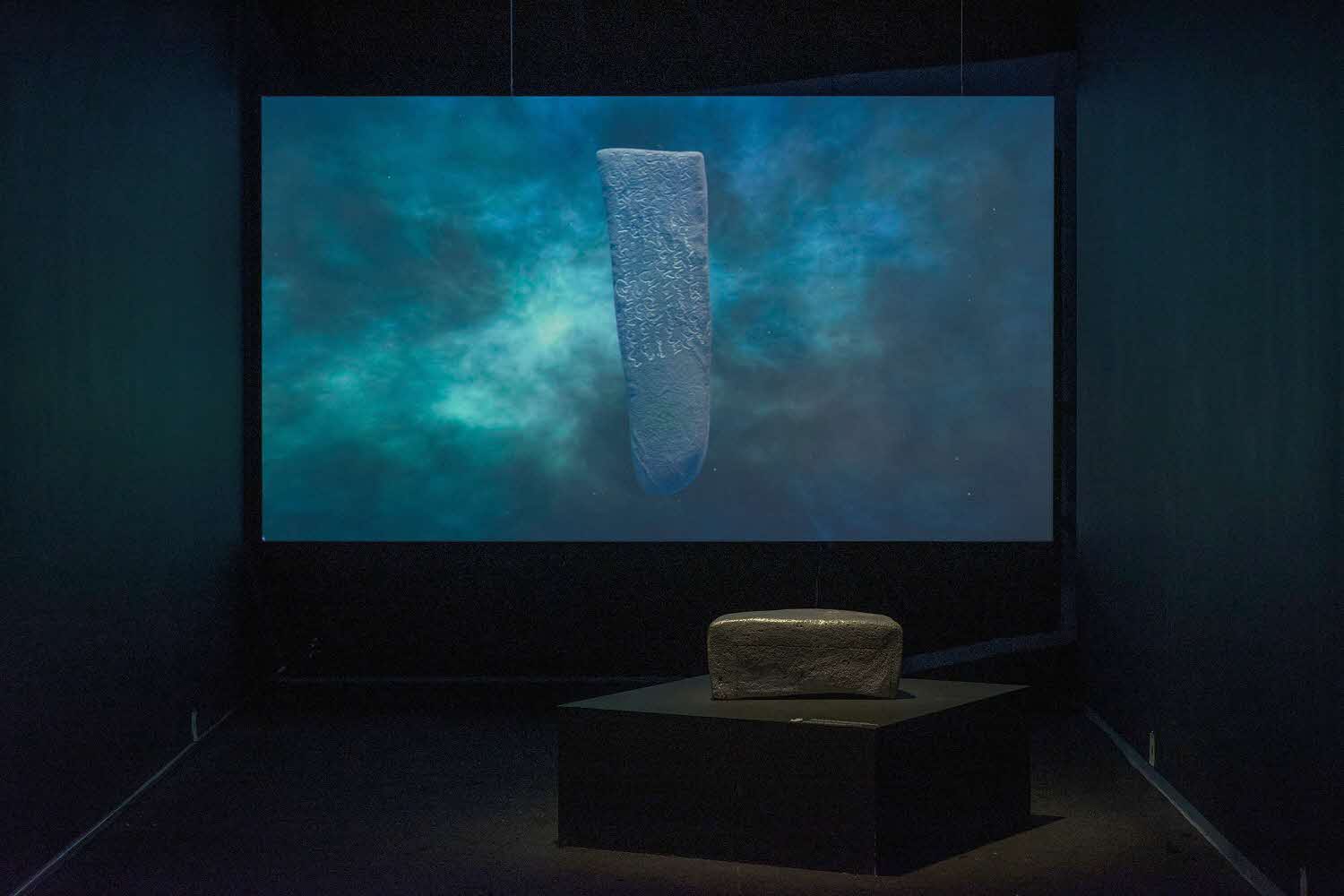
ILHAM Art Show 2022 iteration. Installation view of 2024-00081 The Mercurial Inscription by Tan Zi Hao. Collection of the Singapore Art Museum. Photo courtesy of Kenta Chai.
Time-based media (TBM) artworks are technology-based artworks that have duration as a dimension. These works span many formats, ranging from video and sound channels to software-based works and multimedia installations. TBM works pose a unique preservation challenge, as they are reliant on particular technologies and components, subject to artist-specific requirements, and are dynamic in nature.
New Threats to a New Form of Artwork
The threat of losing TBM works is twofold: media obsolescence and physical degradation. Firstly, access to TBM works depends on the availability of obsolete software and hardware. For instance, Video Home System (VHS) players are no longer in mass production, making it difficult to maintain access to works stored on VHS tapes. Likewise, access to certain file formats may depend on specific software, and TBM works risk becoming inaccessible if that software is no longer supported.
Secondly, like other physical objects, both the media carriers and associated technological components face degradation threats such as mould. If these carriers are damaged, the artwork can no longer be read or displayed. The inherently unstable nature of TBM works therefore requires different preservation strategies from traditional object-based approaches.
As art and heritage institutions continue to acquire more TBM works, dedicated equipment and workflows are needed to ensure their long-term preservation. This article covers ongoing efforts at the Heritage Conservation Centre (HCC), including a brief insight into the existing TBM collection, capability development across collections and conservation teams, HCC’s first Media Conservation Lab, and the overall TBM Preservation Plan (2023–2029).
TBM Preservation Plan (2023-2029)
With an existing collection of TBM works and an anticipated exponential increase in future acquisitions, the need for a TBM management strategy became essential. A TBM Working Group was formed at HCC, comprising conservators, collections managers, and visual resource team members, who collaborated on the first TBM Preservation Plan (2023–2029). Drawing on contemporary art workflows, the Working Group developed foundational guidelines for processing TBM works. This included securing long-term funding, defining taxonomy, refining cataloguing procedures, and revising existing documentation templates. The Working Group also standardised the acquisition, accessioning, and condition assessment workflows for TBM works.
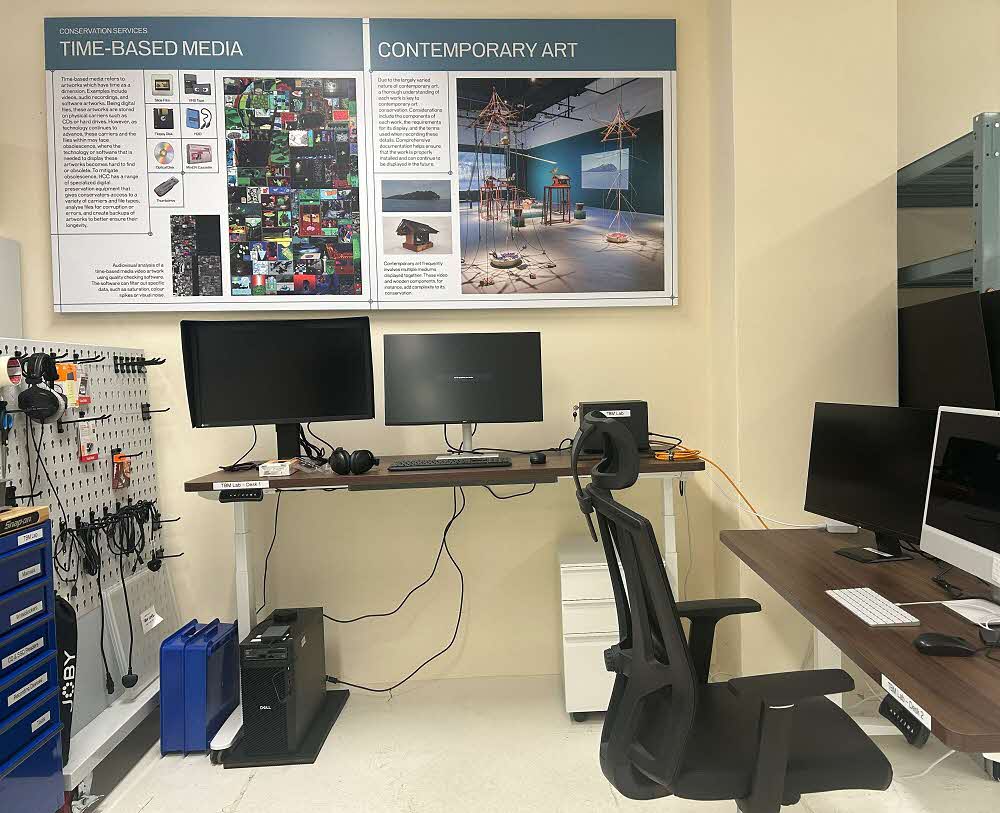
To accommodate the initial setup for TBM preservation, the first phase of the Plan focused on basic operational needs within HCC. This included the creation of HCC’s Media Conservation Lab, which houses dedicated hardware and software that allows conservators to safely access, analyse, and transfer works for preservation and display. Core acquisition workflows, including condition assessment, documentation, and media ingestion, are also conducted here. It features a direct-attached storage (DAS) device for local data storage, write blockers to prevent accidental file tampering, and a forensic workstation for advanced digital analysis and data preservation.
.jpg?width=1000&height=813)
HCC’s first Media Conservation Lab, established in 2024. Photo courtesy of HCC.
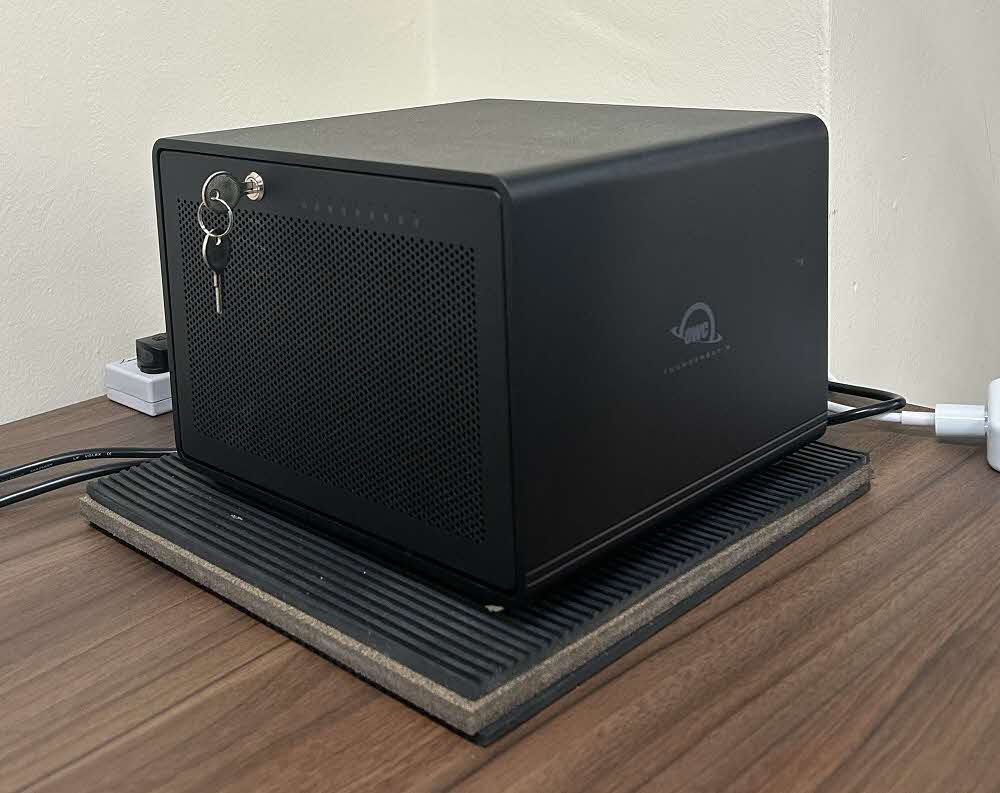
DIRECT ATTACHED STORAGE (DAS)
The DAS enables the ingestion of digital artworks from the artist’s media carrier to local storage. Serving as a quick-access digital store in HCC, the DAS helps ensure the safe receipt and transfer of artworks.
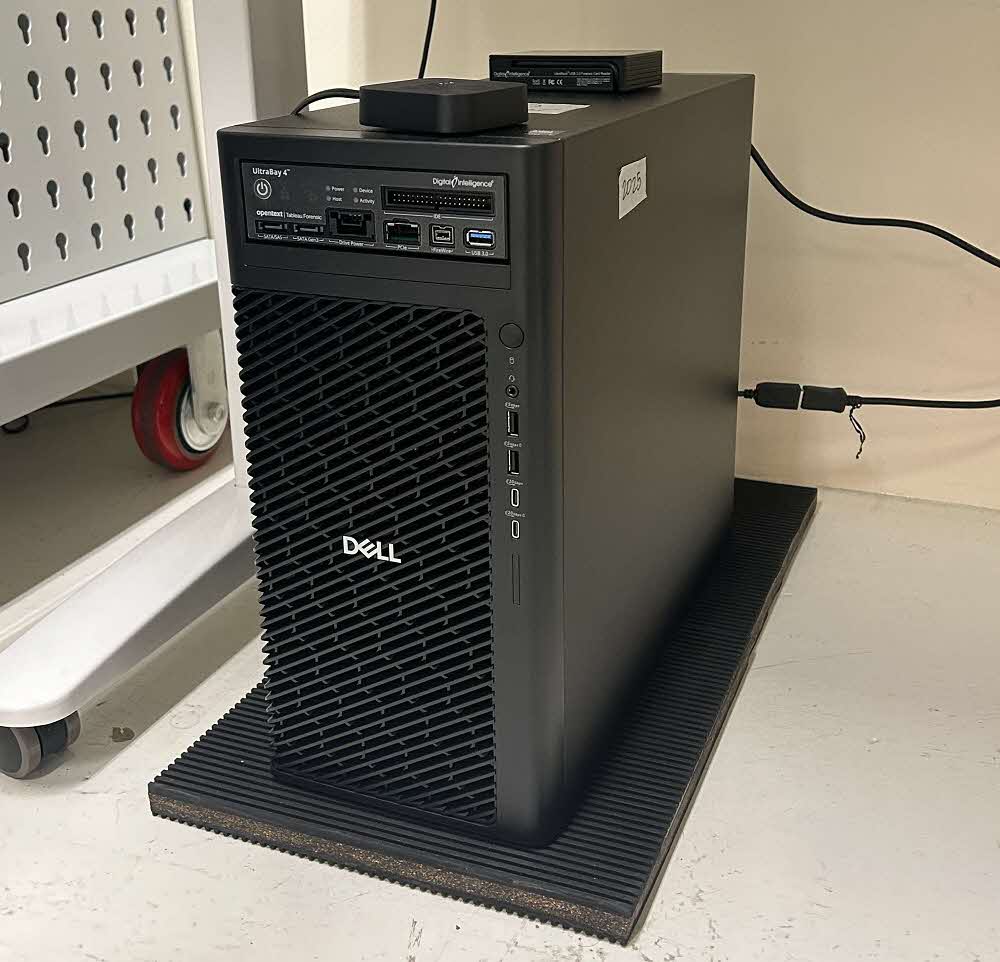
FORENSIC RECOVERY OF EVIDENCE DEVICE (FRED)
The FRED workstation allows our conservators to access a large range of file formats and media carriers. Also used in investigative work, the FRED’s capabilities enable in-depth digital analysis, expanding the ways we can preserve our artworks.
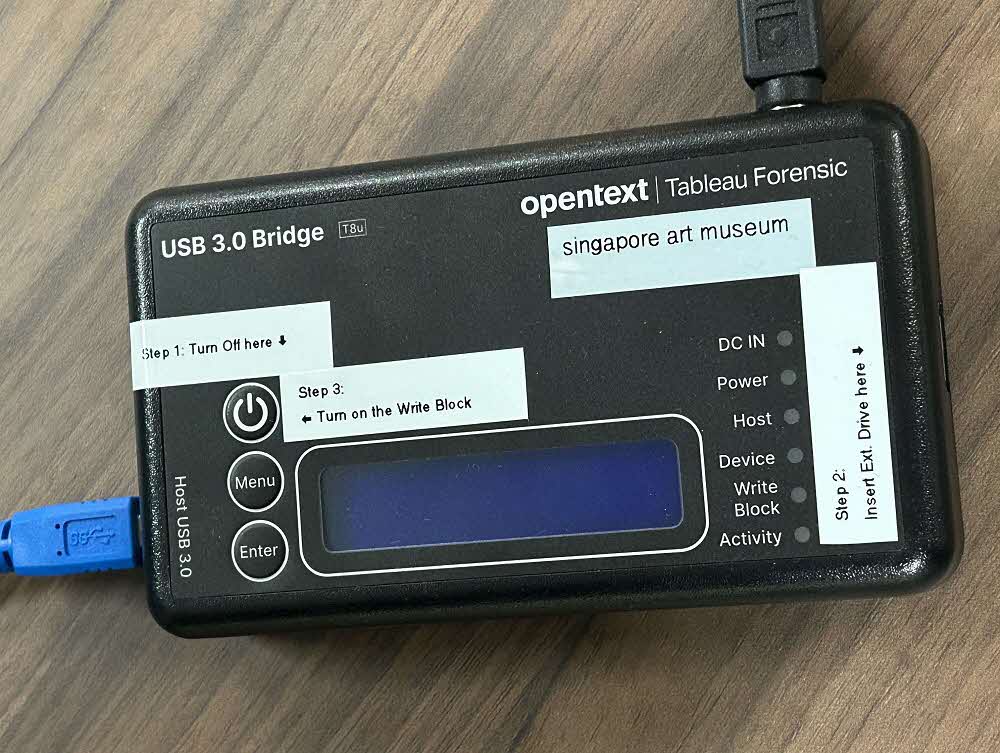
WRITE BLOCKER
The Write Blocker ensures files are read-only. When accessing digital artworks stored on external media carriers, our conservators use the Write Blocker to prevent any accidental damage to the artworks.
HCC also completed its first comprehensive survey of TBM works, covering over 200 works. The survey consisted of two parts: a physical record of all existing TBM media carriers at HCC and a digital survey of all files stored within those carriers. Documentation included file formats, media carriers, condition, storage, and types of work in the existing collection. This helped refine the preservation strategy to directly address the collection’s existing needs, including planning for a Trusted Digital Repository: a form of cloud storage for the secure long-term storage and access of TBM works.
The implementation of these initiatives has not been without challenges. Building the Media Conservation Lab required careful prioritisation of equipment purchases and consideration of hardware and software needs. Additionally, balancing the demands of processing legacy collections while simultaneously developing processes for new acquisitions proved challenging, as they require distinct approaches. Despite these constraints, phase one established key infrastructure for TBM preservation at HCC.
Building on this foundation, the Plan looks ahead to phases two and three to further strengthen HCC’s management of TBM works. Phase two aims to streamline access to the existing collection, including artwork rehousing and re-accessioning, digitising the analogue collection, and procuring additional equipment for the Media Conservation Lab. Finally, phase three addresses the long-term sustainability of TBM preservation efforts. By implementing measures for disaster recovery, planning ahead for hardware and software obsolescence, and solidifying a knowledge management plan, HCC hopes to mitigate future challenges to TBM preservation.
Case Study: The Mercurial Inscription by Tan Zi Hao
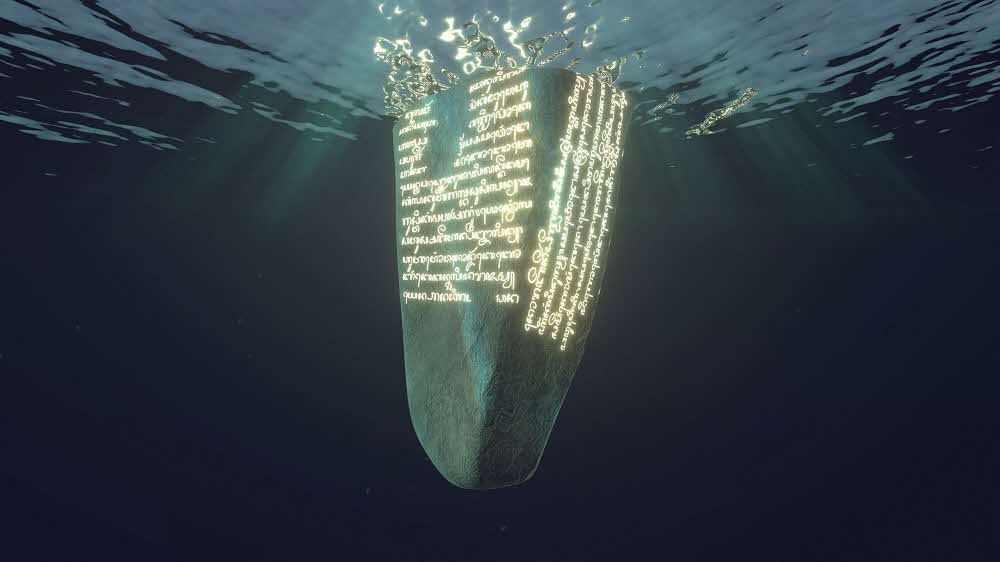
Still capture of 2024-00081 The Mercurial Inscription by Tan Zi Hao. Collection of the Singapore Art Museum. Photo courtesy of Tan Zi Hao.
The Mercurial Inscription by Tan Zi Hao is a multimedia installation artwork comprising both a physical interactive piece and a reactive computer animation, with the components connected via a microcontroller. Based on the Terengganu Inscription Stone, Tan constructed a hollow aluminium stone with a sensor on the underside of the metal. When exhibited, an idle animation of a stone fragment floating in water is projected on a wall behind the metal stone. Upon touching the physical stone, the computer animation is triggered, with the stone fragment submerging beneath the water and glowing to show the inscription on the stone’s faces. After some time, the projection returns to the idle animation until the physical stone is interacted with again.
As one of the first complex cases examined under HCC’s new TBM guidelines, The Mercurial Inscription helped ensure their feasibility. The required test installation of the work revealed a technical issue that prevented the work from being displayed, allowing for early intervention.
Through facilitation by the Singapore Art Museum, HCC was able to communicate with the artist on the approved reconfiguration of technical components before the work was formally registered in the National Collection. By having dedicated workflows and expertise to address TBM-specific considerations, HCC is able to improve its management and approach to the unique nature of TBM acquisitions.
Developing Capabilities at HCC and Beyond
The topic of digital preservation, as well as associated skills and needs, has developed a significant presence across institutions around the globe. As an active participant in this conversation, HCC became a full member of the Digital Preservation Coalition in 2024, an international network of institutions that exchange knowledge and resources on caring for digital collections. HCC has also presented its TBM preservation efforts at international conferences such as the American Institute for Conservation annual meeting and through local platforms, such as the National Library Board’s Community of Interest for Digital Preservation. Additionally, HCC conducted in-person visits to overseas institutions with TBM collections to learn more about different practices for the storage and preservation of TBM works. Through these efforts, HCC aims to maintain a culture of mutual sharing with the wider preservation community.
Beyond external engagement, HCC also prioritises the development of TBM-related capabilities internally, both within the existing TBM Working Group and across the wider organisation. The care of TBM works and associated workflows has been incorporated into training and workshops for HCC’s collections team, reinforcing cross-departmental knowledge sharing and building institutional capacity for TBM preservation. HCC also draws on external expertise through fellowships and internships with TBM professionals from other institutions.
Conclusion
The question of how best to preserve TBM works in the long run has become critical for institutions. With the growing prominence of digital media in cultural production, TBM works will become an increasingly significant and complex part of our National Collection. Their care therefore demands sustained effort and continuous adaptation to ever-changing technologies. Through dedicated infrastructure, strategic planning, and ongoing collaboration, HCC aims to ensure the long-term preservation and accessibility of these works, both for Singapore’s National Collection and as a knowledge partner to the wider cultural and heritage sector. Building on this foundation, HCC will continue adapting its practices to meet the evolving challenges of TBM preservation.