
Eurasian Weddings
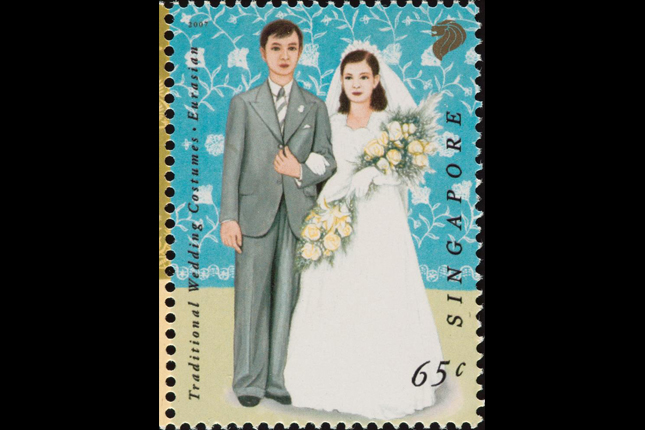
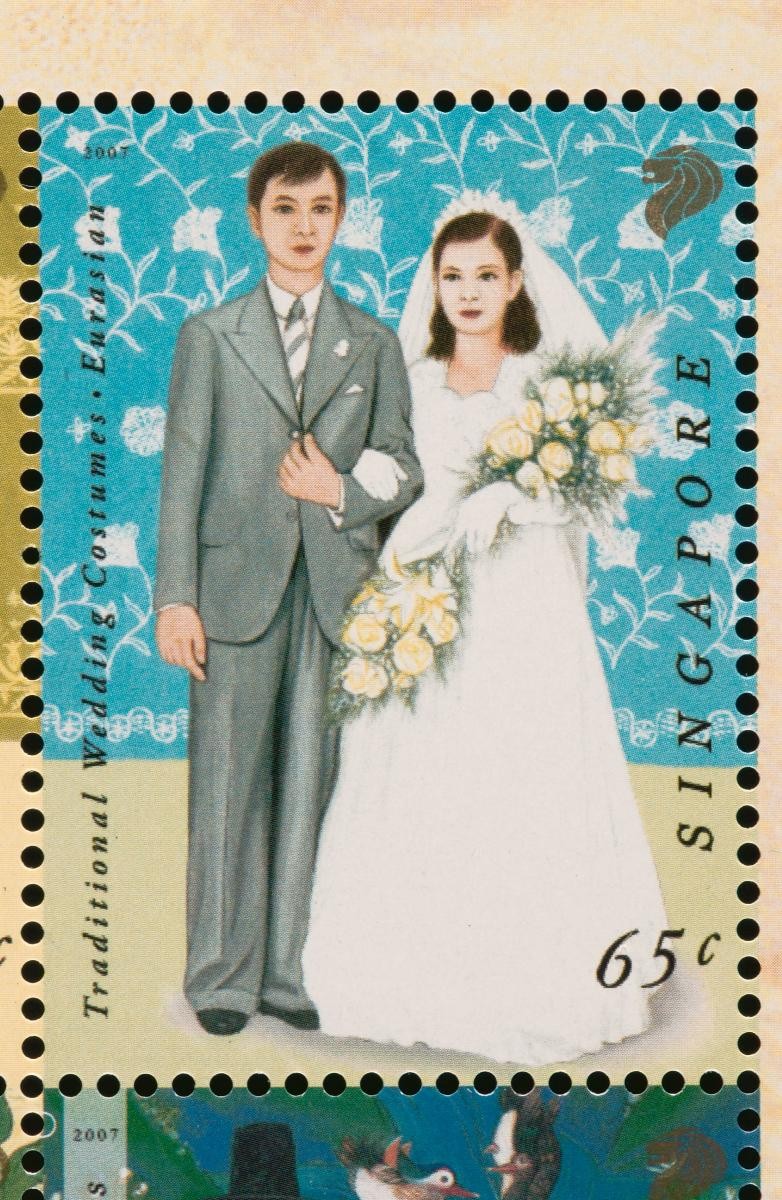
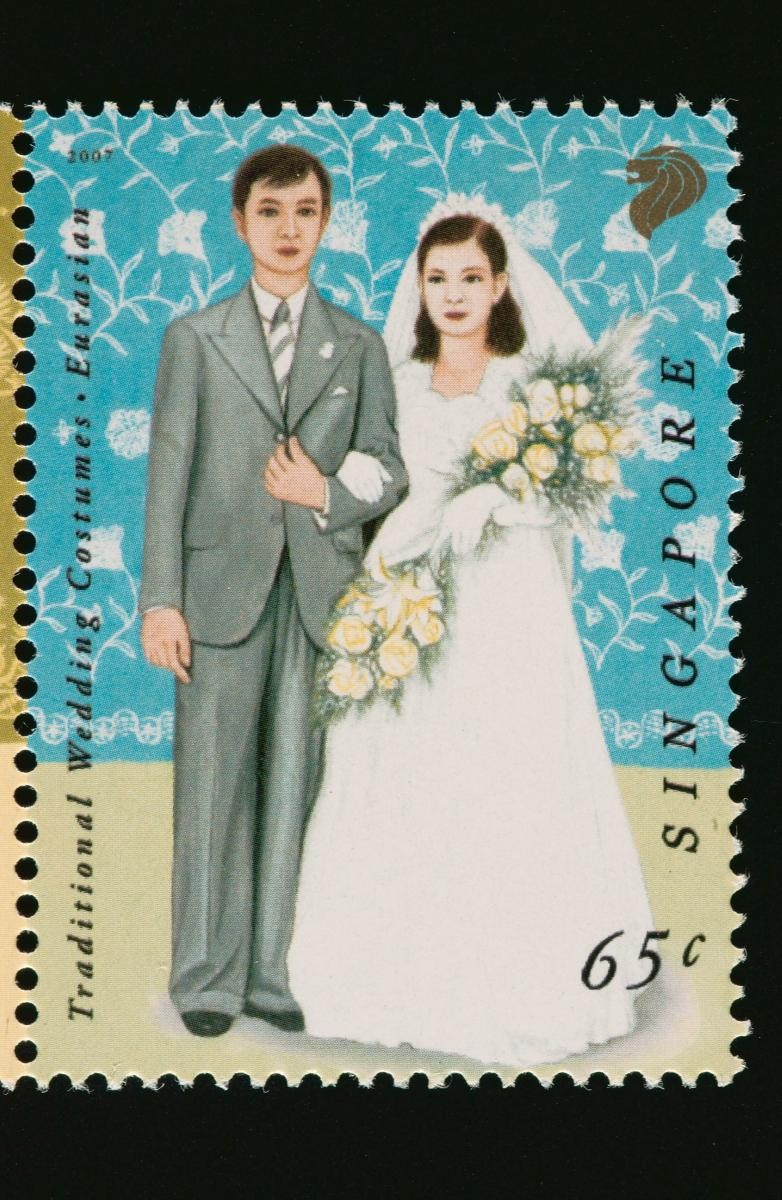
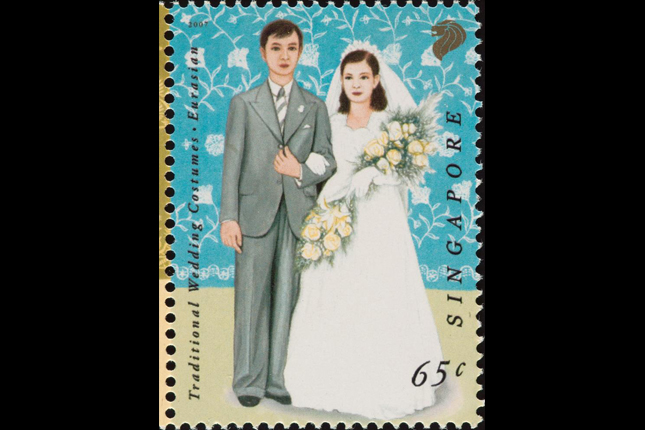
Eurasian weddings are celebrated by members of the Eurasian community. Many Singapore Eurasians practise the Catholic faith, and the wedding rites for Eurasian couples are performed by the church. Eurasian weddings are usually held on Saturday to fit the schedule of the Catholic church. “Banns” (wedding announcements) are traditionally read at Sunday Mass, three weeks before the wedding. The transmission of wedding practices is usually passed down orally from older generations to younger ones, and wedding preparations may start about six months in advance.
Geographic Location
Until about the 1950s, Eurasian wedding receptions were always held at the bride’s family home. Today, wedding receptions are commonly held in hotels and restaurants, in addition to family homes and church halls.
Communities Involved
The Eurasian community in Singapore practise and transmit the customs and traditions for Eurasian weddings in Singapore. Community members involved in a Eurasian wedding generally include the families of the couple, relatives, friends and even congregational members of the church where the wedding is held.
Associated Social and Cultural Practices
It is common for the jinkli nona, a Portuguese Eurasian folksong, to played for everyone to dance to during the wedding reception. There will be speeches and toasts, and similar to European weddings, it is common for the newlyweds’ car to be decorated with “Just Married” signs and have cans and bottles tied to the bumper.
Popular photography studios for Eurasian newlyweds in the past were Delux or Raffles Photography. Today, just like other communities in Singapore, Eurasians go to different photography studios to have their wedding photographs taken.
Preparation for the wedding reception includes making foods like curry puffs, sausage rolls, cream puffs, sambal (spicy paste), ham sandwiches and sugee cakes (made from a mix of semolina, flour and ground almonds). In the past, wedding cakes were usually ordered from bakeries like Cona’s, G H Café or Victoria Confectionery, which were famous for their sugee wedding cakes.
The day after the wedding is usually a day for thanksgiving. Some couples may attend mass together in their wedding finery. They may also visit people who had assisted with the wedding preparations to express their gratitude or with a lunch.
Present Status
Eurasian wedding customs and traditions continue to be practised by the Eurasian community in Singapore, though some customs may evolve with time. In addition, there are many Eurasians who may marry non-Eurasians and non-Catholics, resulting in further assimilation of different cultures. Nevertheless, many Eurasian customs are still retained in the Eurasian wedding celebrations today. A better understanding of the ceremonies can help future generations appreciate the customs and traditions of Eurasian weddings.
References
Reference No.: ICH-020
Date of Inclusion: April 2018; Updated March 2019
References
Blaga-Blake, M. and Eber-Oehlers, A. Singapore Eurasians: Memories and Hope. Singapore: The Eurasian Association, 1992.
Daus, R. Portugese Eurasian communities in Southeast Asia. Singapore: Institute of Southeast Asian Studies, 1989.
Pereira, Alexius. "The Revitalization of Eurasian Identity in Singapore." Southeast Asian Journal of Social Science 25 (2): 7-24, 1997.
The Eurasian Association, Singapore. “Eurasian Culture and Lifestyle”, 2015, http://www.eurasians.org.sg/eurasians-in-singapore/eurasian-culture-lifestyle/. Accessed 2 Feb 2019.
Walker, Kirsty. "Intimate Interactions: Eurasian Family Histories in Colonial Penang." Modern Asian Studies 46 (2): 303-29, 2012.