

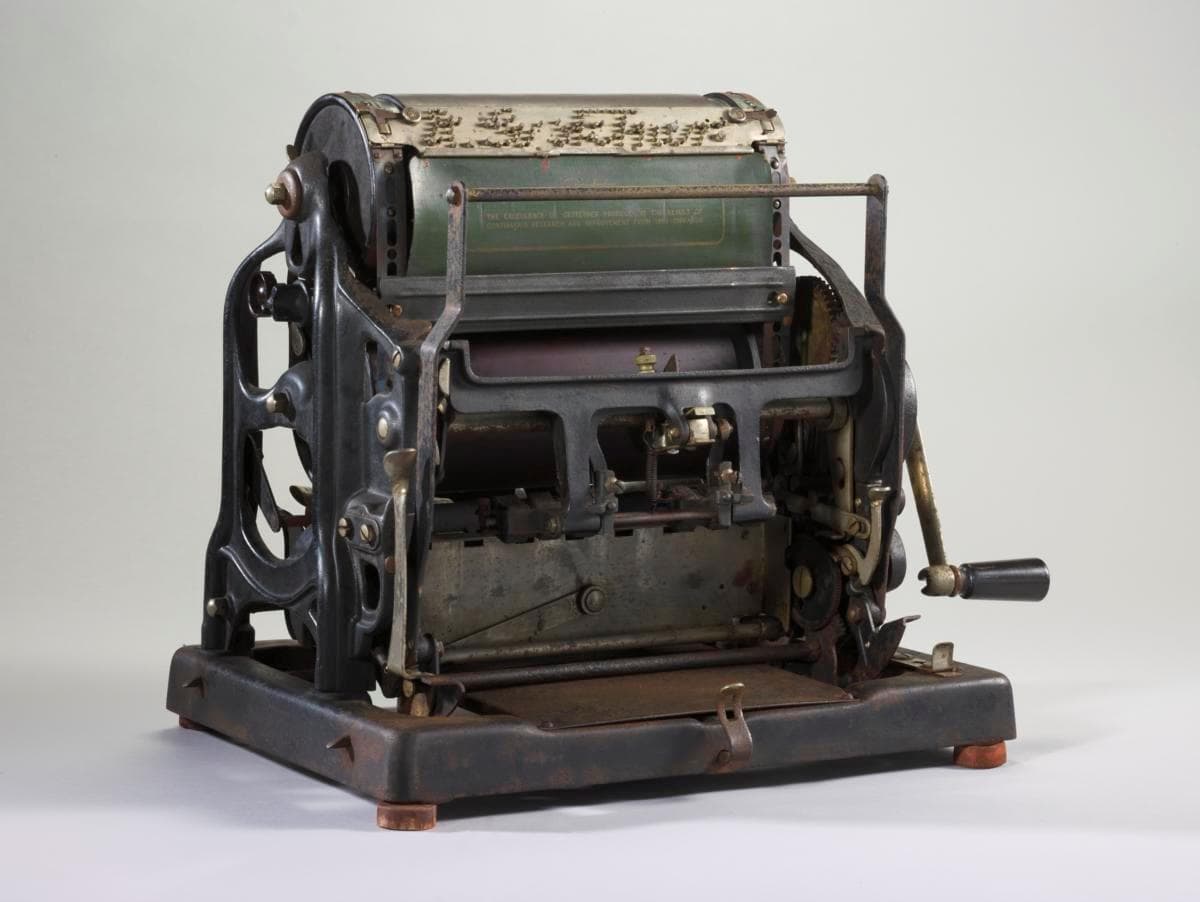
The Gestetner mimeograph press, invented in 1879 by David Gestetner, transformed low-cost publishing by enabling mass duplication using wax stencils and a rotating ink drum. Especially effective for cursive scripts such as Arabic and Jawi, the press allowed users to hand-cut stencils or use adapted typewriters, bypassing the need for expensive typesetting.In Kampong Gelam—home to Malay and Arab communities and a centre for Jawi-language publishing—the Gestetner press became a practical tool in the late 19th and early 20th centuries. Madrasahs, mosques, and small publishers used it to produce schoolbooks, religious texts, and community bulletins in Jawi. Its portability, affordability, and ability to reproduce flowing scripts made it a part of the everyday print culture in colonial Southeast Asia.