

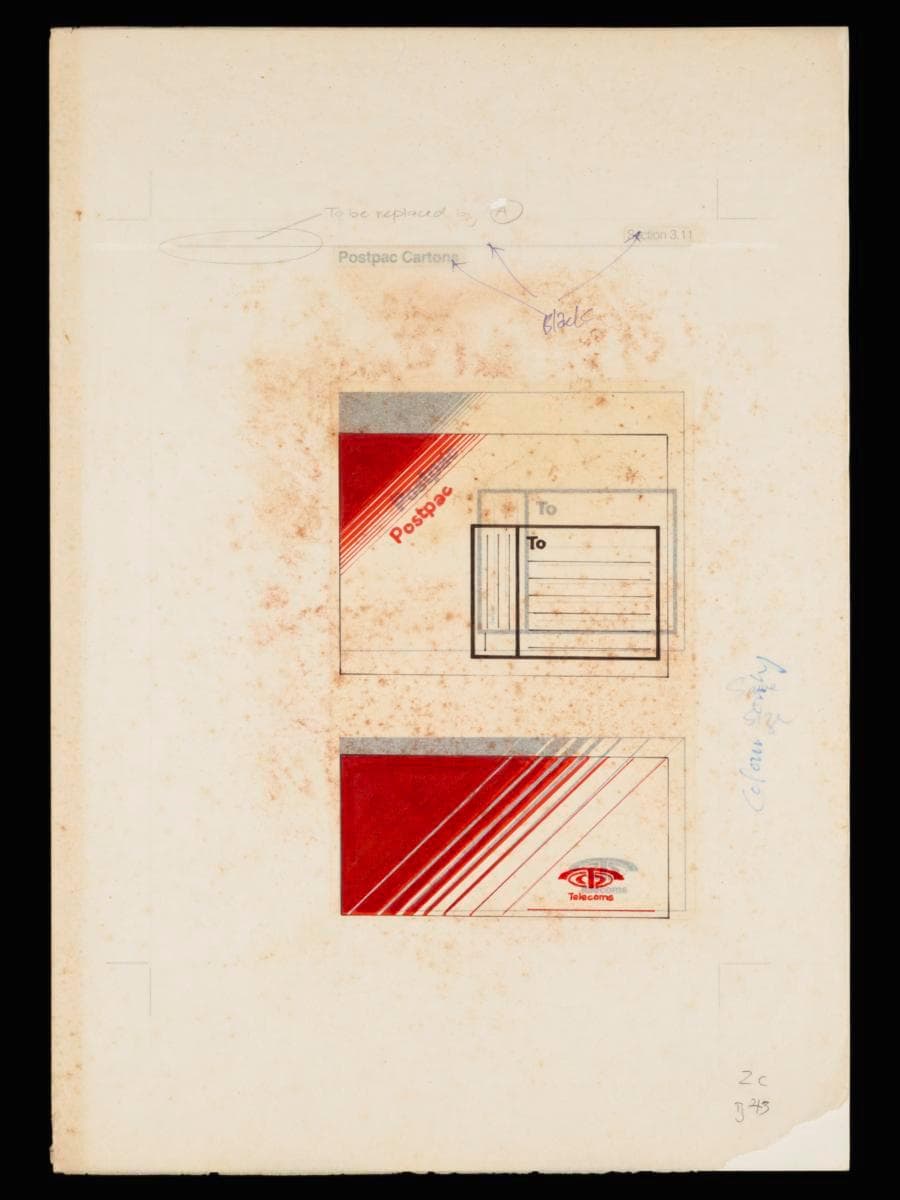
Image size: 43.1 x 30.0 cm
Introduced by Singapore post offices in March 1986, these cartons were developed based on studies conducted by Telecoms in early 1984 to improve parcel handling. Available in four sizes, they provided customers with a practical, accessible solution for mailing fragile items, while also standardising the shape and size of parcels for easier processing. Before this, parcels arrived in all sorts of shapes, sizes, and packaging materials—many of which were prone to damage during delivery.Each carton featured a prominent triangle in paprika orange—Telecoms’ corporate colour—with the word "Postpac" printed in bold at the top left corner, signalling that the contents required careful handling. Radiating orange lines around the triangle added a dynamic, modern touch to the design, while the back of the carton displayed the official Telecoms logo. Almost six months later, Telecoms expanded the range by introducing Postpac padded envelopes, designed for mailing smaller, delicate items.This postal feature reflects the growing sophistication of Telecoms' mail processing system following its 1982 merger with the Postal Services Department. The consolidation streamlined operations, allowing post offices and customer service centres to function as convenient, one-stop hubs for both postal and telecommunication services. Hengdesign Associates, helmed by U.S.-trained principal designer James Heng, had been appointed to oversee Telecoms' logo redesign at a pivotal moment when the statutory board was preparing to introduce more advanced and futuristic telecommunications services in the 1980s. It also created a refreshed corporate identity for the agency, which was adapted to its business forms, signs, and stationery, and corporate vehicles, projecting a unified presence across multiple touchpoints.