

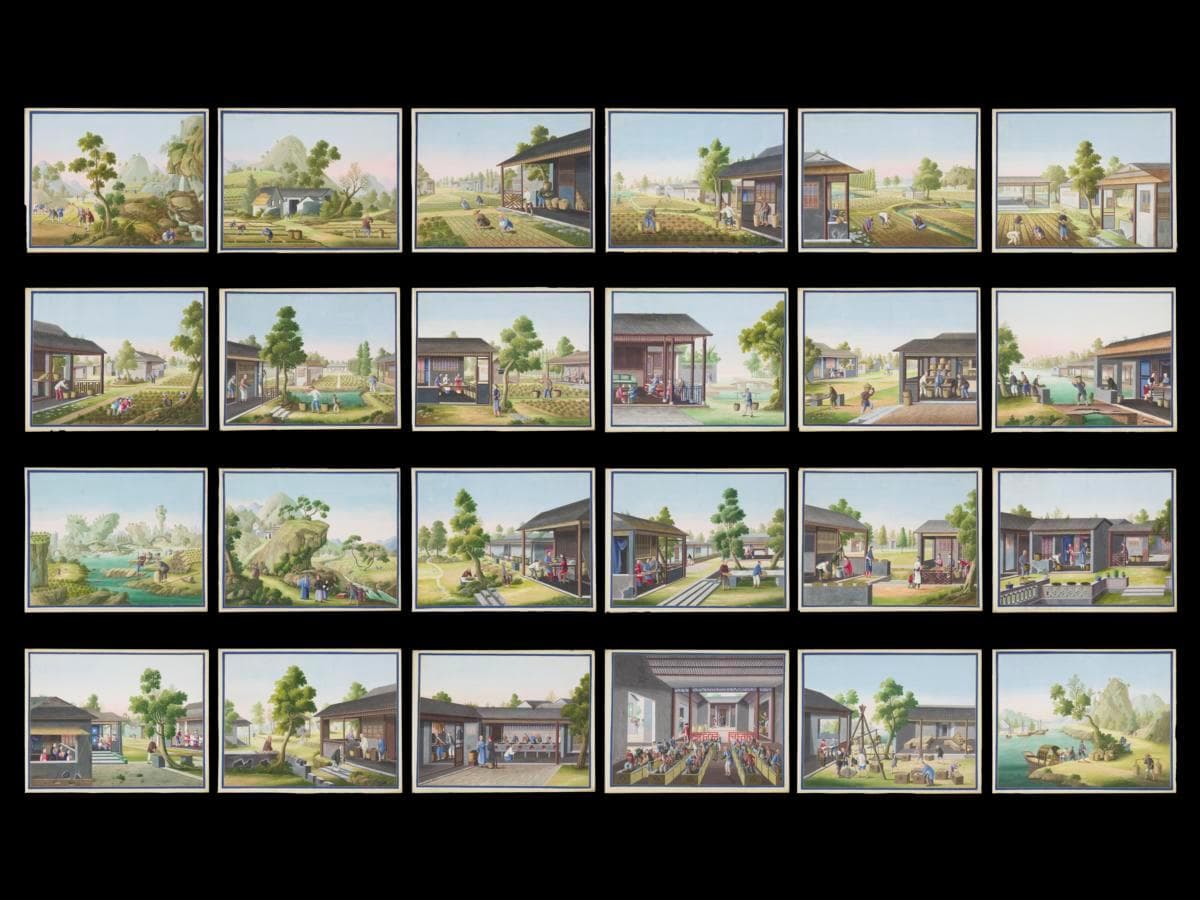
Paintings depicting ports, people, and Chinese life were made as souvenirs for Western traders in Canton (Guangzhou) in the 18th and 19th centuries. Chinese artists incorporated European mediums and artistic techniques, resulting in a uniquely hybrid style of painting. The production of valuable commodities such as tea, silk, and porcelain were popular subjects. These paintings visualised – in a highly idealised manner – people and places that were not accessible to foreigners, revealing the processes behind coveted trade goods. This set shows every stage of tea production, from the propagation of shoots to shipping.While many of these paintings were made for Western audiences, they are related to the Chinese genre of gengzhi tu (pictures of tilling and weaving). These bucolic images were often commissioned by rulers to record steps in silk and grain cultivation. They also asserted political authority by promoting the image of a harmonious Confucian society.