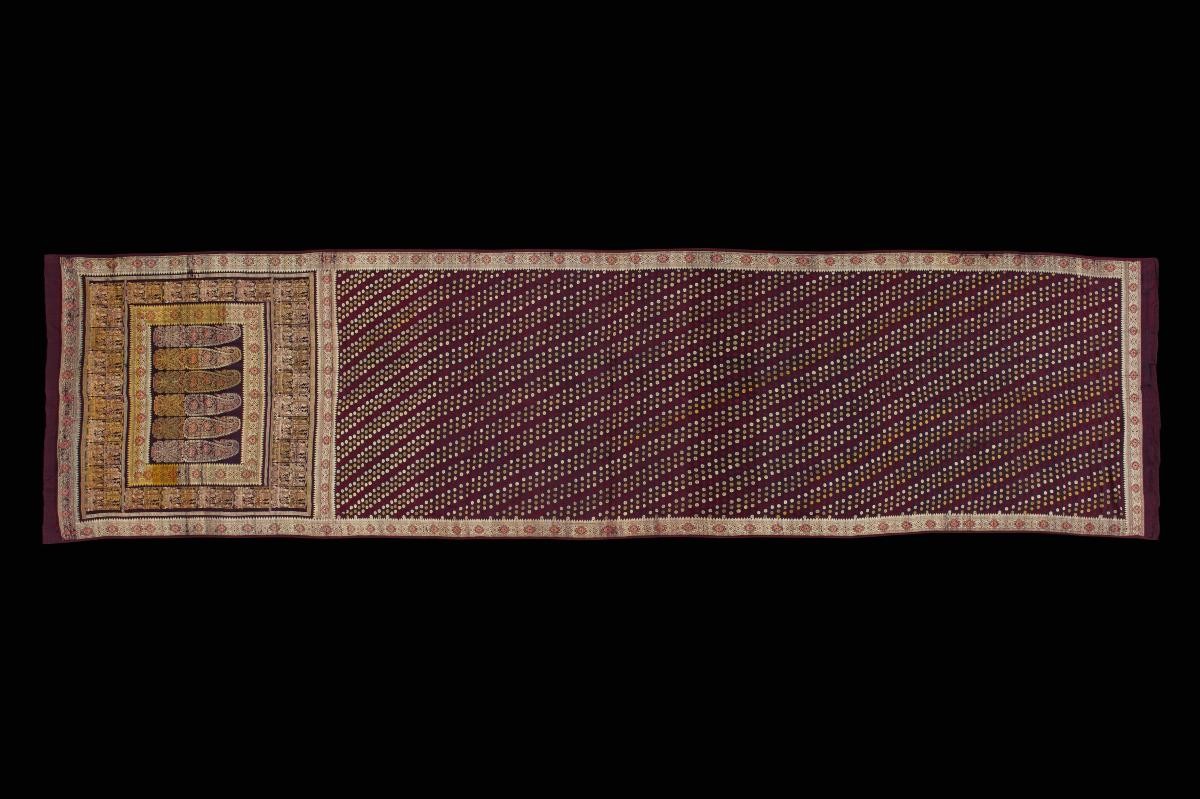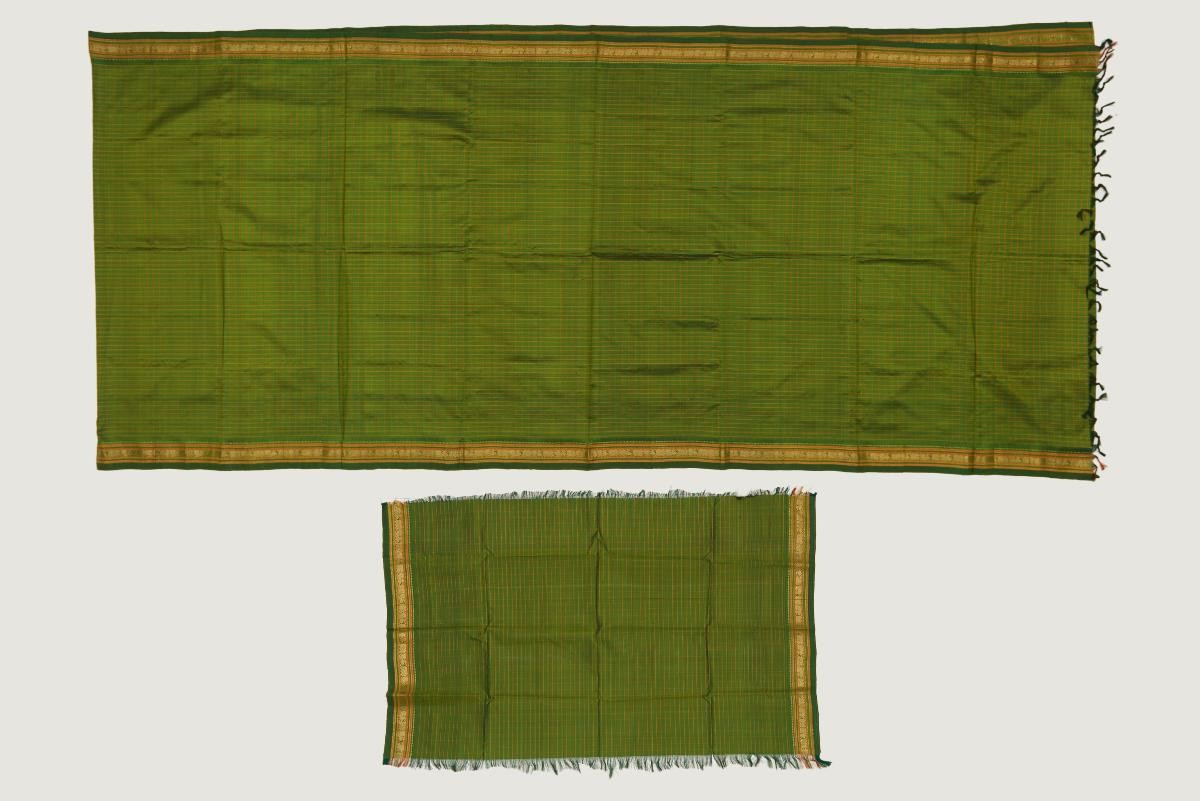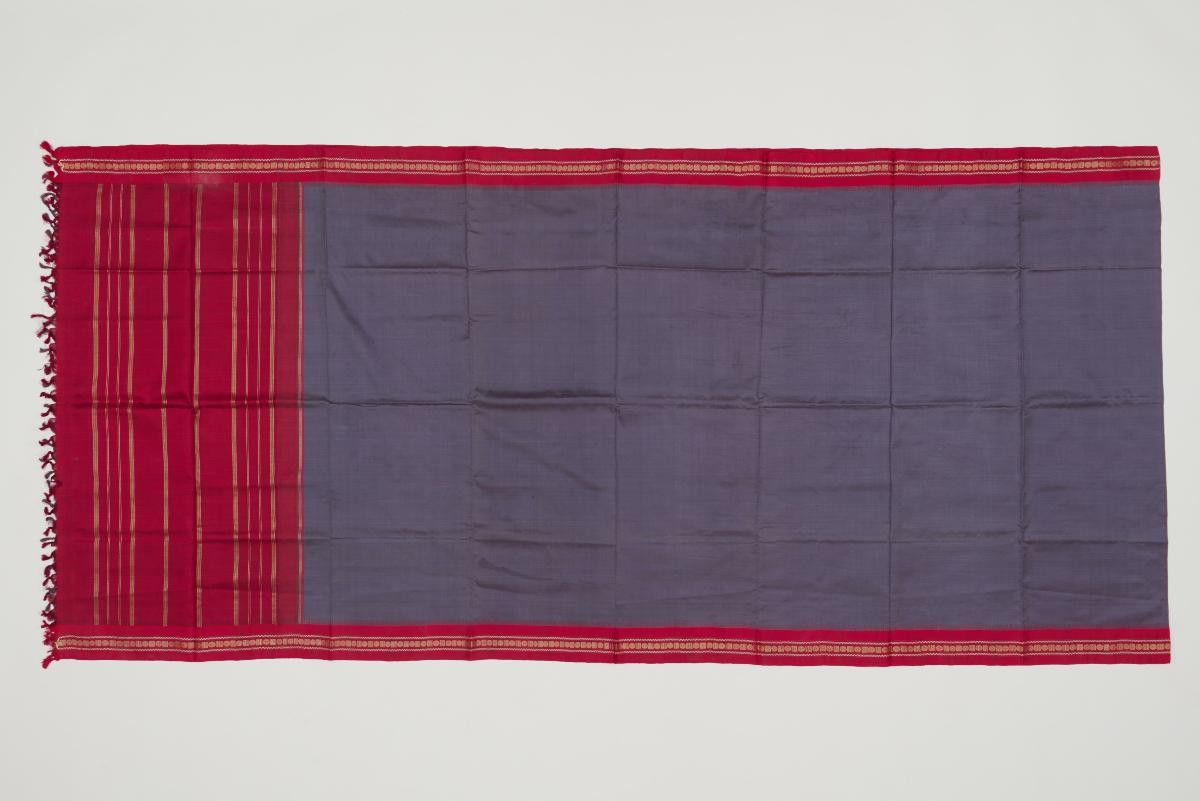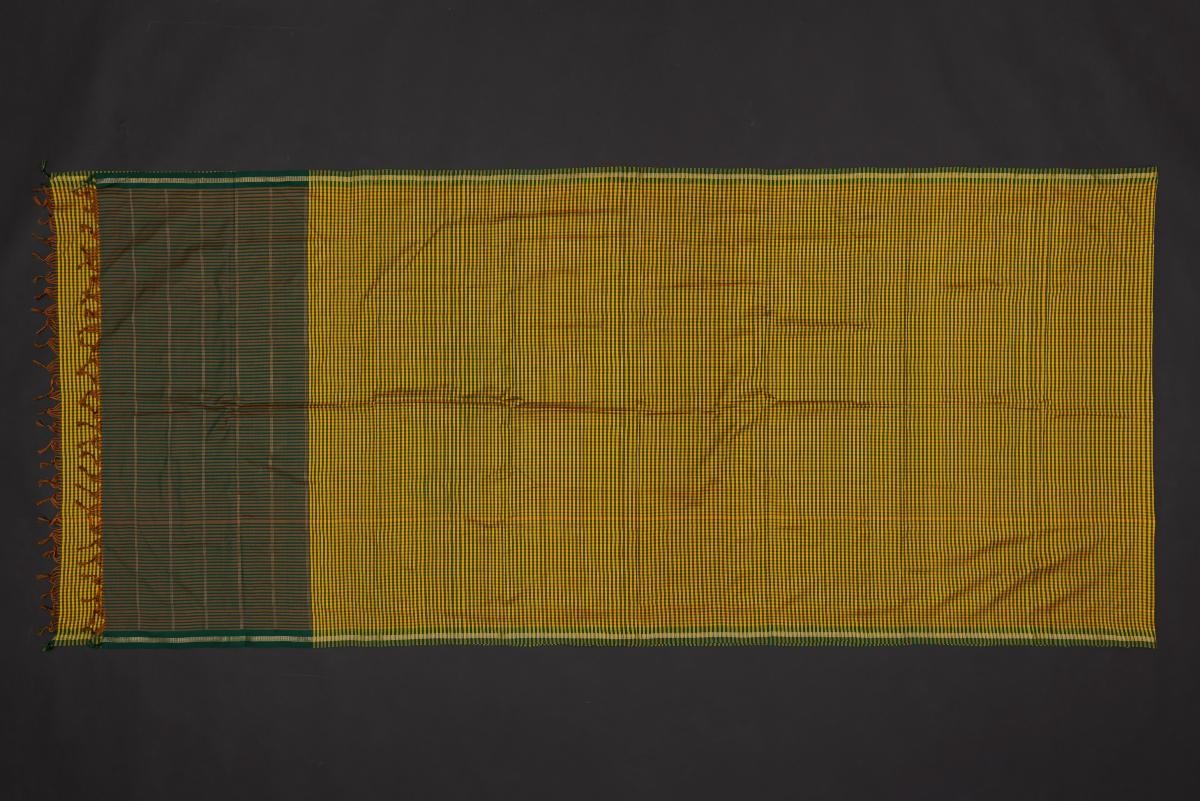

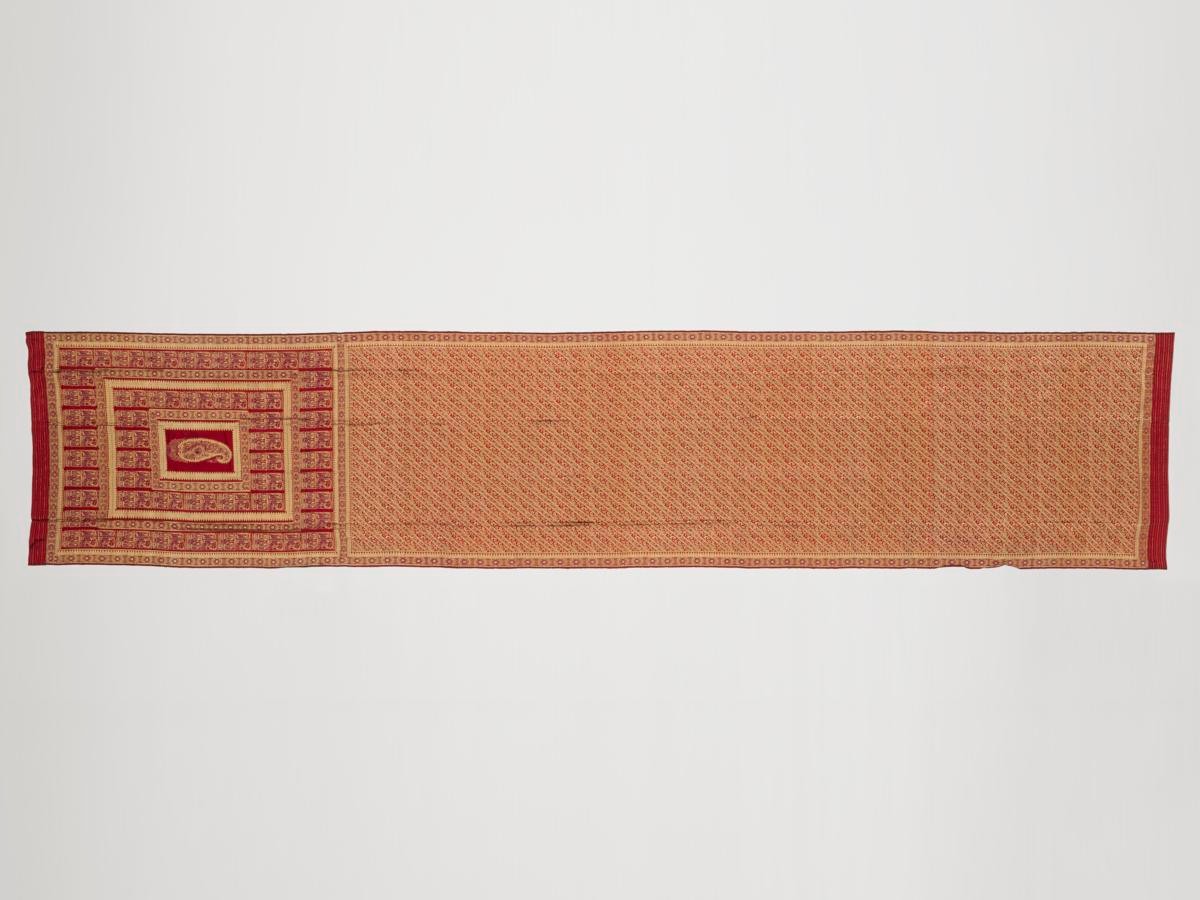
Baluchari saris originated in the town of Baluchar in the Murshidabad district of West Bengal, India. They have a rich history that dates to the 18th century when Murshidabad was the capital of the Bengal province under the Nawabs of Bengal, keen patrons of the arts. These saris are known for their intricate designs and vibrant colours, and for their unique borders which feature scenes from Indian mythology and folklore. Baluchari saris are worn for weddings, festivals, and formal events and were highly valued by the nobility and aristocracy. The superiority of the drape is achieved by the twill weave, and the use of jacquard looms allows for intricate details. Baluchar weavers were primarily Muslim, and designs were initially inspired by the Mughal court, but over time they began to incorporate local themes and motifs. During the Mughal and British eras, they had a square design on the pallu (loose end) with paisley motifs, and scenes of nawabs smoking hookahs or driving horse carriages, and even European officers of the East India Company. From the collection of Minaldevi Mahadevia Daftary (1939-2015). Minal was born in Ahmedabad, Gujarat, and her family were co-founders of one of India's most prolific textile manufacturers, the Mafatlal Industries. Minal was a celebrated dancer, especially in three classical dance forms - Bharatnatyam, Kuchipudi and Kathakali from the 1950s to 1970s, and she travelled and performed across India. She loved textiles and clothes and purchased the best examples of saris from famous weaving centres to form an extensive and important collection.