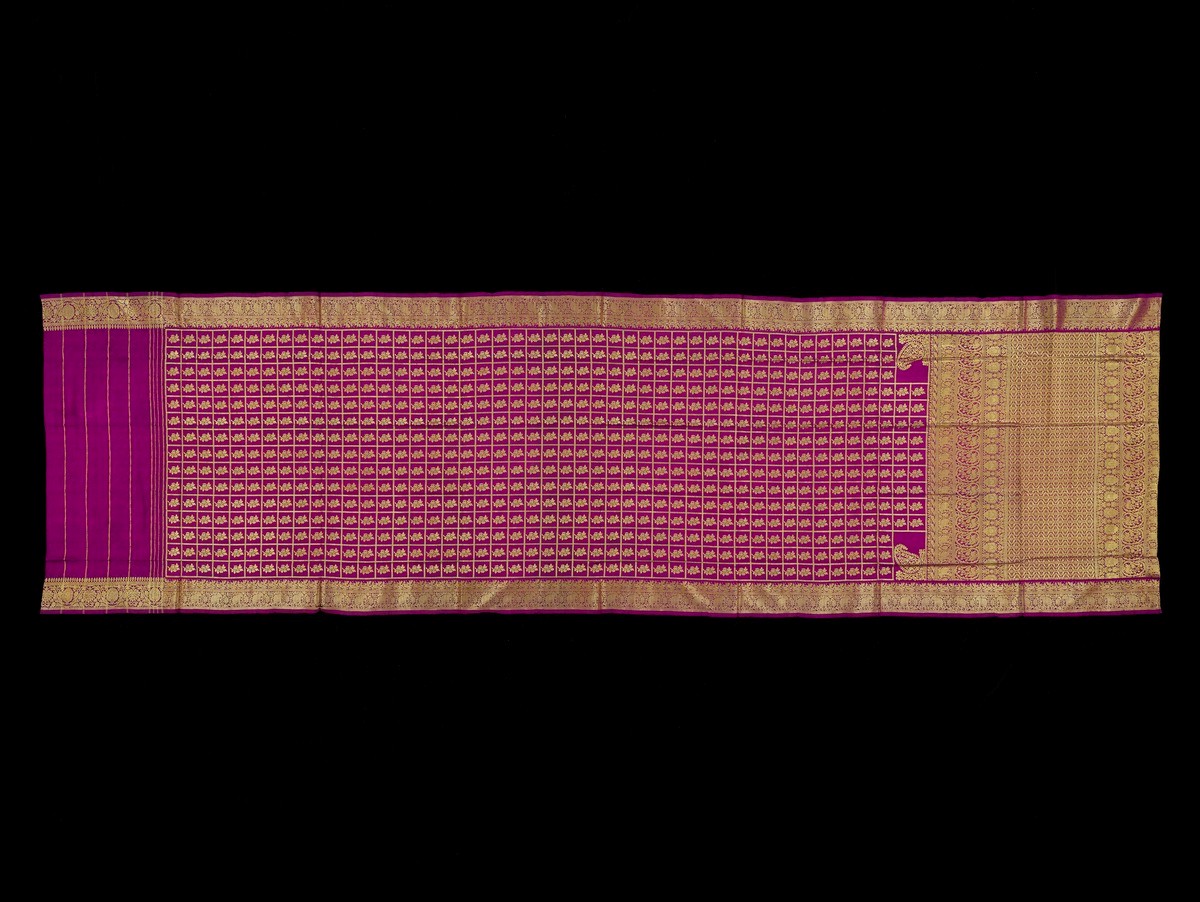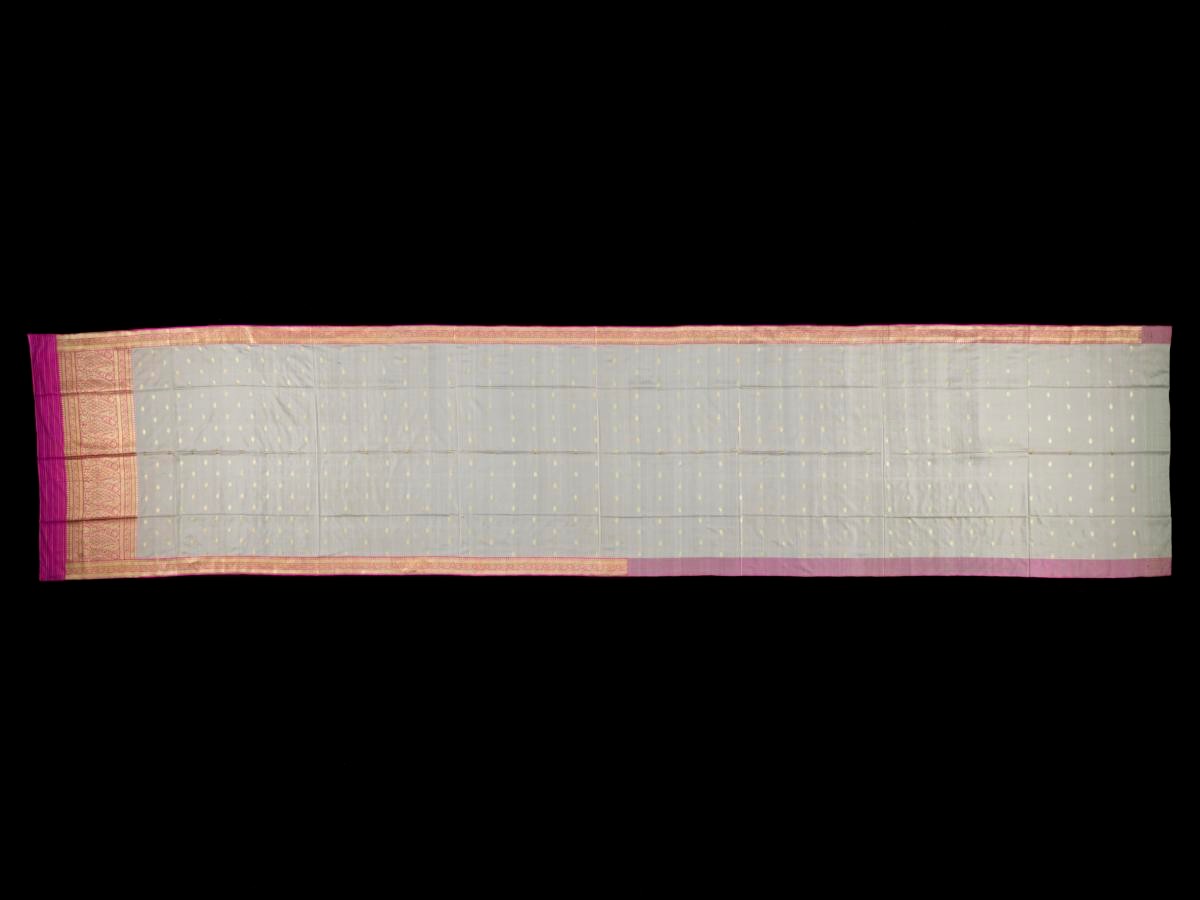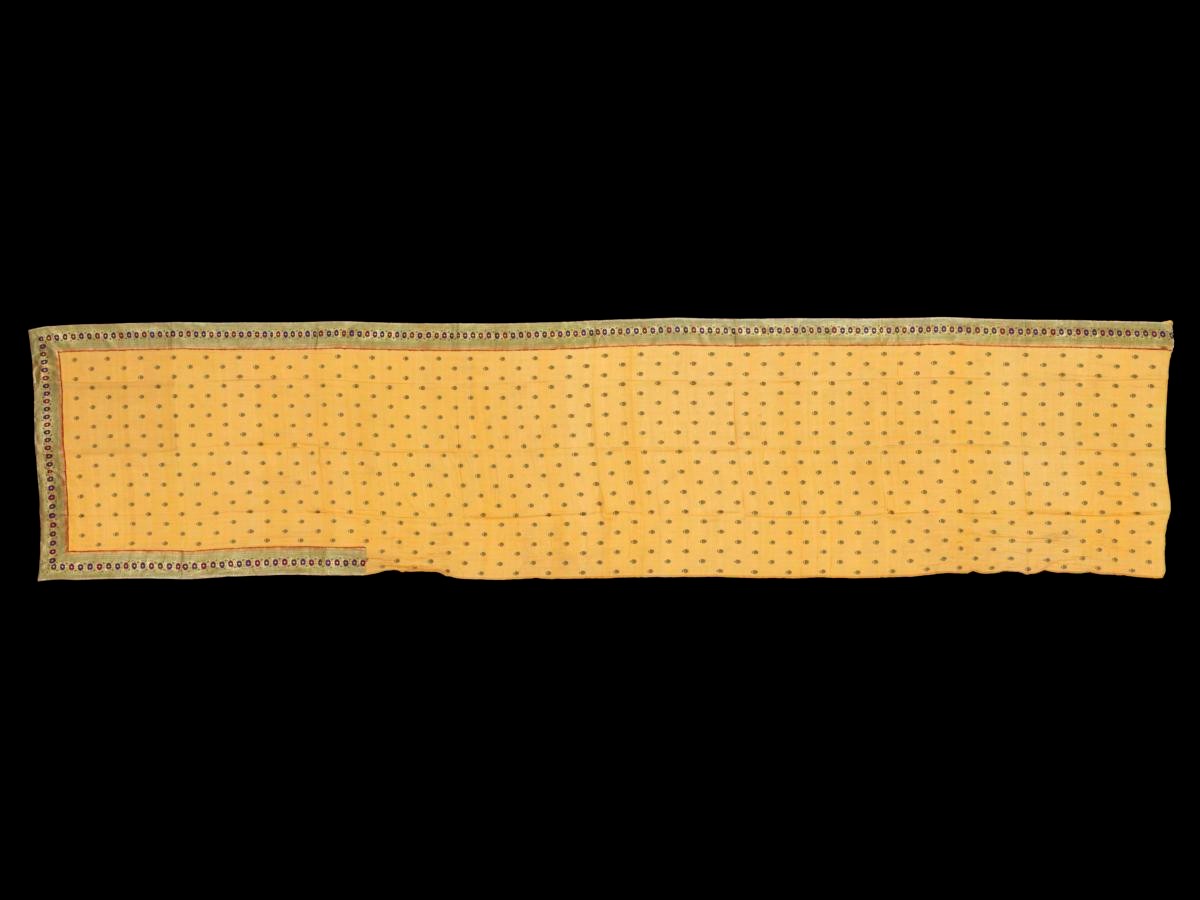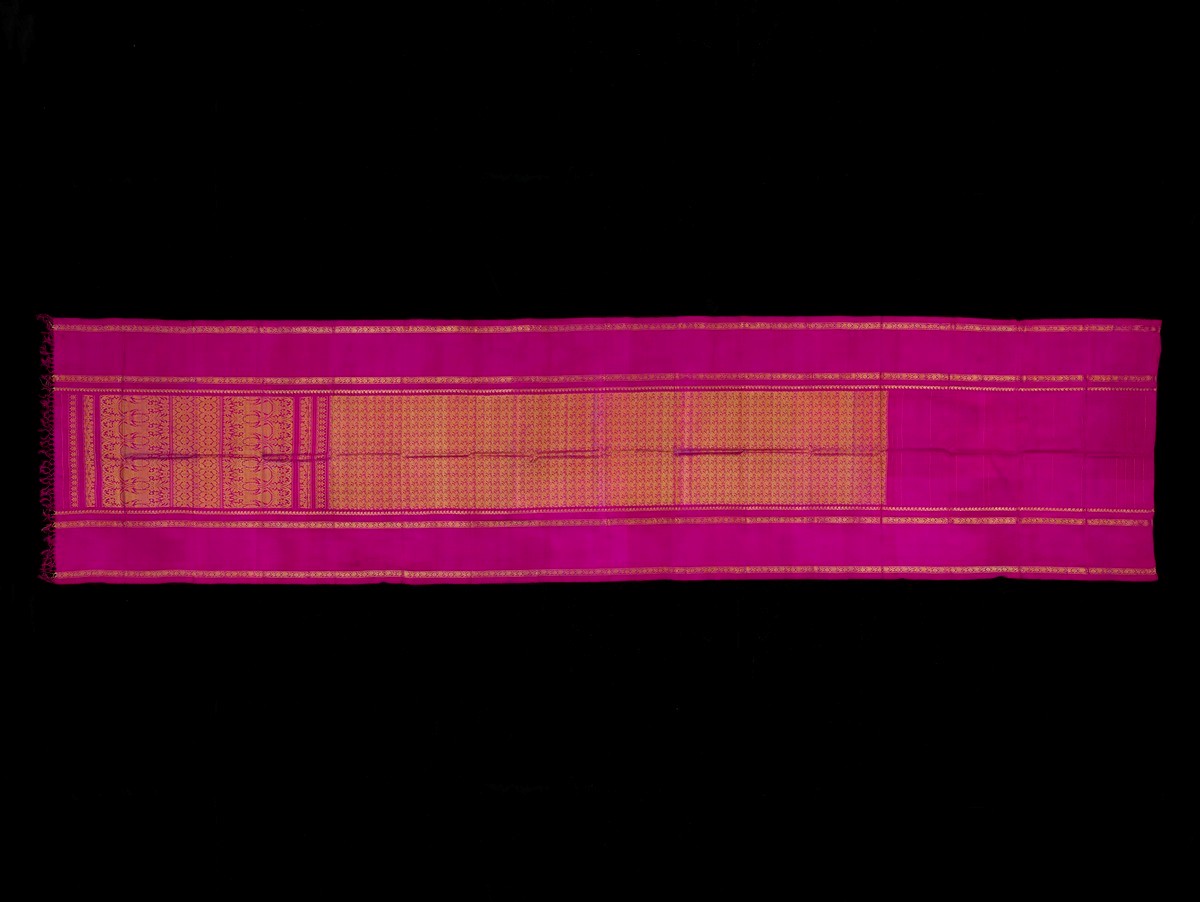

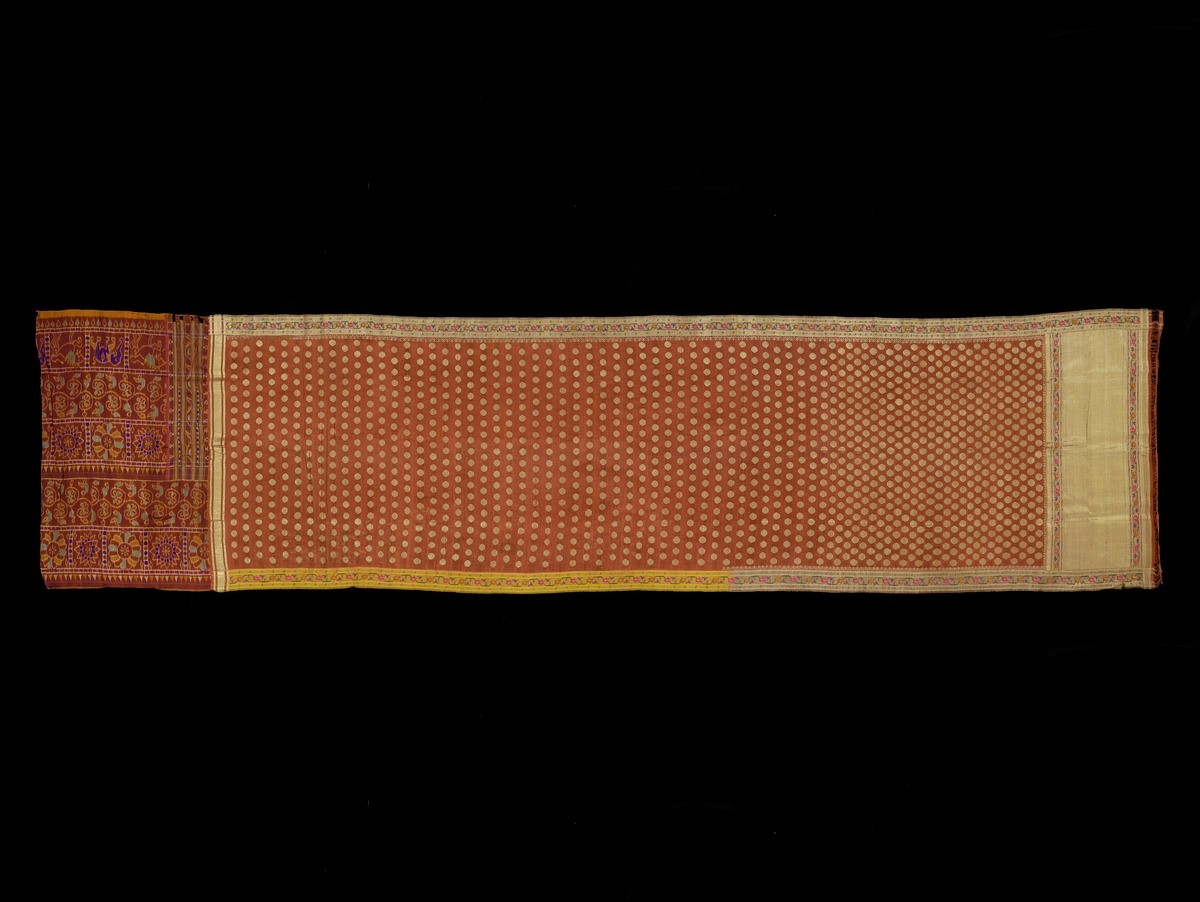
A type of silk and gold sari named after the town of Paithan in Aurangabad district in the state of Maharashtra, India. Originally made with pure gold wire and silk or cotton the Paithani sari dates to 200 BC Satvahana Dynasty, and Greeks and Romans purchased these saris for gold. In ancient Hindu and Buddhist texts it is called Dev vastra (fabric of God). In the 18th century a revival of Paithanis was possibly started with Peshwa royal patronage. Worn by the Maratha elite Paithanis became synonymous with high status, power, and prestige. Paithani is made in a plain weave with weft figuring designs, like tapestry, and can take anywhere from a month to two years to make. A distinguishing feature of handwoven Paithani is that both sides look the same, and is further characterised by a border with an oblique square design, here like a floral vine. Spotted designs were popular on Paithani produced in the 1940s – 1960s. From the collection of Minaldevi Mahadevia Daftary (1939-2015). Minal was born in Ahmedabad, Gujarat, and her family were co-founders of one of India's most prolific textile manufacturers, the Mafatlal Industries. Minal was a celebrated dancer, especially in three classical dance forms - Bharatnatyam, Kuchipudi and Kathakali from the 1950s to 1970s, and she travelled and performed across India. She loved textiles and clothes and purchased the best examples of saris from famous weaving centres to form an extensive and important collection.