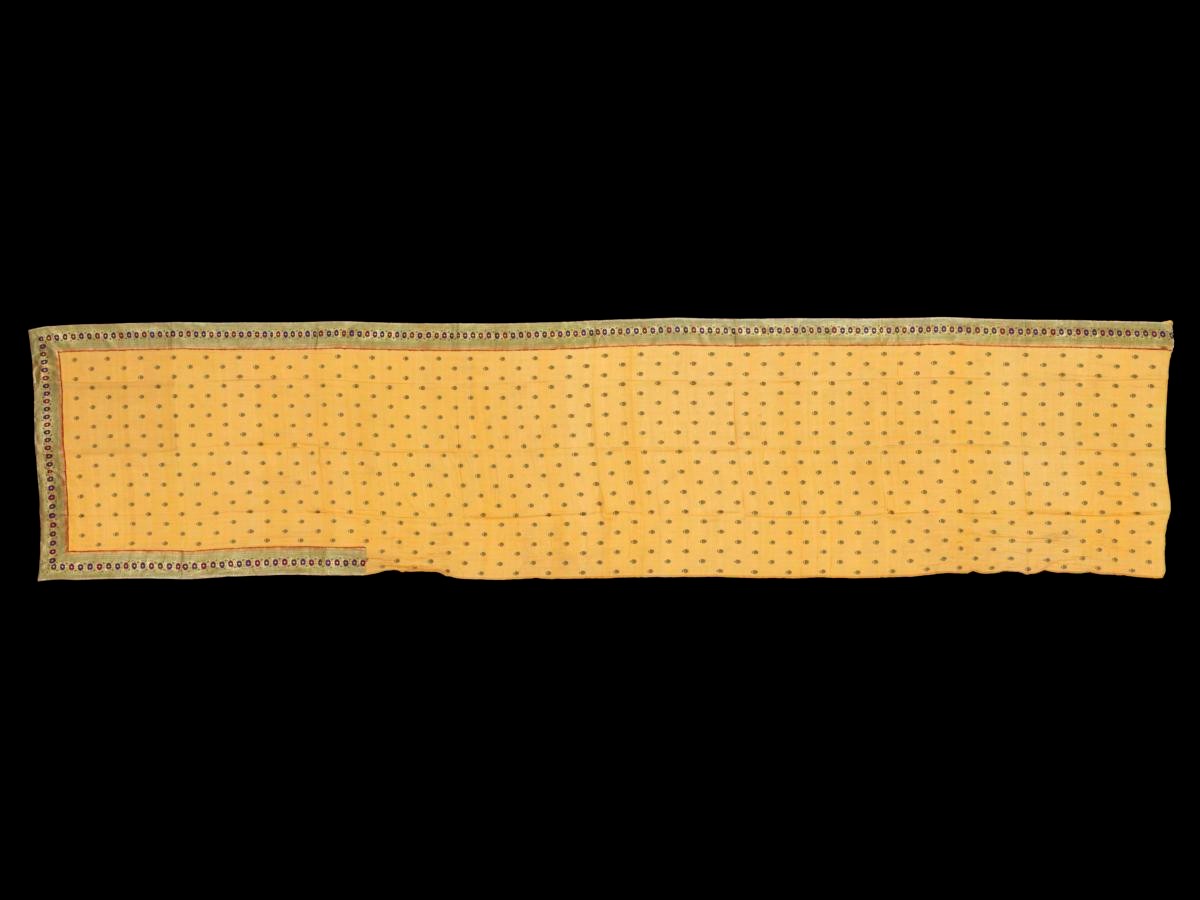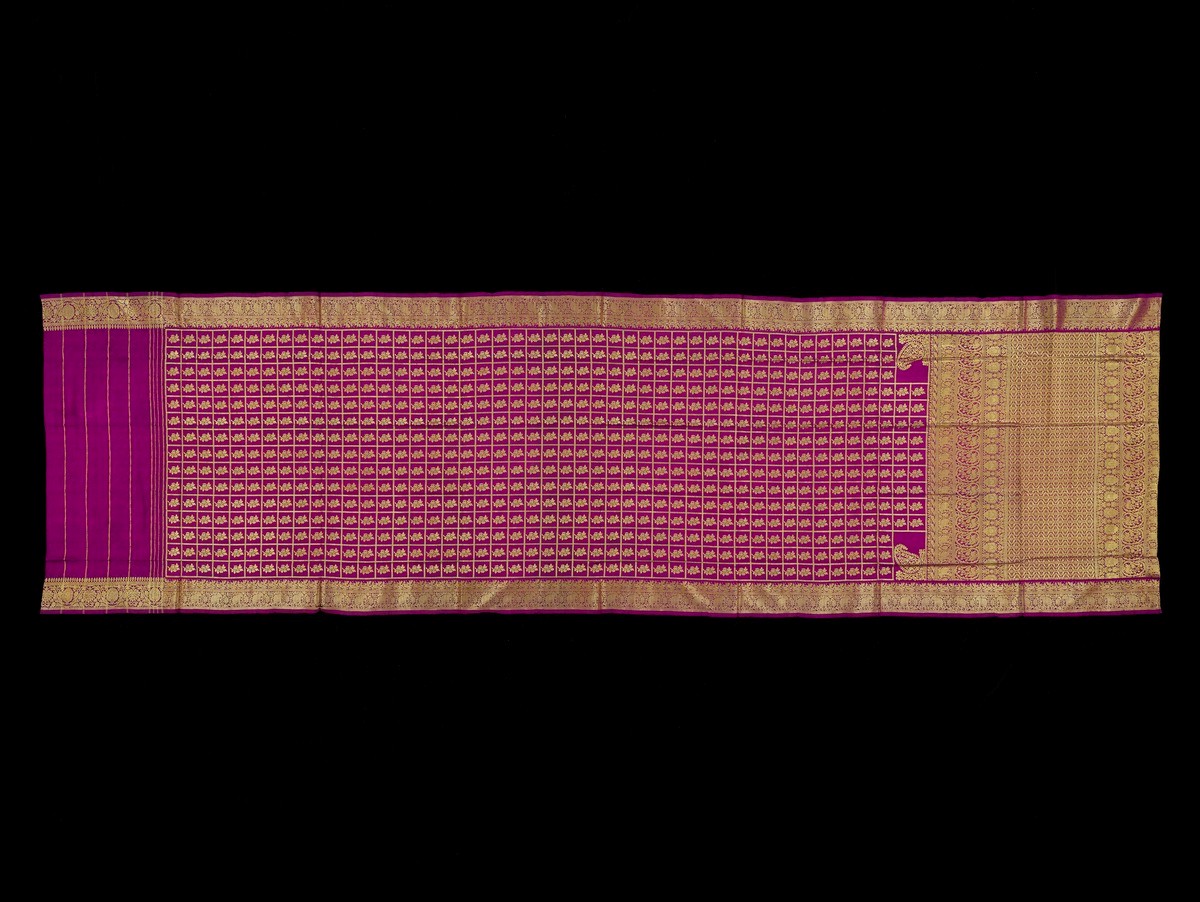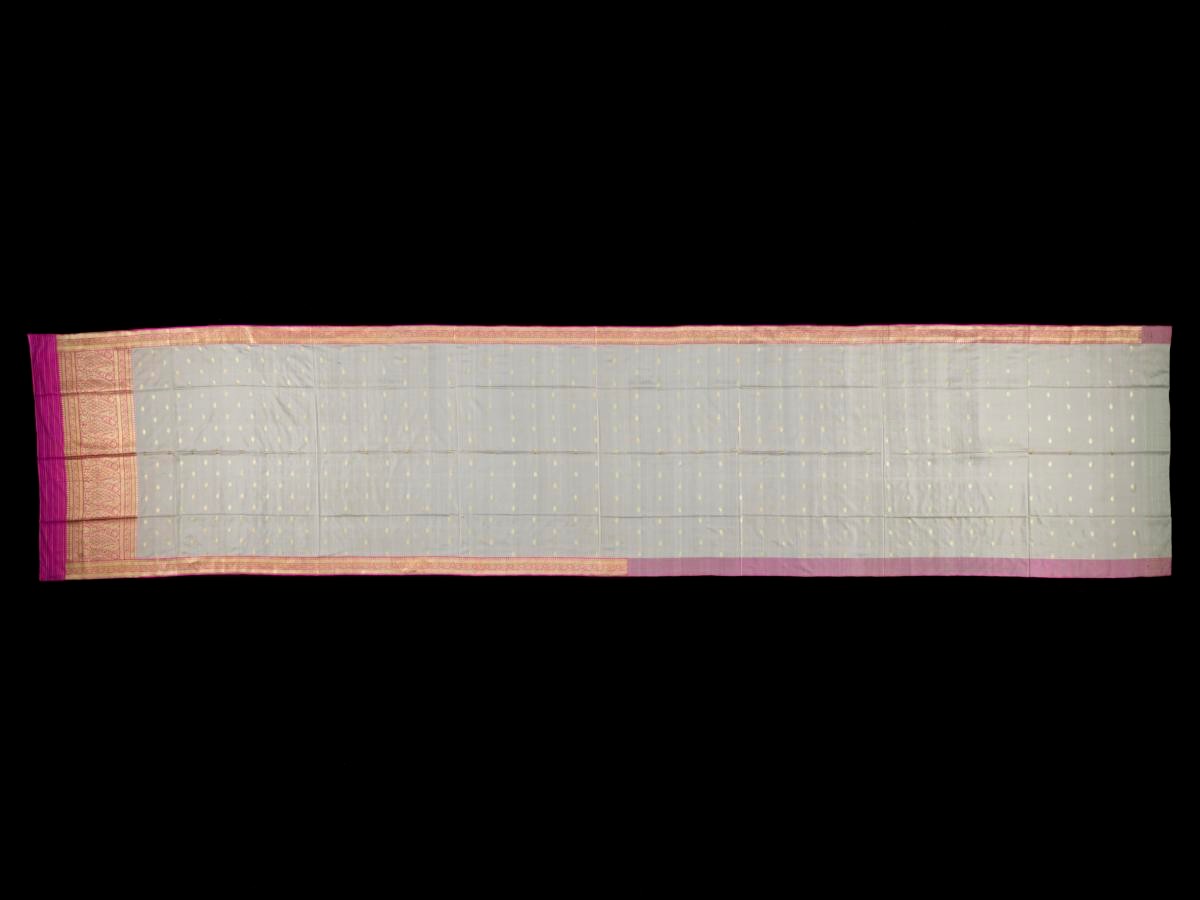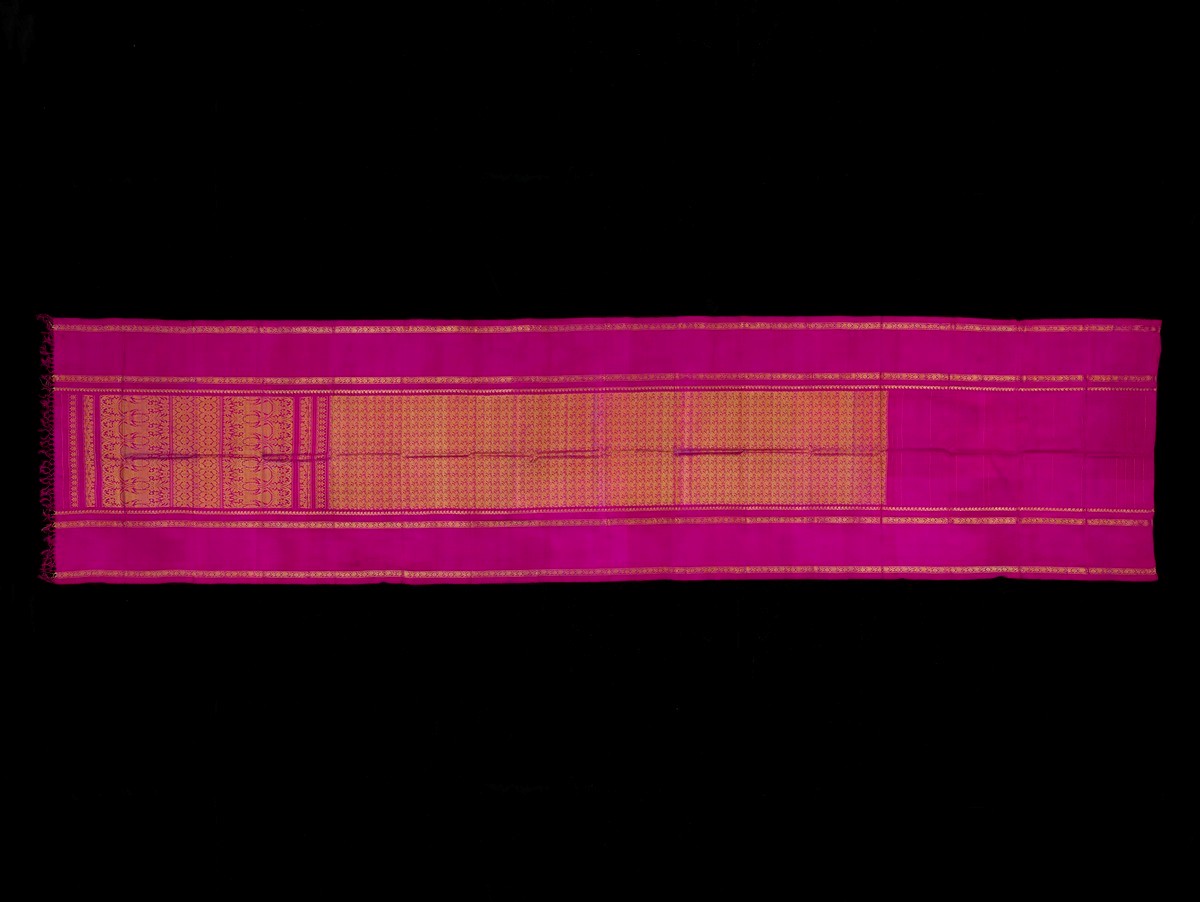

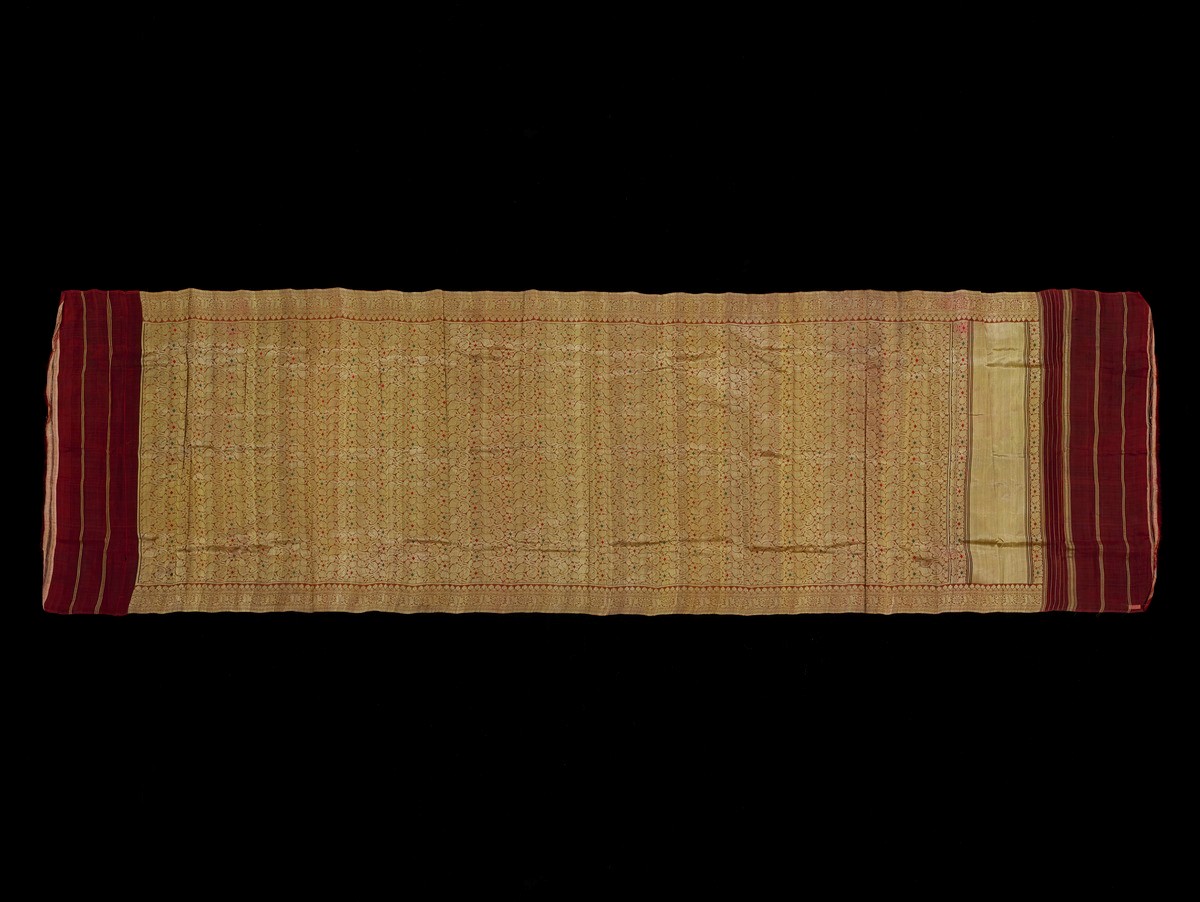
This Ashavali sari has gold brocade keri (paisley) motifs covering the entire body of the sari. Ashavali is an intricate brocade known as kinkhwab, made using metallic gold and silver threads known as zari. Woven on pit looms, using an alternating twill technique, the motifs appear raised or embossed on the surface. Characteristic are the highlights of coloured threads that give it an enamelled look. The motifs are very distinct and show animals and birds of Gujarat. The weaving technique originated in Ahmedabad (previously called Ashavali), Gujarat from at least the 16th century, and were made by the Khatri and Patel families. Ahmedabad was a bustling textile centre on a very large scale and was nicknamed the Manchester of the East alluding to the industrial city in England. When machine weaving came in weavers lost their jobs and migrated to other states and countries, taking their skills with them. Ashavali is thought to have influenced the now-famous brocade traditions of Benares through the migration of Gujarati weavers. Ashavali were used primarily by the Mughals, local royalty, and the rich mercantile class. From the collection of Minaldevi Mahadevia Daftary (1939-2015). Minal was born in Ahmedabad, Gujarat, and her family were co-founders of one of India's most prolific textile manufacturers, the Mafatlal Industries. Minal was a celebrated dancer, especially in three classical dance forms - Bharatnatyam, Kuchipudi and Kathakali from the 1950s to 1970s, and she travelled and performed across India. She loved textiles and clothes and purchased the best examples of saris from famous weaving centres to form an extensive and important collection.