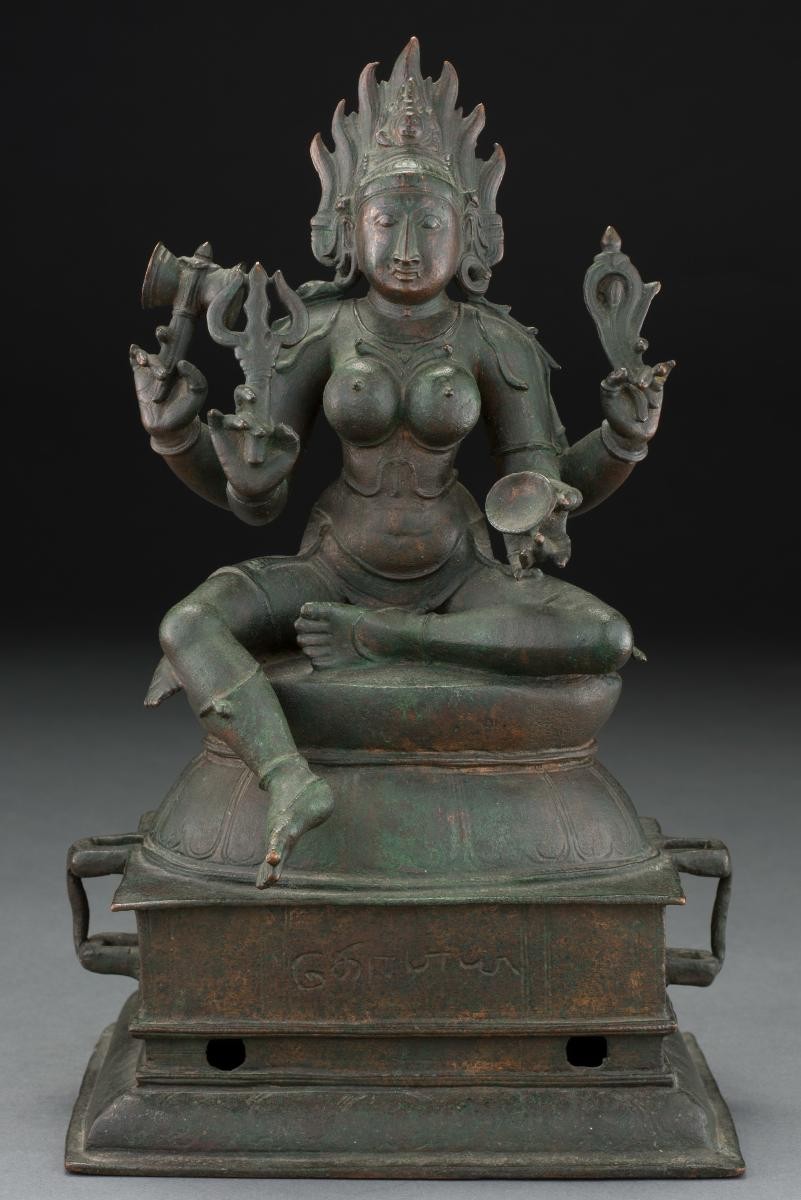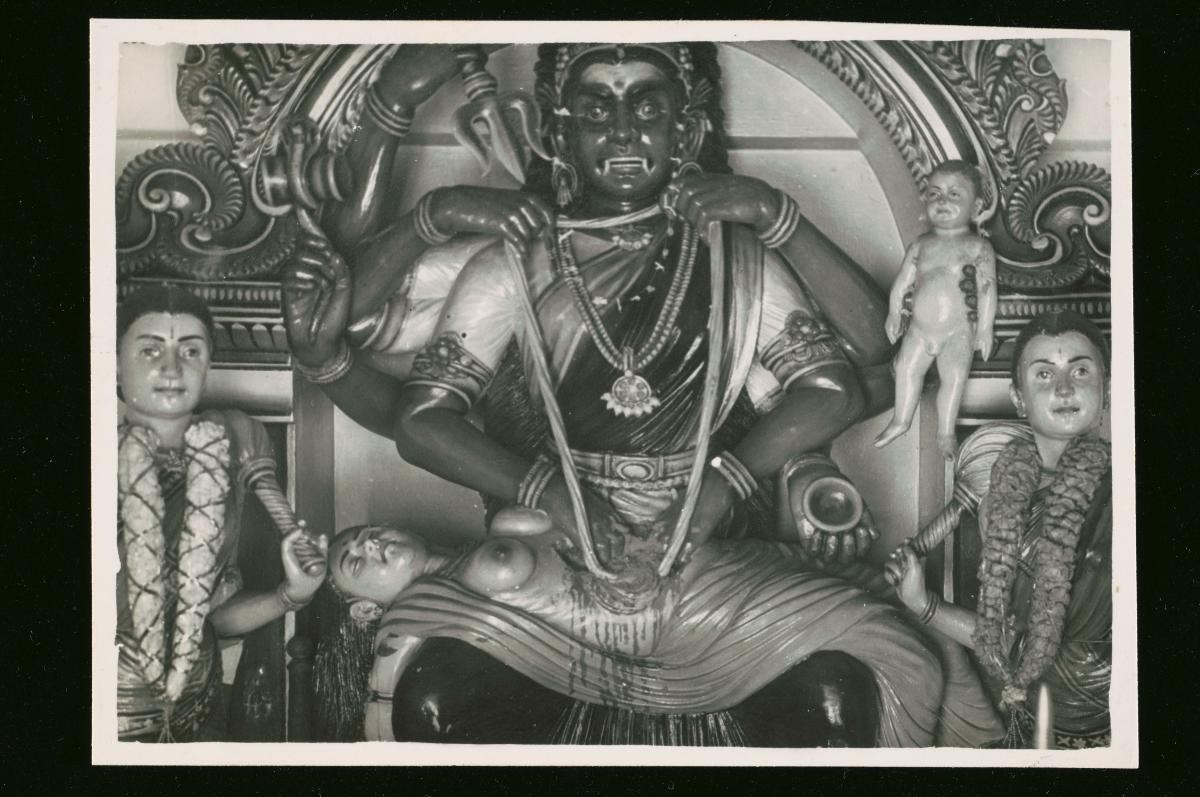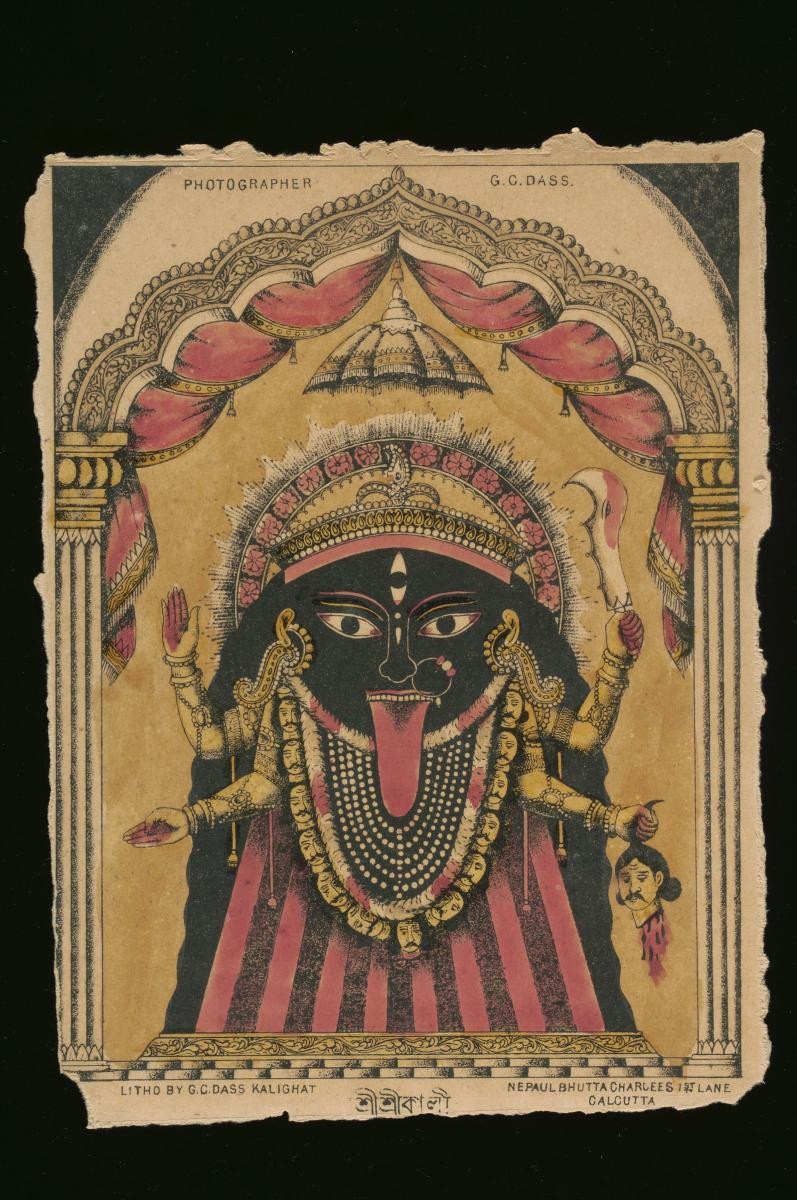

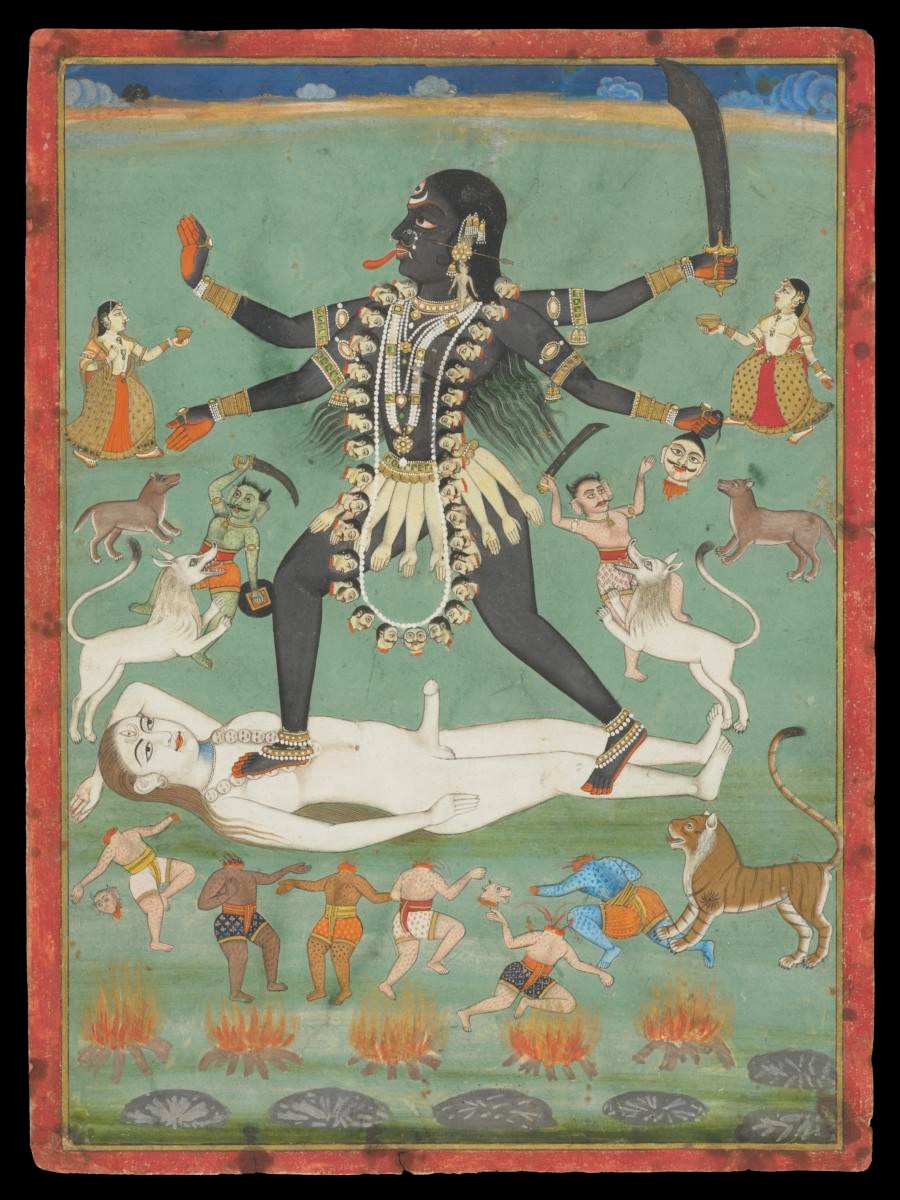
This image is a depiction of the Hindu goddess Kali, in her most well represented form. The name “Kali” is derived from the Sanskrit word kāla meaning both “time” and “darkness”. She can be understood as the goddess of time and of death and is often depicted as having dark skin. She is the fiercest manifestation of Devi or Shakti, the divine feminine power in Hindu belief and practice. Despite her terrifying nature, bloodthirstiness and violence, Kali is worshipped as a protective mother goddess, and is the object of intense devotion across India, particularly in Bengal and RajasthanIn the 5th-6th century text, the Devi Mahatmya, that enumerates the many manifestations and stories of the Divine Female, Kali is said to emerge as an embodiment of the goddess Durga’s uncontrollable rage. Kali slays the demons Chanda, Munda, Raktabija, Shumbha and Nishumba. Her victorious frenzy threatens to become a dance of destruction, causing Shiva to intervene and lie down at her feet. The act of stepping on Shiva’s chest breaks her fury and saves the universe from ruin. This painting depicts this scene of Kali trampling on Shiva. The figures are depicted in a cremation ground, alluding to Kali’s association with death. She holds a sword and a severed head in two hands, while her other two hands make the gestures of reassurance and generosity. She wears the heads and arms of the vanquished along with ornate jewellery, while a tiger, her vehicle, and attendants look on.