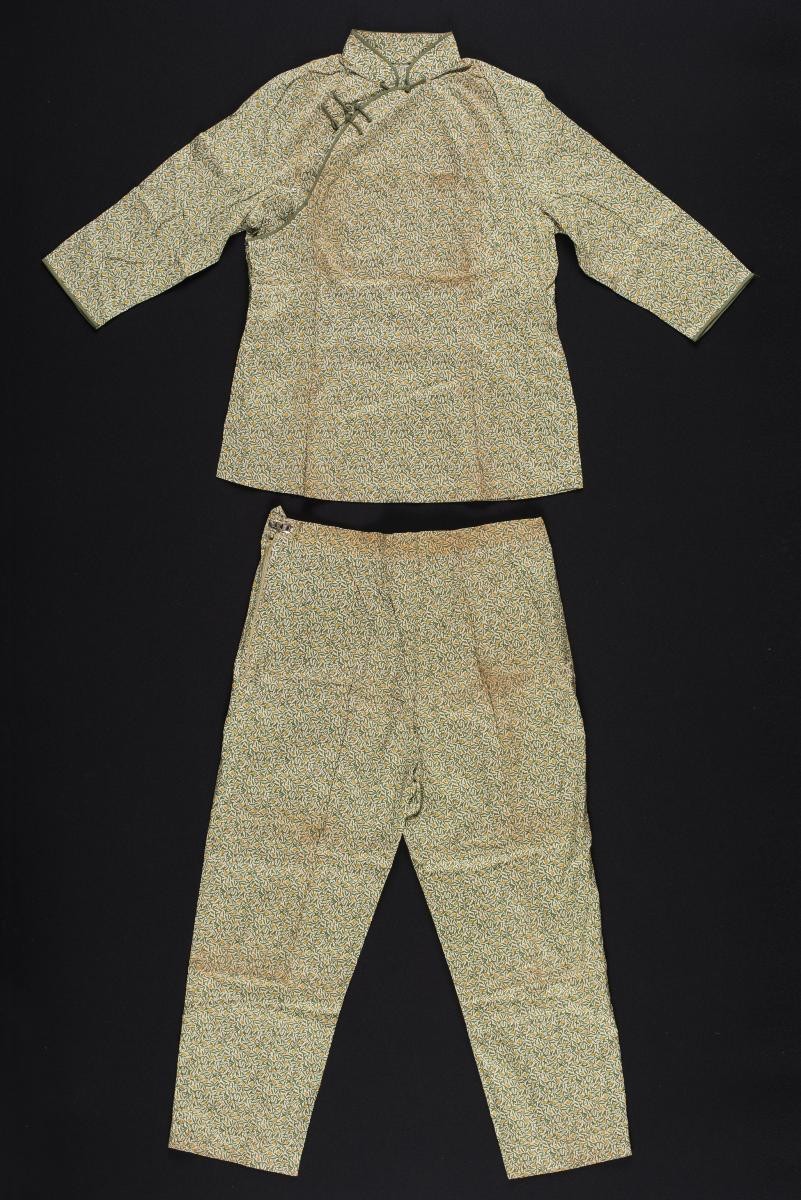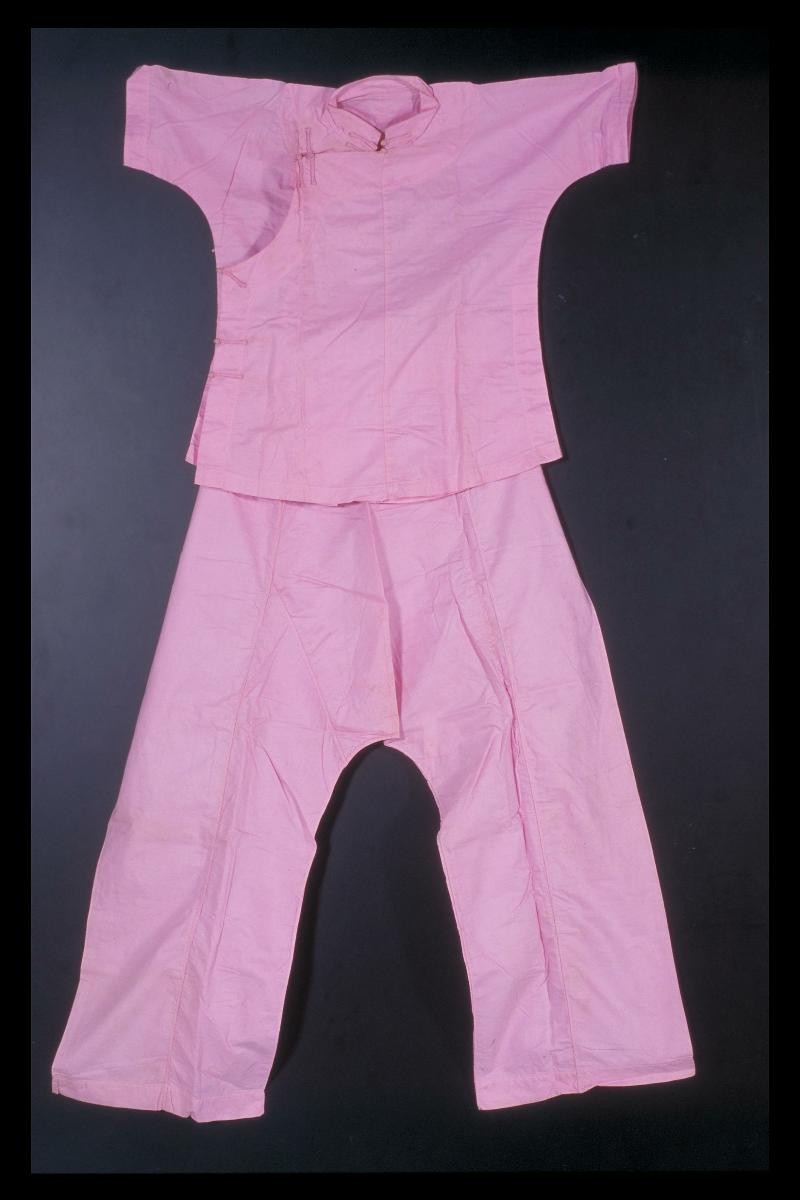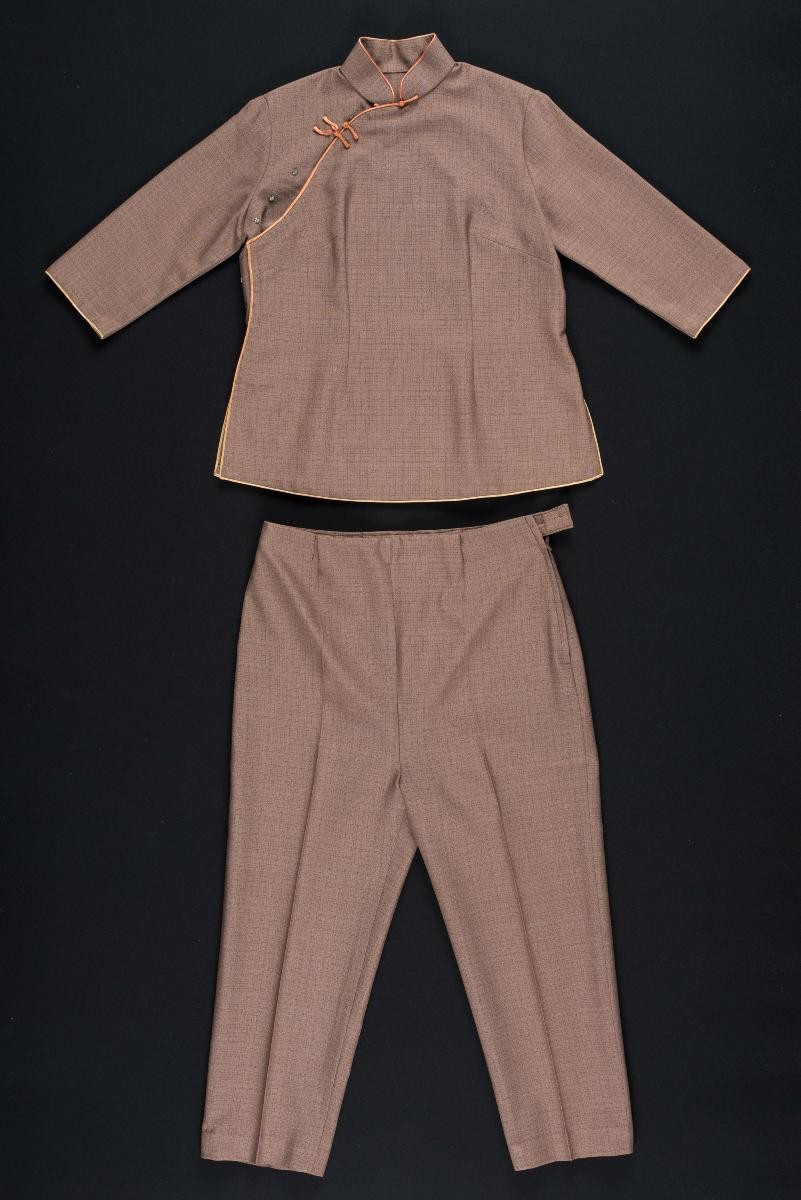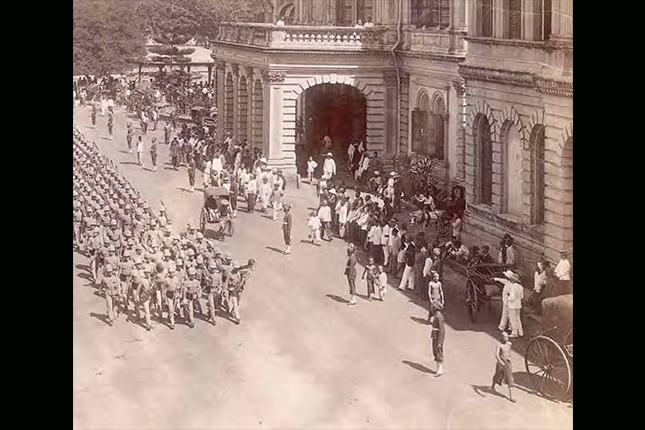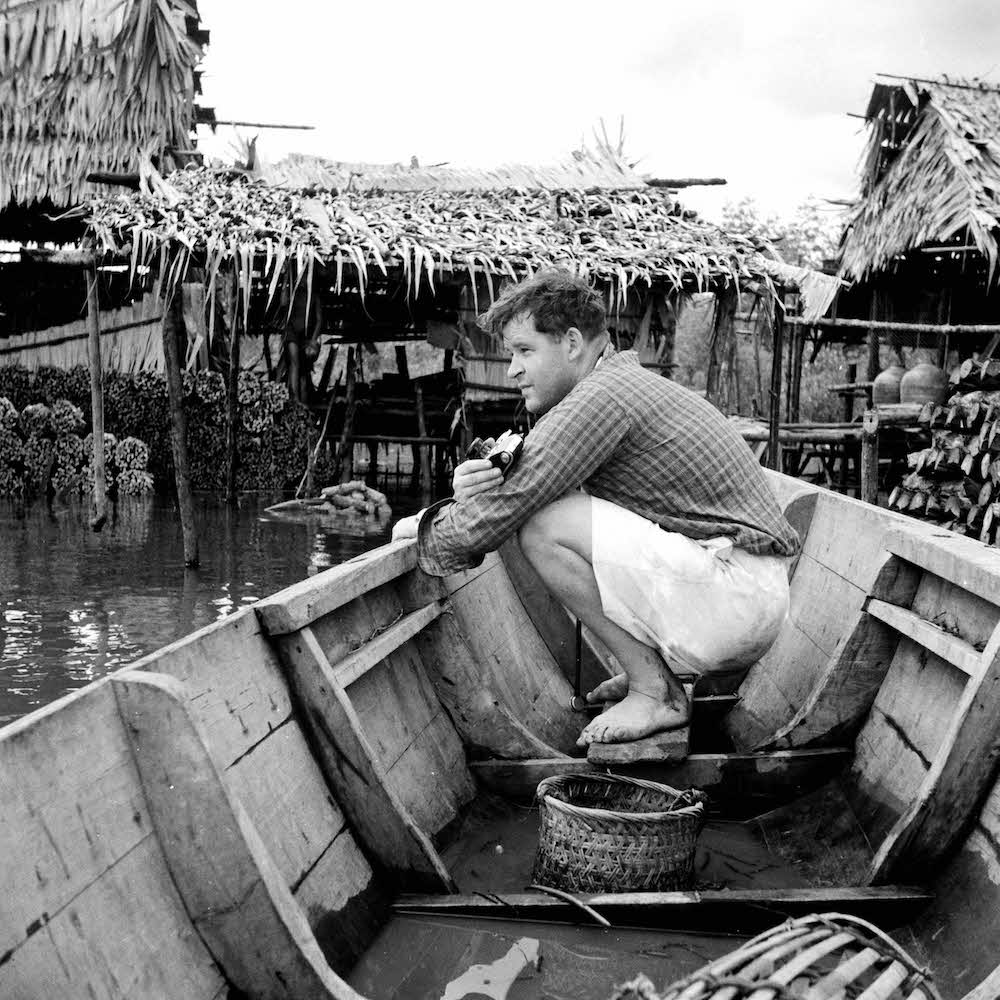

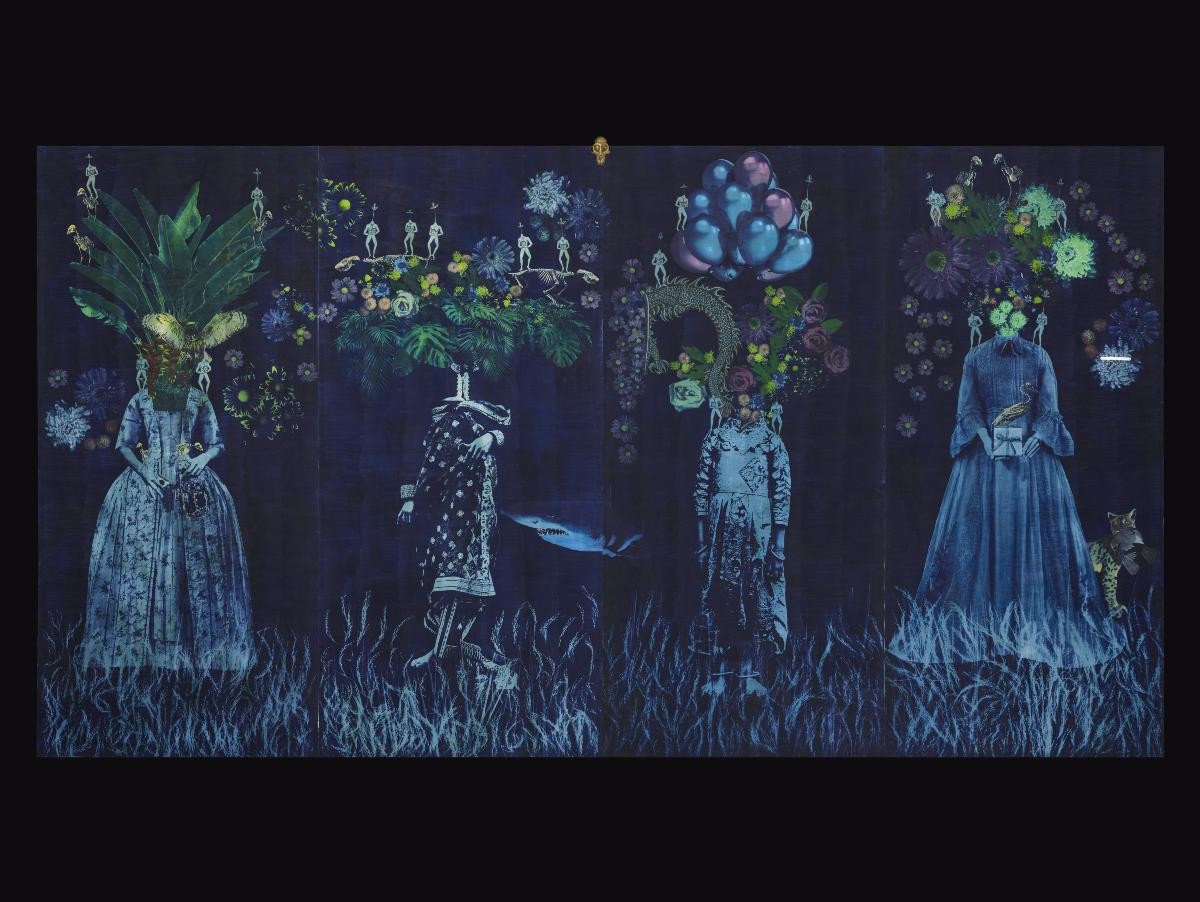
Wildly Convenient are a set of large-scale cyanotypes-on-canvas made by Budi Agung Kuswara. For this work, the artist took archival images and photographs as his main point of departure. By considering the archive as live and enduring, the artist believes that the archive can be activated meaningfully through response. The artist uses images found in the archives of institutions such as the Tropenmuseum, Rijksmuseum, and other major photo archives in Leiden. In the process of doing so, the artist consistently works with images that open themselves up to multiple interpretations to draw attention to narratives that have been systematically silenced through careless categorization.The figures featured in Wildly Convenient are both real and fictional. The two middle canvases feature the Karangasem Regent, I Gusti Bagus Jelantik, and his oldest son, Anak Agung Gede Djelantik. Despite this information, the official title of the image (as documented by the Tropenmuseum’s collection) denies the king and his son their names, stating generically that the image features the “Radja van Karangasem [Raja of Karangasem]”. The figures on the left and right canvases are fictional. Whilst imagined, they can be situated within the artist’s wider archival research and interest in intergenerational lineages. The figures share affinities with, for example, historical images of Javanese noble people who dressed in European attire. To print these figures, the artist also referenced specific dresses in the Rijksmuseum’s collection. The artist made this work as a pointed and critical response to the conversations around colonial looting of historical and cultural materials, and of the possibilities of restitution. Cognizant of the fact that certain figures are not named, given identities, or properly attributed within these archives, the artist repositions these figures as anonymous ancestors of his. By nodding towards decoloniality and critical realisms, these interventions reify these forgotten figures. At the same time, they do so by acknowledging the inherently violent power dynamics that have resulted in a one-dimensional reading of their histories.