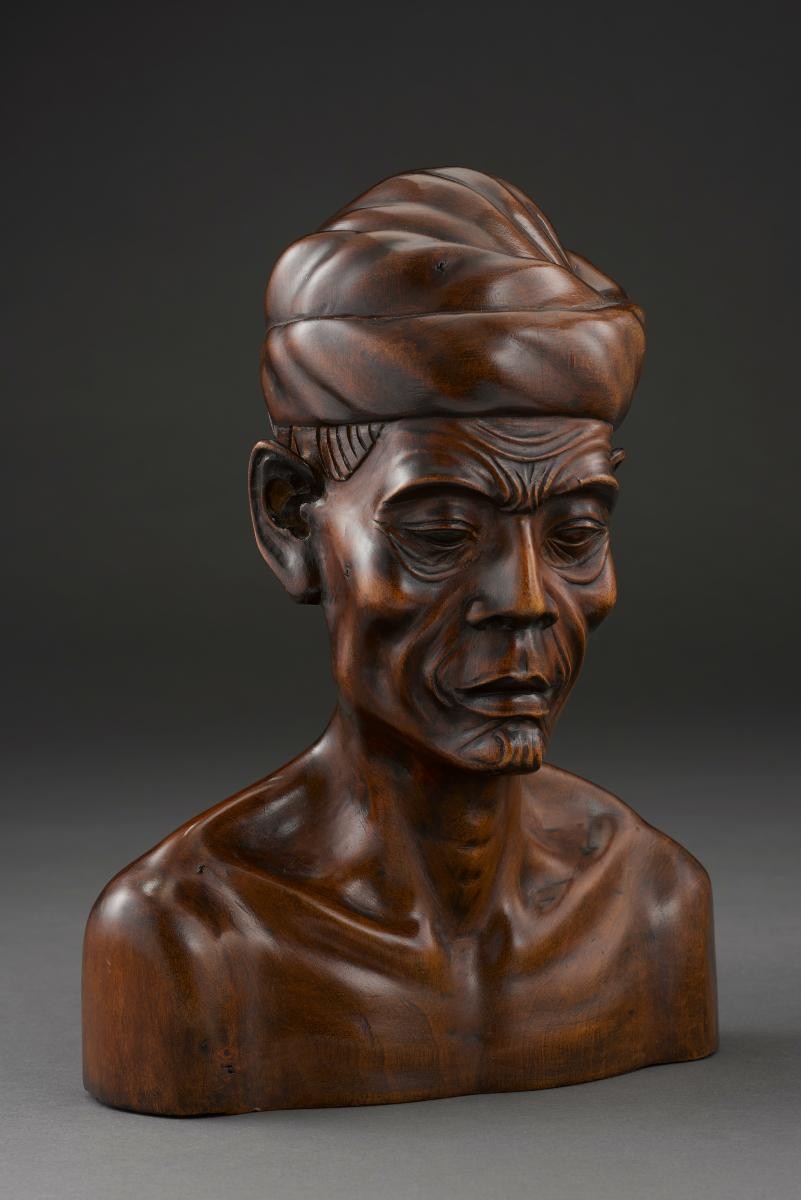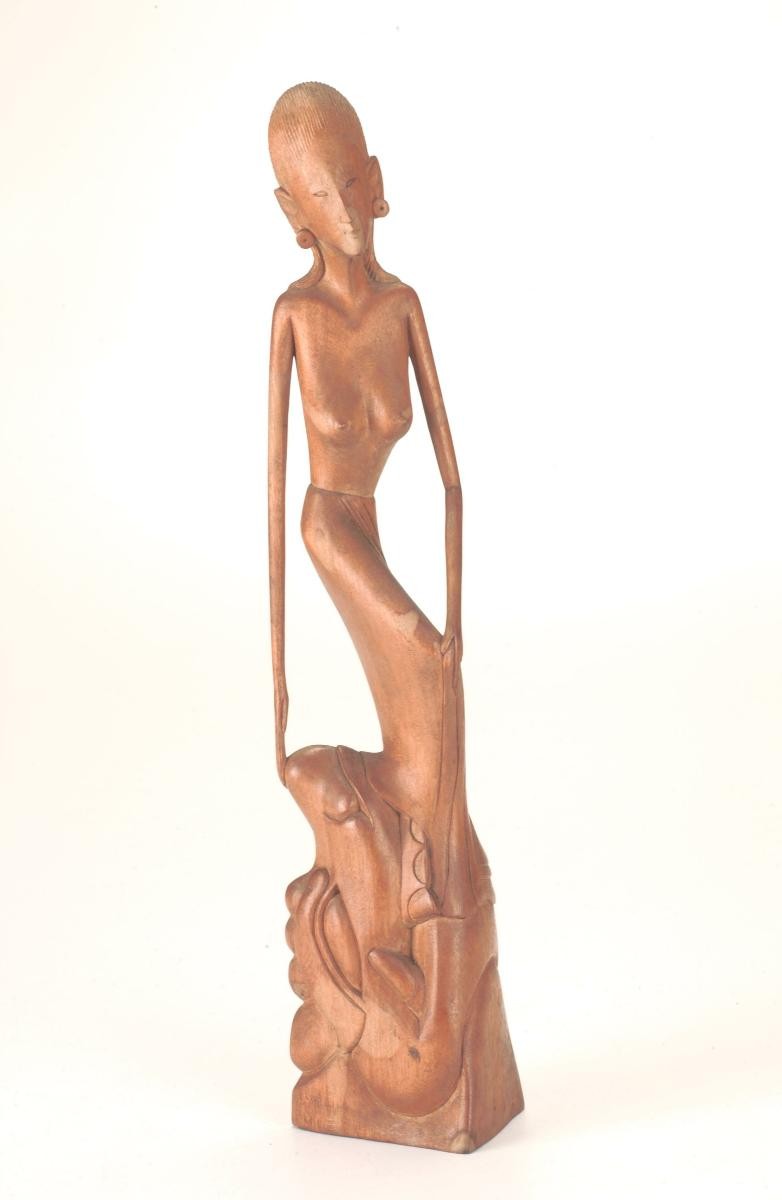

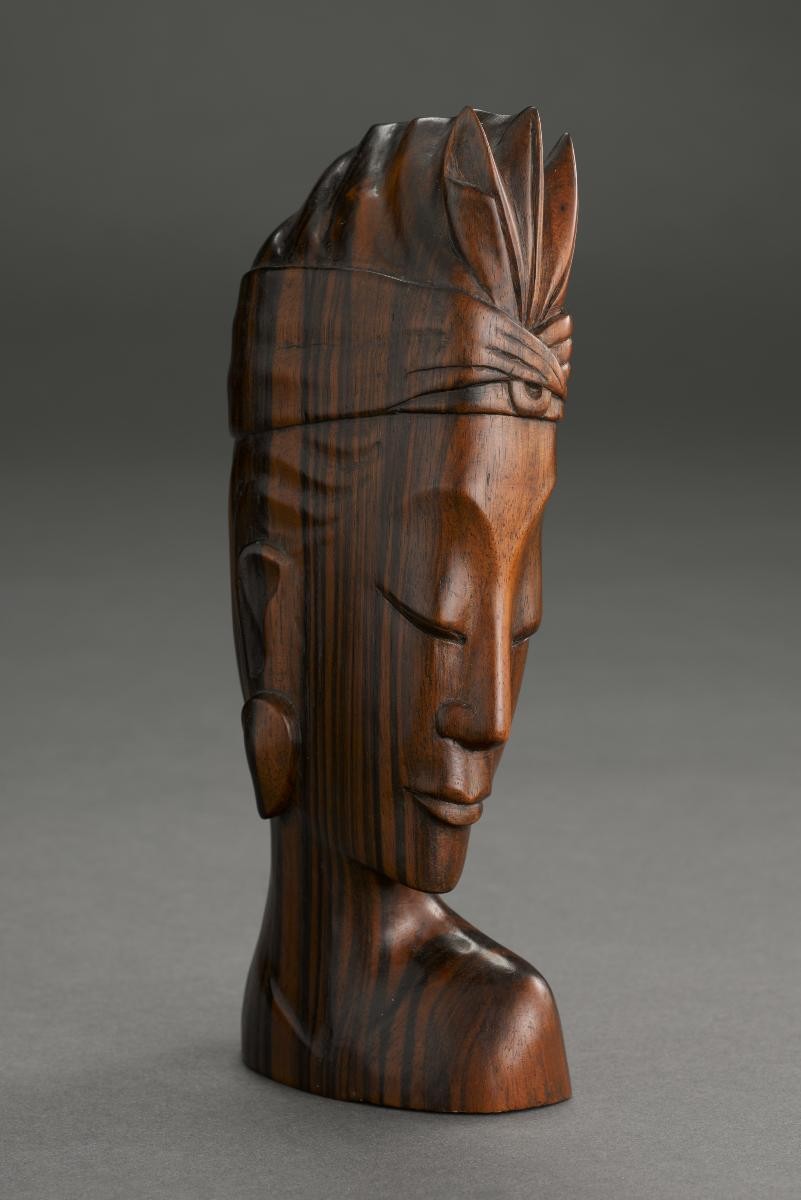
This bust of a young Balinese man is carved in Macassar ebony wood polished to a smooth, high-gloss finish. The overall facial profile is elongated and slender, with certain features like the nose and chin appearing more angular. His headdress, known as udeng, is a folded square cloth commonly worn by Balinese men during religious ceremonies. This bust is an example of an “art-deco” style of woodcarving which Balinese artists began to practice from the 1930s. This style is characterized by the elongation of various aspects of Balinese physique in paintings and sculptures that result in exaggerated portrayals of slender figures. The development of such a style was attributed to artistic exchanges that occurred between local Balinese artists as well as European and Mexican collectors and artists who settled in Bali from the 1930s. Before this time, woodcarving was largely used in temple architecture and in religious ceremonies.