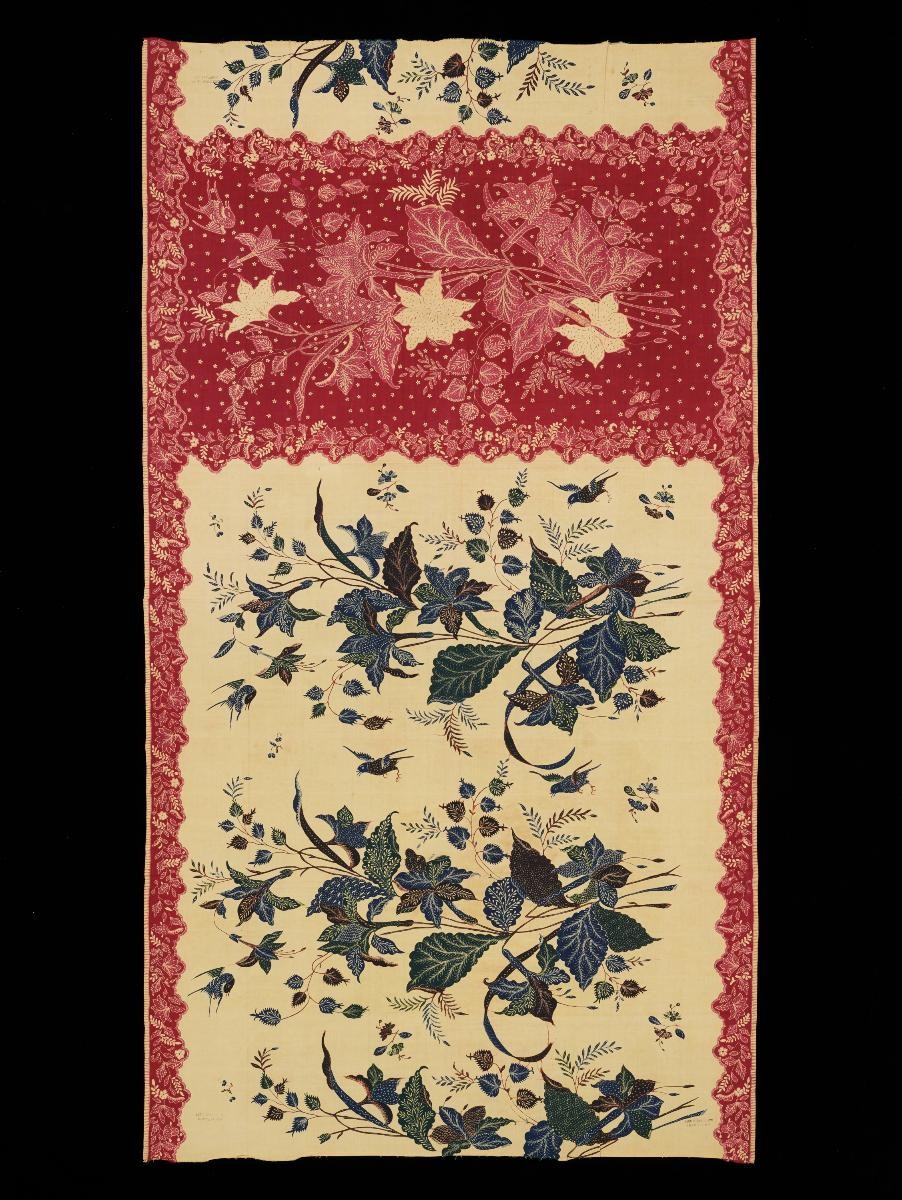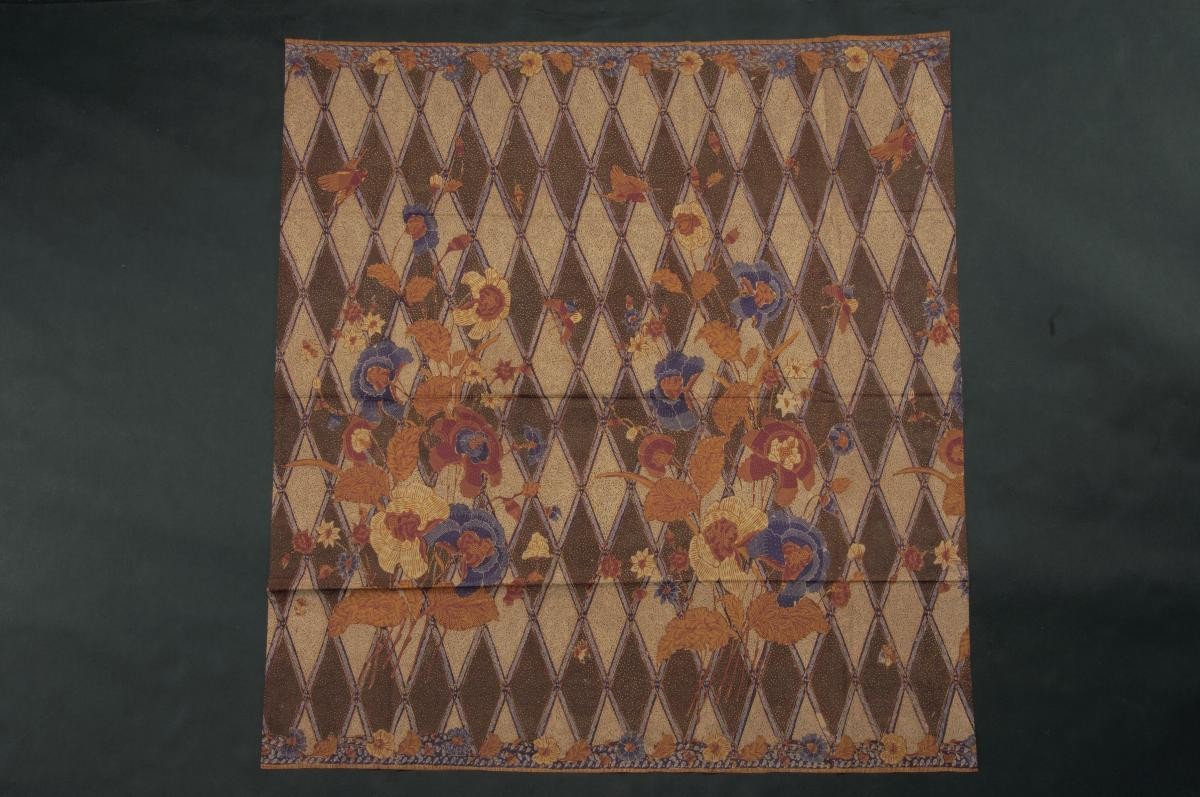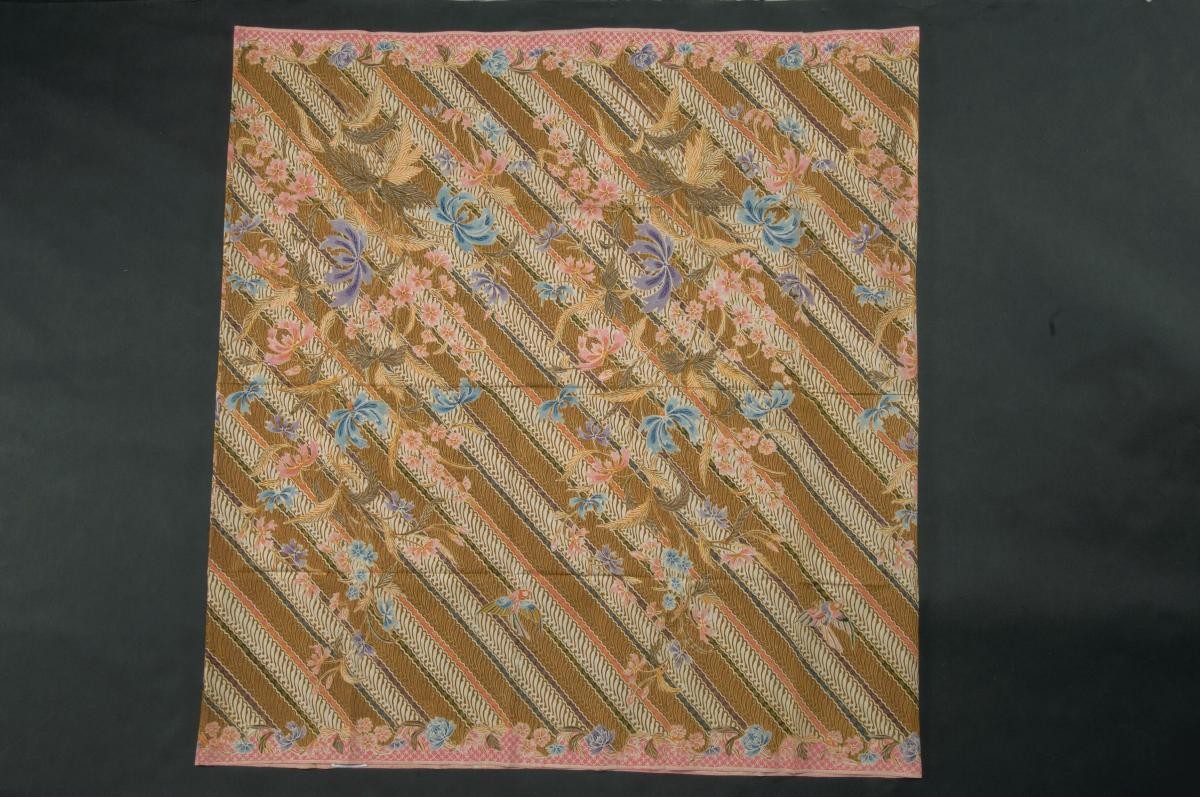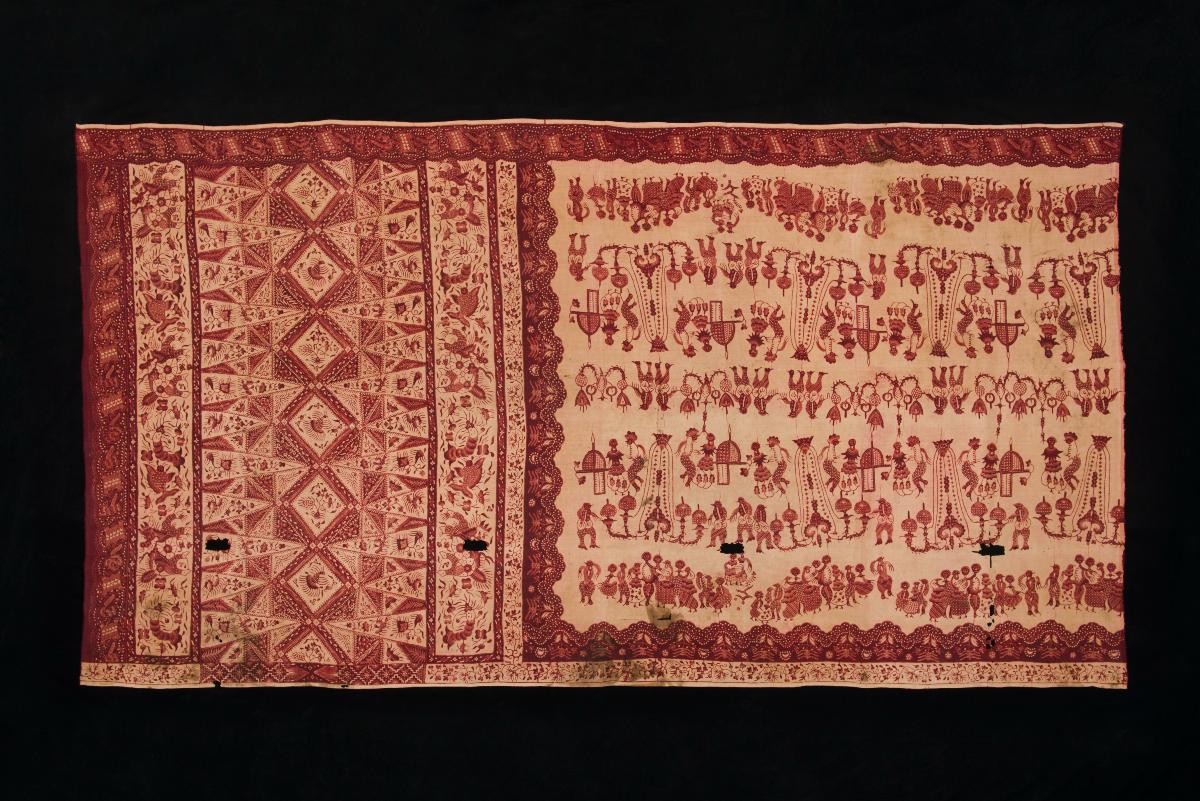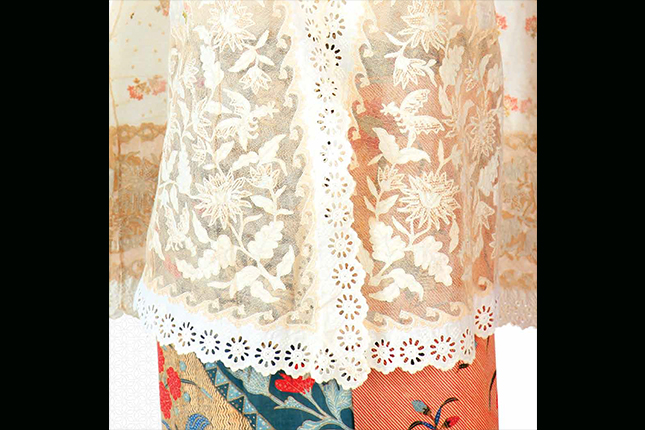

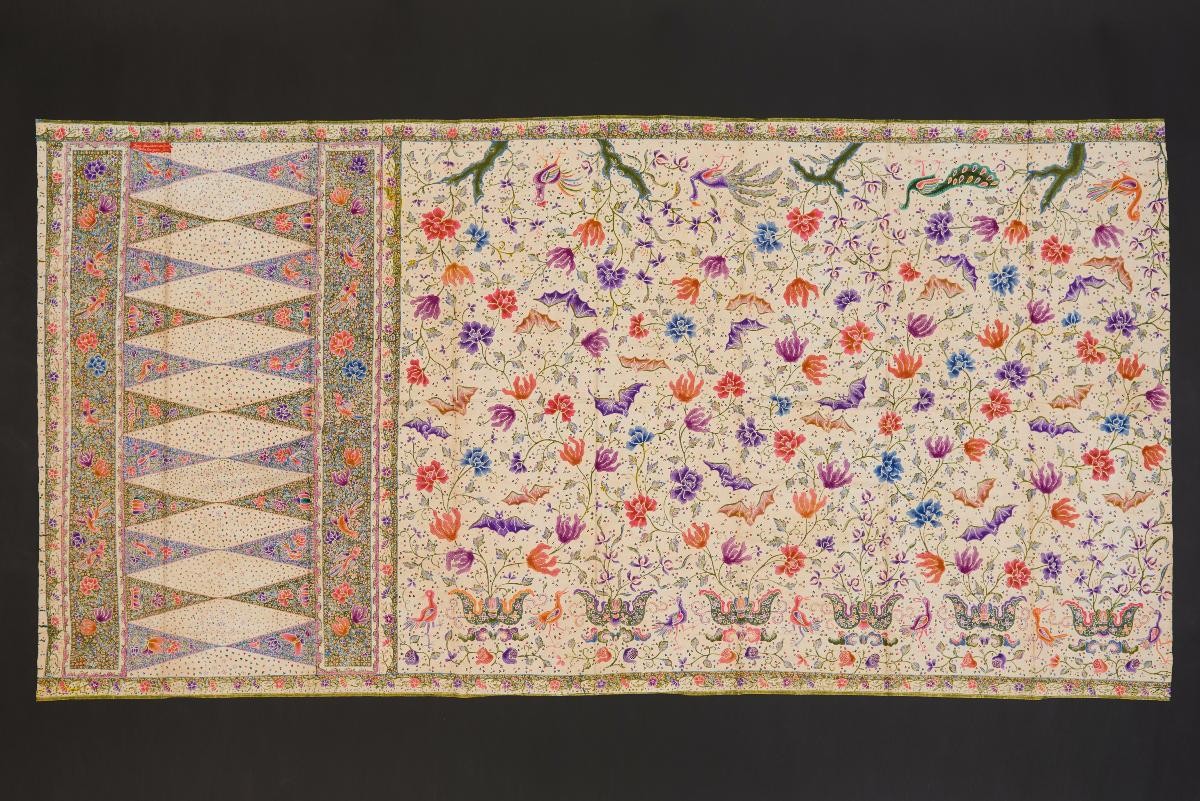
Rows of opposing and interlocking triangles, known as tumpal occupy the broad vertical panel (kepala) of this sarong. On the main design field or badan of this sarong, flowers interspersed with bats (symbolising good fortune for the Chinese) and birds are repeated. Although the buketan motif (large bouquets flowers) is a common design theme for batiks, this sarong additionally features exotic rock formations and bird varieties. This batik is part of a large group donated to the museum by the descendants of three generations of female batik makers from Pekalongan. It was made by the mother of the donors, Jane Hendromartono, the last of the three generations. Jane Hendromartono came from a family of batik makers in Pekalongan. She used many names in her lifetime. Her first batiks were created under her mother’s name, Nyonya Oeij Kok Sing (1895–1966). She began using her husband’s name, Liem Siok Hien, in 1947. From 1967 her works were marketed as Hendromartono’s Batik Art “Unique”, using her husband’s new Indonesian family name. She rarely repeated designs, and her highly individualistic style and inventive use of colour made her batiks popular at home and abroad.