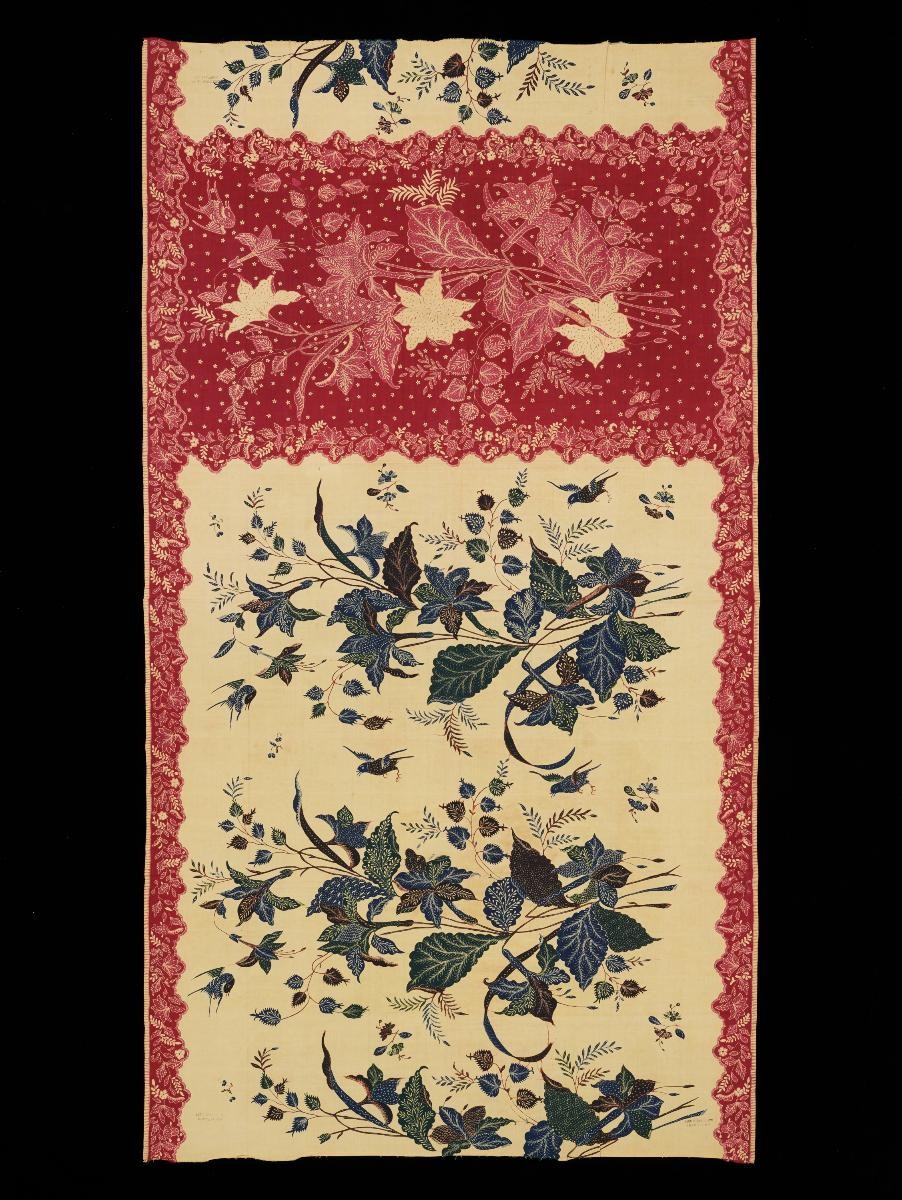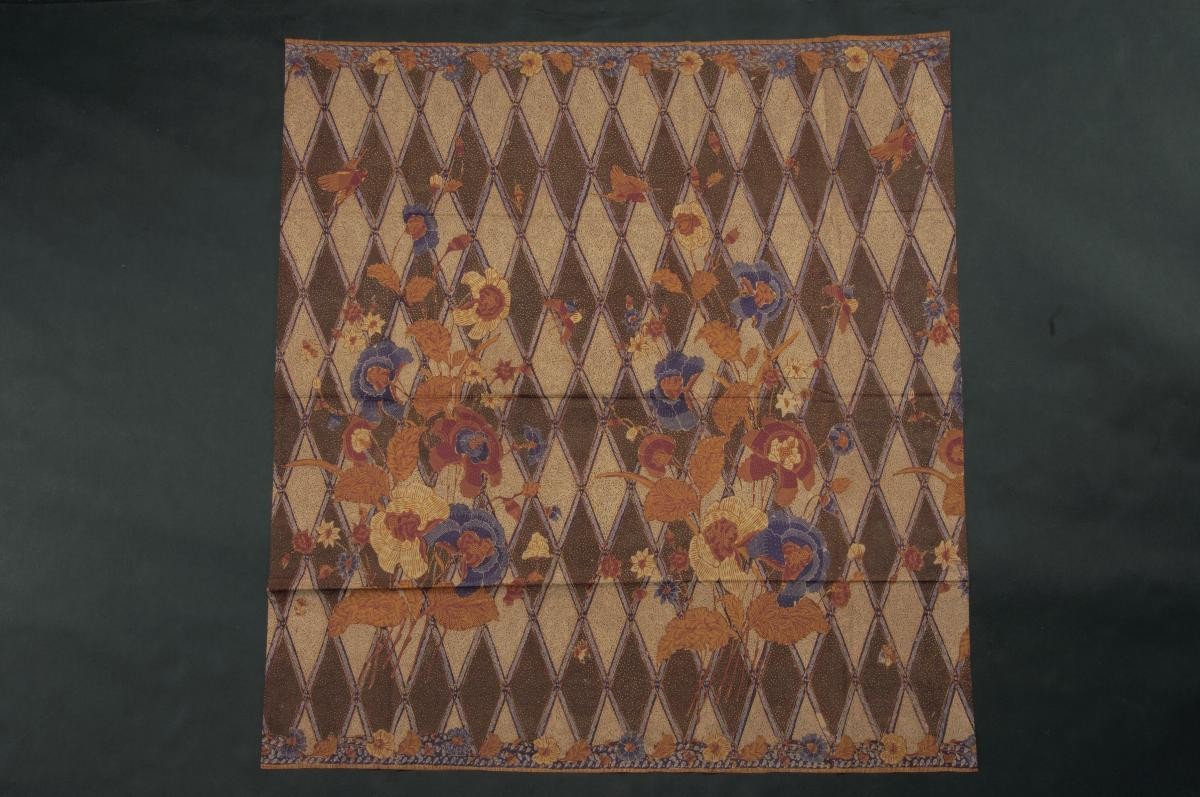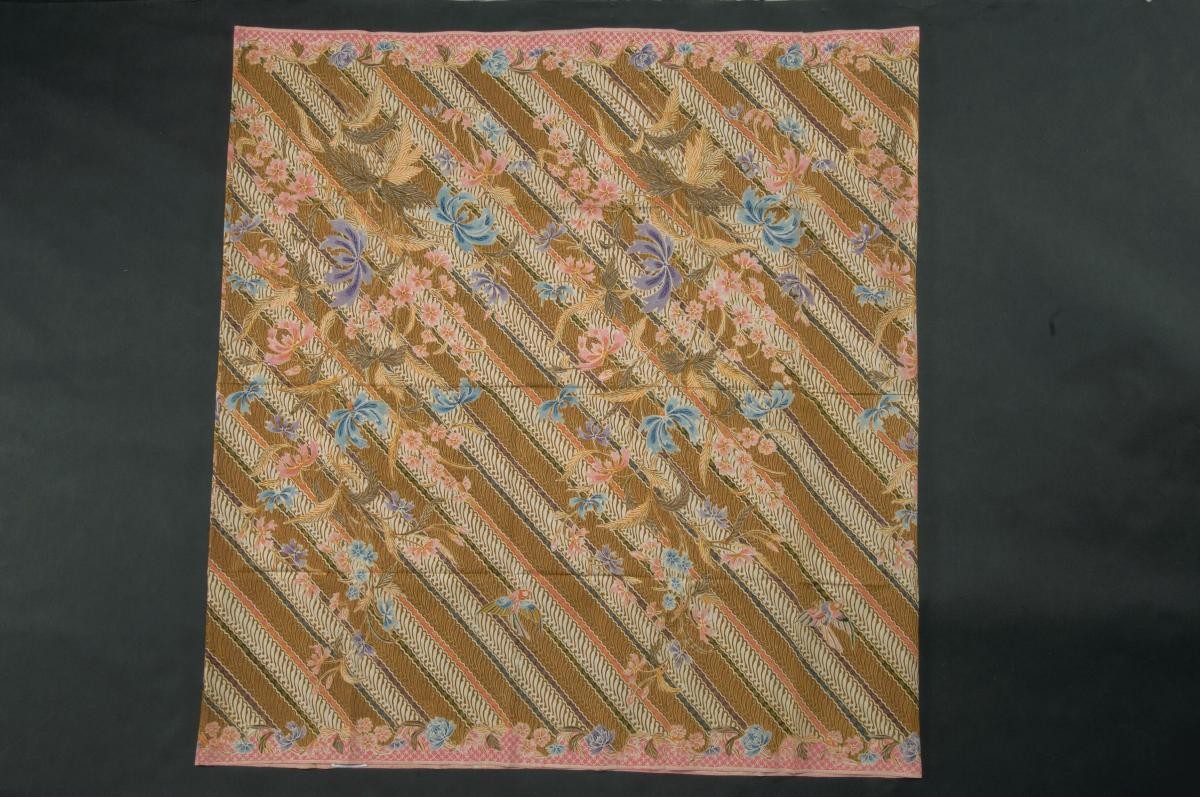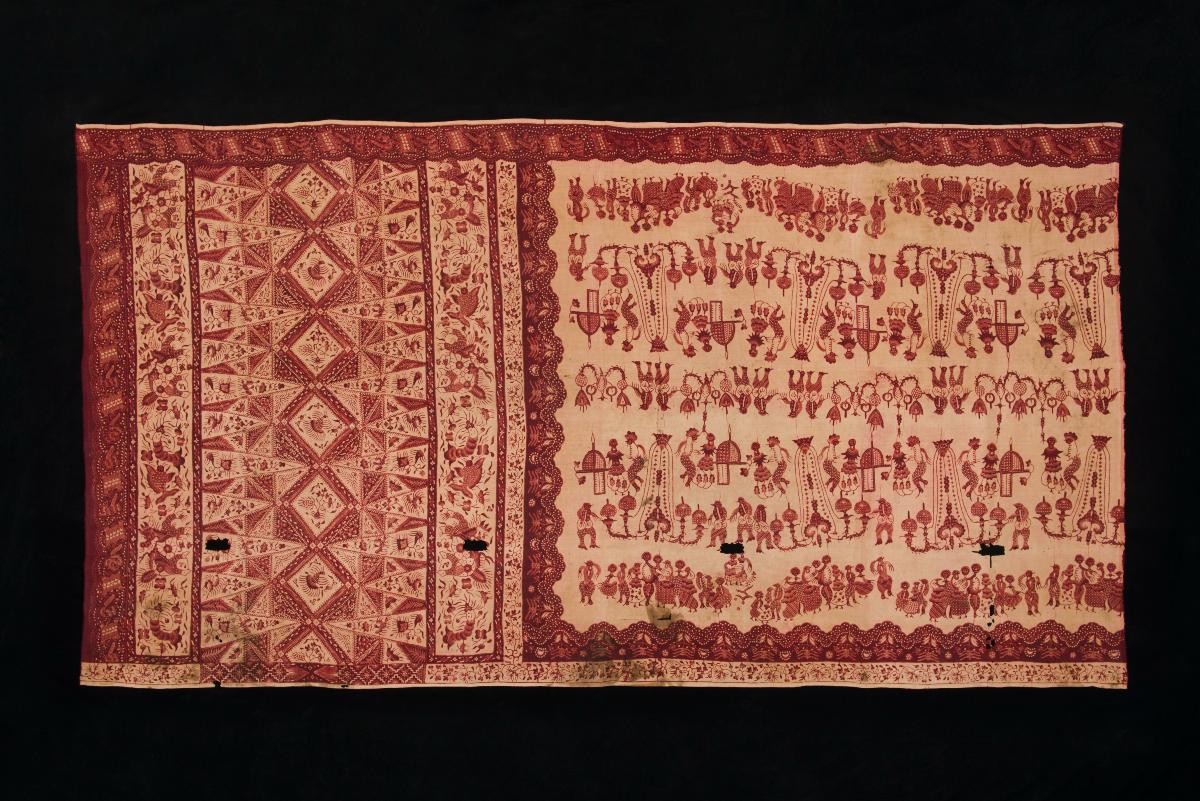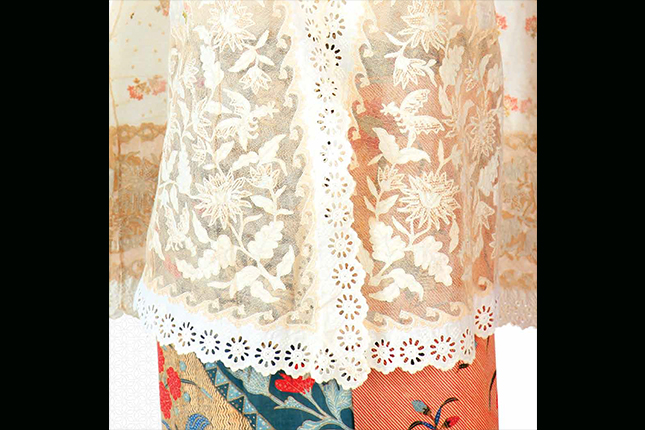

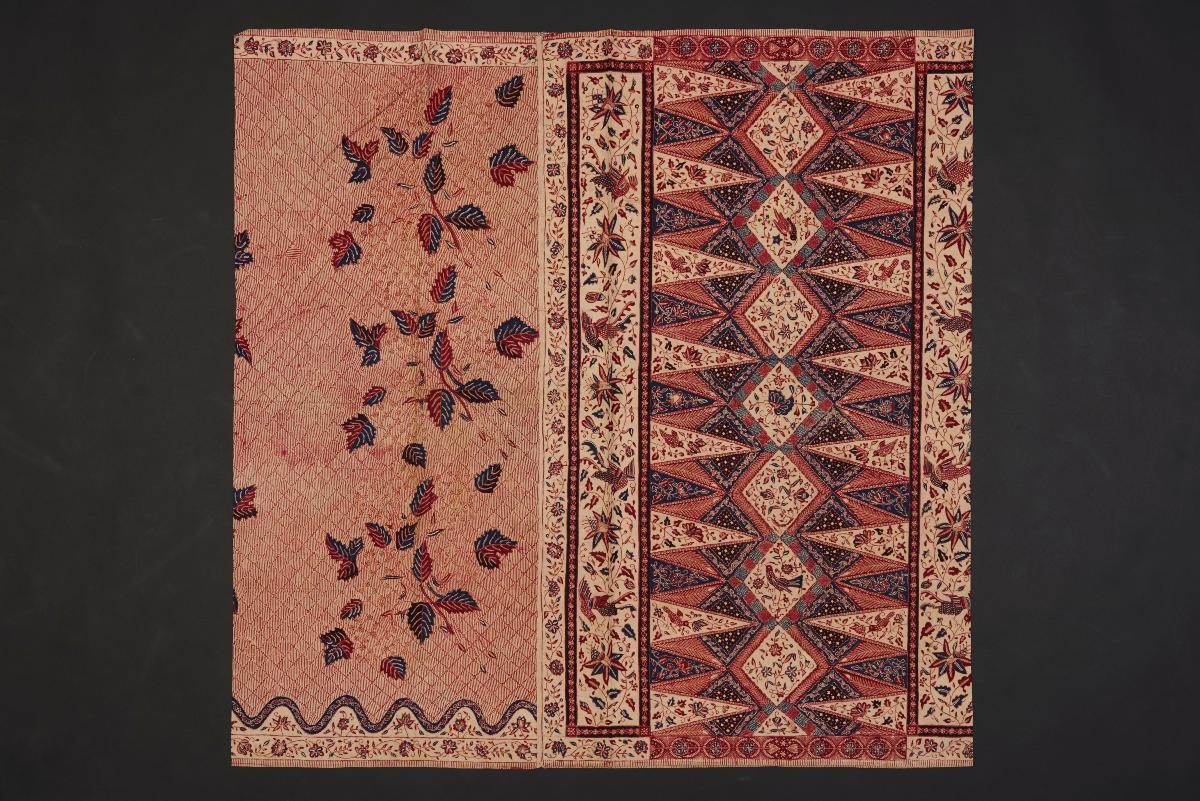
On the broad, vertical panel of this batik (or kepala), square and upright diamonds appear between the rows of interlocking triangles (or tumpal). While the motifs enclosed within the upright diamonds stand out against a plain cream ground, the triangular panels are densely filled with intricate motifs. The main decorative field (or badan) of this sarong in comparison, is sparsely decorated with leaves set against a ground of faint, diamond-patterned background. This batik is part of a large group donated to the museum by the descendants of three generations of female batik makers from Pekalongan. According to the family, it was made by the great grandmother of the donors, Nyonya Oeij Soen King, the first of the three generations. Her batiks were made in a style that was popular throughout most of the nineteenth century, characterised by a tumpal (saw-tooth pattern) placed at the “head” of a kain panjang (long cloth) or sarong. They are typically embellished with motifs from a sophisticated design repertoire that evolved in Java over several centuries. Although they have distinctly local characteristics, they combine influences from indigenous, Indian, Chinese, and Islamic art. The use of of natural red and blue dyes on a cream ground is also characteristic of batiks made during this period, before chemical dyes were introduced to the industry in the late 19th century. Nyonya Oeij Soen King was probably active until the 1920s, after which the business was taken over by her daughter-in-law, Nyonya Oeij Kok Sing.