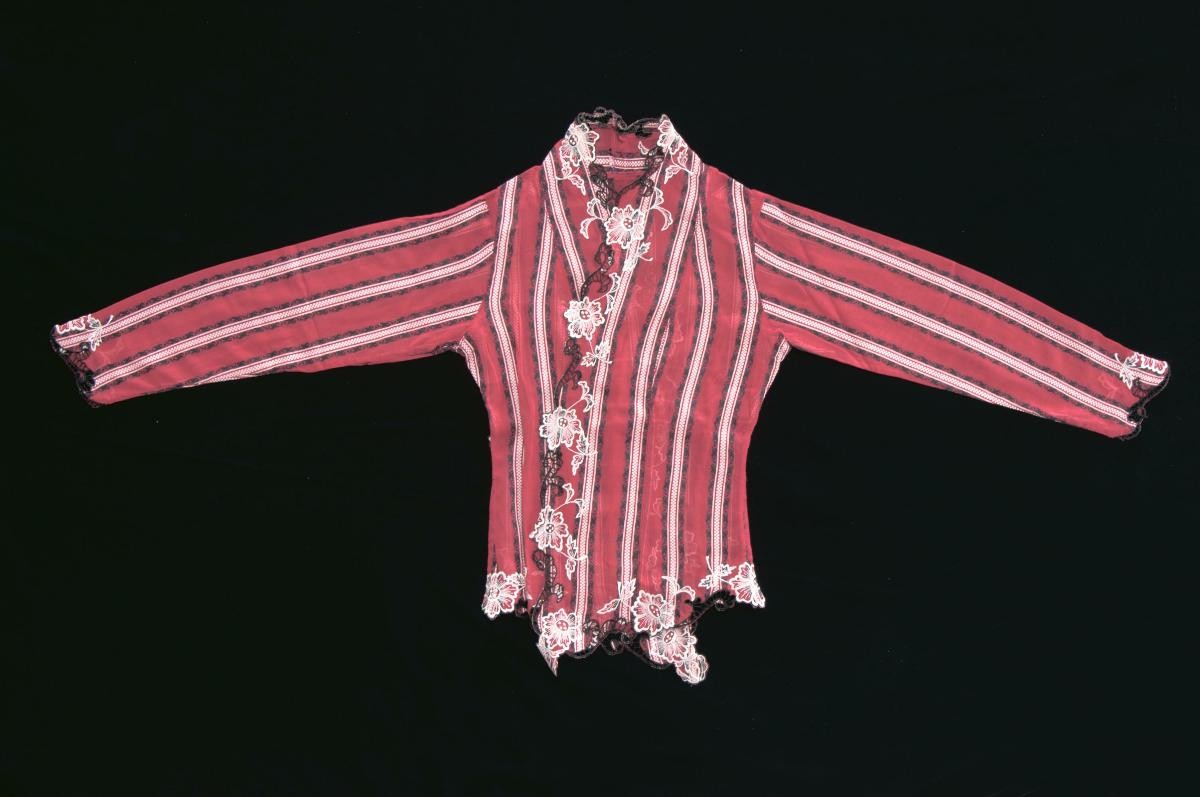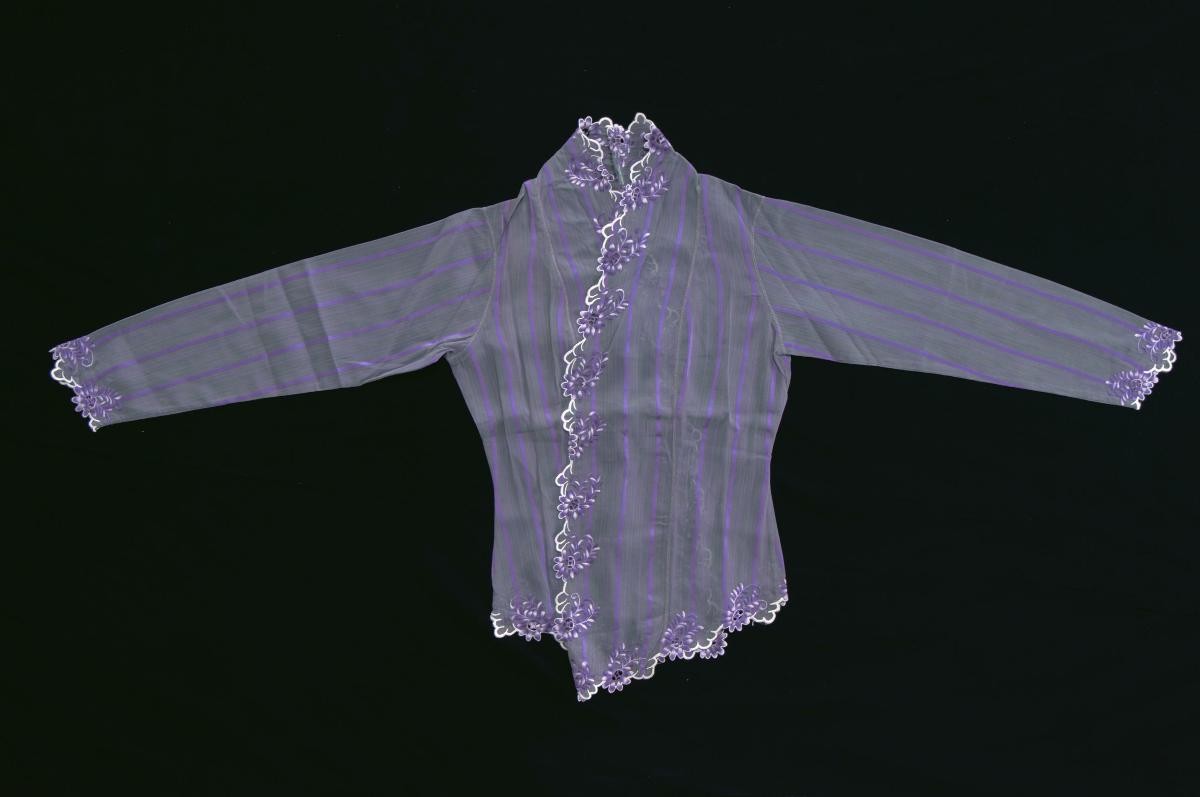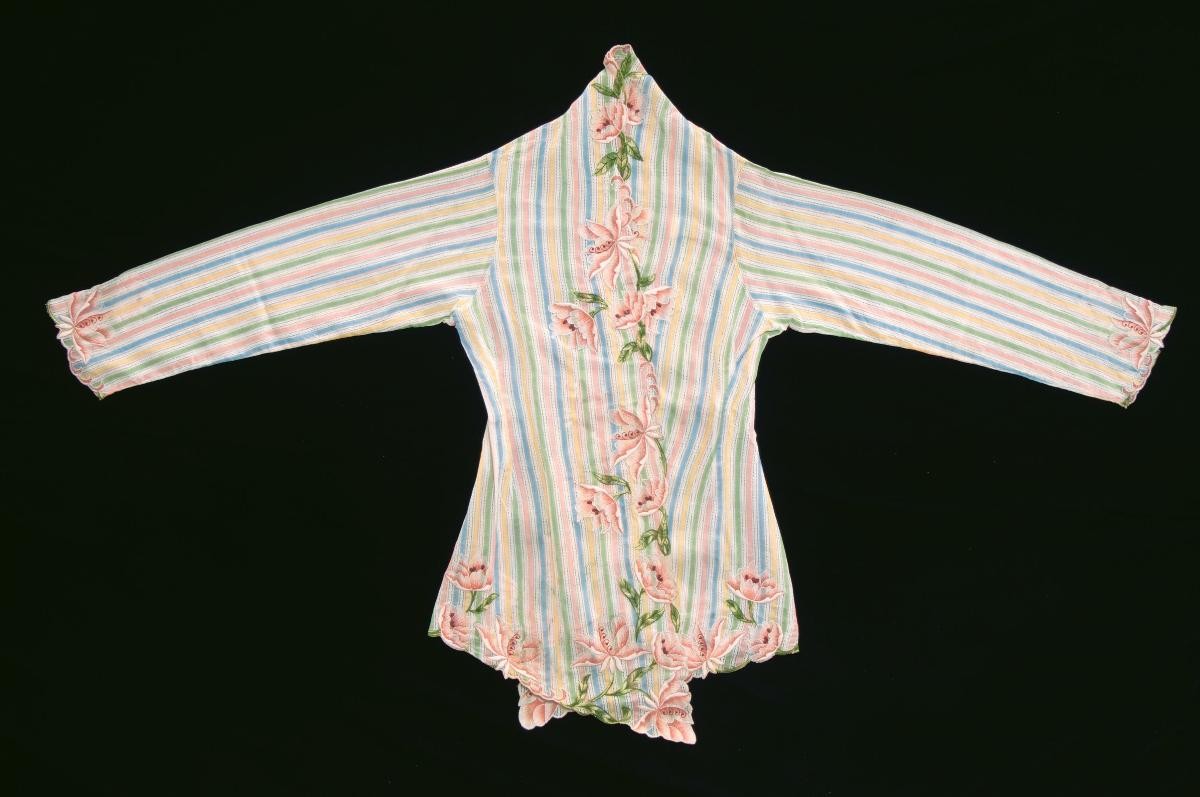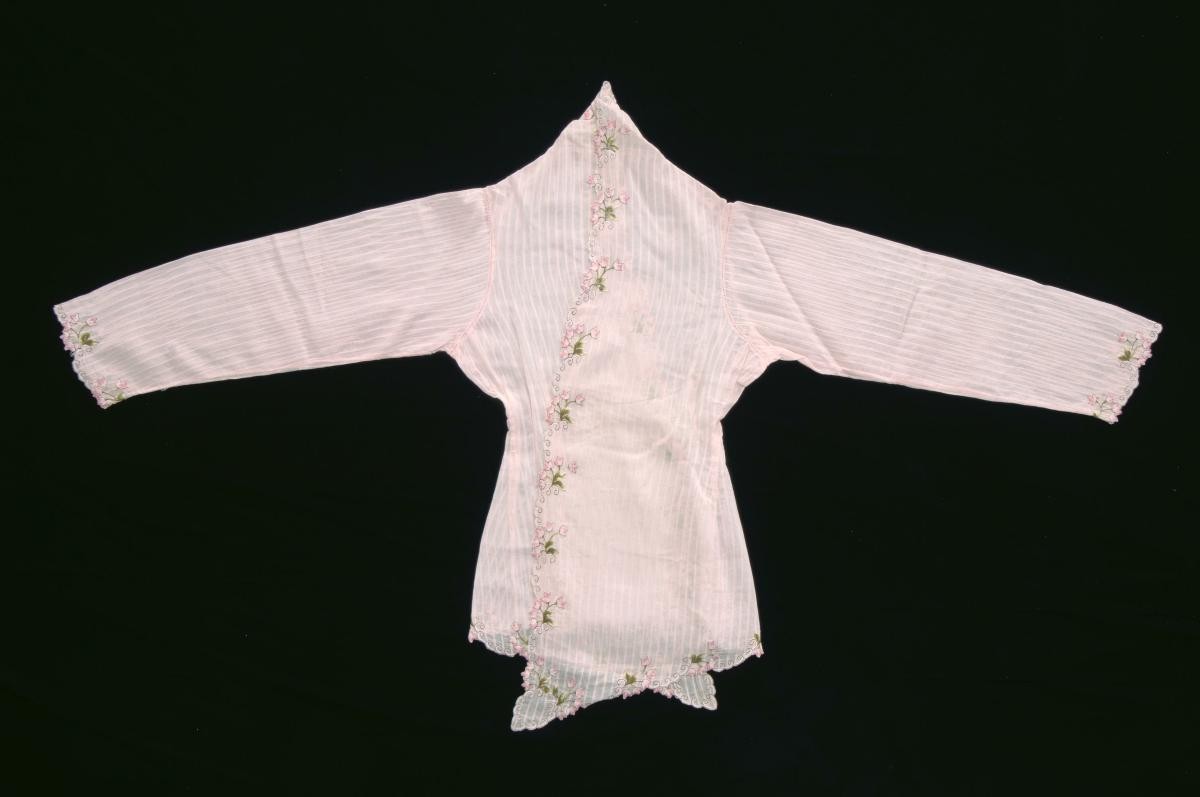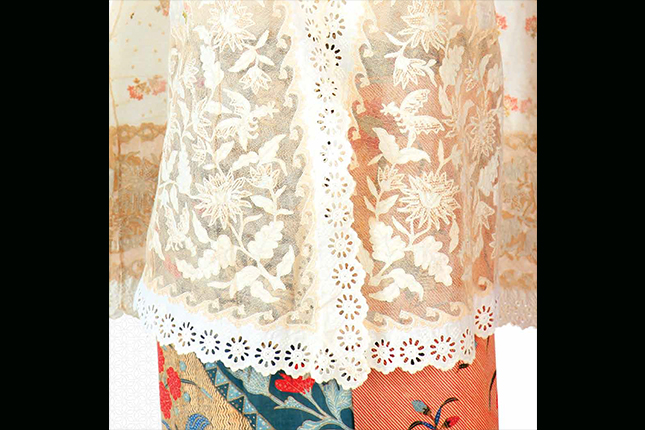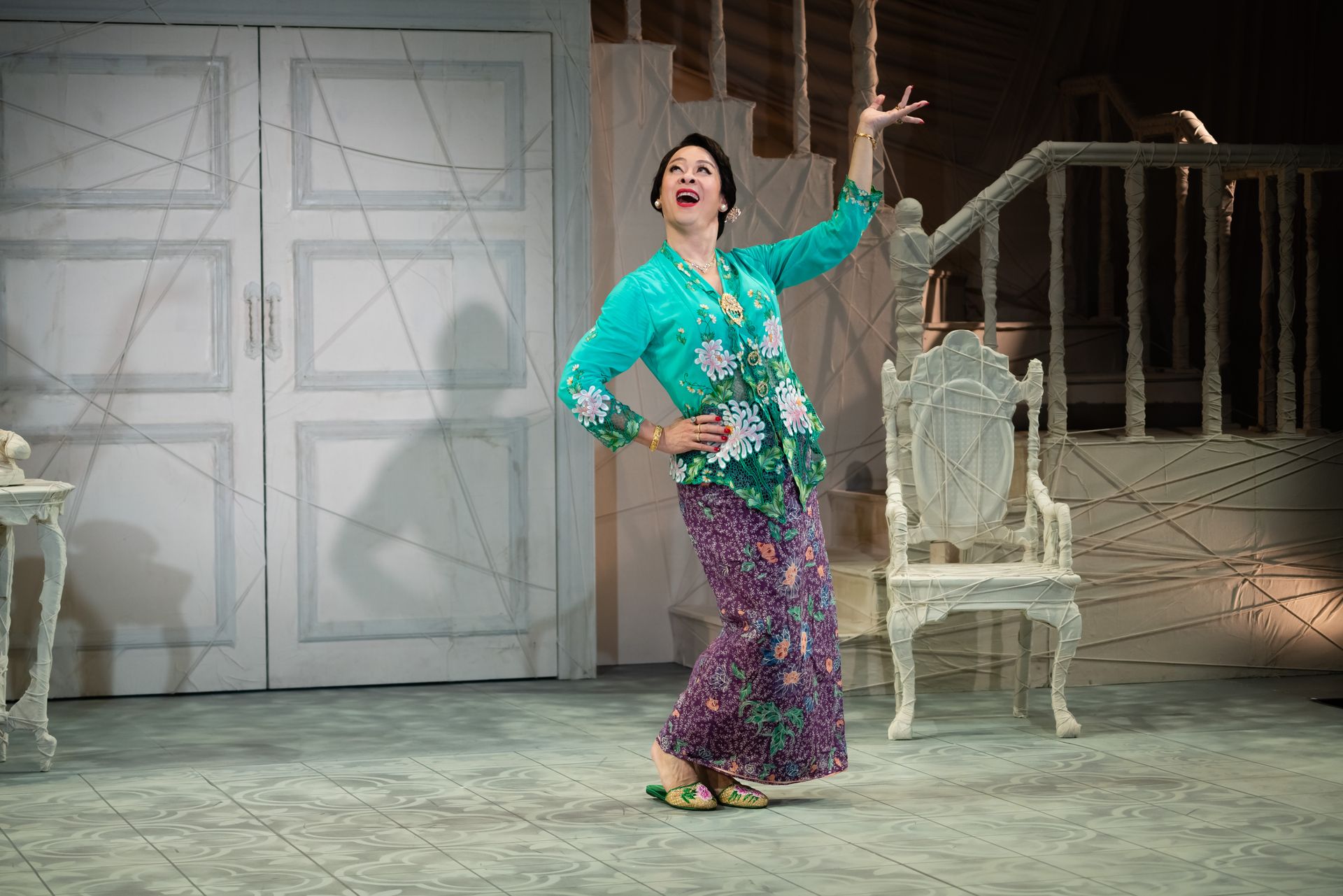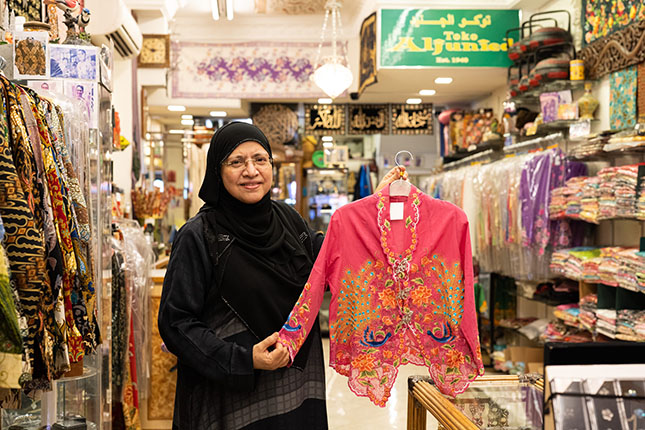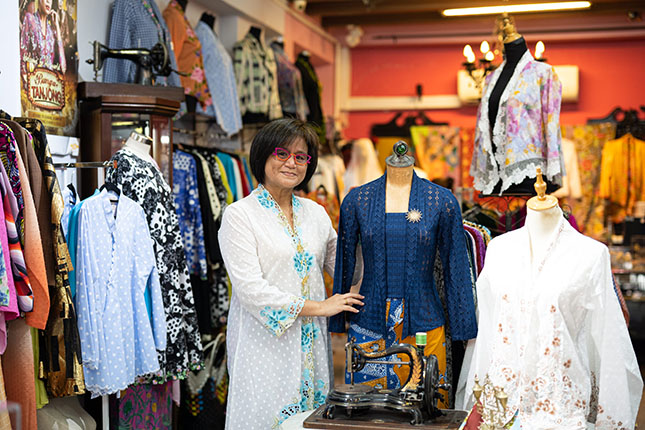

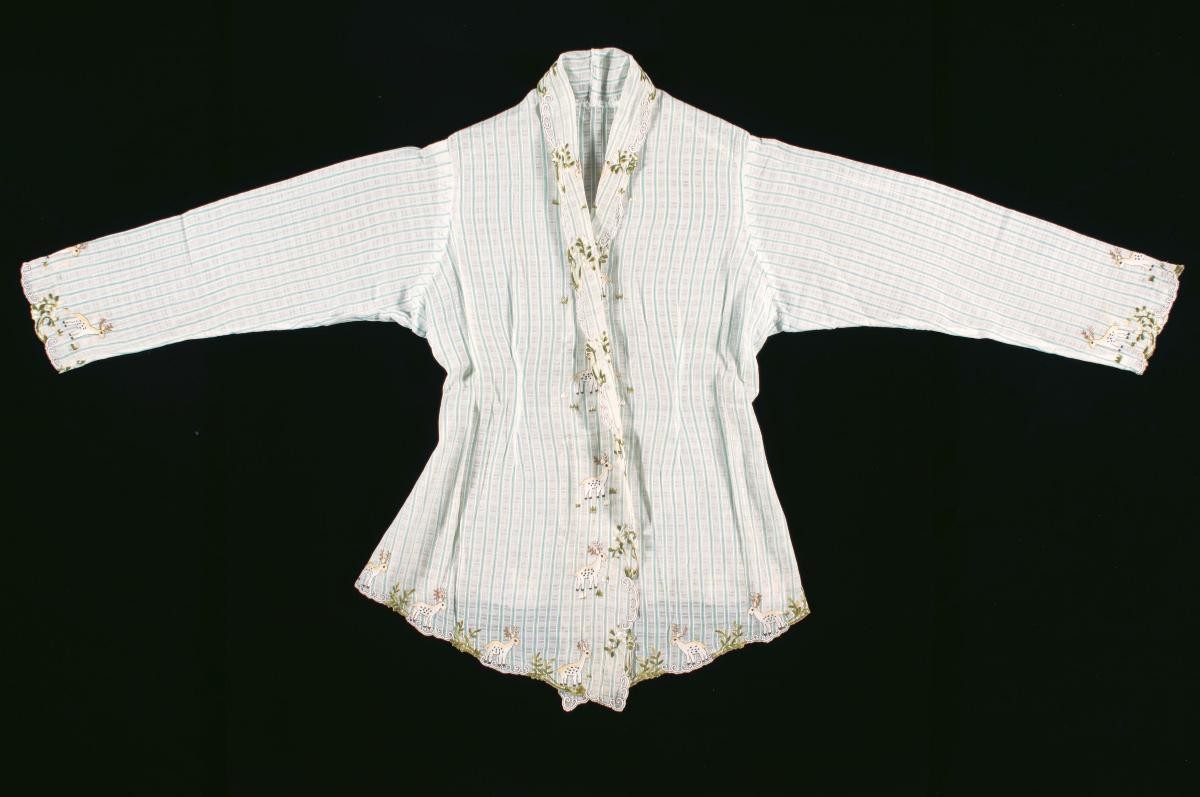
The relative simplicity of the whimsical design of antelopes on this piece suggests that this could have been everyday wear. The kebaya is also made of a thicker (and therefore more durable) material than the popular fine voile.The kebaya is a long-sleeved, open-front blouse typically paired with a colourful batik sarong. Kebayas are thought to have been first worn by the Indo-Dutch ladies in the latter part of the 19th century. Its exact origins remain unclear, although some suggest that it comes from the Arabic abaya, a long, open-front tunic. The kebaya has also been associated with the Portuguese kobaya, a lace-trimmed blouse.By the 1940s, the increased popularity of hand-turned (and later, foot-powered) sewing machines made stunning and intricate embroidery possible. Embroidery-work, also known as 'sulam', has since been viewed as a distinguishing feature of kebayas.The Peranakan Chinese kebaya is one of the most distinctive features of the Peranakan Chinese today. It is currently undergoing a revival in Singapore and Malaysia, with many Peranakan Chinese women wearing kabayas during festive occasions like wedding and Chinese New Year as a mark of their Peranakan identity. Many of the old kabayas from the early to mid 20th century continue to inspire new creations today.