
Gazette Date: 7 August 2015
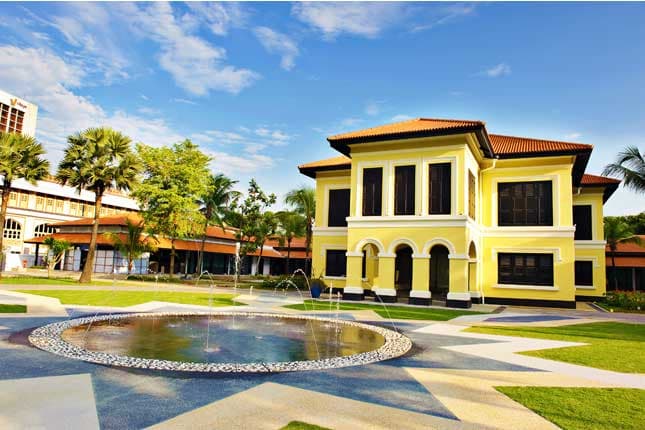
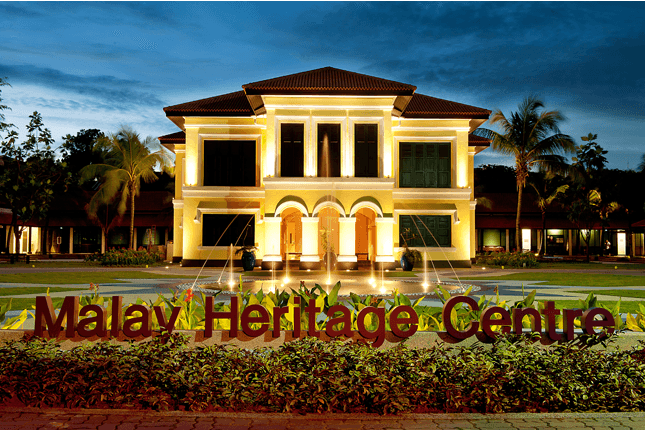
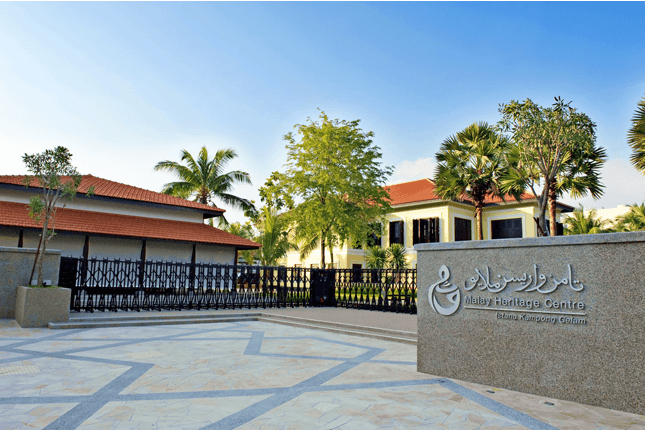
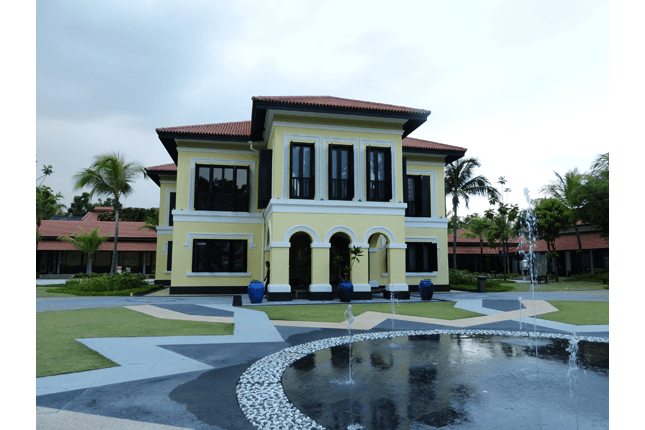
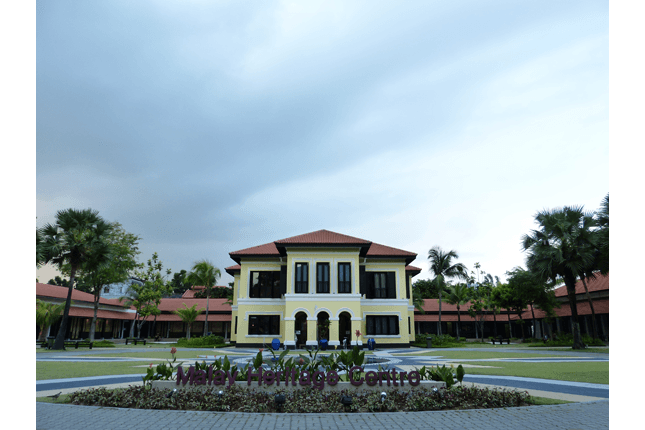
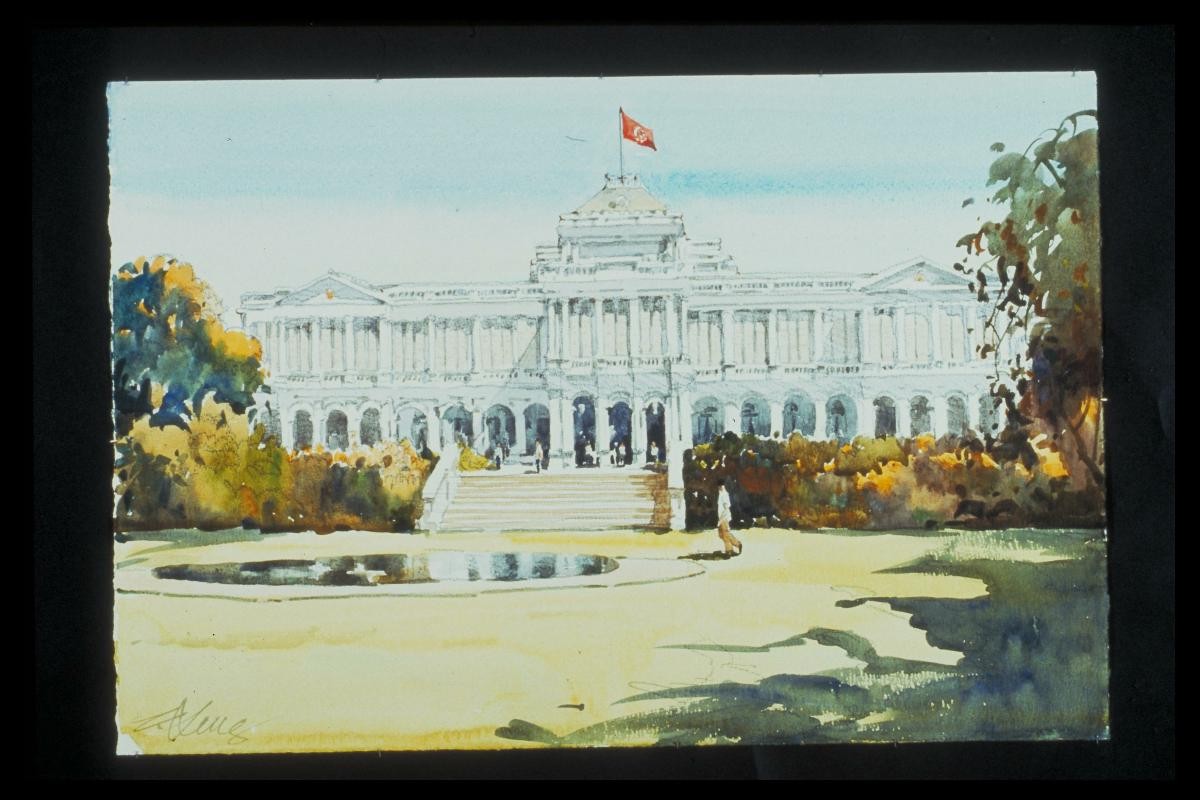
Originally built in 1819, Istana Kampong Gelam was the royal seat of Sultan Hussein Shah, following his recognition by the British as Sultan of Johor with authority over Singapore. Rebuilt in 1890 for the Sultan's grandson, Tengku Alam Shah, the current building now houses the Malay Heritage Centre.
Construction of a Palace
The establishment of a royal settlement at Kampong Gelam dates to the founding of modern Singapore in 1819. Embroiled in a succession crisis, Sultan Hussein Shah won British recognition as the Sultan of Johor, which enabled him to sign the 1819 Treaty of Friendship and Alliance—the foundational document of modern Singapore. As part of the treaty arrangements, Sultan Hussein Shah settled at Kampong Gelam, which developed into a royal precinct.
The Hikayat Abdullah records that Sultan Hussein Shah began construction of his Istana at Kampong Gelam just four months after signing the 1819 Treaty. The structure was described as "a large rambling attap habitation". A wall was built around the Istana compound, the boundaries of which are still marked today by the present-day boundary wall.
Subsequent Palaces
Due to the vagueness of cartographic records from the period, the actual development of buildings within the walled compound remains unclear. Another residence belonging to Sultan Ali, the son and heir of Sultan Hussein Shah, was located in the southeast corner of the compound from the 1840s to 1880s. Marked as "Sultan's Residence" on contemporary maps, this was the primary building in the compound during that period.
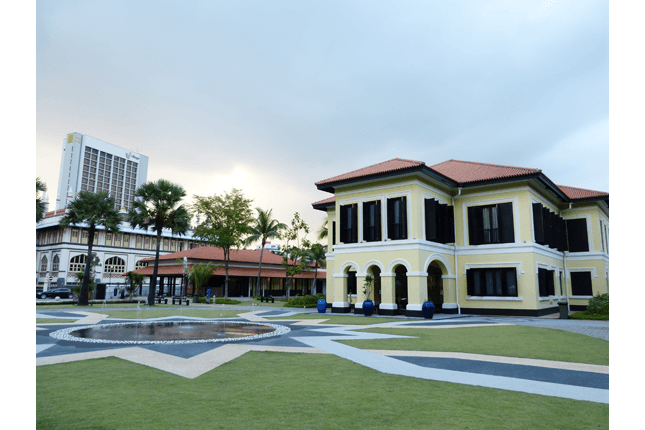
Sultan Ali died in 1877, after which his son Tengku Alam became head of the household. After losing the Jementah Civil War in 1879 to Abu Bakar, Maharaja of Johor, Tengku Alam was forced to cede Muar to Abu Bakar and subsequently resettled in Kampong Gelam, Singapore. In 1887, the Governor of the Straits Settlements, Sir Frederick Weld, secured approval from the colonial government for $20,000 to construct a house for Tengku Alam in Kampong Gelam's royal compound. Completed in 1890 and described as being "of quite an English type", what is now the Istana Kampong Gelam was officially handed over to Tengku Alam by Acting Governor Sir Frederick Dickson on 13 August 1890.
Tengku Alam died in the Istana a year after its construction. Descendants of Sultan Hussein Shah continued to reside in the Istana until 1999. The building was later converted into the Malay Heritage Centre.
Architecture
The Istana Kampong Gelam is a compound house, representing a syncretic architectural form that combines Western Neo-Classical ornamental elements with the spatial logic of traditional Malay houses. This fusion is most evident in the anjung—an antechamber located on the second floor and accessed via a staircase just after the entrance. The upper floor, known as the panggung, serves as the principal living space, whilst the lower floor, the kolong, contains rooms such as kitchen and stores not typically visited by guests.
Centre of the Community
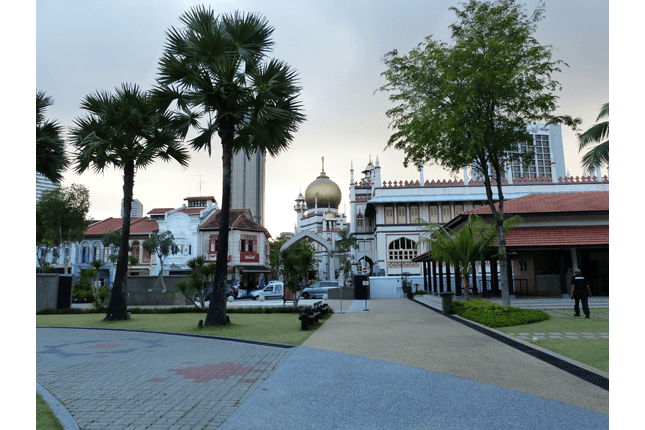
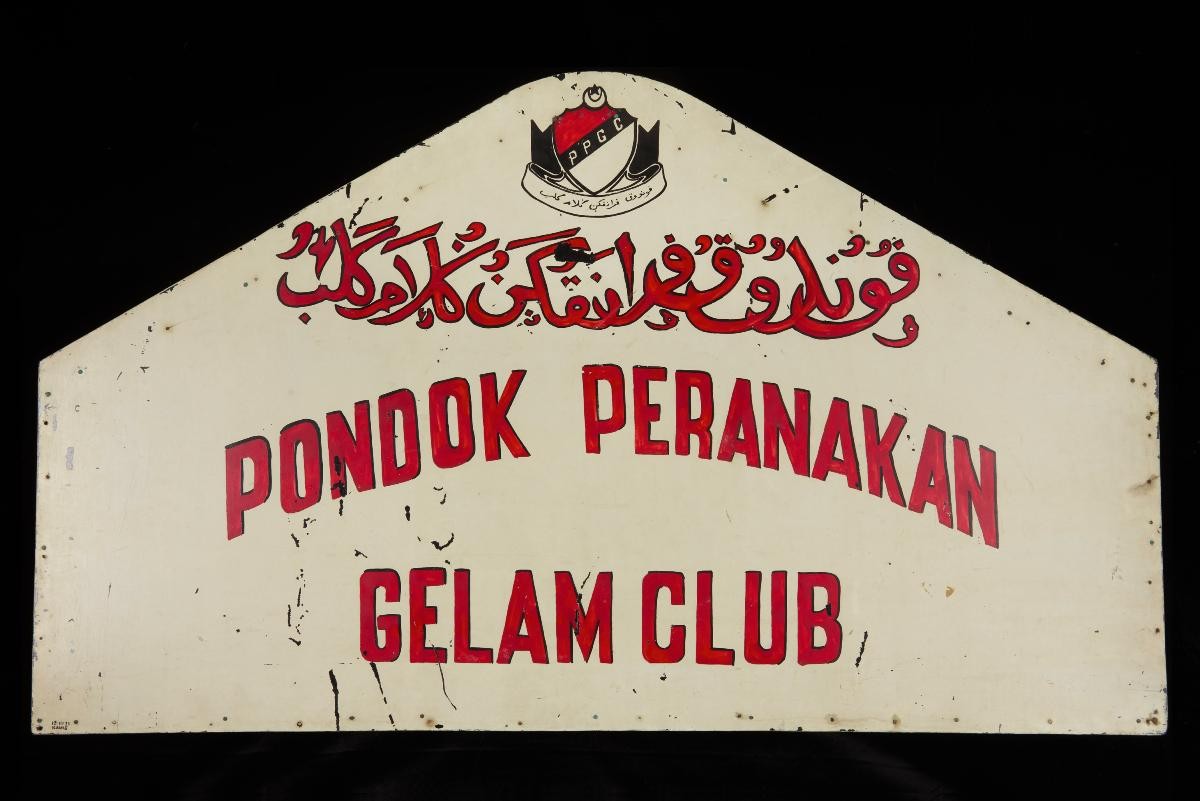
The Istana served as both the geographic and symbolic heart of Kampong Gelam, hosting numerous social and community activities. The prestigious Kota Raja Club operated from the Istana grounds from 1948 to 1999, whilst the venue also supported traditional Malay sports and martial arts, including a significant 1957 gathering celebrating sepak takraw's recognition as an international sport.
Religious and cultural festivals were regularly celebrated at the Istana, particularly those important to Malay and Muslim communities. These celebrations continued even during challenging periods such as the Japanese occupation, when Hari Raya Puasa dinners were held for the community. The Prophet Mohammad's Birthday was also commemorated regularly at this significant venue.
Throughout its history, the Istana Kampong Gelam remained a vital gathering place, hosting various meetings, conferences, and cultural events that brought the community together. Reopening as the Malay Heritage Centre in 2005, the Istana Kampong Gelam continues to be a significant part of Singapore's Malay community and a key site representing Singapore's connections to the Malay Archipelago.
Our National Monuments
Our National Monuments are an integral part of Singapore’s built heritage, which the National Heritage Board (NHB) preserves and promotes for posterity. They are monuments and sites that are accorded the highest level of protection in Singapore.